- Cognitive Engagement: Strategic board games challenge executive functions like planning, working memory, and inhibition, which are essential for maintaining daily cognitive agility.
- Social Vitality: Beyond the mental workout, these games provide structured social interaction, which is a primary factor in reducing feelings of isolation and supporting long-term mental health.
- Choosing the Right Match: Select games based on your preferred level of complexity and social intensity; start with games that offer clear rules and manageable playtimes to avoid fatigue.
Engaging in strategic board games is one of the most effective, accessible, and enjoyable ways to maintain cognitive sharpness as we move through our sixties, seventies, and beyond. Unlike passive forms of entertainment, strategic games require active mental processing, decision-making, and adaptation to changing circumstances. By integrating these games into your weekly routine, you are not just passing time; you are participating in a form of “cognitive training” that keeps the brain flexible and resilient.
The Cognitive Mechanics of Strategy Games
To understand why board games are beneficial, we must look at what happens in the brain when we play. When you consider a move in a game like Chess, Ticket to Ride, or Carcassonne, your brain engages several core executive functions simultaneously.
1. Working Memory and Planning
Working memory allows you to hold information in your mind while manipulating it. In a game, you must remember the rules, track your opponent’s previous moves, and anticipate their future strategy. This is not merely about memory; it is about active synthesis. You are constantly updating your internal model of the game, which strengthens the neural pathways responsible for complex task management.
2. Inhibition and Flexibility
Inhibition is the ability to suppress impulsive actions. In many strategy games, the “obvious” move is often a trap. You must learn to stop and evaluate the board before acting. Cognitive flexibility, on the other hand, is the ability to shift gears when your initial plan fails. If an opponent blocks your route or takes a key resource, you must pivot. This mental agility is directly transferable to real-world scenarios, such as adjusting to a change in travel plans or managing complex household finances.
3. Pattern Recognition
Many games rely on recognizing visual or logical patterns. Whether it is spotting a sequence in a tile-laying game or identifying a threat in a tactical combat game, the brain is essentially performing high-speed pattern matching. This constant stimulation helps maintain the speed of information processing, which can naturally slow down with age.

Selecting the Right Game for Your Needs
Not all games provide the same type of mental workout. Choosing the right one depends on your current interests, the number of players, and the level of intensity you seek. It is helpful to categorize games based on their primary cognitive demand.
| Game Category | Primary Cognitive Skill | Best For |
|---|---|---|
| Abstract Strategy (e.g., Chess, Go, Checkers) | Long-term planning and foresight | Those who enjoy deep, quiet concentration. |
| Engine Builders (e.g., Splendor, Wingspan) | Resource management and optimization | Those who like systematic, logical progression. |
| Area Control (e.g., Carcassonne, Ticket to Ride) | Spatial reasoning and risk assessment | Those who enjoy visual, map-based challenges. |
| Social Deduction (e.g., Codenames) | Language processing and social intuition | Groups who want high-interaction, fun experiences. |
When selecting a game, consider the “learning curve.” A common mistake is choosing a game with a massive manual that takes two hours to read. For your first few sessions, opt for games that are “easy to learn, hard to master.” This allows you to start playing quickly without becoming frustrated by overly complex rules.
The Social Dimension of Cognitive Health
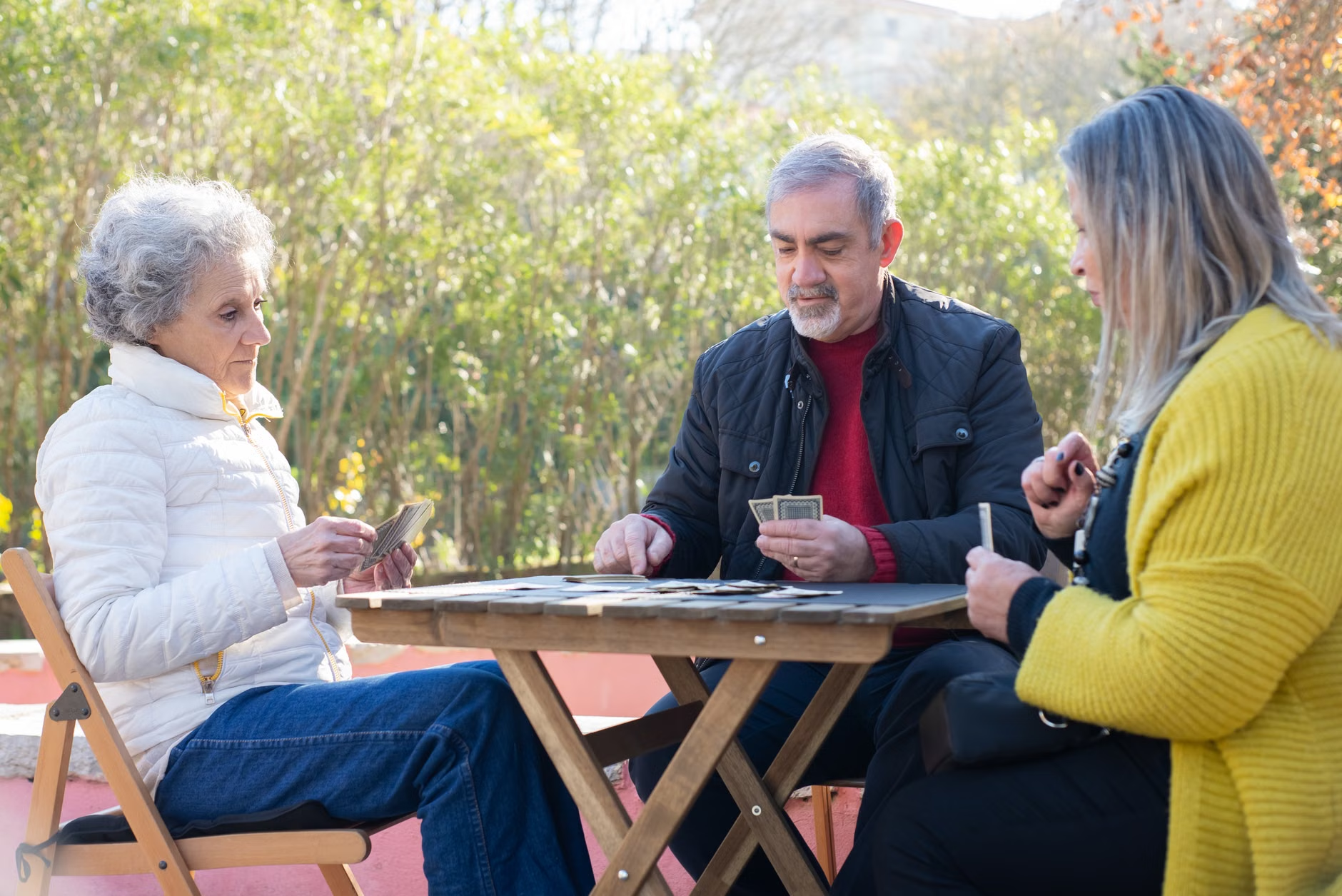
The benefits of board games are not strictly internal. The social aspect of gaming is a critical, often overlooked, component of healthy aging. Loneliness and social isolation are known risk factors for cognitive decline. Engaging in a game with friends or family provides a “structured social environment.”
Unlike a cocktail party where conversation may drift or feel forced, a board game provides a shared focus. It gives you a common goal, a set of rules, and a natural rhythm to the interaction. This makes it easier for people who may feel shy or socially anxious to connect with others. Furthermore, the act of laughing, negotiating, and even experiencing friendly competition releases neurochemicals that support emotional well-being.
Practical Tips for Integrating Gaming into Your Life
To make gaming a sustainable hobby, focus on consistency rather than intensity. It is better to play a 30-minute game twice a week than to attempt an eight-hour marathon once a month. Here are some practical steps to get started:
- Create a Dedicated Space: Ensure you have a well-lit table with comfortable, supportive seating. Proper lighting is essential for reducing eye strain, particularly if the game involves small text or intricate board details.
- Start Small: You do not need a massive collection. Start with two or three games that cover different categories. Visit a local game store or library, as many now offer “game nights” where you can try games for free before purchasing.
- Involve Family: Board games are an excellent way to bridge generational gaps. They provide a level playing field where grandchildren and grandparents can interact as equals, moving away from “caregiver-patient” dynamics.
- Use Digital Aids: Many modern board games have companion apps that handle the “bookkeeping” (like calculating scores or tracking turns). This reduces the mental load of the administrative side of gaming, allowing you to focus purely on the strategy.
Addressing Potential Challenges
It is important to acknowledge that some games may present accessibility challenges. For example, if you have reduced dexterity, look for games with larger pieces or cards. If you have visual impairments, look for games with high-contrast components or clear, large-print iconography. Many publishers are now prioritizing “accessible design,” making it easier than ever to find games that accommodate different physical needs.
If you find yourself becoming easily fatigued, remember that you do not have to finish a game in one sitting. Many games allow for “save points,” or you can simply agree to play a shorter variation. The goal is to stimulate your brain, not to exhaust it.
The Difference Between “Game” and “Task”
A crucial insight for older adults is to distinguish between a “game” and a “brain training task.” While many apps claim to “train your brain,” they often become repetitive and boring. Board games are inherently social and context-rich. You aren’t just clicking a button; you are making a decision that affects another person. This emotional and social context makes the cognitive effort more “real” to the brain, which may lead to better long-term retention of the skills you are exercising.
Furthermore, avoid the trap of thinking you need to win to gain the benefits. The cognitive workout happens during the process of playing—the thinking, the planning, and the evaluating—not in the result. Even if you lose every game, your brain has still engaged in hours of complex, high-level processing.
Establishing a Routine
To successfully adopt this hobby, treat it like any other wellness activity. If you enjoy routine, schedule a “Game Afternoon” on your calendar. If you prefer flexibility, keep one or two games in an easily accessible location in your living room. The easier it is to access the game, the more likely you are to play it during those small pockets of downtime throughout the week.
Consider the environment as well. Is the room quiet? Is the table at the right height? These small environmental factors contribute to your stamina. If you are playing with others, ensure the group size is comfortable. A game for two people feels very different from a game for six. Start with smaller groups to build confidence before moving to larger, more chaotic social settings.
Conclusion: Beyond the Board
The cognitive benefits of strategic board games extend far beyond the table. By regularly challenging your planning abilities, memory, and social skills, you are building a “cognitive reserve.” While there is no single activity that guarantees long-term brain health, engaging in complex, enjoyable, and social hobbies is a cornerstone of proactive aging. Choose a game that excites you, find a partner or a group, and enjoy the process of keeping your mind as sharp as it has ever been.
Frequently Asked Questions
1. Are digital board games (on a tablet or computer) as effective as physical board games?
Digital versions are excellent for learning rules and playing when you cannot meet in person. However, physical board games offer the added benefit of fine motor coordination and tactile stimulation, which can be beneficial for maintaining dexterity.
2. What if I feel overwhelmed by the rules of a new game?
It is perfectly normal. Start by watching a “How to Play” video on YouTube. These videos are often much clearer than reading a manual. Also, do not be afraid to play the first game “open-handed,” where everyone keeps their cards visible so you can learn the mechanics together.
3. Can board games help if I am already experiencing memory lapses?
While games are not a treatment for cognitive impairment, they are a form of cognitive enrichment. They provide a structured, low-stress environment to practice focus and engagement. If you have concerns about your cognitive health, it is always a good idea to speak with your primary care physician to discuss your overall health strategy.
For more information on healthy aging and lifestyle habits, you may consult resources from the World Health Organization’s guide on Ageing and Health.