- Creative writing is a cognitive exercise that enhances memory retention, emotional processing, and mental agility.
- Starting small—through journaling or short anecdotes—is more effective for building a habit than attempting a full-length novel immediately.
- You do not need specialized software; simple tools like notebooks or basic word processors are sufficient to begin crafting your legacy.
Creative writing is often viewed as the domain of professional authors, yet for adults aged 60 to 80, it serves as a profound tool for self-discovery, memory preservation, and intellectual stimulation. Engaging in the craft of writing—whether it takes the form of memoirs, short stories, or poetry—is not merely about producing a final product; it is about the process of organizing thoughts and finding clarity in one’s experiences. This guide explores how to approach creative writing as a sustainable hobby, providing actionable steps to help you overcome common hurdles and build a rewarding practice.
Understanding the Mental and Emotional Value of Writing
Writing is a unique cognitive task that requires the integration of language, memory, and structural thinking. Unlike passive forms of entertainment, writing forces the brain to retrieve information, synthesize events, and make decisions about tone and pacing. For many older adults, this represents a form of “mental gymnastics” that can help maintain focus and verbal fluency.
Beyond the cognitive benefits, writing serves as an emotional outlet. Many individuals find that putting complex life experiences onto paper allows them to view them from a distance. This process, often referred to by psychologists as “expressive writing,” can help in processing transitions, such as retirement, relocation, or the changing dynamics of family life. By externalizing these thoughts, you gain a sense of control over your narrative.
The Difference Between Writing for Yourself and Writing for Others
A common mistake for beginners is worrying about a potential audience before the first sentence is even written. It is essential to distinguish between these two modes:
- Writing for Yourself (Reflective): This includes journals, diaries, or private memoirs. The goal here is honesty and clarity. There is no pressure to “perform” or entertain.
- Writing for Others (Creative/Public): This involves short stories, articles, or books meant to be shared. This mode requires more attention to structure, pacing, and the reader’s perspective.
For those just starting, we recommend beginning exclusively in the “Reflective” mode. Once you have built confidence in your ability to express yourself, you can transition pieces of your work into the “Creative” mode if you wish to share them with family or friends.
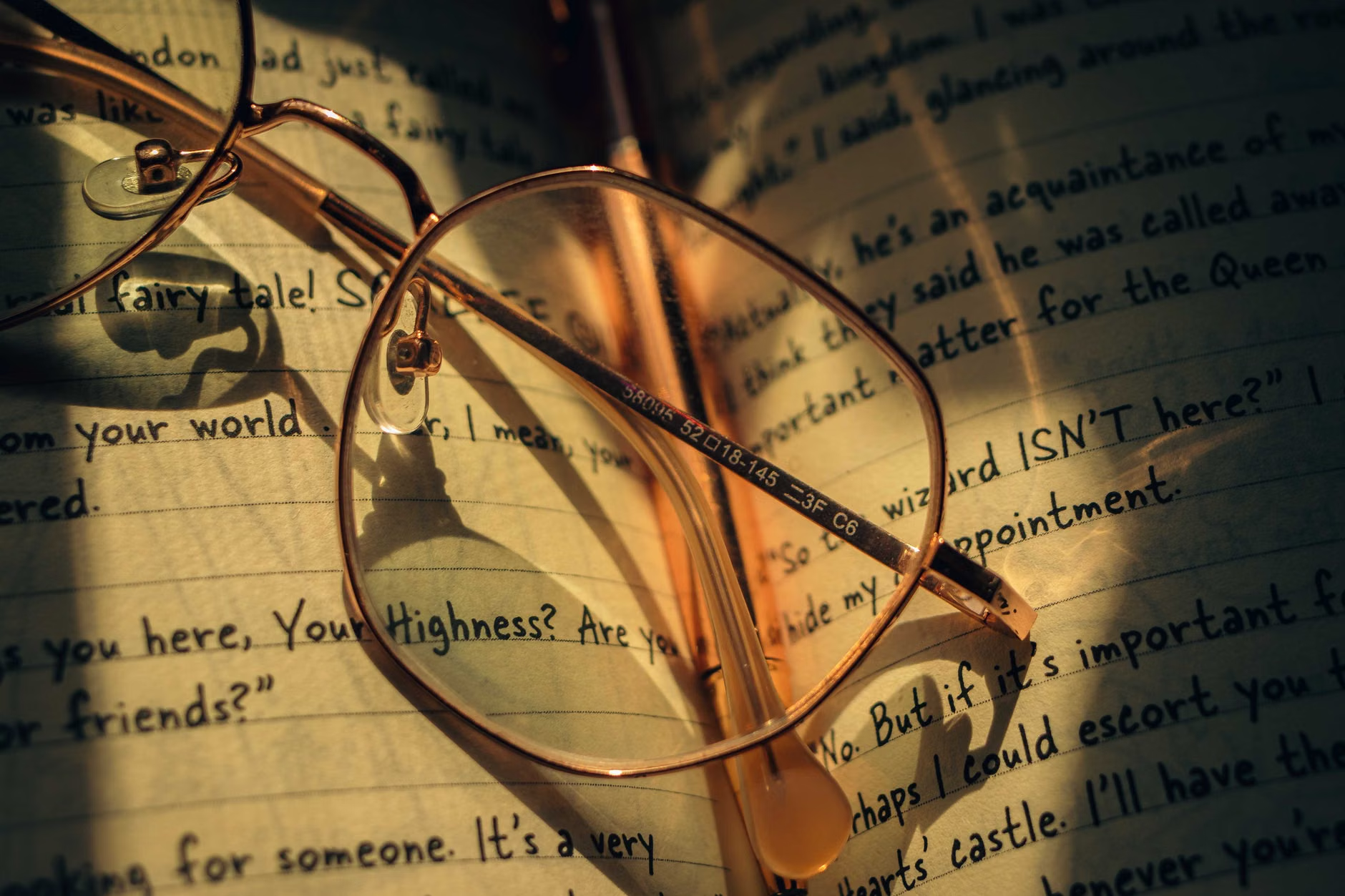
Establishing a Sustainable Writing Routine
One of the biggest barriers to creative writing is the “blank page syndrome.” The expectation that you must write for hours at a time can be daunting and, ultimately, unsustainable. Instead, view writing as a daily habit, similar to a morning walk or a daily crossword puzzle.
The 15-Minute Rule
To avoid burnout, aim for a “15-minute session” rule. Set a timer for 15 minutes and commit to writing during that time. If you feel like stopping when the timer goes off, stop. If you are in a flow state, feel free to continue, but never force yourself to go beyond your energy levels. Consistency is significantly more important than volume.
Creating the Right Environment
Your environment plays a significant role in your ability to focus. Consider these factors:
| Factor | Recommendation | Why it matters |
|---|---|---|
| Lighting | Ample natural light or task-specific LED lamps | Reduces eye strain, which is vital for long sessions. |
| Ergonomics | Adjustable chair with lumbar support | Prevents back and neck stiffness during writing. |
| Distractions | A dedicated “writing-only” space or time | Signals to the brain that it is time for creative work. |
Choosing Your Tools: Pen, Paper, or Digital?
There is no “correct” tool for writing. The best tool is the one that you find most comfortable and intuitive. However, each has its own advantages and limitations:
1. Traditional Pen and Paper
Writing by hand is often described as a more “tactile” and meditative experience. It slows down the thinking process, which can be beneficial for those prone to rushing. However, handwriting can become physically taxing for those with arthritis or limited grip strength. If you choose this method, invest in pens with a thicker grip or ergonomic barrels to reduce strain.
2. Digital Word Processors
Using a computer or a tablet offers the advantage of easy editing. You can move paragraphs, fix spelling errors, and change fonts without messy erasures. For those with visual impairments, digital tools allow you to increase the font size to a comfortable level. Note: If you are new to digital writing, start with a simple program like Microsoft Word or Google Docs. Avoid complex “writing software” that requires a steep learning curve.

Techniques for Capturing Memories and Ideas
If you are interested in writing memoirs or family history, the challenge is often knowing where to start. Do not attempt to write your life story chronologically from birth. That is a massive undertaking that often leads to frustration.
The “Snapshot” Method
Instead of a biography, write “snapshots.” Pick one specific event, a single day from your childhood, or a particular person you once met. Write about that event in isolation. Once you have a collection of these snapshots, you can arrange them in any order you like. This approach makes the task manageable and prevents the feeling of being overwhelmed.
Using Prompts to Spark Creativity
If you find yourself stuck, use prompts to stimulate your memory or imagination. Examples include:
- “Describe the kitchen of your childhood home in vivid detail.”
- “What was the most significant journey you ever took, and how did it change your perspective?”
- “If you could give your 20-year-old self one piece of advice, what would it be?”
These prompts act as entry points. Once you start describing the kitchen, you will naturally find yourself writing about the people who sat at the table and the conversations that occurred there.
For many, the ultimate goal of creative writing is to preserve stories for children, grandchildren, or the local community. If you decide to share your work, there are several ways to do so, ranging from simple to complex.
Digital Preservation
Sharing your work digitally is often the most cost-effective method. You can compile your stories into a PDF document, which can be easily emailed or shared via cloud storage services like Google Drive or Dropbox. Safety note: Always ensure you have a backup of your work on an external hard drive or a secure cloud service to prevent data loss due to computer failure.
Self-Publishing Options
If you wish to create a physical book, there are many “print-on-demand” services available. These platforms allow you to upload your manuscript, and they will print a physical copy only when an order is placed. This eliminates the need for large upfront costs or inventory storage. However, be cautious: avoid “vanity presses” that demand thousands of dollars in fees. Legitimate print-on-demand services operate on a per-book cost model.

Practical Tips for Maintaining Long-Term Engagement
Maintaining a hobby over the long term requires managing your expectations. It is normal for interest to wax and wane. Do not view a week or two of inactivity as a “failure.” Writing is a creative pursuit, and like any art, it requires periods of rest.
Join a Writing Circle
Writing can be a solitary activity, but it doesn’t have to be. Many community centers, libraries, and online forums host senior writing groups. These groups provide a sense of community and a gentle structure for accountability. When looking for a group, prioritize those that offer “supportive feedback” rather than “critical review.” The goal is encouragement, not professional editing.
The Importance of Revision
The first draft is rarely the best version. A common mistake is trying to edit as you write. Separate the writing phase from the editing phase. Write your draft first, then leave it for at least 24 hours. When you return to it with “fresh eyes,” you will be much better at spotting areas that need clarity or improvement. This separation is the secret to producing high-quality work.
Handling Physical Fatigue and Accessibility
If you have conditions that affect your stamina or physical comfort, adapt your environment accordingly:
- Voice-to-Text Software: Modern devices have built-in dictation tools. If typing or writing by hand is difficult, you can “speak” your story, and the computer will transcribe it for you. This is an excellent way to maintain flow without physical exertion.
- Short Sessions: If you tire easily, break your writing time into 10-minute blocks with 5-minute breaks. Use these breaks to stretch or walk around, which also helps reset your focus.
Overcoming the Fear of “Not Being Good Enough”
One of the most persistent hurdles in creative writing is the internal critic. You may worry that your life isn’t “interesting enough” or that your writing style is “too simple.” These concerns are almost always unfounded. The value of your writing lies in your unique perspective and the authenticity of your voice.
Remember that the primary purpose of this hobby is your own fulfillment. If you find joy in the process, you have already succeeded. If your family enjoys reading your stories, that is a wonderful bonus. Do not let the pressure of “literary quality” stifle your creative spirit. Your stories are a part of your legacy, and they are worth telling simply because they are yours.
Conclusion
Creative writing is a lifelong skill that offers immense rewards for the mind and the heart. By starting small, choosing tools that accommodate your physical needs, and focusing on the process rather than the result, you can turn writing into a source of daily joy. Whether you are documenting your history for future generations or simply exploring your own imagination, the act of writing is a powerful assertion of your voice and your experiences. Start with a single sentence today, and see where it leads you.
Frequently Asked Questions
1. Do I need expensive software to start writing?
No. In fact, simple is often better. A standard word processor like Microsoft Word, Google Docs (which is free), or even a basic notepad application is more than sufficient. Avoid complex publishing software until you are ready to format a book for printing.
2. How can I protect my work from being lost?
Always keep at least two copies of your work. If you use a computer, save your file to your hard drive and also to a cloud service (like Google Drive or iCloud) or a USB thumb drive. If you write by hand, consider taking photos of your pages with a smartphone to store them digitally as a backup.
3. Is it too late to start writing if I have never done it before?
It is never too late. Many of the most compelling memoirs and stories are written by people who began the craft in their later years. Your life experience provides a depth of perspective that younger writers often lack. Start by writing one short paragraph about a memory that makes you smile, and you have officially begun.
For further information on senior wellness and hobbies, you may visit resources provided by your local library or community health organizations, which often host workshops and writing groups for older adults.