- Bookbinding combines fine motor skill practice with cognitive focus, acting as a “meditation in motion” that promotes patience and mental clarity.
- Getting started requires minimal investment; a “starter kit” approach allows you to test your interest before committing to expensive professional equipment.
- The practice is highly scalable: it can range from simple pamphlet stitching for beginners to complex leather-bound restoration for advanced hobbyists.
Bookbinding is the craft of physically assembling a book from a stack of paper sheets, often involving folding, sewing, and attaching covers. For adults aged 60 to 80, it offers a unique intersection of creative expression and functional utility. Unlike hobbies that require high-impact physical exertion, bookbinding rewards precision, steady hands, and rhythmic, repetitive movements—factors that contribute to both hand-eye coordination and stress reduction.
Understanding the Therapeutic Value of Bookbinding
At its core, bookbinding is a tactile experience. In an era dominated by digital interfaces, the act of physically manipulating materials—paper, thread, glue, and cloth—provides a sensory grounding that is increasingly rare. For the older adult, this practice serves several specific roles in daily wellbeing.
Cognitive Engagement and Fine Motor Skills
The process of bookbinding requires sequential planning. You must measure, cut, fold, and sew in a specific order. This “executive function” training helps keep the mind sharp. Furthermore, the fine motor movements involved in threading a needle or using a bone folder to create a sharp crease are excellent for maintaining dexterity in the hands and fingers. If you have mild arthritis or stiffness, the controlled, gentle movements required in bookbinding are often more accessible than high-intensity crafts.
The “Flow” State and Stress Reduction
Psychologists often describe the “flow” state—a period of total absorption in a task—as a significant contributor to emotional health. Because bookbinding requires undivided attention to prevent errors in measurement or cutting, it naturally pushes the brain into this state. This provides a temporary, healthy escape from the anxieties of daily life, acting as a form of mindfulness where the focus is entirely on the present moment.
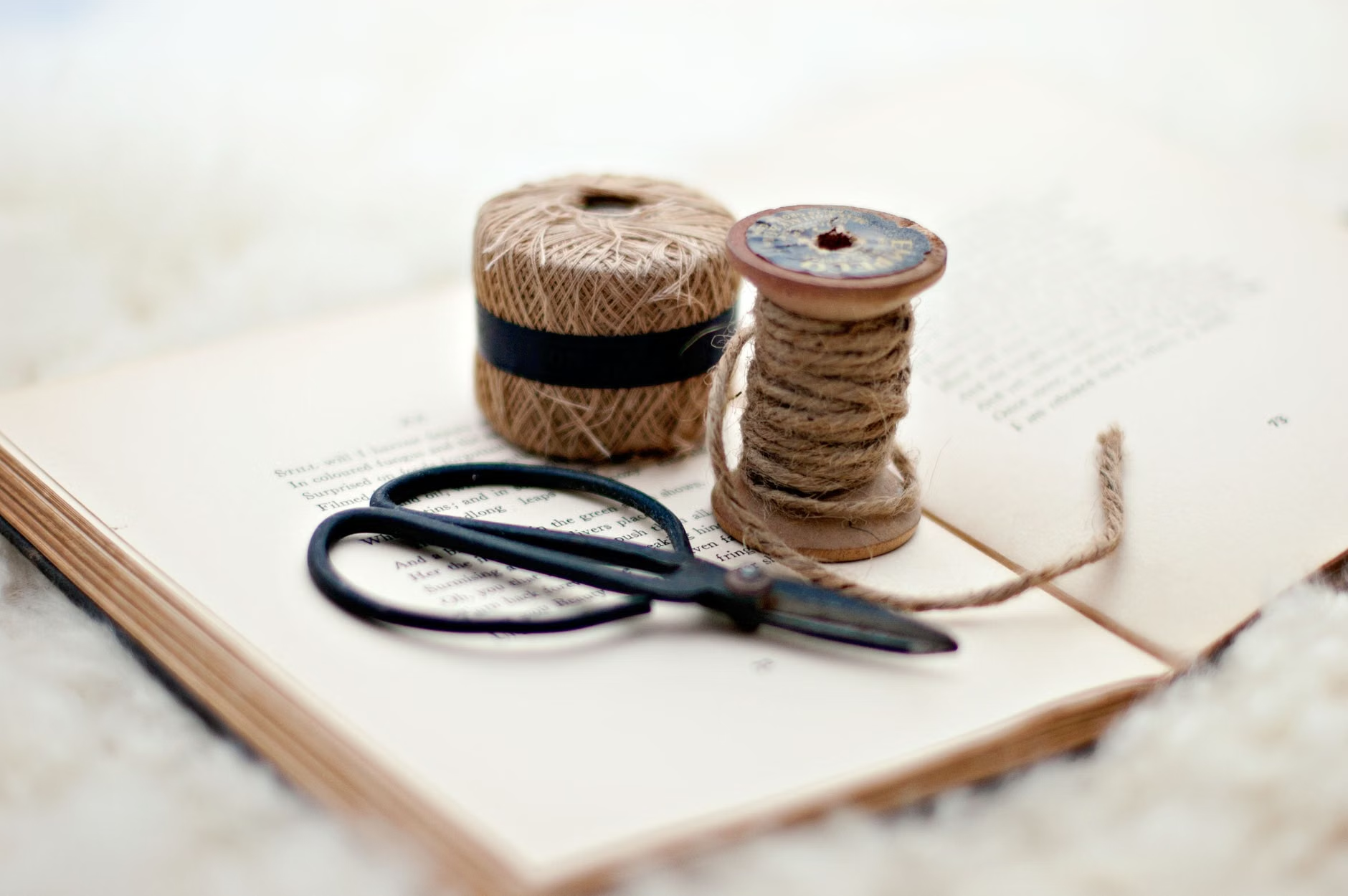
Getting Started: Essential Tools and Safety
One common misconception is that bookbinding requires a professional studio. In reality, you can begin with a few basic tools that fit in a small shoebox. When starting, prioritize ergonomic comfort to ensure you can enjoy the hobby without straining your neck or back.
The Essential Toolkit
Before purchasing expensive equipment, start with these core items. They are generally available at local craft stores or through specialized online suppliers.
| Tool | Primary Use | Selection Tip |
|---|---|---|
| Bone Folder | Creasing paper and smoothing glue | Choose a smooth, synthetic bone folder to avoid snagging delicate paper. |
| Awl | Punching holes for sewing | Ensure the handle fits comfortably in your palm to avoid grip fatigue. |
| Metal Ruler | Measuring and guiding cuts | Use a cork-backed ruler to prevent slipping on the paper surface. |
| Waxed Linen Thread | Binding the signatures | Waxed thread prevents tangling and is easier to thread through needles. |
Safety Note: Always work on a stable, well-lit surface. If you use a utility knife for cutting paper, always keep the blade sharp; a dull blade requires more force, which increases the risk of slipping. If you have reduced grip strength, consider using a self-healing cutting mat with a grid, which helps stabilize your materials without needing to hold them down tightly.

The Step-by-Step Process: A Beginner’s Project
The best way to start is with a “pamphlet stitch” book. This is the foundation of all bookbinding and can be completed in an afternoon. Follow these steps to create your first journal.
- Preparation: Gather 8-10 sheets of paper and fold them in half to create a “signature.” Use your bone folder to ensure the crease is perfectly flat.
- Measuring: Use a pencil to mark three dots on the inside of the crease: one in the center, and two about 2 inches from the top and bottom.
- Piercing: Place your signature on a scrap piece of cardboard or a cutting mat. Use your awl to carefully punch holes through the paper at your three marks.
- Sewing: Thread your needle with waxed linen thread. Start from the center hole, go out to the top hole, back through the center, then out to the bottom, and finish by tying the ends at the center hole.
- Covering: Use a piece of heavier cardstock or decorative paper to create a cover. You can adhere this to your signature using a non-toxic bookbinding glue or simply include it in the sewing process for a cleaner look.
Common Mistakes to Avoid
Newcomers often struggle with “thread tension.” If the thread is too loose, the book will feel flimsy. If it is too tight, the paper may tear at the holes. The “Goldilocks” rule applies here: tighten the thread until it lies flat against the paper, but not so tight that the paper begins to buckle. Practice on scrap paper first to get a feel for the resistance.
Advanced Techniques and Long-Term Progression
Once you have mastered the pamphlet stitch, you can explore more complex structures like the “Coptic stitch,” which allows the book to lie perfectly flat when opened—a feature highly desirable for journals or sketchbooks. This involves sewing multiple signatures together, creating a beautiful, exposed spine that showcases your craftsmanship.
For those interested in historical methods, “case binding” involves creating a hard cover separately from the text block and then joining them together. This is the standard method for most hardcover books you see in libraries. It requires more patience and a higher degree of accuracy in measurement, but the result is a professional-grade volume that can last for generations.

Resource Management and Community
Bookbinding is a hobby that can grow with you. Many local community colleges or art centers offer workshops. These are excellent for social interaction, as they allow you to learn from others and share techniques. If mobility makes traveling to workshops difficult, there are numerous online communities, such as the Society of Bookbinders, which provide tutorials and forums for troubleshooting.
Financial Insight: While tools are a one-time purchase, paper is your ongoing cost. Do not feel obligated to buy expensive artisanal paper immediately. Practice on high-quality recycled printer paper or leftover stationery. The skill is in the technique, not the cost of the materials.
Conclusion: The Lasting Impact of Handmade Books
Whether you create a simple notebook to track your garden progress or a complex photo album to preserve family memories, bookbinding offers a tangible sense of accomplishment. It is a hobby that respects your time, encourages your focus, and results in a physical object that carries your personal touch. By starting small and prioritizing safety and comfort, you can turn this ancient craft into a lifelong source of joy and cognitive stimulation.
Frequently Asked Questions
1. Is bookbinding physically demanding for someone with mild arthritis?
Bookbinding can be adapted for those with joint discomfort. Using larger handles on tools, working in shorter sessions (30-45 minutes), and utilizing specialized clamps to hold paper in place can significantly reduce the strain on your hands. Always listen to your body and take breaks to stretch your fingers and wrists.
2. Where can I find reliable tutorials for beginners?
The American Academy of Bookbinding (or similar local guilds) often provides resources for beginners. For visual learners, reputable channels on platforms like YouTube that focus on “Bookbinding 101” can provide step-by-step guidance. Look for instructors who emphasize safety and traditional techniques rather than “fast” projects.
3. How much space do I need to store my supplies?
A standard desk or kitchen table is sufficient for most projects. Supplies can be stored in a plastic bin or a dedicated drawer. The most important requirement is a flat surface and adequate lighting. You do not need a dedicated workshop to produce high-quality work.
For further exploration of bookbinding techniques and historical context, you may visit the Society of Bookbinders official website for global resources and archival information.
Note: This article is intended for informational and leisure purposes. It does not constitute medical advice. If you have specific health conditions affecting your hands or vision, please consult with your healthcare provider before starting any new craft.