- Seed-swapping transforms solitary gardening into a social activity that combats isolation and builds local intergenerational bonds.
- Participating in seed exchanges provides cognitive stimulation through learning new plant varieties and tracking seasonal planting cycles.
- Success in community swapping relies on proper seed drying, clear labeling, and understanding local climate compatibility.
Gardening is often viewed as a solitary pursuit—a quiet morning spent weeding or pruning. However, the practice of seed-swapping turns this quiet hobby into a vibrant social network. For adults aged 60 to 80, participating in seed-swapping groups is not merely about acquiring free plants; it is a profound way to engage with the community, share decades of horticultural wisdom, and maintain a sense of purpose.
The Social Architecture of Seed-Swapping
At its core, seed-swapping is a form of social capital. When you exchange seeds, you are exchanging stories, failures, and successes. For many older adults, the transition into retirement can sometimes lead to a shrinking social circle. A seed-swap event—whether held at a local library, a community center, or via an online forum—creates a low-pressure environment for meeting like-minded individuals.
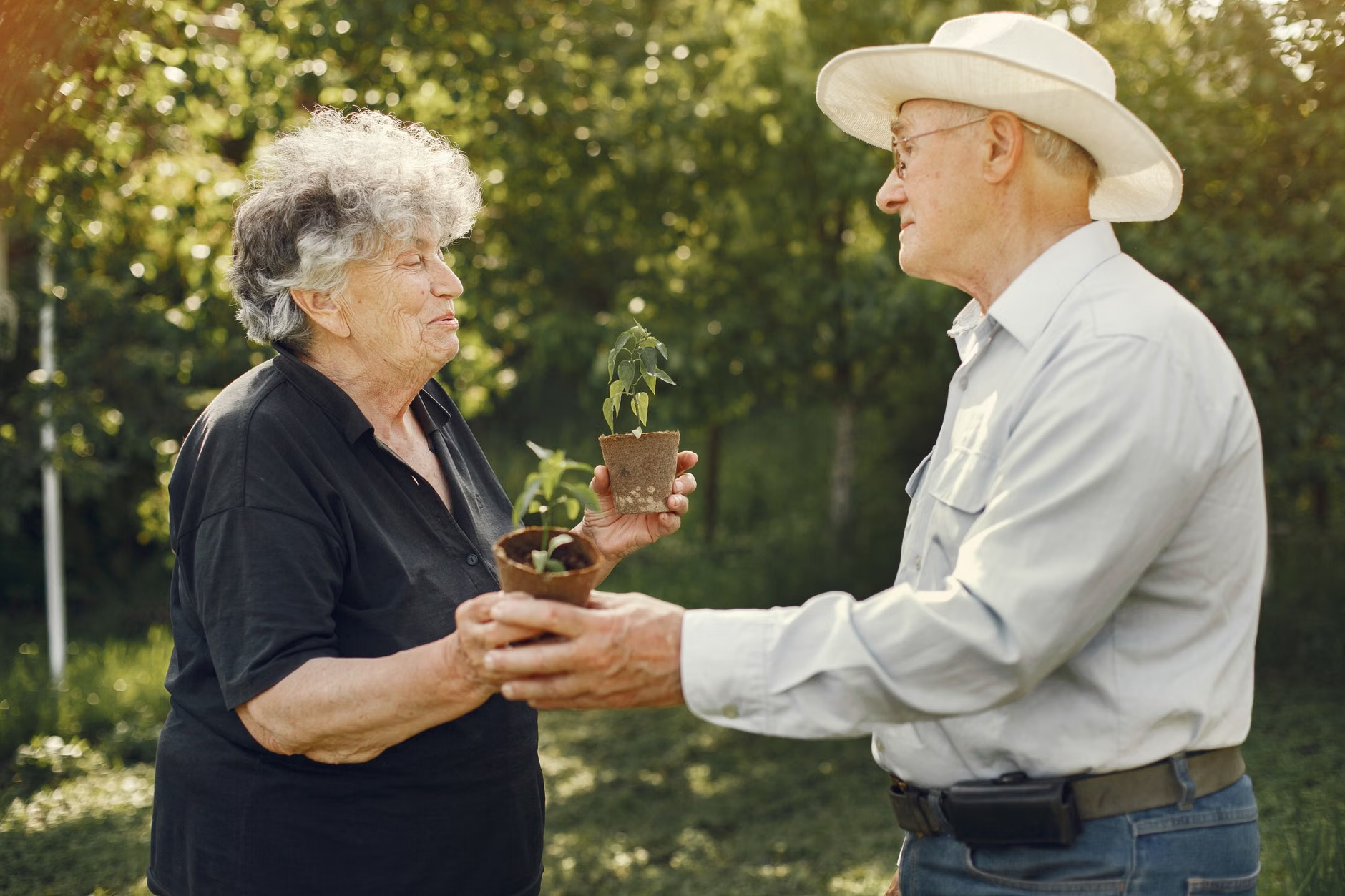
Unlike high-intensity social clubs that may require significant stamina or long-term commitments, seed-swapping is flexible. You can participate once a season or become a regular organizer. This autonomy is vital for maintaining a healthy balance between social engagement and personal rest. By sharing seeds, you are essentially initiating a conversation that often leads to deeper community involvement, such as mentoring younger gardeners or contributing to neighborhood food security initiatives.
Why Community Swapping Matters for Mental Wellbeing
Engaging in community gardening and seed distribution has been linked to improved mental health outcomes. The act of “giving” seeds triggers a positive psychological response, reinforcing your role as a provider of knowledge and resources. Furthermore, the anticipation of planting a “gifted” seed adds a layer of excitement to the gardening calendar, providing a reason to stay active and look forward to future seasons.
Getting Started: The Logistics of a Successful Swap
If you have never participated in a seed-swap, the process can seem daunting. However, it is fundamentally a matter of preparation. You do not need to be an expert botanist to participate. You simply need to follow a few standard practices to ensure the seeds you share are viable and the ones you receive will thrive.
| Step | Action | Why It Matters |
|---|---|---|
| 1. Selection | Choose heirloom or open-pollinated seeds. | Hybrids do not always grow “true to type,” meaning the offspring may not resemble the parent plant. |
| 2. Processing | Dry seeds thoroughly in a cool, dark place. | Moisture is the enemy of seed longevity; it causes rot and mold. |
| 3. Documentation | Label with plant name, harvest date, and variety. | Clear labels prevent confusion and help others plan their garden layout. |
| 4. Packaging | Use breathable paper envelopes. | Plastic bags can trap humidity, which kills the embryo of the seed. |
Crucial Decision Rule: Always prioritize “Open-Pollinated” seeds for swaps. These seeds are predictable and allow the recipient to save seeds from their own harvest in the future, creating a sustainable cycle of sharing.

For those managing mobility concerns or limited stamina, physical garden work can sometimes be challenging. Seed-swapping is an excellent “low-impact” way to stay connected to the gardening world without needing to spend hours on your knees in the soil. You can participate in the administrative side of a seed library or act as a “seed curator,” focusing on the documentation and sorting process.
Adapting Your Participation
- The Curatorial Approach: If you have extensive experience, focus on identifying rare or local-climate-appropriate varieties. This requires minimal physical exertion but provides immense value to the community.
- The Social Coordinator: If you enjoy meeting people, volunteer to manage the sign-in table or help facilitate the exchange process at a local event. This keeps you in the loop without requiring heavy lifting.
- Online Communities: For those who find travel difficult or have limited energy, many global and regional online seed-swap groups exist. These allow you to mail seeds or participate in virtual discussions, keeping your social circle active from the comfort of home.
Avoiding Common Pitfalls
One common mistake is over-committing. It is easy to be tempted by a bag of 20 different seed varieties, but remember that every seed requires a specific amount of space, water, and sunlight. Before accepting a new variety, ask yourself: “Do I have the physical capacity to care for this plant throughout its entire growth cycle?”
Another point to consider is the biosecurity of your local area. Some regions have strict regulations regarding the introduction of non-native plant species. Always check with your local agricultural extension service or municipal garden authority if you are unsure about the seeds you are swapping. This is particularly important if you are swapping seeds across different climate zones or international borders.
The Deeper Insight: Seeds as Cultural Heritage
Beyond the simple act of growing food, seed-swapping is a way of preserving history. Many older adults hold the knowledge of “heritage varieties”—plants that were common 50 years ago but have vanished from commercial garden centers. By swapping these, you are acting as a custodian of biodiversity. This adds a layer of intellectual satisfaction to the hobby; you are not just gardening, you are participating in a living library of plant genetics.
When you share a packet of seeds, include a small note about why that variety is special. Perhaps it was a family favorite, or maybe it is exceptionally drought-resistant. This simple act of storytelling turns a cold transaction into a warm, human connection. It bridges the gap between generations, as younger gardeners are often eager to learn the “why” behind the plants they are growing.
Practical Next Steps
- Locate a group: Search for “community seed library” or “seed swap [your city/region]” on search engines or social media platforms.
- Assess your collection: Start by gathering seeds you have successfully harvested or purchased but haven’t used.
- Prepare your kits: Use small paper envelopes (or folded paper) and write down the essential details mentioned in the table above.
- Attend a meeting: Start small. Just observe the first time if you feel nervous. Most gardening groups are incredibly welcoming to newcomers.
By engaging in this hobby, you are not just cultivating a garden; you are cultivating a neighborhood. The social, cognitive, and physical benefits of seed-swapping provide a meaningful framework for staying active and connected throughout your retirement years.
Frequently Asked Questions
1. Do I need to be an expert gardener to join a seed swap?
Absolutely not. Most groups are happy to have beginners. In fact, many groups have “beginner-friendly” sections specifically for those who are just starting out. The only requirement is a willingness to learn and a genuine interest in sharing.
2. Is it safe to grow seeds I receive from strangers?
In a community setting, it is generally safe. However, use common sense. If a seed packet looks damaged, moldy, or is unlabeled, it is better to discard it. If you are concerned about specific plant diseases, stick to swapping with members of established, reputable local gardening clubs.
3. How can I participate if I have mobility limitations?
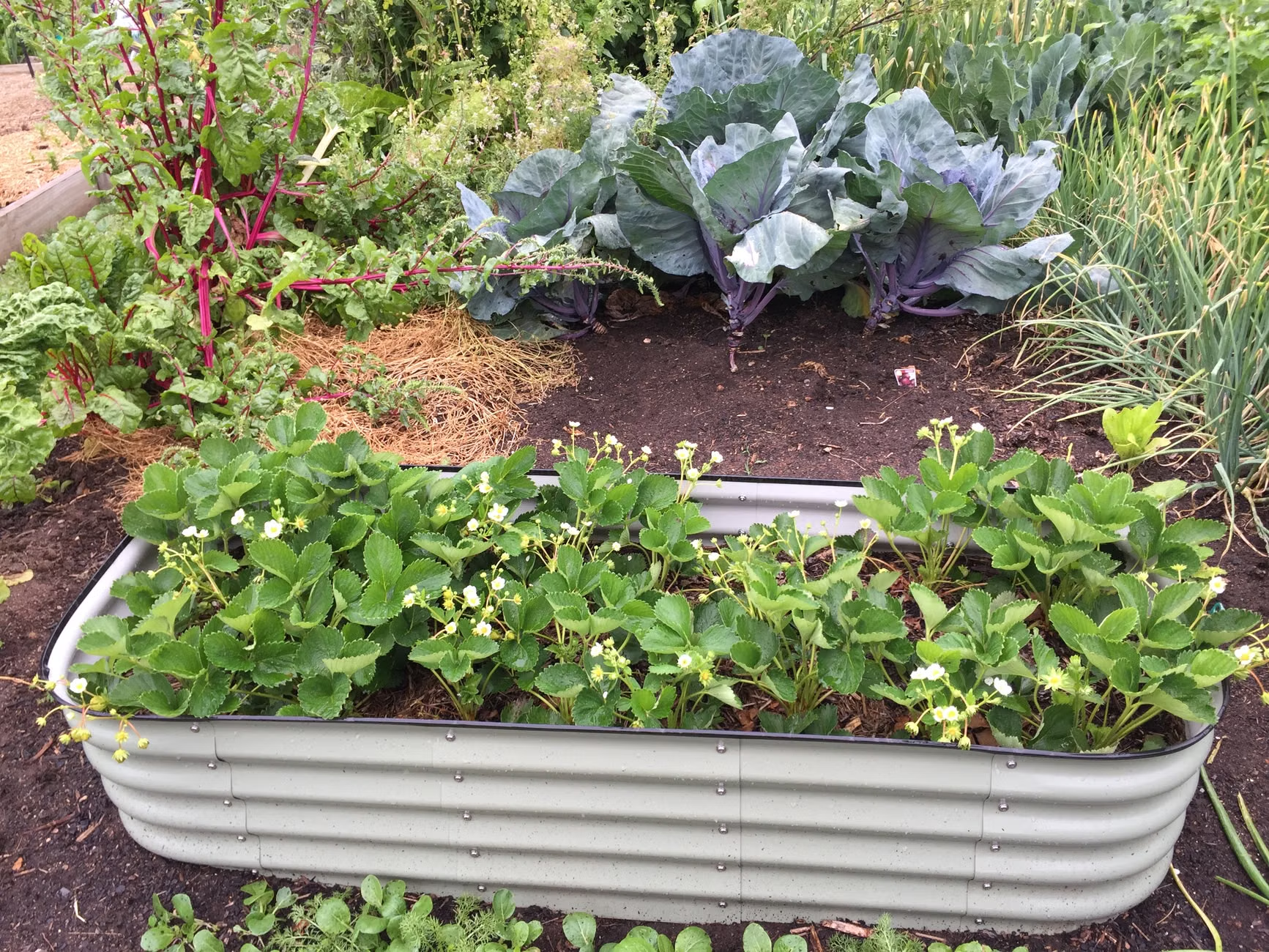
Focus on the “Curator” or “Coordinator” roles. You can contribute your knowledge by labeling seeds, helping to organize the inventory, or even managing the online communications for the group. Many community gardens are also increasingly installing raised beds and accessible paths, making them more welcoming than ever for all levels of mobility.
For further information on starting a community garden or finding local horticultural resources, you can visit the American Community Gardening Association or your local government’s agricultural extension website. Always verify local regulations regarding seed movement to ensure compliance with regional environmental protections.