- Prioritize “Reachability”: Pack essential medications, documents, and comfort items in a small, accessible “personal item” bag that remains at your feet, not in an overhead bin.
- Stamina Management: Overnight transit is physically demanding; prioritize hydration, light movement, and the use of airport/station lounges to minimize fatigue and joint stiffness.
- Strategic Gear Selection: Use lightweight, four-wheeled luggage to reduce physical strain on wrists and shoulders, and consider compression socks to promote circulation during long periods of inactivity.
The Strategy of Minimalist Mobility in Transit Hubs
For travelers aged 60 to 80, the primary challenge of an overnight transit hub—whether an international airport or a major railway interchange—is not just the time spent waiting, but the physical tax of navigating large spaces while managing luggage. A successful transit experience relies on a shift from “carrying” to “managing” your belongings. When you are in transit for 12 to 24 hours, your packing choices dictate your level of independence and your physical comfort.
The goal is to eliminate the need to reach into an overhead bin or struggle with a heavy suitcase while exhausted. Your “personal item”—a smaller bag that fits under the seat—should contain everything you need for the next 12 hours. This includes essential medications, a change of undergarments, a high-quality neck pillow, and digital devices. By separating your “transit kit” from your “checked luggage” or “overhead bin bag,” you reduce the physical effort required to settle in for a rest.
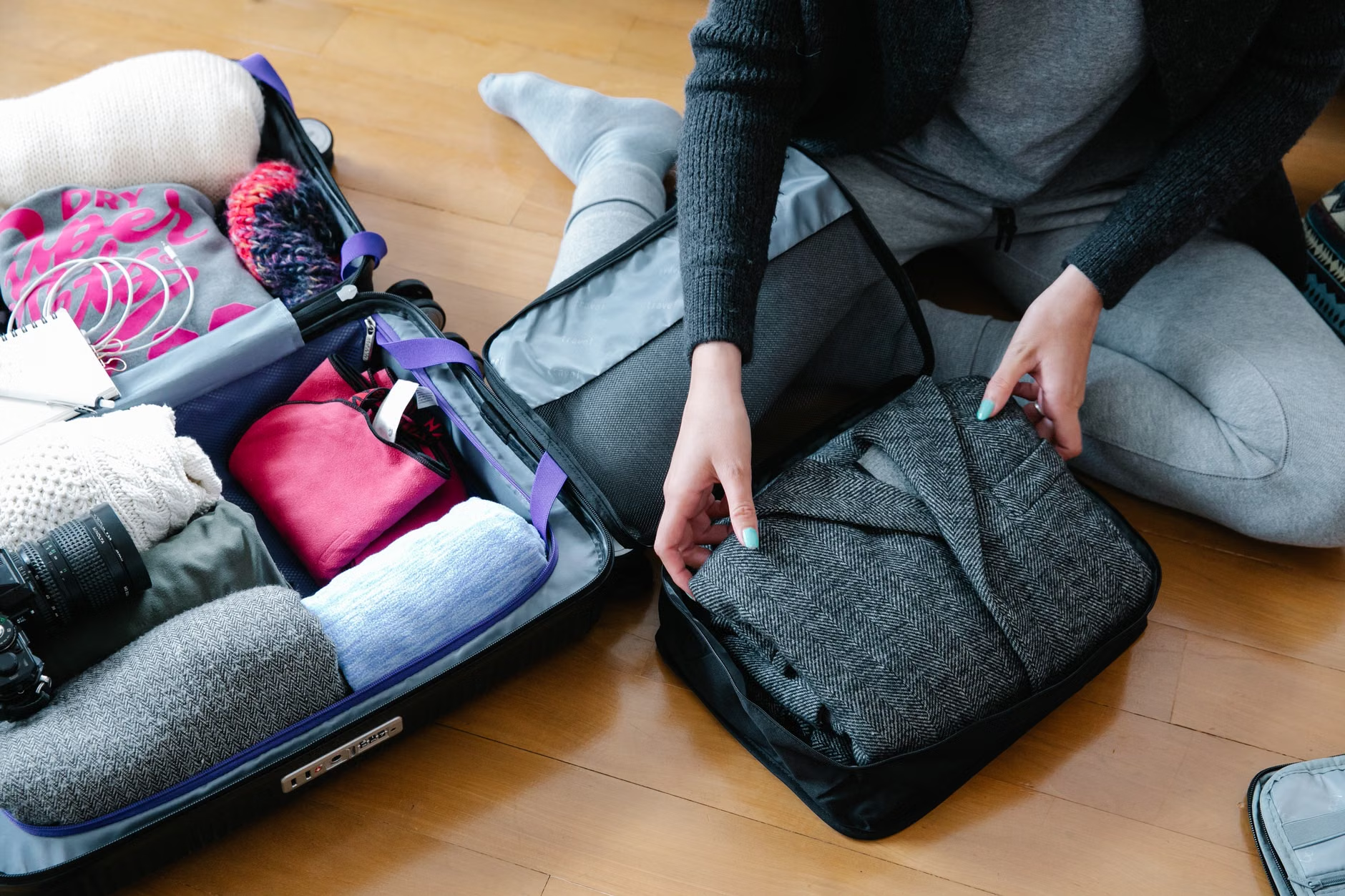
Optimizing Your “Transit Kit” for Accessibility
When preparing for an overnight stay in a transit hub, think of your carry-on as a mobile survival kit. Many travelers make the mistake of packing items they might need at their destination in the same bag as their transit essentials. This leads to rummaging through bags in crowded, poorly lit terminals.
Categorizing Your Essentials
Use a system of small, labeled pouches or packing cubes. This allows you to locate items by touch if necessary. Your transit kit should be organized into three distinct layers:
- The Immediate Layer: Passport, boarding pass, medication, and reading glasses. These must be in the outer pocket of your personal item.
- The Comfort Layer: A lightweight pashmina or travel blanket, noise-canceling headphones, and a reusable water bottle.
- The Recovery Layer: A fresh change of socks, a travel-sized toothbrush, and moisturizer. These are for the “refresh” moment before your next leg of travel.
| Item Category | Why It Matters | Pro-Tip for Seniors |
|---|---|---|
| Medication Organizer | Prevents dose confusion due to time zone shifts. | Use a digital pill reminder on your phone as a backup. |
| Compression Socks | Reduces risk of DVT and leg swelling during inactivity. | Put them on 30 minutes before boarding. |
| Portable Power Bank | Ensures your phone remains a reliable source of info. | Choose one with a high capacity (10,000mAh+). |
The table above highlights items that directly influence your physical stamina. For instance, compression socks are not merely for comfort; they are a vital tool for circulation management during long periods of seated immobility. Choosing a high-quality power bank ensures you are not tethered to a wall outlet in a busy terminal, allowing you to choose a quieter, more comfortable place to rest.

Managing Physical Stamina and Joint Health
Overnight transit hubs are often cold, bright, and noisy. These factors can contribute to sensory overload and physical exhaustion. To maintain your stamina, you must treat your transit time as a period of rest rather than a period of waiting.
The “Rest-First” Protocol
Instead of finding the closest gate to your next flight, consider using an airport or station lounge. Many transit hubs now offer “day passes” or “hourly lounge access” that provide comfortable seating, showers, and quiet environments. For an older traveler, the cost of a lounge pass is often an investment in physical recovery. A shower, in particular, can be a transformative experience that resets your body clock and reduces muscle tension.
Common Mistake: Many travelers prioritize saving money by sitting on terminal benches. These are often made of hard materials that offer poor lumbar support. Spending several hours on these surfaces can lead to significant back and joint pain. If you must use public seating, use a small, inflatable lumbar pillow to maintain spinal alignment.
Movement and Hydration
Stiffness is the enemy of the long-distance traveler. Every 90 minutes, stand up and perform a short walk around the terminal. This is not just for your legs; it helps reset your vestibular system and keeps you alert. Hydration is equally critical. Air-conditioned terminal environments are notoriously dry, which can lead to headaches and fatigue. Carry an empty, reusable bottle through security and fill it at a fountain. Aim for small, frequent sips rather than large amounts of fluid, which can make frequent bathroom trips disruptive.
Navigating a large international airport can involve walking distances of over a kilometer between gates. Do not hesitate to request “Special Assistance” services. These are not just for those with visible disabilities; they are for any traveler who finds the distance or the pace of the terminal challenging.
Most major airlines and rail operators offer:
- Wheelchair Escort: Staff will push you from check-in to the gate, saving your energy for the flight itself.
- Priority Boarding: This allows you to stow your luggage and get settled before the aisle becomes crowded.
- Electric Cart Transport: Available in many large hubs to bridge the gap between terminals.
To access these services, you must request them at least 48 hours before your departure. Check the specific airline’s “Accessibility” page, as policies vary by carrier. For example, in the European Union, the rights of passengers with reduced mobility are strictly regulated under Regulation (EC) No 1107/2006, ensuring consistent support. In the United States, the Air Carrier Access Act provides similar protections. Always verify the rules in your departure and arrival countries.
Hidden Variables in Overnight Transit
Beyond the obvious, there are subtle factors that can impact your experience. Lighting, for instance, plays a major role in your ability to sleep. Even if you plan to stay awake, the harsh fluorescent lighting of a terminal can disrupt your circadian rhythm. A high-quality eye mask is essential, even if you are not planning to nap. It provides a visual boundary between you and the busy environment.
Another overlooked variable is the temperature fluctuation in transit hubs. Terminals are often kept at cooler temperatures to accommodate the movement of large crowds. A lightweight, breathable layer—such as a merino wool cardigan—is far more effective than a heavy coat, which is difficult to manage in small seating areas. Layering allows you to adjust your body temperature without needing to unpack your entire bag.
Planning for the “Last Mile” of Transit
The final phase of your transit—the transition from the gate to your next destination—is where most fatigue hits. By this point, you have been awake and moving for many hours. Ensure that your “arrival logistics” are confirmed before you leave your transit hub. Have your hotel address saved in your phone or written on a card. If you are using ride-sharing apps, ensure you have a data plan or local SIM card active before you reach the arrival hall. This prevents the stress of trying to navigate digital services while you are exhausted.
If you are traveling with a companion, establish a “check-in” routine. Every two hours, ask each other how you are feeling—physically and mentally. This simple habit helps identify signs of fatigue before they become overwhelming. If one person is struggling, adjust your pace. There is no prize for rushing through a transit hub; your primary goal is to arrive at your destination refreshed and ready to enjoy your trip.
Conclusion: The Value of Preparation
Mastering overnight transit is about control. By packing strategically, utilizing available mobility services, and prioritizing your physical comfort, you transform the transit experience from a stressful ordeal into a manageable part of your journey. Remember that your stamina is a finite resource; spend it wisely during your transit so you can save it for the experiences that truly matter at your final destination. When in doubt, lean toward convenience and ease of access. The extra time spent preparing your transit kit or the cost of a lounge pass will pay dividends in your overall well-being.
Frequently Asked Questions
1. Should I book a hotel inside the terminal or leave the airport for the night?
If your transit time is less than 8 hours, booking a transit hotel or an airside lounge is almost always better. Leaving the airport requires going through security twice, which is physically demanding and time-consuming. If you have 12+ hours, leaving the airport for a real bed can significantly improve your recovery, provided the travel time to the city center is short.
2. How do I know if I qualify for “Special Assistance” services?
“Special Assistance” is not restricted to those with permanent disabilities. It is available to anyone who needs help navigating the airport due to age, stamina, or minor mobility issues. You do not need to prove a medical condition; you simply need to request the service when booking your ticket or at least 48 hours prior to departure.
3. How can I manage medication schedules across multiple time zones?
The best approach is to keep your medication on your “home time” for the first 24 hours of travel, then gradually shift one to two hours per day toward the destination time. Always carry a copy of your prescriptions and a list of your medications in your personal bag, and keep the original bottles or blister packs to avoid issues at security checkpoints.
For further information on air travel rights, you may consult resources such as the U.S. Department of Transportation Air Consumer Protection or the European Union Passenger Rights portal.