- Cognitive Engagement: Landscape photography requires active decision-making, spatial reasoning, and visual focus, which stimulate neural pathways related to memory and attention.
- Mindfulness and Stress Reduction: The “slow-looking” required for photography acts as a form of meditative practice, significantly lowering cortisol levels and promoting mental clarity.
- Accessible Practice: You do not need expensive, heavy gear; modern lightweight cameras or smartphones, combined with proper planning for mobility and safety, make this a sustainable hobby for any fitness level.
Introduction: Why Photography is More Than Just Capturing Images
For adults aged 60 to 80, the pursuit of hobbies is not merely a way to pass time; it is a critical component of maintaining cognitive vitality and emotional well-being. Landscape photography stands out as a uniquely beneficial activity because it bridges the gap between physical movement, artistic expression, and complex mental processing. Unlike passive hobbies, landscape photography demands that the practitioner engage with their environment in a deliberate, analytical, and creative manner.
When you stand before a landscape—whether it is a local park, a coastal path, or a mountain range—your brain performs a series of high-level tasks. You are analyzing light, judging distances, framing subjects, and making split-second decisions about composition. This article explores how this process functions as a “cognitive workout,” how you can adapt the hobby to your specific physical needs, and why it is a powerful tool for maintaining mental sharpness.
The Cognitive Mechanics of Landscape Photography
The human brain thrives on novelty and sustained attention. Landscape photography provides both in abundance. When you seek out a landscape to photograph, you are not just looking at a scene; you are scanning for patterns, textures, and lines. This process, often referred to as “active looking,” is remarkably different from the “passive looking” we do while watching television or driving.
Spatial Reasoning and Visual Memory
To capture a compelling photograph, one must understand how objects relate to one another in three-dimensional space. This requires the use of spatial reasoning—a cognitive skill that is often under-utilized in retirement. By determining where to stand to get the best angle, you are calculating distance, elevation, and perspective. Research suggests that engaging in tasks that require spatial navigation and visual-spatial processing can help maintain the integrity of the hippocampus, the area of the brain most associated with memory.
The “Flow” State and Stress Reduction
Psychologist Mihaly Csikszentmihalyi coined the term “flow” to describe the state of complete immersion in an activity. Landscape photography is a prime candidate for inducing flow. Because the activity requires focus on technical settings (aperture, shutter speed, ISO) and creative choices (framing, color balance), it effectively pushes aside daily worries and ruminations. For older adults, this reduction in stress is vital; chronic stress is linked to cognitive decline, and finding an engaging, non-competitive outlet like photography can serve as a buffer against the pressures of life.
Practical Equipment Choices for Comfort and Stamina
A common misconception is that “real” photography requires heavy, expensive equipment. For the older adult, the best camera is the one you are willing and able to carry comfortably. Carrying a heavy DSLR (Digital Single-Lens Reflex) camera with multiple lenses can lead to neck strain, back fatigue, and a reluctance to go outside.
| Equipment Type | Pros | Cons | Best For |
|---|---|---|---|
| Smartphone | Lightweight, always with you, easy to share. | Limited zoom, less control over manual settings. | Casual walks, spontaneous shots, ease of use. |
| Mirrorless Camera | Lightweight, high image quality, interchangeable lenses. | Requires learning technical menus. | Those wanting to learn manual control without the weight. |
| Bridge Camera | All-in-one zoom, no need to change lenses. | Fixed lens, slightly heavier than compacts. | Travelers who want versatility without the bulk. |
Decision Criteria: If you struggle with grip strength or hand tremors, a mirrorless camera with a “grip” or a high-quality smartphone with a dedicated camera app may be the most suitable choice. The weight of your equipment should never be a barrier to your enjoyment. If you feel tired after 30 minutes of carrying your gear, it is time to downsize to lighter, more ergonomic equipment.
Planning Your Outings: Mobility and Safety First
Landscape photography should be a source of joy, not a physical burden. Before heading out, you must treat your photography sessions as a structured outing. This means accounting for your current mobility, stamina, and the environmental conditions.
The “Accessibility-First” Approach
You do not need to hike up a mountain to capture stunning landscapes. Many of the most profound images are found in accessible environments. Consider the following when planning your outing:
- Trail Surfaces: Look for paved, gravel, or well-maintained boardwalk paths. Avoid loose sand or steep, uneven terrain unless you are accompanied and confident in your balance.
- Rest Stops: Map out your route using tools like Google Maps or local park websites to identify benches or picnic areas. A good rule of thumb is to rest for 5–10 minutes for every 30 minutes of walking.
- Accessibility Data: In many countries, such as the UK (via the National Trust) or the US (via the National Park Service), websites often specify the “accessibility grade” of trails. Always check these before you go.
Managing Stamina and Hydration
Photography requires standing still for long periods, which can be taxing on the lower back and legs. Invest in a lightweight, collapsible walking stick that doubles as a camera monopod. This provides both stability and a way to steady your camera for sharper images. Additionally, always carry a small backpack rather than a shoulder bag to distribute the weight evenly across your torso.
Technical Steps to Enhance Cognitive Engagement
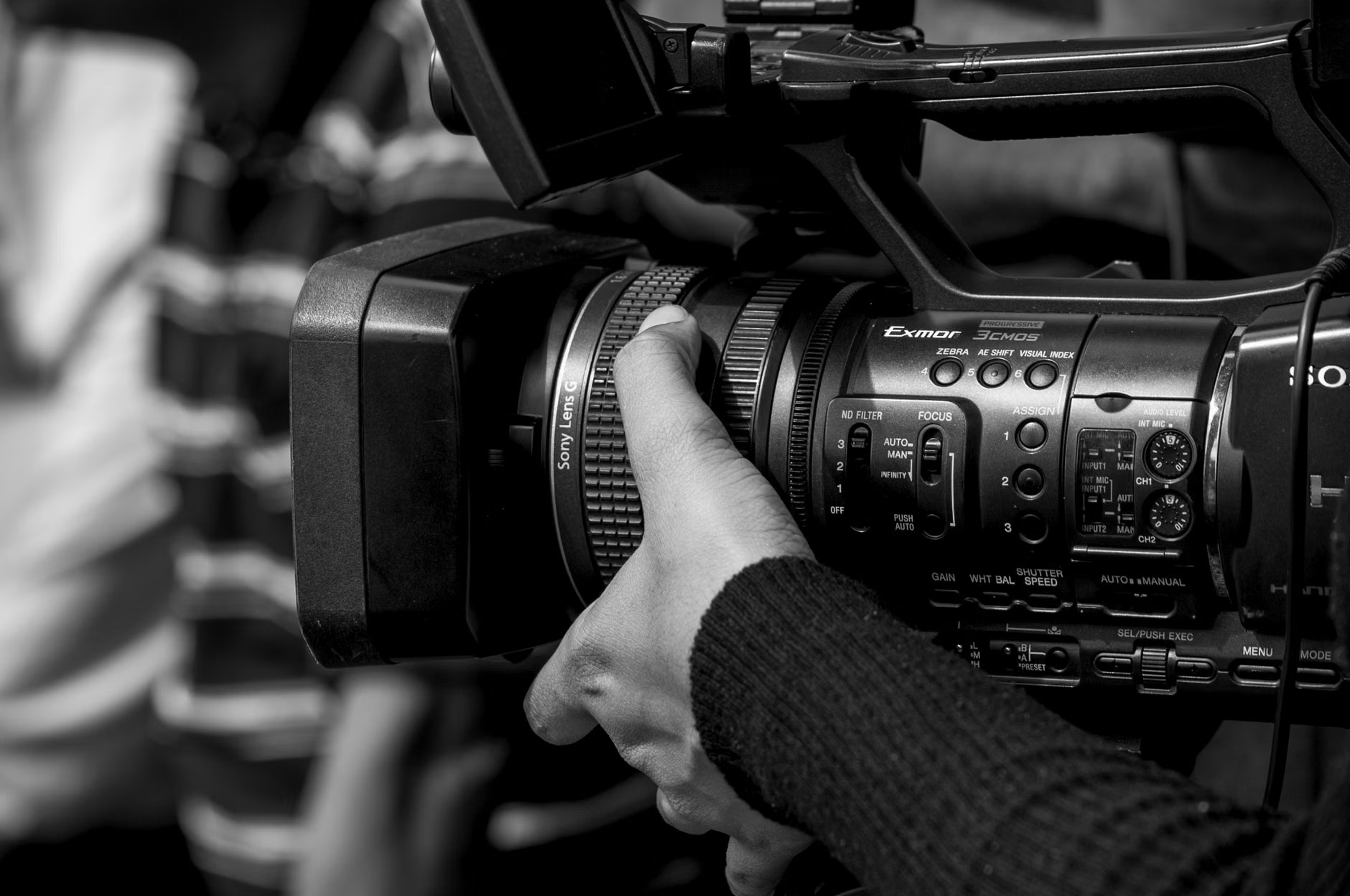
To maximize the cognitive benefits of photography, move beyond “Auto” mode. Using manual or semi-manual settings forces the brain to solve problems. Here is a simple step-by-step process for your next outing:
- Observation: Spend the first 10 minutes walking without your camera. Notice the light, the shadows, and the colors. This primes your brain for visual scanning.
- Framing: Before you lift the camera, use your hands to create a “frame.” This forces you to isolate a section of the landscape, improving your ability to filter out visual noise.
- Settings Adjustment: Set your camera to “Aperture Priority” (often marked as ‘A’ or ‘Av’). This allows you to control the depth of field while the camera handles the shutter speed. This is a perfect balance between creative control and technical ease.
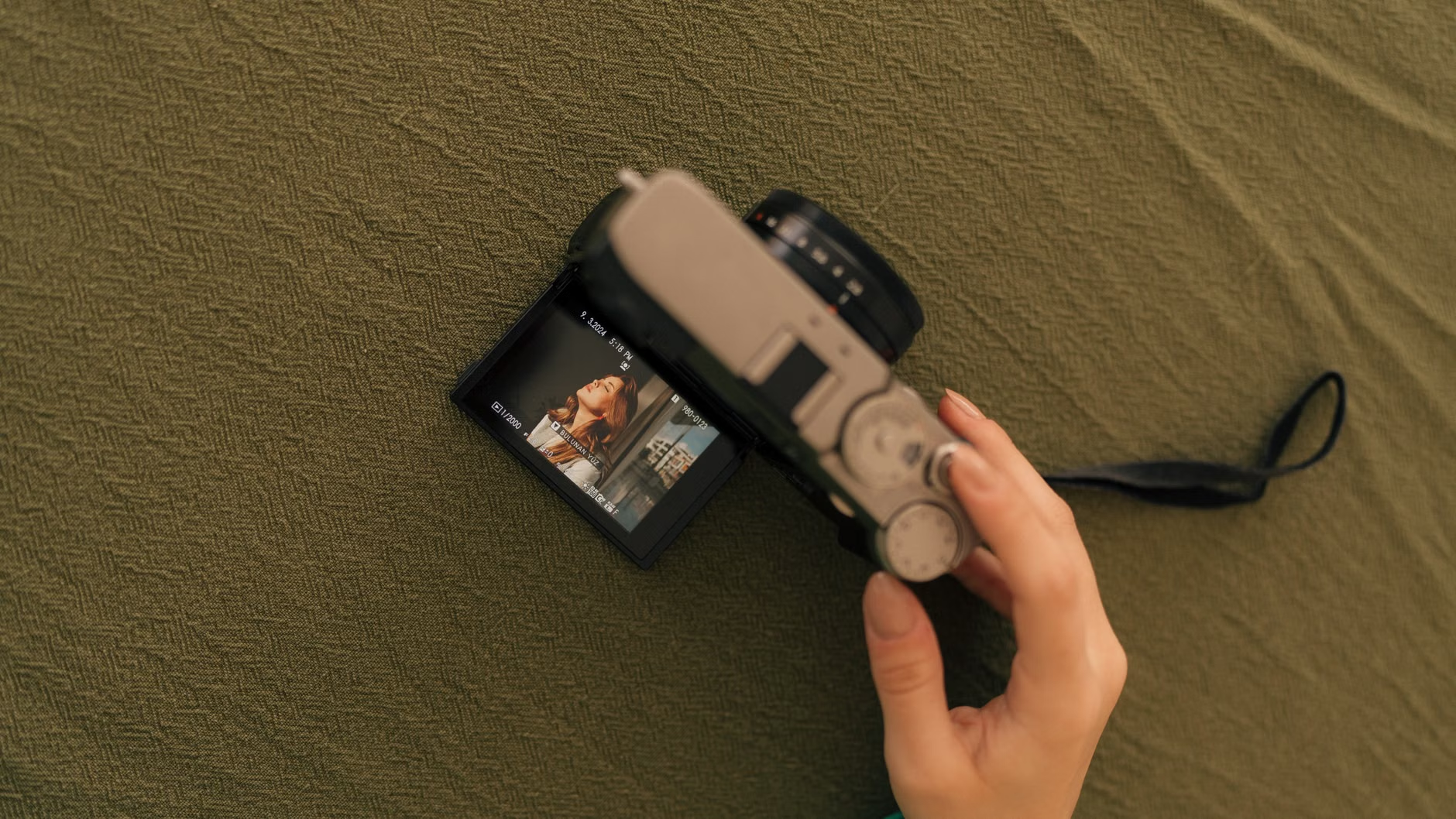
- Review and Critique: After taking a shot, look at the screen. Ask yourself: “Is the horizon straight? Is the subject clear? What would happen if I moved two steps to the left?” This self-critique is the core of the cognitive benefit.
Common Pitfalls and How to Avoid Them
Many seniors avoid photography because they feel “not tech-savvy enough.” This is a common but avoidable barrier. Digital cameras and smartphones are designed with menus that are, in principle, logical. If you feel overwhelmed, do not try to learn every feature. Focus on the “exposure triangle”—aperture, shutter speed, and ISO—and ignore the rest until you are comfortable.
Another pitfall is the pressure to produce “perfect” photos. Remember that this is a hobby for your personal growth. If a photo is blurry, it is not a “failure”—it is a data point that helps you understand how your hand movement affected the shot. Keep a small notebook to record what settings you used; this simple act of writing reinforces the learning process and improves memory retention.
Social and Psychological Benefits
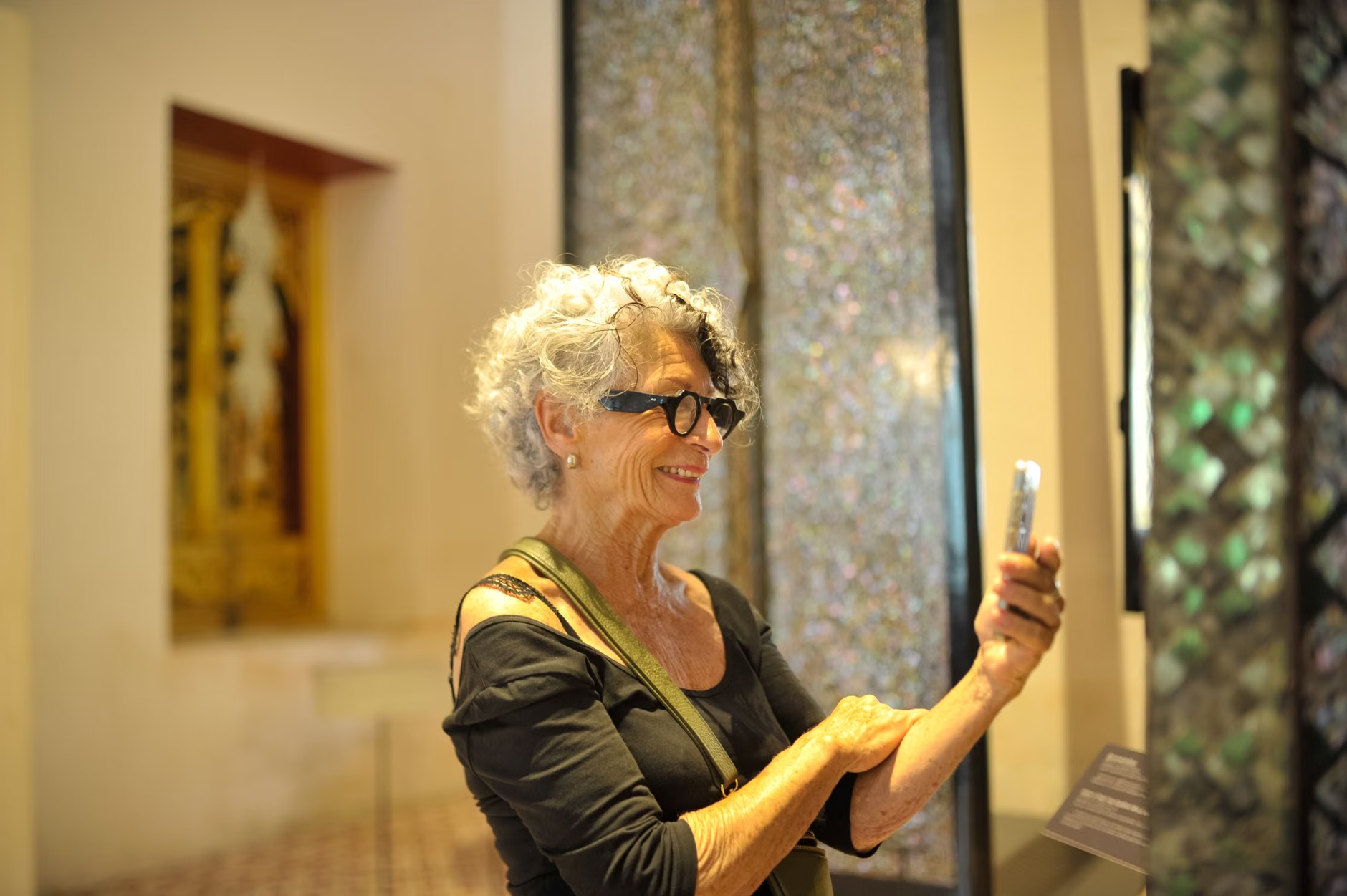
Photography can be a solitary or a social activity. Joining a local photography club can provide a sense of community and purpose. For those who prefer solitude, the act of “sharing” your photos with family members or on digital platforms can provide a sense of connection. However, be mindful of the “comparison trap.” Looking at professional photographers’ work on social media can be discouraging. Instead, use these platforms to find inspiration for locations or techniques, rather than measuring your worth against others.
Insight: An often overlooked variable is the role of post-processing. Editing your photos on a computer or tablet is another excellent cognitive exercise. It requires decision-making about color, contrast, and cropping. It is a quiet, seated activity that can be done on days when your mobility might be limited, ensuring that your hobby remains accessible regardless of the weather or your physical energy levels.
Conclusion: Taking the First Step
Landscape photography is a lifelong skill that offers a unique combination of physical activity, creative expression, and cognitive challenge. By starting small—perhaps just in your own garden or a nearby park—you can begin to unlock these benefits today. You do not need the latest technology or the ability to travel to exotic locations. You only need curiosity and a willingness to look at the world a little differently.
Start by selecting one local location you enjoy. Go there with the sole intention of taking three photos that you find beautiful. Do not worry about the outcome. Focus on the process, the light, and the way the landscape makes you feel. Over time, this practice will refine your vision, sharpen your mind, and provide a rewarding, sustainable hobby that grows with you.
Frequently Asked Questions (FAQ)
1. Do I need to be good with computers to enjoy digital photography?
No. While computers can help with editing, they are not strictly necessary. You can view your photos on the camera screen or a digital photo frame. If you choose to use a computer, start with very basic software, such as the built-in photo app on your computer, which allows for simple cropping and color adjustments without complex jargon.
2. Is landscape photography too expensive to start?
It can be, but it doesn’t have to be. If you already own a modern smartphone, you already have a high-quality camera. If you wish to upgrade, the second-hand market for older model mirrorless cameras is a fantastic way to acquire high-quality gear at a fraction of the original price. Always prioritize comfort and ease of use over the latest, most expensive models.
3. What should I do if I have mobility limitations?
Focus on “stationary photography.” Many beautiful landscapes can be captured from a bench, a car park, or a flat, paved path. You do not need to hike to be a landscape photographer. Use a tripod or monopod to keep your camera steady while you are seated, and focus on the elements of the landscape that are within your immediate line of sight. Safety and comfort are the foundation of a sustainable hobby.
Sources and Further Reading: