- Improved Visibility: New 2026 standards prioritize “uniformity” and “color rendering,” making it easier to distinguish curbs, obstacles, and depth—crucial for those with age-related vision changes.
- Reduced Glare: Municipalities are shifting toward “smart cut-off” luminaires that direct light downward, significantly reducing the blinding glare that often causes discomfort for older eyes.
- Advocacy & Reporting: Residents can now use standardized local portals to report “dark spots” or flickering lights, with new mandates requiring faster repair timelines in residential neighborhoods.
As we head into 2026, a significant shift in global public lighting standards is underway. Designed to accommodate an aging global population, these new guidelines move away from simple “brightness” toward “functional visibility.” For adults aged 60 to 80, this transition is not merely a technical update; it is a fundamental improvement in how we navigate our neighborhoods, parks, and city centers after dark.
Understanding the Shift: Why 2026 Standards Matter for You
For years, public lighting focused primarily on energy efficiency and crime deterrence. While these remain important, the 2026 International Commission on Illumination (CIE) updates and regional mandates (such as the EU’s updated CEN standards and similar revisions in North American jurisdictions) now explicitly incorporate “human-centric” metrics. This means planners must now account for how eyes change as we age.
As we reach our 60s and beyond, our eyes require more light to perceive the same level of contrast. Furthermore, our ability to recover from glare—such as looking directly into a harsh, unshielded LED light—diminishes. The 2026 standards mandate a transition to “warm-spectrum” lighting (typically 3000K or lower) and stricter control over light distribution to ensure that the ground is illuminated evenly without creating blinding “hot spots.”
The Science of Contrast and Depth Perception
One of the most dangerous aspects of walking at night for older adults is the inability to distinguish a change in pavement height or a sudden obstacle. Older eyes have reduced sensitivity to subtle contrast. The new standards require “high-uniformity” lighting. In practical terms, this means that the light level between the brightest point under a lamp and the darkest point between lamps must be minimized. This prevents the “zebra effect,” where your eyes struggle to adjust to alternating pools of light and shadow, which is a leading cause of tripping incidents.
What the 2026 Changes Look Like in Your Neighborhood
You will likely notice three distinct physical changes in your community starting in 2026. These updates are being rolled out globally, though the pace varies by municipality.
| Feature | Old Standard | 2026 New Standard |
|---|---|---|
| Light Color | Cool/Blueish (High Kelvin) | Warm/Neutral (3000K or lower) |
| Beam Control | Wide-angle/Omnidirectional | Shielded/Down-directed |
| Uniformity | High contrast/Shadow-prone | High uniformity (even coverage) |
The shift to warmer light is particularly beneficial for circadian health. Blue-heavy light suppresses melatonin, which can disrupt sleep patterns if streetlights shine into bedrooms. The move to 3000K lighting is a compromise that provides excellent visibility for navigation while being less disruptive to biological rhythms.
The “Shielding” Mandate
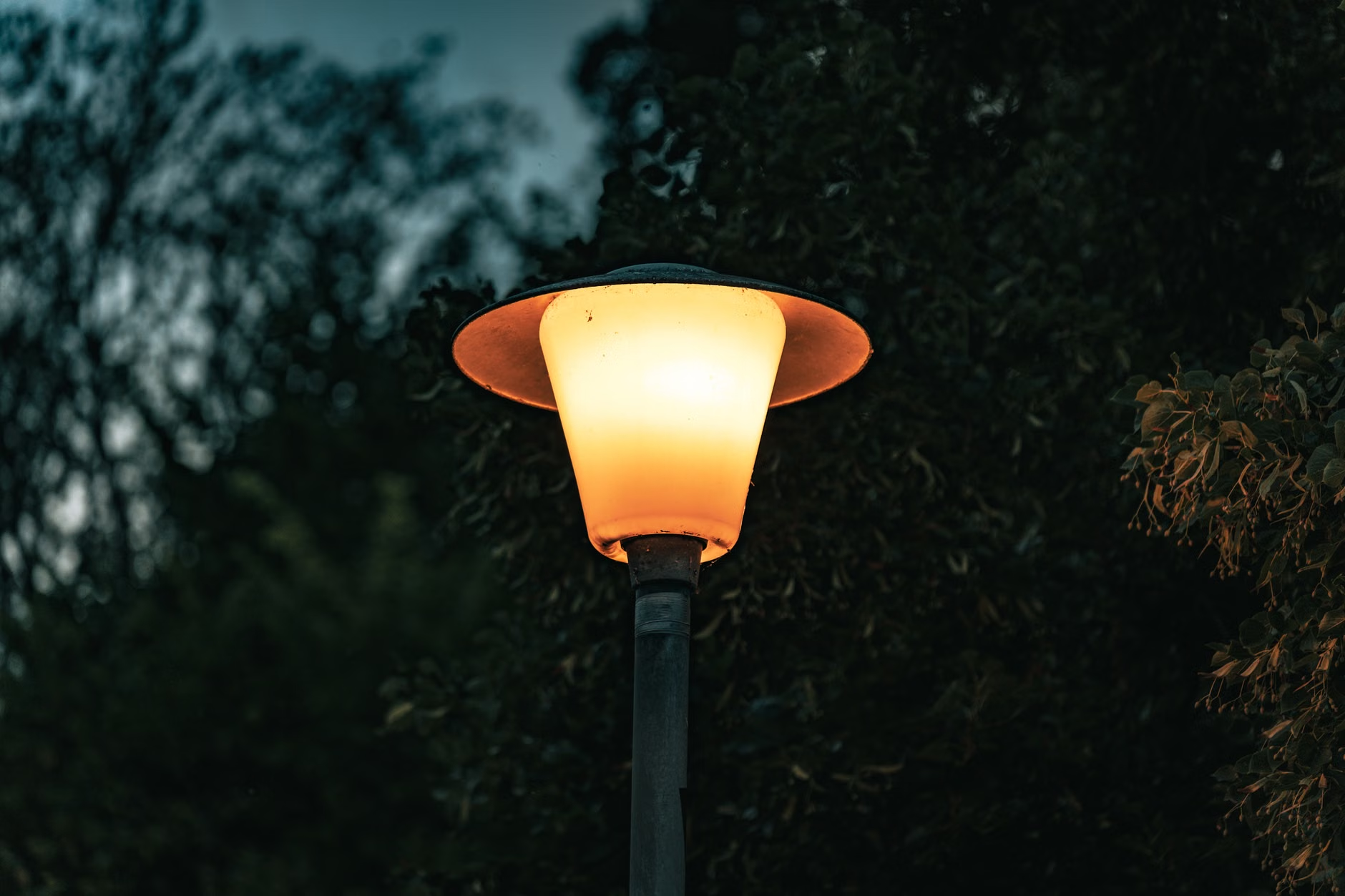
Perhaps the most significant change is the requirement for “full cut-off” fixtures. In many older street lighting systems, the bulb is visible from the side. This creates glare. Under the 2026 standards, the housing of the light must physically block the bulb from view when you are standing at a distance. This means you can see the light on the sidewalk, but you are not looking directly into the source. This reduces the “halo” effect that many people with cataracts or early-stage vision decline experience.
With these infrastructure upgrades comes a push for better digital public services. Many cities are launching “Safety and Accessibility Portals.” If you find a street that feels poorly lit or has hazards that are exacerbated by lighting, you are no longer expected to simply “put up with it.”
Step-by-Step: Reporting a Lighting Concern
- Identify the Asset: Most new streetlights have a small identification tag (a series of numbers or a QR code) at about eye level on the pole.
- Access the Portal: Check your local municipality’s website for a “Report a Problem” or “Infrastructure Maintenance” portal.
- Use the “Safety” Category: Many cities now have a specific category for “Pedestrian Safety/Lighting” that triggers a faster response time than general maintenance requests.
- Document the Issue: If you are comfortable using a smartphone, take a photo during the day of the pole and the area that feels dark at night.
It is important to note that “faster response” does not mean immediate. However, under the 2026 guidelines, municipalities are being held to higher standards for “dark spot” remediation. If you report a light that is flickering or out, the service level agreements in many jurisdictions are being tightened to 48–72 hours for critical pedestrian zones.

Practical Considerations for Evening Mobility
Even with improved lighting, your personal safety habits remain the most critical factor. The new standards provide a better environment, but they do not eliminate all risks. When walking in the evening, consider these practical adjustments:
- The “Transition Period”: Even with improved streetlights, your eyes still need a moment to adjust when moving from a brightly lit indoor space to the outdoors. Give yourself 30 to 60 seconds at the doorway to let your pupils adjust before stepping onto the sidewalk.
- High-Contrast Footwear: While fashion is important, wearing shoes with reflective elements or lighter colors can help others—and cyclists—see you more clearly at crosswalks, even in well-lit areas.
- Use Main Thoroughfares: The 2026 standards prioritize “high-traffic pedestrian corridors.” Even if a side street is a shorter route, it may not have received the lighting upgrade yet. Stick to main streets where lighting uniformity is prioritized.
Frequently Asked Questions (FAQ)
1. Will these new lights make the street too bright for my home?
No. The 2026 standards specifically address “light trespass” (the light spilling into private homes). The new “full cut-off” fixtures are designed to direct light strictly downward and onto the sidewalk/road, preventing the light from shining into windows.
2. I live in a rural area; will these standards apply to me?
Implementation is usually prioritized in urban and suburban centers with high pedestrian activity. However, many rural municipalities are adopting these standards as they replace aging, energy-inefficient bulbs with LED technology. You can check your local council’s “Infrastructure Plan” to see if your area is slated for lighting upgrades.
3. Can I request a brighter light in front of my house for safety?
Most municipalities operate on a “standardized lighting plan.” While you can report a dark spot, they generally do not install extra lights based on individual requests for personal security. Instead, they evaluate the street as a whole to ensure it meets the universal standard of “uniformity.” If your street is below the standard, report it as a safety concern rather than an individual request.
For further reading on international lighting standards, you may refer to the International Commission on Illumination (CIE), which provides the technical framework that most national governments use to draft their specific lighting laws.
Disclaimer: This article is for informational purposes regarding public infrastructure trends. It does not constitute legal or safety advice. Always prioritize your personal comfort and situational awareness when moving through public spaces at night.