Maintaining flexibility in your upper body is one of the most effective ways to preserve mobility and comfort as you age. Seated shoulder-rolls are a simple, low-impact exercise that can be performed almost anywhere, helping to counteract the effects of prolonged sitting and daily fatigue.
- Shoulder-rolls help release tension accumulated from daily activities and improve overall spinal alignment.
- Consistency, rather than intensity, is the key to seeing long-term benefits in joint mobility and comfort.
- If you experience sharp pain or numbness, stop the movement immediately and consult a healthcare provider to rule out underlying conditions.
Understanding the Mechanics of Seated Shoulder-Rolls
Shoulder-rolls are not merely a stretch; they are a controlled movement pattern designed to engage the trapezius, rhomboids, and levator scapulae muscles. These muscles are frequently overworked during activities such as reading, using digital devices, or driving. When we remain in a static position for extended periods, these muscles can tighten, leading to what is commonly referred to as “forward-head posture.”
By performing gentle, deliberate rolls, you encourage blood flow to the area, which helps flush out metabolic waste products that contribute to stiffness. This process is essential for maintaining the health of the shoulder girdle, which acts as the foundation for your arm movements. When the shoulders are locked in a tense, elevated position, it can restrict your range of motion, making simple tasks like reaching for a high shelf or putting on a jacket feel significantly more difficult.
Why Seated Positioning Matters
Performing these rolls while seated provides a stable base. When standing, our balance is constantly being adjusted by our core and legs. In a chair, you can isolate the shoulder movement, ensuring that you are not compensating by arching your lower back or shifting your hips. This isolation makes the exercise safer and more effective for those who may have concerns about balance or stamina.
Step-by-Step Guide to Proper Technique
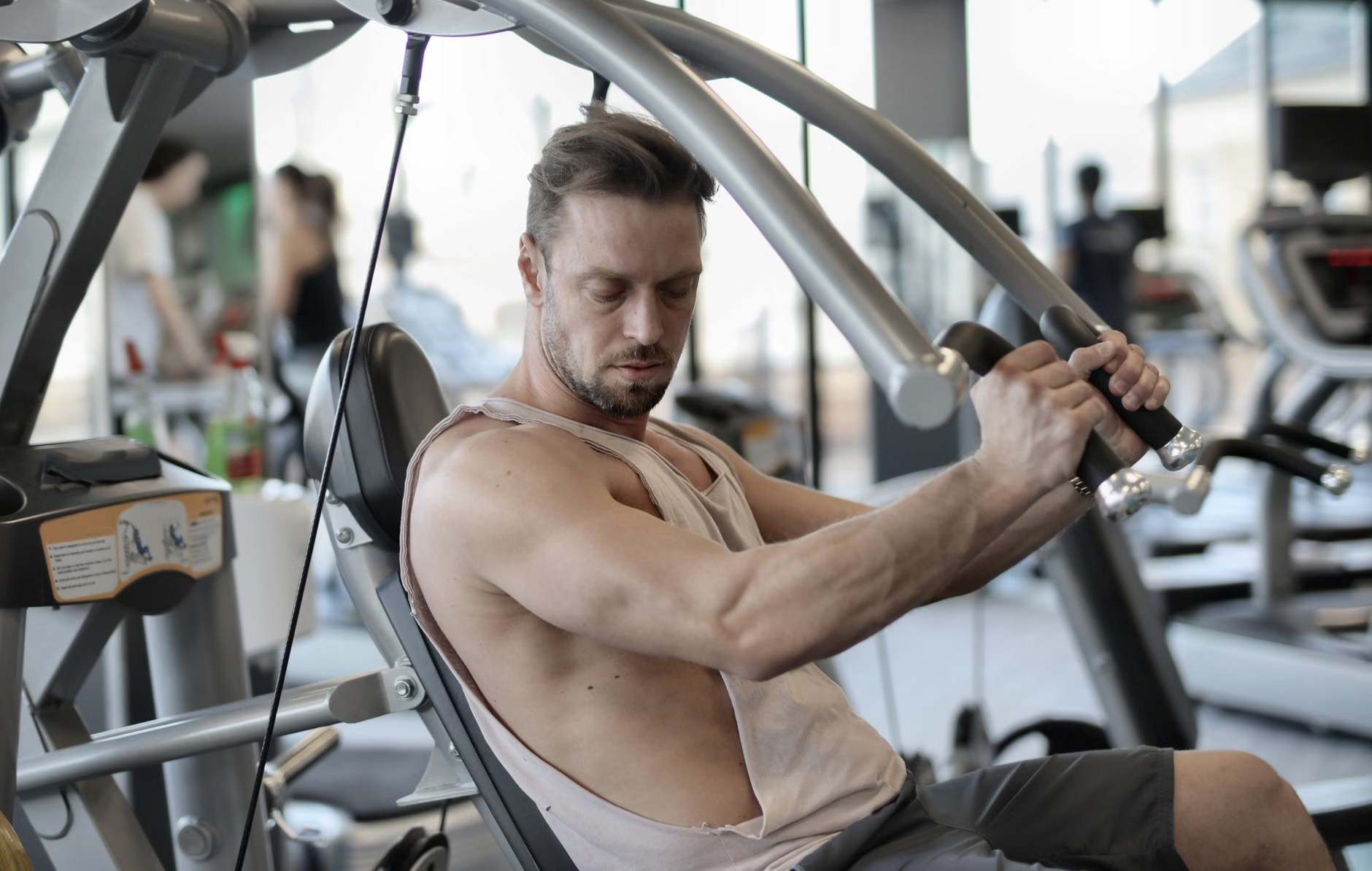
To gain the most benefit, you must focus on the quality of the movement rather than the speed or quantity. Follow these steps to ensure you are performing the movement safely.
| Step | Action | Purpose |
|---|---|---|
| 1. Setup | Sit upright with feet flat on the floor and your spine against the back of the chair. | Provides a neutral, stable foundation. |
| 2. Lift | Slowly inhale while lifting your shoulders toward your ears. | Engages the upper trapezius muscles. |
| 3. Rotate | Exhale while rolling your shoulders back and down. | Opens the chest and resets the shoulder blades. |
| 4. Relax | Pause for two seconds before the next repetition. | Prevents muscle fatigue and promotes relaxation. |
Common Mistakes to Avoid: A frequent error is “crunching” the neck forward during the lift phase. Keep your chin parallel to the floor throughout the entire movement. Another mistake is rushing through the rotation. The “down and back” phase is where the benefit lies; focus on squeezing your shoulder blades together slightly as you lower them.
Integrating Mobility into Daily Life
Incorporating this exercise into your routine does not require a dedicated workout block. Because it is subtle, you can perform it while waiting for a kettle to boil, during a commercial break, or while waiting for a public transport connection. The goal is to break the cycle of static tension.
The Role of Consistency
The human body adapts to the positions we hold most frequently. If you spend three hours a day reading, your body begins to “learn” that hunched position. By performing five to ten shoulder-rolls every hour, you provide your body with a “counter-instruction,” reminding your muscles how to return to a neutral, open state. This is a form of functional maintenance that keeps your joints lubricated and your muscles from shortening over time.
When to Seek Professional Advice
While shoulder-rolls are a low-risk activity, they are not a substitute for medical treatment if you are experiencing chronic pain. It is important to distinguish between “muscle stiffness” and “joint pathology.”
Warning Signs: If you feel sharp, stabbing pain, tingling sensations, or numbness radiating down your arm, these are indicators that something more than simple muscle tension may be occurring. In such cases, the movement should be avoided until you have spoken with a physiotherapist or your primary care physician.
When preparing for an appointment regarding shoulder discomfort, be ready to describe:
- Duration: How long the discomfort has been present.
- Triggers: Specific activities that worsen the feeling (e.g., reaching overhead, sleeping on one side).
- History: Any past injuries or surgeries in the neck or shoulder area.
The Hidden Benefits of Open Posture
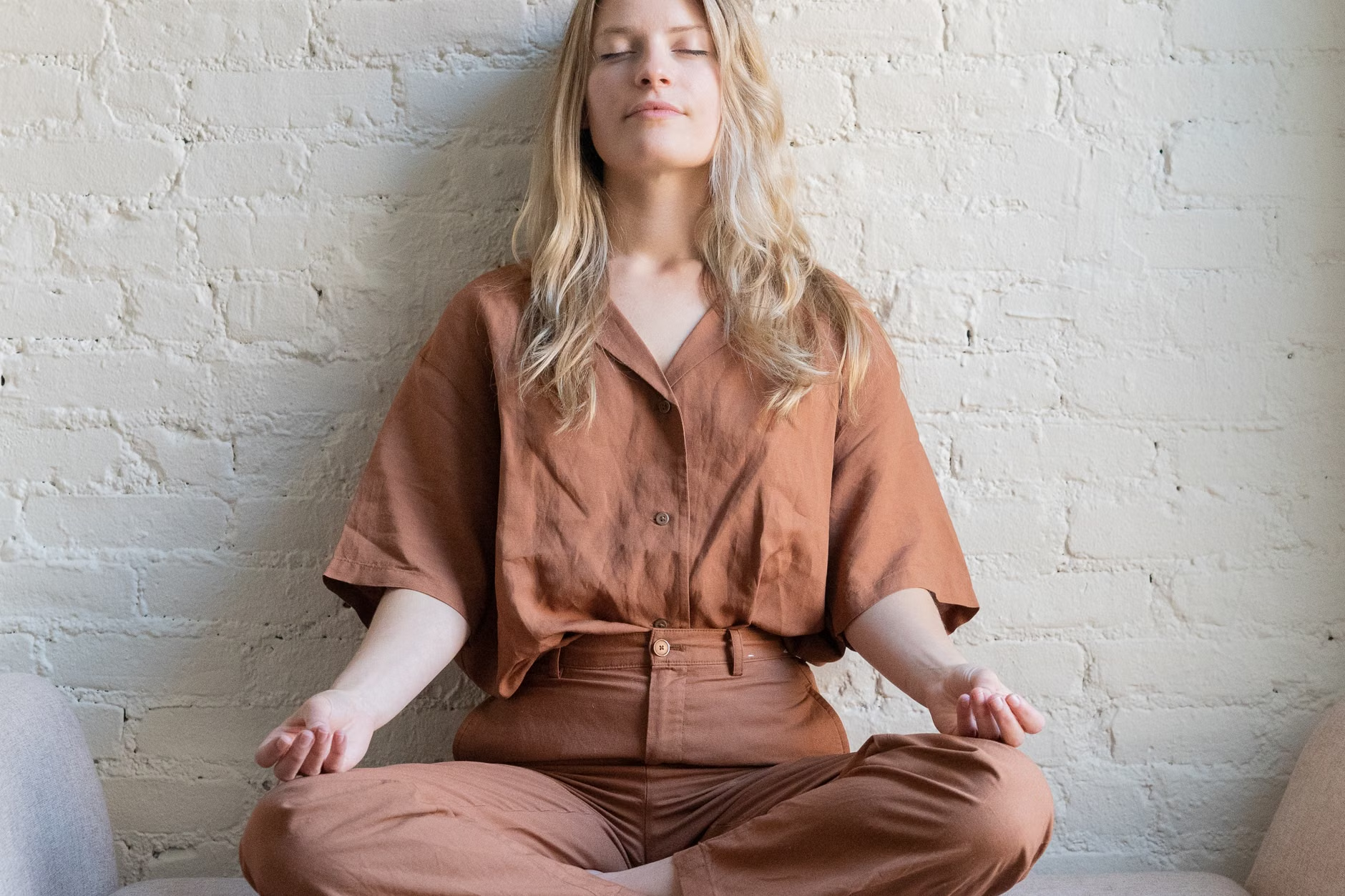
Beyond the immediate relief of muscle tension, maintaining an open posture through these gentle movements has secondary benefits. When the shoulders are rolled back and the chest is open, your lungs have more room to expand fully. This can lead to deeper, more efficient breathing, which in turn helps regulate your nervous system. Many people find that a few minutes of mindful shoulder-rolling acts as a reset button for their stress levels, providing a moment of calm in a busy day.
Customizing the Exercise for Your Needs
Not all chairs are created equal. If you are using a soft sofa, you may lack the support needed to maintain an upright spine. In these cases, it is better to sit on the edge of the seat or use a firm cushion behind your lower back. If you have limited mobility in one shoulder, do not force the movement to match the other side. Work within the range of motion that feels comfortable and pain-free.
Remember that “gentle” is the operative word. You are not trying to build massive muscle or increase explosive power. You are performing “maintenance work” on your body’s mechanical systems. Think of it like oiling the hinges on a door; the goal is smoothness and silence, not force.
Assessing Your Environment
Consider the furniture you use most often. If you find yourself consistently hunching over a laptop or book, evaluate your setup. Are your elbows supported? Is the screen or book at eye level? Shoulder-rolls are a corrective measure, but optimizing your environment reduces the need for constant correction. For example, using a document holder to raise reading material can prevent the forward-head posture that necessitates the need for shoulder-rolls in the first place.
Understanding the Science of Movement
The muscles of the upper back and neck are sensitive to our mental state. When we feel anxious or focused, we tend to subconsciously raise our shoulders toward our ears. This “fight or flight” response is a holdover from our evolutionary history. In modern life, we rarely need to protect our necks from physical threats, yet our bodies still respond to stress with this same contraction. By consciously performing shoulder-rolls, you are essentially telling your nervous system that it is safe to relax.
This is why the movement is most effective when paired with deep, rhythmic breathing. As you inhale, imagine your lungs filling with air, expanding your ribcage. As you exhale and roll your shoulders, imagine the tension leaving your body with the breath. This mind-body connection turns a simple physical exercise into a holistic practice for daily wellness.
Conclusion: Making It a Habit
The most successful health habits are those that integrate seamlessly into your existing life. You do not need expensive equipment or a gym membership to improve your posture and reduce shoulder tension. By performing these gentle seated shoulder-rolls, you are taking a proactive step in maintaining your independence and physical comfort.
Start today by identifying one time of day—perhaps while drinking your morning tea or watching the evening news—where you can commit to just one minute of movement. Over time, this small investment in your physical maintenance will pay dividends in your overall quality of life.
Frequently Asked Questions
- How many repetitions should I do per day?
There is no strict rule, but a good starting point is 5 to 10 repetitions, performed 2 to 3 times throughout the day. Listen to your body and prioritize the quality of the movement over the number of repetitions. - Can I do these if I have arthritis in my shoulders?
If you have a diagnosed condition like arthritis, it is best to consult your doctor or a physical therapist. They can provide specific modifications that ensure you stay mobile without aggravating the joint. - Should I feel a stretch during the movement?
You should feel a gentle release of tension, but never sharp or shooting pain. If you feel pain, reduce the range of motion or stop the exercise entirely.
For further information on maintaining joint health as you age, you may visit the National Institute on Aging website, which provides comprehensive resources on safe physical activity for older adults.