The safest way to enjoy a concert, festival or sports event is to control three things: how loud the sound is, how long you stay in it, and how close you are to the source. You do not need to stop enjoying live events. A little planning—well-fitted hearing protection, a sensible seat, and regular quiet breaks—can reduce avoidable noise exposure while keeping the day sociable and fun.
- If you must shout to speak with someone at arm’s length, treat the setting as potentially too loud and take action.
- Move away from loudspeakers, wear properly fitted earplugs, and take breaks in a genuinely quieter area.
- Persistent ringing, muffled hearing, pain, dizziness or a sudden change in hearing deserves professional advice; sudden hearing loss can require urgent assessment.
This guide is for adults who want practical prevention, including people who already use hearing aids. It is general information, not a diagnosis or a substitute for advice from an audiologist, hearing-care professional or doctor.
Why live events deserve a hearing plan
Sound risk is not determined by age alone. It depends mainly on sound level, exposure time and frequency. The louder the sound, the less time it takes to create risk. A single very loud impulse, such as a firework close to the ear, can also cause immediate harm.
The World Health Organization’s 2026 safe-listening guidance explains that repeated or prolonged loud sound can damage the sensory cells and structures involved in hearing. Temporary muffling or ringing after an event may improve, but it is still a warning that the ears were stressed. Repeated exposure can lead to permanent noise-induced hearing loss or tinnitus.
Age-related changes may already make speech harder to follow in a noisy crowd. Adding excessive sound can make conversation, announcements and safety signals more difficult to understand. That is why a plan should preserve both enjoyment and situational awareness.
| What you notice | Practical response |
|---|---|
| You must shout to someone at arm’s length | Move farther away, insert hearing protection and shorten exposure |
| Ringing or muffled hearing begins | Leave the loud area and rest in quiet; seek advice if it persists |
| Sound feels painful or distorted | Exit immediately rather than waiting for the programme to finish |
| A firework or blast occurs close to one ear | Move to safety and arrange prompt medical advice if symptoms follow |
Step 1: Check the venue before buying or choosing a seat
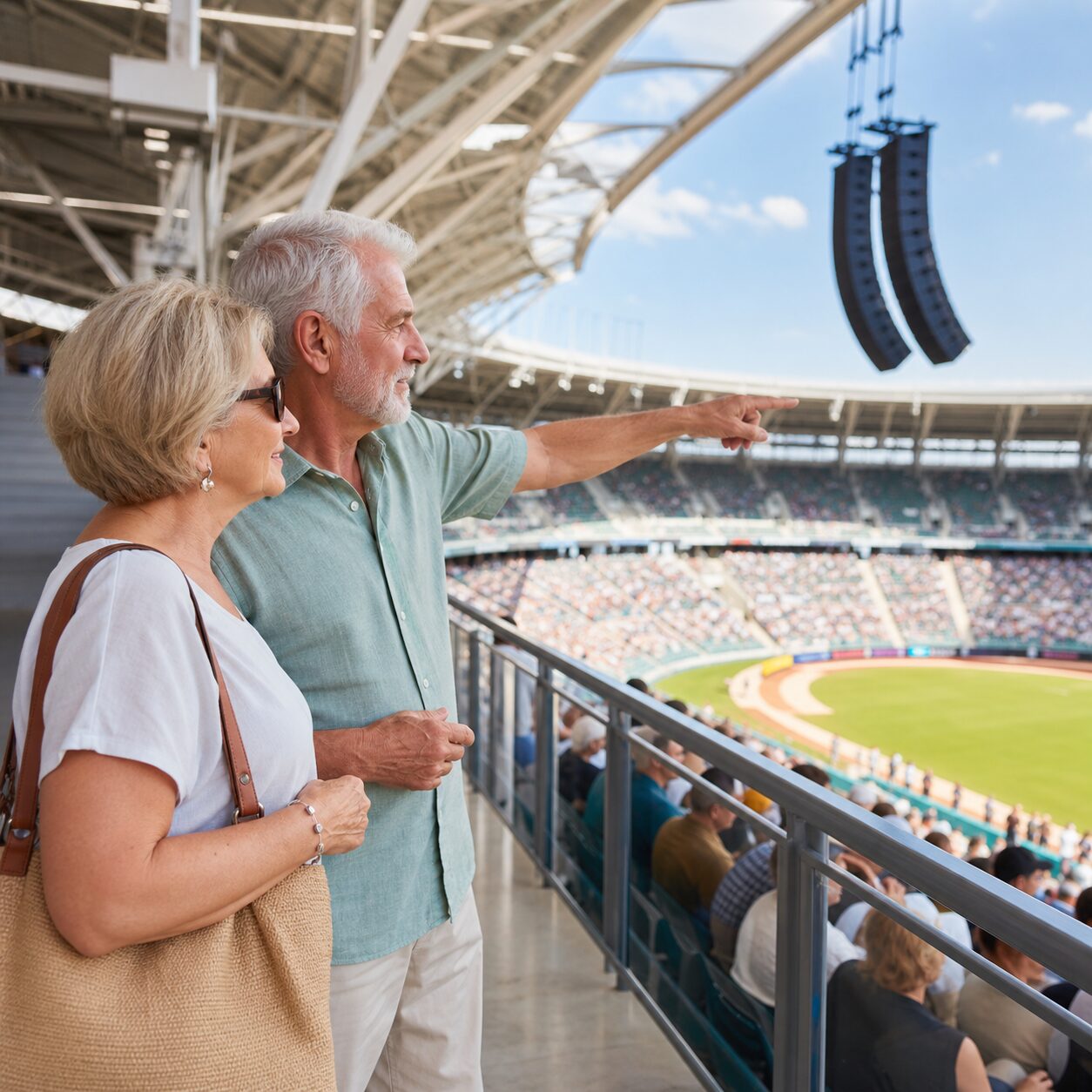
Look at the venue map and ask where the main speaker stacks, stage monitors, fireworks or motor-noise sources will be. At a stadium, seats directly below a suspended loudspeaker can be much louder than seats only a few sections away. At an outdoor festival, standing beside a speaker tower may create unnecessary exposure even when the overall site feels spacious.
Choose a position with a clear route to a quieter concourse, lobby, garden or outdoor edge. If mobility is limited, check whether the route is step-free and whether re-entry is allowed. A quiet break is only useful when it is practical to reach.
People with hearing aids can contact the venue about hearing loops, assistive-listening systems, captioning or accessible seating. These services may improve speech or programme access without relying on higher volume.
Step 2: Bring hearing protection that fits
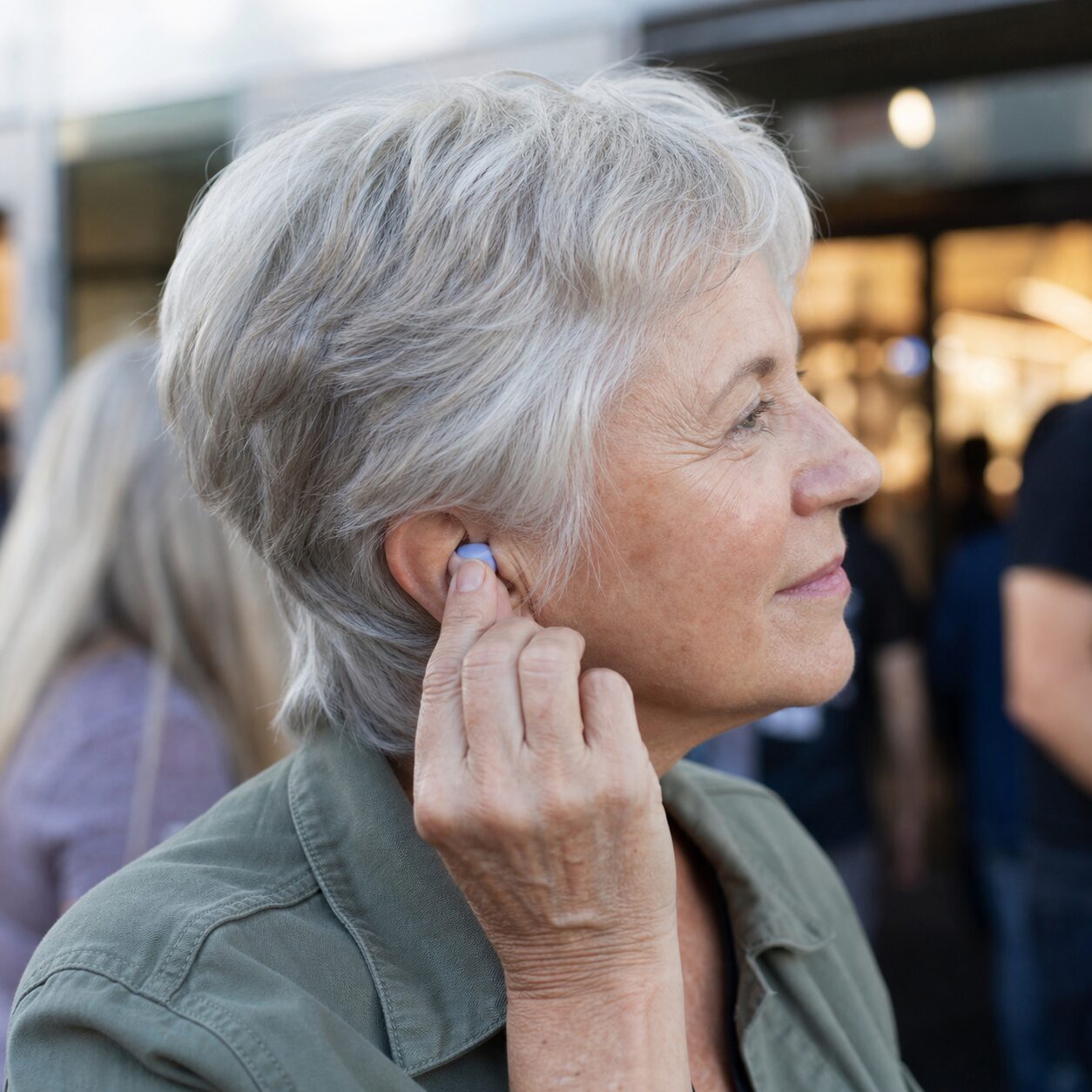
Foam earplugs, reusable filtered earplugs and earmuffs can all reduce sound when they fit correctly. The best choice is the one you can fit, tolerate and keep in place. A device left in a pocket offers no protection.
Foam earplugs
Foam plugs are widely available and compact. They need to be rolled into a narrow cylinder, inserted carefully, and held while they expand. Poor insertion greatly reduces protection. Follow the manufacturer’s directions and never force a plug into a painful or irritated ear.
Reusable or music earplugs
Filtered “music” plugs aim to lower volume while preserving a more balanced sound. They may make live music and conversation more comfortable, but fit still matters. Clean reusable plugs as instructed and replace damaged parts.
Earmuffs
Earmuffs are easier for some people with reduced hand dexterity. Their seal can be weakened by thick glasses arms, hats or hair. They can also be warm in summer. For very loud or impulsive settings, ask a qualified professional what protection is appropriate.
Step 3: Use distance as free protection
Sound generally becomes less intense as you move away from its source. Avoid standing beside loudspeakers, stage monitors, sirens, engines or firework launch zones. Follow barriers and staff directions; they are not merely suggestions about the view.
At an event with unreserved space, walk around before settling. If conversation requires shouting, move back or sideways. Even after inserting earplugs, distance remains useful. Hearing protection should not be treated as permission to remain beside the loudest source indefinitely.
Step 4: Budget your listening time
The WHO explains that allowable listening time falls sharply as volume rises. Its safe-listening Q&A gives an illustrative comparison: 80 decibels for up to 40 hours per week, but 90 decibels for only four hours per week. These figures show why a small increase in level matters; they are not a personal medical guarantee.
A phone sound-meter application can provide a rough prompt, but it is not a calibrated professional instrument. Do not wait for an app to confirm danger when the sound is painful, speech requires shouting, or symptoms begin.
| Before the event | During the event | After the event |
|---|---|---|
| Pack plugs and a spare pair; identify quiet areas | Wear protection before the loud programme starts; move away and take breaks | Give your ears quiet time and note any persistent symptoms |
Step 5: Make quiet breaks part of the outing
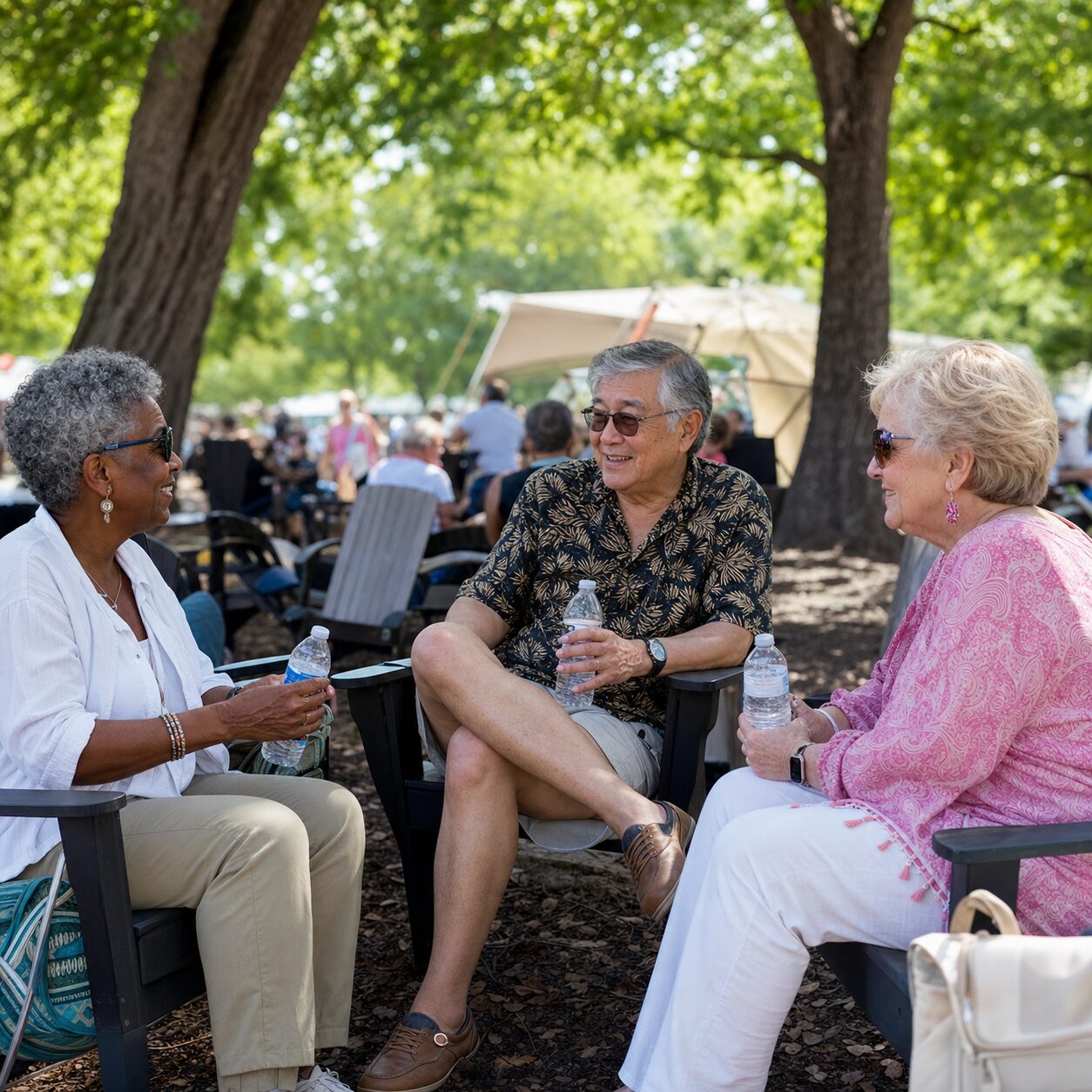
A break should be taken away from the sound source, not just at the back of the same loud room. Use an interval to visit a quiet lobby, shaded seating area or calm café. Keep earplugs in while walking through noisy corridors.
Agree on a meeting point with companions before separating. This is especially useful when earplugs make casual conversation harder or mobile reception is poor. A simple plan prevents anyone from staying in a loud area solely because they fear losing the group.
Step 6: Handle hearing aids thoughtfully
Hearing aids are designed to support hearing, but they are not automatically hearing protectors. Their settings and features differ. Do not improvise by covering devices or changing prescribed settings based on generic internet advice.
Before a planned event, ask your hearing-care professional whether your devices have a programme for music or noisy environments and how to use it. Bring spare batteries or a charged case if appropriate. At the venue, ask about assistive listening rather than simply increasing volume.
If you remove hearing aids to use earplugs, store them in a secure, dry case. Make sure your companion knows you may hear announcements less clearly. Preserve access to visual alerts and emergency instructions.
Step 7: Know when to arrange care
Contact a qualified professional if ringing, muffled hearing or difficulty following conversation persists after the event. Arrange a hearing check if you repeatedly turn up the television, miss doorbells, struggle in restaurants, or notice that one ear performs differently from the other.
A sudden loss of hearing, especially in one ear, should not be treated as routine ageing or simply “blocked ears.” Seek urgent medical assessment according to your local health system. Severe ear pain, discharge, significant dizziness, head injury or symptoms after a blast also justify prompt advice.
Regular hearing reviews can establish a baseline. They also help distinguish a correctable issue, such as wax or an ear condition, from changes that require rehabilitation or assistive technology. Do not insert cotton buds, tools or home devices into the ear canal to investigate symptoms.
A compact event-day checklist
- Check speaker, firework and engine locations.
- Choose a seat with a simple route to quiet space.
- Pack fitted earplugs, a spare pair and a clean storage case.
- Insert protection before the loud portion begins.
- Move if you need to shout at arm’s length.
- Take planned breaks away from the sound.
- Keep companions and emergency information accessible.
- Leave promptly if sound is painful or symptoms begin.
Official sources and further reading
- World Health Organization: Deafness and hearing loss—safe listening
- World Health Organization: Deafness and hearing loss fact sheet
- US Centers for Disease Control and Prevention: Preventing noise-induced hearing loss
- US Centers for Disease Control and Prevention: Causes of noise-induced hearing loss
Frequently asked questions
FAQ: Are ordinary foam earplugs enough for a concert?
Correctly fitted foam plugs can reduce sound, but their real-world performance depends heavily on insertion and fit. Reusable filtered plugs may preserve music clarity better for some people. For very loud, frequent or occupational exposure, ask a hearing-care or safety professional for individual guidance.
FAQ: Should I remove my hearing aids at a loud event?
There is no single rule for every device or hearing profile. Hearing aids are not automatically protective. Ask your hearing-care professional how to use your model in loud leisure settings and whether separate hearing protection or an assistive-listening system is more suitable.
FAQ: How long should ringing after a concert last?
Ringing after loud sound indicates that the auditory system was stressed. Do not use a fixed waiting period as proof that everything is fine. Move to quiet immediately and seek professional advice if ringing persists, is severe, affects one ear, or comes with sudden hearing change, pain or dizziness.