- Weight is the enemy of stamina: Aim for a total daypack weight under 3kg to prevent fatigue and preserve your energy for sightseeing.
- Footwear is your primary travel tool: Prioritize structural support and arch stability over brand aesthetics to avoid common foot issues during long walks.
- Strategic rest is a deliberate activity: Plan your route with “rest nodes” (benches, cafes, or public museums) to avoid pushing your physical limits too far.
Urban walking tours offer an intimate way to experience the pulse of a new city, but for travelers aged 60 to 80, the difference between an enjoyable day and an exhausting ordeal often comes down to what is inside your bag. Minimalism in this context is not about deprivation; it is about the strategic removal of unnecessary weight to enhance your mobility and safety.
The Physics of Minimalist Packing: Why Less is More
When you carry a heavy bag for four to six hours, the cumulative strain on your shoulders, lower back, and hips increases exponentially. For older adults, even a few extra kilograms can alter your center of gravity, making you more susceptible to trips or balance issues on uneven cobblestone streets or stairs.
A minimalist approach focuses on the “Essential Three”: Weight, Accessibility, and Security. By reducing your load, you decrease the metabolic cost of walking, which directly translates to higher stamina throughout the day. A good rule of thumb is to keep your daypack weight below 10% of your body weight, ideally targeting 2–3kg for urban environments.
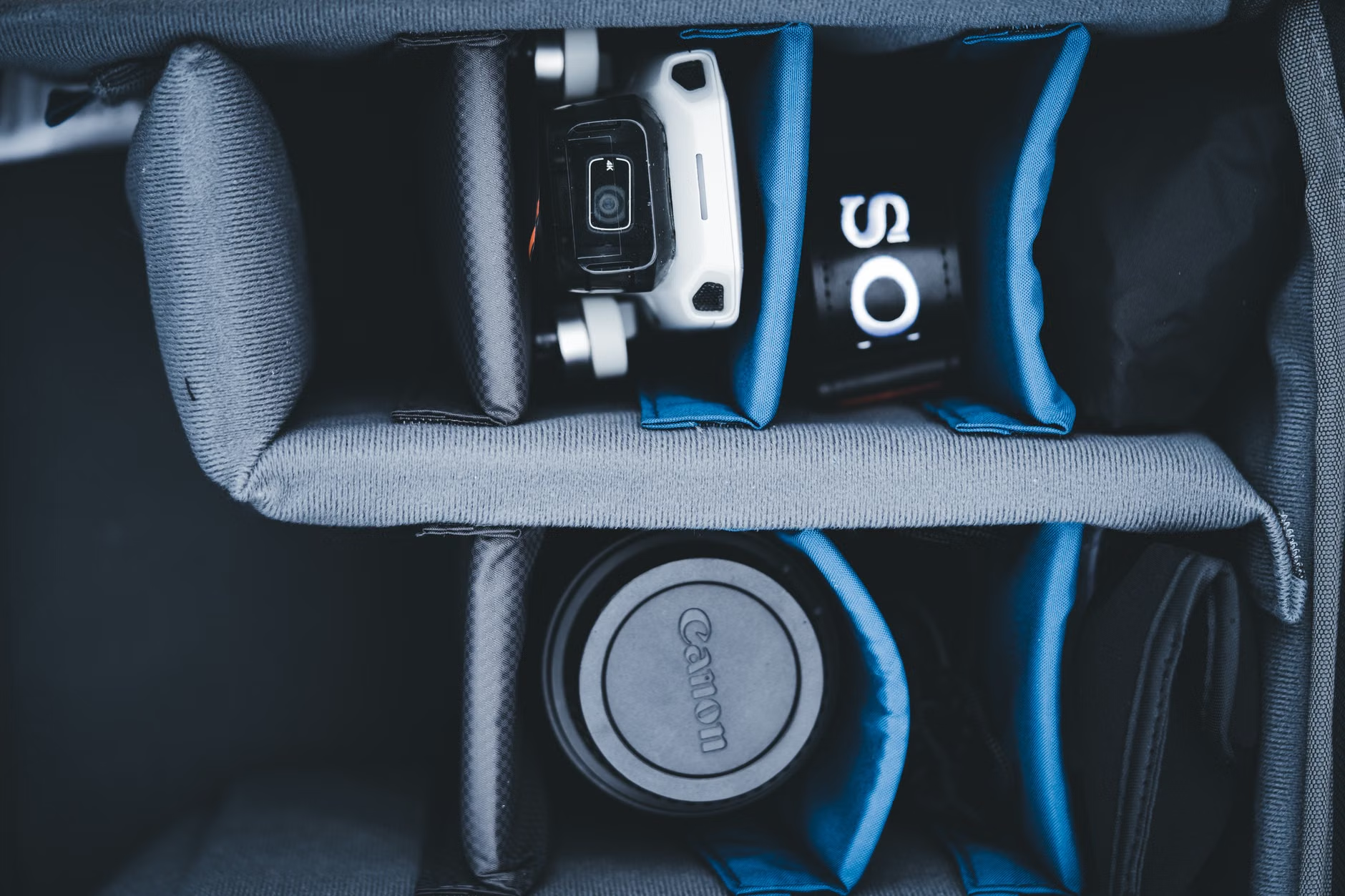
The Anatomy of an Urban Daypack
Your choice of bag is as important as its contents. Avoid single-strap sling bags, which distribute weight unevenly and can cause shoulder strain. Instead, opt for a lightweight, ergonomic backpack with a sternum strap. The sternum strap is critical; it shifts the load from your shoulders to your chest and torso, preventing the bag from pulling your posture backward.
| Item Category | Minimalist Recommendation | Why It Matters for Seniors |
|---|---|---|
| Hydration | 500ml insulated bottle (refillable) | Frequent hydration prevents lightheadedness and fatigue. |
| Navigation | Smartphone + Printed Backup Map | Digital tools are great, but maps prevent “tech-anxiety.” |
| Protection | Foldable, wind-resistant umbrella | Avoid heavy rain gear; stay dry without carrying bulk. |
| Health | Small, labeled medication pouch | Ensures critical meds are always on your person. |
The table above highlights that minimalist packing is about utility. If you carry a 2-liter water bottle, you are adding 2kg of weight. By carrying a 500ml bottle and refilling it at cafes or public fountains, you reduce your immediate burden by 1.5kg, which is significant after two hours of walking.
Footwear: The Foundation of Your Journey
While packing for travel, your shoes are the most important piece of “gear.” Many travelers make the mistake of wearing brand-new shoes, assuming they are “clean” and “ready.” However, footwear for urban walking must be broken in for at least two weeks prior to departure.
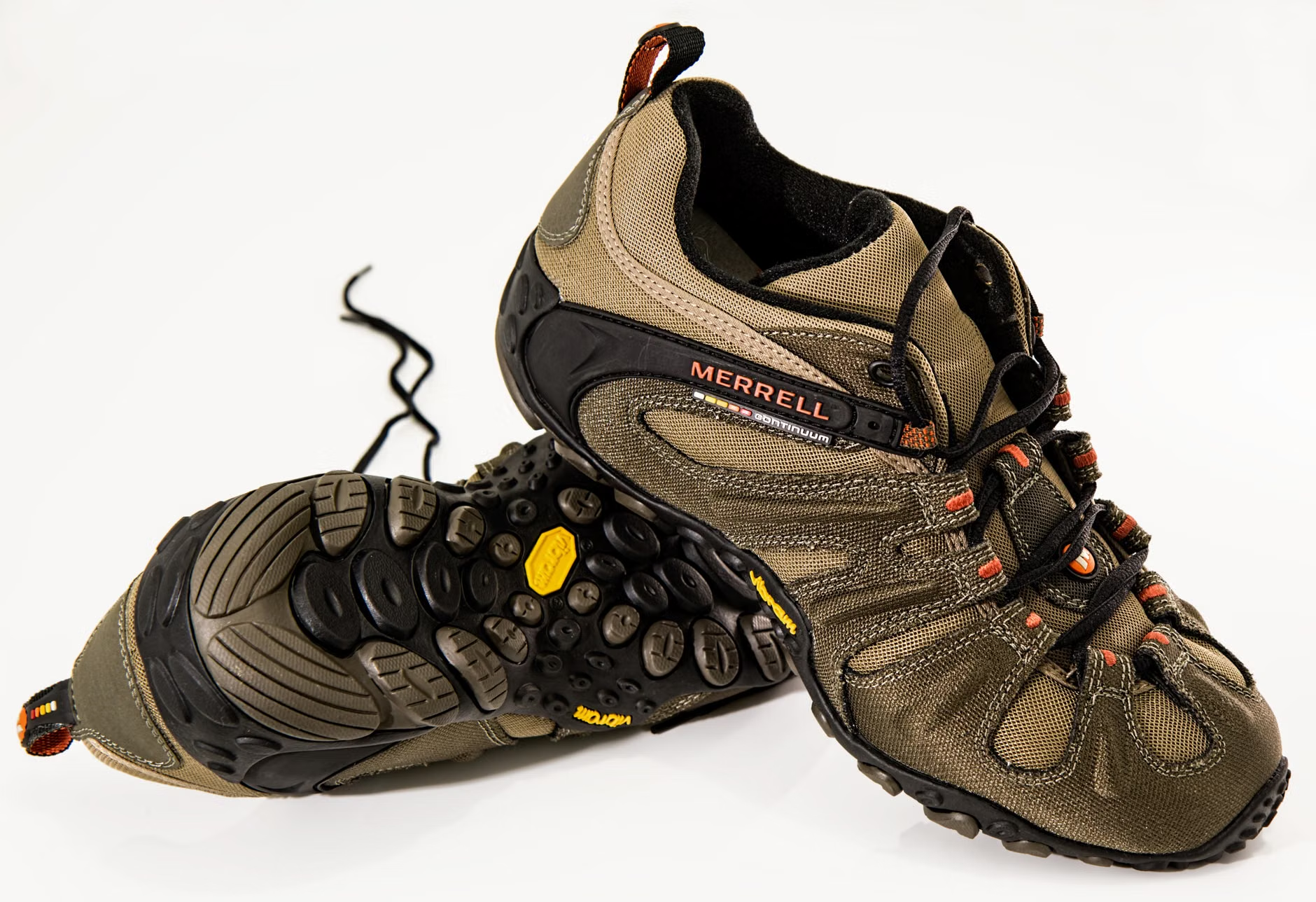
Criteria for Senior-Friendly Walking Shoes
- Structural Arch Support: Look for removable insoles so you can insert your own orthotics if necessary.
- Traction: Urban environments often feature polished marble or wet granite. Ensure your outsoles have deep treads.
- Closure System: While laces provide the best lockdown, consider “lock-lace” systems or high-quality velcro if bending down to tie laces causes dizziness or discomfort.
Common Mistake: Choosing stylish, flat-soled sneakers. These often lack the shock absorption required for long days on concrete. Over time, this causes plantar fasciitis or knee pain. If you require extra support, consult a podiatrist before your trip to discuss specific insoles that accommodate the impact of city walking.
Minimalism also applies to your itinerary. A common error is “over-scheduling.” An urban walking tour should ideally consist of no more than three primary “anchor” locations per day, with the time in between treated as transit and recovery.
The “Rest Node” Strategy
Before leaving your accommodation, use digital mapping tools (like Google Maps or Citymapper) to identify “rest nodes.” These are not just benches, but locations where you can safely sit for 15–20 minutes: museums with seating, public libraries, or quiet cafes. If you feel your stamina waning, do not push through. A 15-minute rest at a cafe is a legitimate part of the “urban experience” and will significantly extend your energy for the afternoon.
Safety Insight: When navigating transit, always prioritize stations with elevators. Many older subway systems in cities like London, Paris, or New York have limited accessibility. Check the official transit authority website (e.g., Transport for London Accessibility) to verify which stations have step-free access before finalizing your route.
Health and Safety: Managing Risks While Minimalist
Being a minimalist does not mean being unprepared. Your “safety kit” should be small but comprehensive. This includes a list of your medications, any known allergies, and the contact information for your local embassy or consulate. Keep this on a physical card in your wallet, not just on your phone, in case of battery failure.
If you have specific health conditions, such as diabetes or cardiovascular issues, ensure your “minimalist” pack includes a small snack—like a handful of almonds or a glucose tablet—to manage blood sugar levels. These items take up negligible space but provide a critical safety net.
The Psychological Aspect of Urban Travel
Traveling with less gear changes your mindset. When you aren’t worried about a heavy, bulky bag, you are more likely to engage with your surroundings, stop to look at architecture, or interact with locals. Minimalism allows you to be “in the moment” rather than focused on managing your belongings. It shifts the travel experience from “endurance” to “exploration.”
If you are traveling with a partner, divide the load. One person might carry the navigation and emergency kit, while the other carries the water and rain protection. This shared responsibility ensures that neither person is carrying a disproportionate amount of weight.
Conclusion: Prioritizing Your Experience
Minimalist packing for urban walking is an exercise in intentionality. By curating what you carry, you are essentially curating your own comfort. Remember that your goal is to enjoy the culture, history, and atmosphere of the city, not to test your physical limits. Keep your pack light, your footwear supportive, and your itinerary flexible. When you remove the physical burden, you create space for the joy of discovery.
Frequently Asked Questions
- How do I handle the need for different layers of clothing while remaining minimalist?
Use the “layering principle.” Instead of a heavy coat, pack a lightweight, packable down vest or a thermal base layer. These items can be compressed into a small pouch, allowing you to adapt to temperature changes throughout the day without carrying a bulky jacket. - What is the best way to handle valuables if I am only carrying a minimalist daypack?
Use a hidden money belt or an internal zippered pocket inside your backpack for your passport and large amounts of cash. Keep only the day’s budget in an easily accessible external pocket. Never leave your bag unattended, even for a moment, in high-traffic tourist areas. - Is a walking pole necessary for urban walking?
For many, a collapsible, lightweight trekking pole can significantly reduce strain on the knees and provide stability on stairs or uneven pavement. If you feel unsteady on long walks, it is a highly recommended tool. Look for models that collapse to under 40cm so they fit inside a standard daypack when not in use.
Disclaimer: This article provides general travel advice and does not constitute medical advice. Always consult with your healthcare provider regarding your individual physical capabilities and health needs before planning an active trip.