- Prioritize Accessibility: Always check official transit websites for “level boarding” and “step-free access” status before planning your route, as older systems may have hidden stairs at arrival points.
- Manage Your Stamina: Funiculars save your knees from steep climbs, but the walk from the station to the final destination can be strenuous; factor in a 15-minute “recovery buffer” after every transit ride.
- Timing is Everything: Travel during off-peak hours (10:00 AM to 3:00 PM) to ensure you have space for bags, seating availability, and a calmer, less rushed experience.
The Strategic Value of Funiculars for Senior Travelers
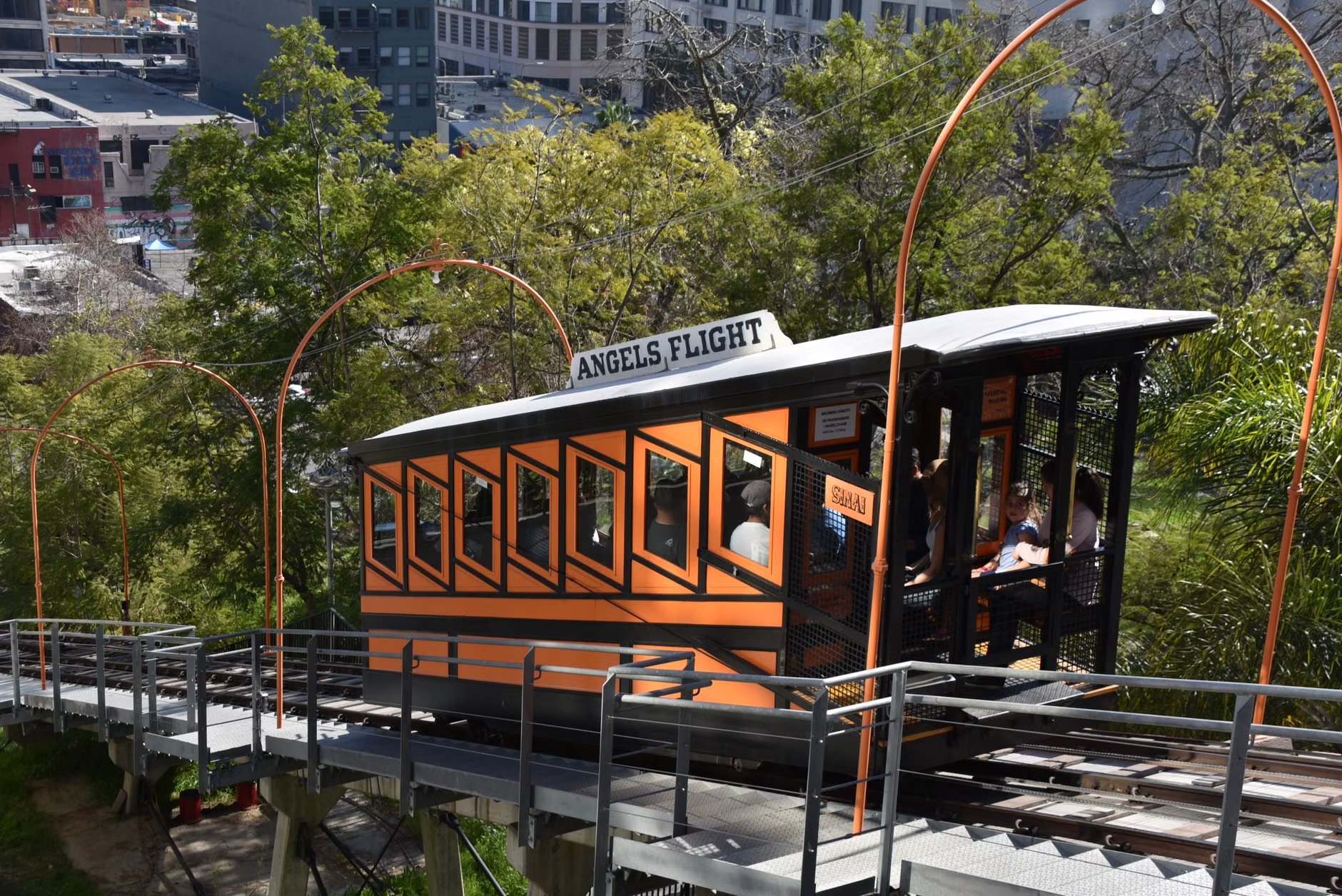
For the traveler aged 60 to 80, the appeal of ancient cities—cobblestone streets, hillside vistas, and historic architecture—is often tempered by the reality of physical exertion. Steep inclines and uneven terrain can turn a dream holiday into a test of physical endurance. Funicular systems, which are cable-driven railways designed specifically to traverse steep gradients, serve as the ultimate mobility tool for the modern senior traveler.
Understanding how to navigate these systems is not just about convenience; it is about energy management. By utilizing a funicular, you preserve your stamina for the activities that matter most—exploring museums, enjoying a relaxed lunch, or walking through flat city centers. This guide will walk you through the technical, physical, and logistical aspects of using these systems to ensure your travel remains safe, enjoyable, and efficient.
Assessing Infrastructure: What “Accessible” Really Means
The term “accessible” is often used loosely in travel brochures. For a senior traveler, it is vital to distinguish between a funicular that is “technically functional” and one that is “comfortably accessible.”
The Reality of Boarding Platforms
In many ancient cities, funicular stations were built in the 19th or early 20th century. While the carriage itself may be modernized, the platforms may still require navigating a few steps or a steep ramp. Always look for the following features:
- Level Boarding: The platform should be flush with the carriage floor. If there is a gap or a vertical rise, look for designated boarding areas for those with limited mobility.
- Tactile Paving: Standard in many European and Asian transit hubs, these raised bumps indicate the edge of the platform and are a reliable indicator that the station has been updated for modern accessibility standards.
- Lift Availability: If the platform is situated underground or on a different level than the street, verify if there is an operational elevator. Never assume an elevator is in service; check the local transit authority’s live status page on the morning of your trip.
Comparative Analysis: Funiculars vs. Alternative Transport
| Transport Mode | Best For | Senior-Friendly Rating |
|---|---|---|
| Funicular | Steep, direct hillside transit | High (Energy-saving) |
| Taxi/Rideshare | Door-to-door convenience | Highest (Costly) |
| Public Bus | Navigating flat terrain | Moderate (Crowded) |
Use the table above to weigh your options. If your goal is to reach a high-altitude viewpoint, the funicular is almost always superior to a bus or walking, as it eliminates the stress of traffic and the physical strain of steep walking.
Planning Your Route: The 3-Step Mobility Audit
Before you depart your accommodation, you must conduct a brief “mobility audit” of your intended route. This reduces the risk of arriving at a station only to find it closed for maintenance or inaccessible.
Step 1: Check the “Real-Time” Status
Many major cities (such as Lisbon, Budapest, or Hong Kong) provide real-time updates for their funiculars. Use official apps or websites to check for:
- Planned Maintenance: These systems are often historic and undergo frequent, scheduled maintenance.
- Peak Density: If the system is crowded, your risk of a fall increases significantly. Avoid rush hour periods (typically 7:00 AM – 9:00 AM and 5:00 PM – 7:00 PM).
Step 2: The “Last Mile” Evaluation
The funicular will drop you off at a specific point, but that point is rarely your final destination. Use Google Maps or a similar tool to look at the “Street View” of the exit station. Are there cobbles? Is there a steep incline leading away from the station? If the exit is on a hill, you might consider booking a taxi for the final few hundred meters to your destination.
Step 3: Ticket Logistics
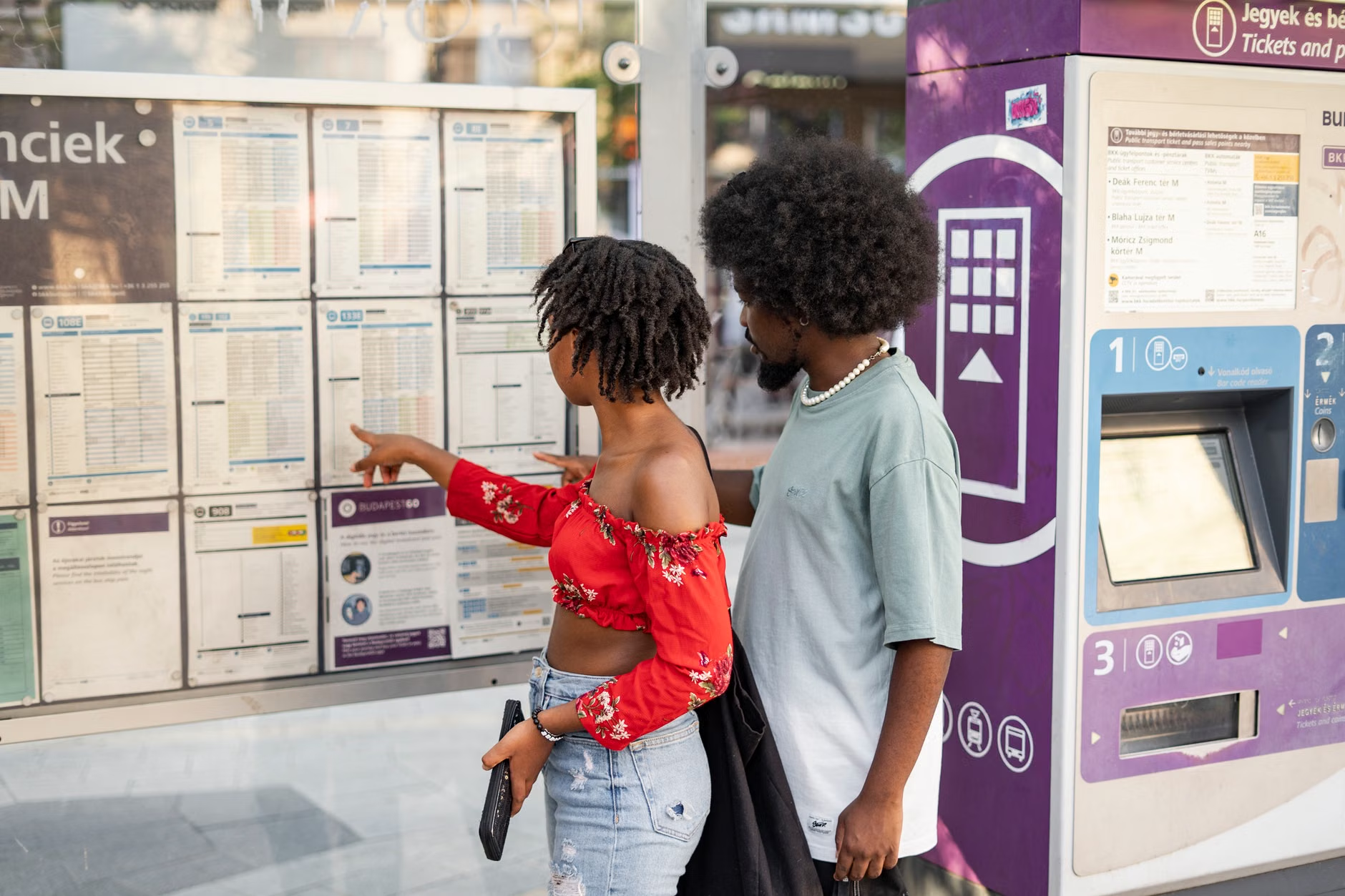
Standing in long queues to purchase tickets is a common source of fatigue. Whenever possible, purchase tickets online or use a contactless payment card (such as a credit card with “tap-to-pay” functionality) if the system supports it. This eliminates the need to fumble with cash or navigate complex vending machines.
Safety and Stamina: Managing the Physical Experience
The transition from a standing position to a moving carriage, even in a modern funicular, requires awareness. Here is how to maintain your safety:
- The “Wait-and-Board” Rule: Do not rush to board. Funiculars usually have a longer dwell time at stations than subways. Wait for the majority of the crowd to enter, then board at a steady, controlled pace.
- Grip and Stability: Always prioritize a seat. If the carriage is full, stand in the center and hold onto a vertical pole or handrail. Avoid standing near the doors, as sudden stops can cause balance issues.
- Temperature Control: Historic funiculars can be poorly ventilated. If you are traveling in summer, carry a portable fan and bottled water. If in winter, be mindful that the temperature inside the carriage may be significantly different from the outside air, so dress in layers.
Hidden Variables: What Most Travelers Overlook
One of the most frequently overlooked variables is the “gradient shock.” Because funiculars move at a steep angle, your body’s center of gravity shifts. If you have inner-ear issues, vertigo, or balance concerns, try to sit facing the direction of travel rather than backward. This provides your brain with better visual cues about the movement, which can significantly reduce the sensation of dizziness.
Additionally, consider the “Exit Inconvenience.” In many ancient cities, the “top” station of a funicular is often located in a medieval district where the streets are narrow and the sidewalks are nonexistent. This means you will be walking in the street alongside local traffic. If you are sensitive to traffic or have mobility aids like a cane or walker, plan to arrive at these locations during the quietest parts of the day, such as early morning.
Preparation Checklist for Your Next Trip
To ensure you are fully prepared, follow this checklist before you leave your hotel:
- Confirm Operational Status: Check the official website for the specific city’s transport authority.
- Pack Light: If you are carrying a day bag, ensure it is a cross-body bag or a small backpack. Avoid heavy totes that pull on your shoulder and affect your balance.
- Hydration: Carry a reusable water bottle. Dehydration can exacerbate fatigue and affect your stamina during uphill walks.
- Emergency Info: Keep a digital or physical copy of your hotel address and any necessary medical information in a pocket that is easily accessible.
Conclusion
Navigating ancient city funiculars is a skill that combines technology, planning, and self-awareness. By treating these systems as a tool for energy conservation rather than just a transit method, you open up possibilities to see more of the world without compromising your comfort or safety. Remember, the goal of travel is to enjoy the destination, not to exhaust yourself in the transit process. Take your time, prioritize your physical limits, and utilize the modern infrastructure that connects the historic world.
Frequently Asked Questions (FAQ)
1. Are funiculars suitable for travelers who use a walking stick or a cane?
Yes, most modern funiculars are very accommodating for those with walking sticks. However, ensure you board during off-peak hours to avoid being bumped by other passengers. If you use a folding cane, keep it secured in your bag while the carriage is in motion to prevent it from sliding.
2. Can I bring a collapsible wheelchair or walker on a funicular?
Most funiculars are designed to accommodate wheelchairs, but the width of the doors and the platform gap can vary. It is highly recommended to check the “Accessibility” section of the specific city’s transit website. Many systems have specific carriages or designated areas for mobility aids.
3. How do I know if the funicular is “too steep” for my physical comfort?
Funiculars are designed specifically for steep gradients, meaning the carriage floor stays level regardless of the slope. You will likely feel a slight sensation of pressure as the carriage starts or stops, but you should not feel like you are “sliding.” If you are prone to motion sickness, focus on the horizon through the front window rather than looking down at the ground.
Official transit resources for major cities (always check the local government site for your specific destination):