- Cognitive Stimulation: Engaging in historical research, interviewing, and data organization functions as a complex mental workout that supports brain health.
- Social Integration: Community history projects bridge generational and social gaps, creating a sense of purpose and belonging through shared storytelling.
- Legacy Preservation: You play a critical role in documenting “living history”—the informal details of daily life that official records often overlook.
For many adults in their 60s, 70s, and 80s, the concept of “leisure” has evolved. It is no longer just about relaxation; it is about finding meaningful ways to apply decades of experience. One of the most rewarding, intellectually stimulating, and socially impactful hobbies available today is community history recording. This practice involves documenting the stories, places, and events that define a specific neighborhood, town, or social group.
Far from being a solitary task relegated to dusty basements, modern community history is a vibrant, collaborative endeavor. It connects you with younger generations who are hungry for context, peers who share your memories, and local institutions that need your unique perspective. This article explores how you can turn your life experience into a structured, rewarding project that benefits both your community and your personal well-being.

The Cognitive and Psychological Benefits of Historical Inquiry
Engaging with history is not merely an act of looking backward; it is a rigorous cognitive exercise. When you participate in a community history project, you are constantly exercising executive function, memory retrieval, and critical thinking. Unlike passive consumption of media, historical recording requires active processing.
The “Memory Workout” of Archival Research
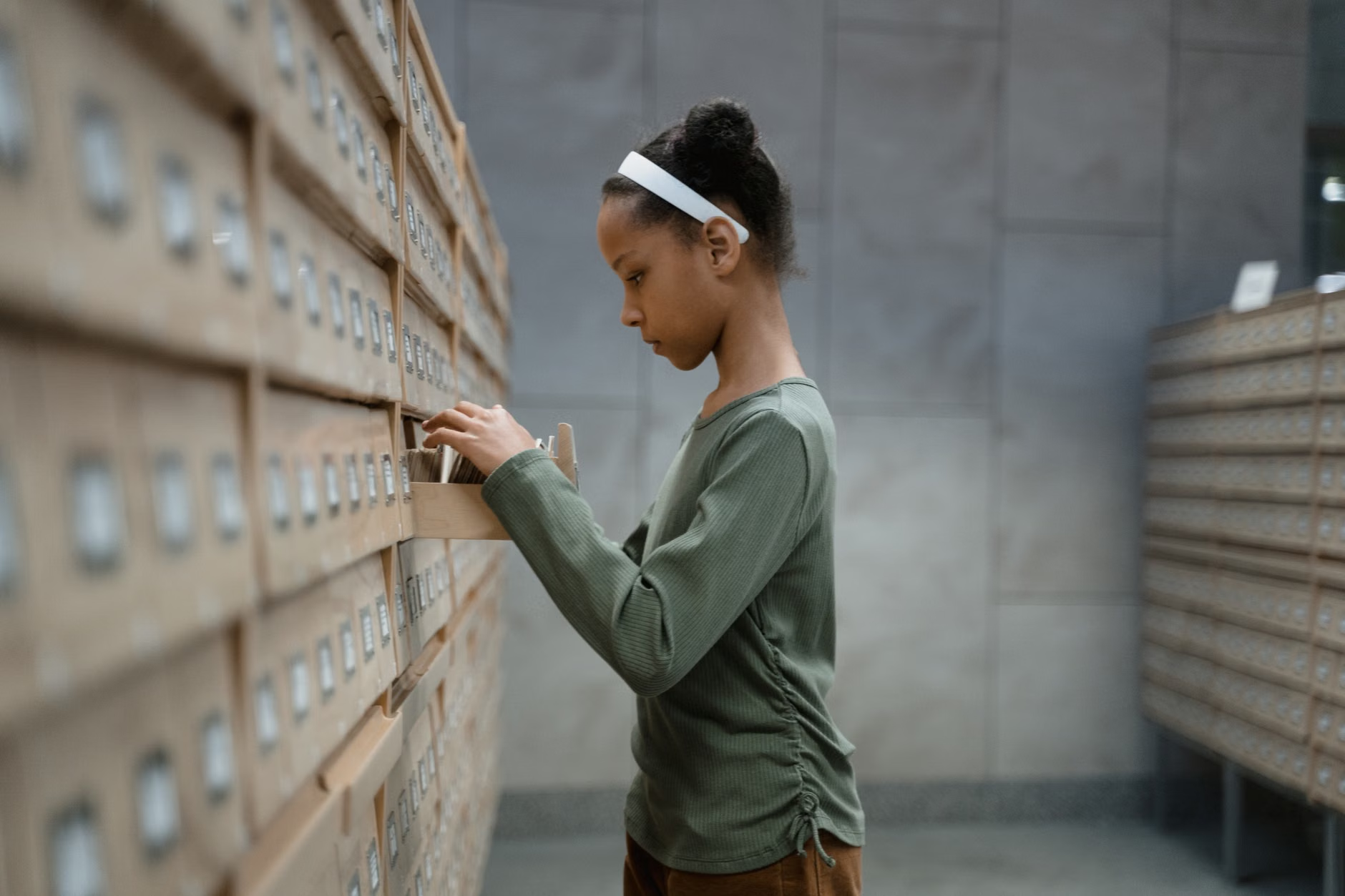
Archival research is an excellent way to maintain mental acuity. It involves navigating databases, cross-referencing information, and determining the reliability of sources. For instance, when you attempt to verify the opening date of a local landmark, you might need to consult city council minutes, newspaper archives, and personal diaries. This process of “triangulation”—comparing multiple sources to find the truth—is a high-level cognitive task that keeps neural pathways active.
The Emotional Value of Narrative Construction
Storytelling is fundamentally human. By gathering oral histories—interviews with neighbors about how a street used to look or how a local business operated—you are helping to construct a narrative. This process offers a sense of “generativity,” a psychological term defined by Erik Erikson as the concern for establishing and guiding the next generation. Contributing to your community’s history provides a powerful antidote to the feeling of being “left behind” by a rapidly changing world.
Choosing Your Path: How to Get Started
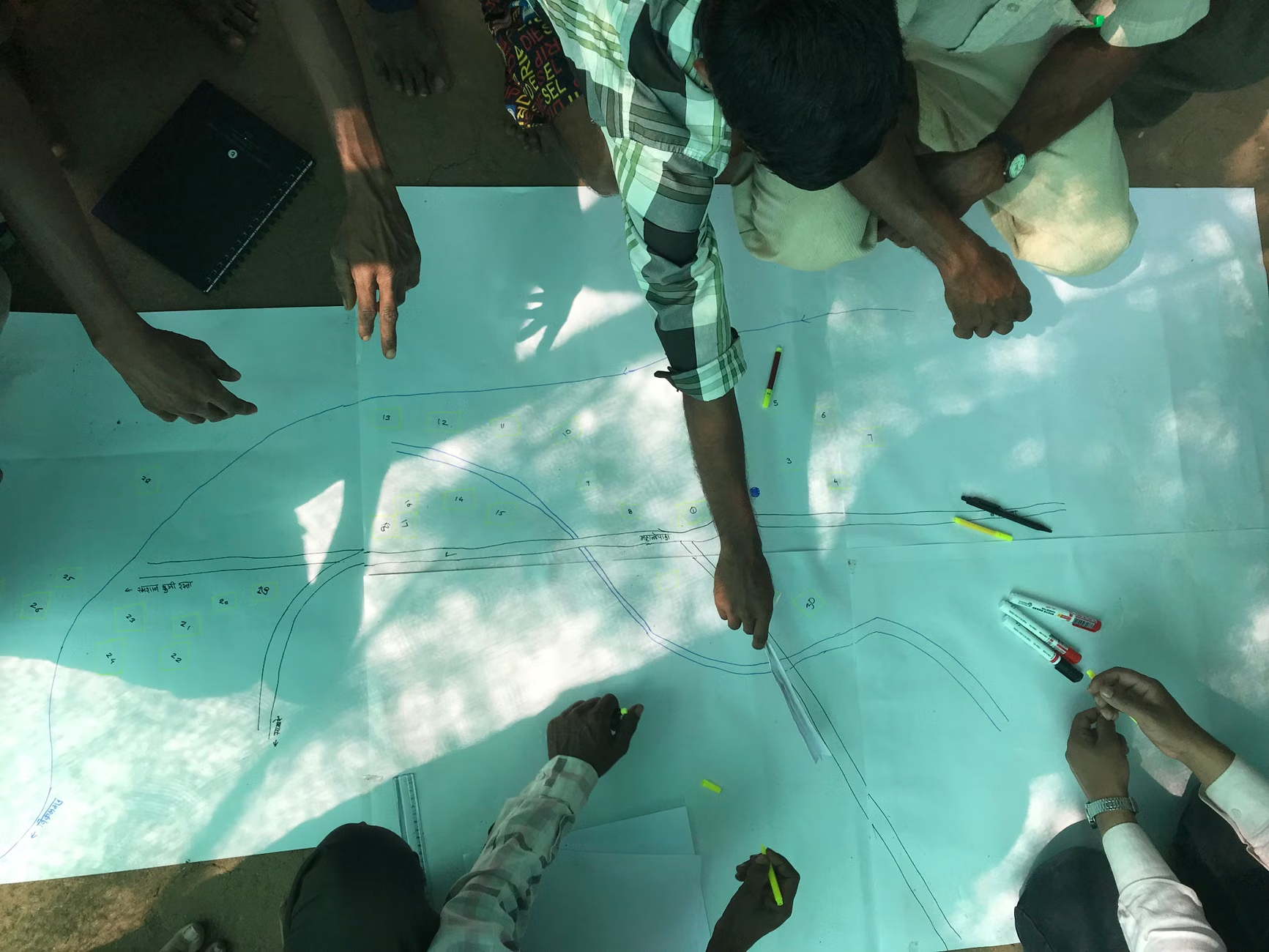
Community history is a broad field. To ensure your project remains a sustainable and enjoyable hobby, it is important to choose a niche that aligns with your interests, physical mobility, and technical comfort level. Below are four common pathways for community historians.
| Pathway | Primary Activities | Required Skills/Tools | Physical Demand |
|---|---|---|---|
| Oral History | Interviewing residents | Audio recorder, patience | Low (can be done remotely) |
| Digital Archiving | Scanning/tagging photos | Scanner, computer | Low (requires sitting) |
| Field Mapping | Walking/photographing sites | Camera, walking shoes | Moderate (requires mobility) |
| Genealogical Liaison | Tracing family-community links | Software, records search | Low (requires research) |
If you are someone who enjoys social interaction, Oral History is likely the most rewarding path. It allows you to meet new people and hear stories that have never been written down. Conversely, if you prefer quiet, focused work, Digital Archiving is an essential service for local historical societies that often struggle to digitize their vast physical collections.
The Practical Side: Ensuring Your Project is Sustainable
A common mistake among new community historians is attempting to “save everything.” This leads to burnout and a cluttered project. To maintain this as a hobby rather than a stressful obligation, you must establish boundaries and a clear scope.
Setting a Scope
Instead of trying to document the entire history of a city, choose a specific “micro-history.” For example, focus on the history of a single street, a defunct community center, or the evolution of local retail over the last 40 years. By limiting the scope, you ensure that you can actually reach a point of completion, which provides a sense of accomplishment.
Data Management and Safety
When dealing with historical documents, preservation is key. Use acid-free sleeves for physical photos and ensure your digital files are backed up in at least two places (e.g., a cloud service and an external hard drive). If you are interviewing people, always obtain written consent. Most community organizations have standard forms for this, which protects both you and the interviewee by clarifying how the recording will be used.
Bridging the Generational Gap
One of the most profound benefits of this hobby is its ability to foster intergenerational connection. Younger people often possess the technical skills to handle website management or high-resolution scanning, while you possess the contextual knowledge and the “long view” of history that they lack. This is a mutually beneficial partnership.
How to Approach Local Schools or Universities
Many history departments at local universities or high school social studies classes are looking for “primary sources.” You can act as a facilitator. By offering to present your findings or guide a student on a research project, you are providing them with invaluable real-world experience. When reaching out, be specific: “I have a collection of 50 photos of the 1970s downtown development; would your class be interested in cataloging these for a digital archive?”
The Role of Local Libraries and Historical Societies
Your local library is your greatest ally. Most libraries have a “Local History Room” or a dedicated archivist. Before starting a project, visit them. They can tell you what has already been documented, preventing you from duplicating work. They can also provide you with access to specialized software or equipment that you might not have at home, such as large-format scanners or microfilm readers.
While this hobby is rewarding, it is not without its challenges. Understanding these ahead of time will help you navigate them without frustration.
Handling Sensitive Information
History is often complicated. You may encounter stories that are controversial or painful for certain members of your community. It is essential to remain neutral and objective. If you are documenting a site that has a history of conflict, focus on the facts and the diverse perspectives of those who lived through it. Do not feel obligated to arbitrate historical truth; your role is to document the record as it exists.
Managing Physical Limitations
If your project requires field work—such as visiting historical sites or attending meetings—always assess the accessibility of the location. Does the site have stairs? Is there adequate seating for an interview? If you have mobility concerns, focus your efforts on the digital or remote aspects of the project. Many organizations are now shifting to “hybrid” models where research can be conducted from home, making the hobby more accessible than ever.
A Step-by-Step Framework for Your First Month
To move from interest to action, follow this four-week roadmap:
- Week 1: Research. Visit your local library or historical society. Ask, “What gaps exist in the current community archive?”
- Week 2: Define. Choose a topic that you can complete within three months. Draft a simple plan outlining who you need to interview or what materials you need to collect.
- Week 3: Outreach. Contact one person or organization that can help you. This could be a neighbor who lived in the area for a long time or a local club member.
- Week 4: Execution. Start your first interview or scan your first batch of documents. Set a schedule of no more than two hours per week to start.
By following this structure, you prevent the project from becoming overwhelming. Remember, this is a hobby—the goal is to enjoy the process of discovery, not to write an academic thesis.
The Lasting Impact: Why This Matters
When you document the history of your community, you are doing more than just saving data. You are confirming that the lives of ordinary people—their struggles, their triumphs, and their daily routines—are worthy of being remembered. In an era where digital information is ephemeral and often overwritten, the physical and recorded history you preserve acts as an anchor for your community’s identity.
Furthermore, this work changes how you see your own neighborhood. A walk to the grocery store becomes a journey through time. You notice the architectural details of an old building, the history behind a street name, or the way a park has changed over the decades. This deepens your connection to your environment, which is a key component of emotional and psychological well-being in later life.
Ultimately, community history recording is a gift to the future. It ensures that when someone in 50 years asks, “What was it like to live here in the early 21st century?”, they will have a rich, detailed, and human answer, thanks to the work you are doing today.
Further Resources and Official Guidance
To learn more about professional standards for historical documentation, visit the following resources:
- Oral History Association (USA) – Provides ethical guidelines and best practices for conducting interviews.
- National Archives (USA) – Offers resources on how to preserve family and community records.
- The Historical Association (UK) – Offers guides for local history projects and community engagement.
Frequently Asked Questions
1. Do I need a background in history to start this as a hobby?
Absolutely not. The most important skills are curiosity, patience, and a willingness to learn. Most community history projects value the lived experience and local knowledge of residents far more than formal academic credentials. You are the expert on your own life and your own neighborhood.
2. Is this hobby expensive to maintain?
It can be done with almost zero cost. Most of the necessary tools—such as a smartphone for recording interviews, a computer for organizing files, and a library card for accessing archives—are likely already available to you. Avoid purchasing expensive software or professional-grade equipment until you are certain you want to commit long-term.
3. How do I ensure my work is actually preserved for the future?
The best way to ensure longevity is to partner with a local institution. Once you have completed a project, offer your findings to your local library, museum, or historical society. They have the infrastructure to store and share your research with the public, ensuring your contribution remains part of the community’s collective memory for years to come.