Key Takeaways for 2026 Park Accessibility
- Universal Design Mandates: Global 2026 updates prioritize non-slip materials, continuous handrails, and increased seating frequency to prevent falls and fatigue.
- Technological Integration: New park standards now include digital wayfinding and emergency call points that are designed for high readability and ease of use by seniors.
- Inclusive Social Planning: Updated policies emphasize “co-location” of facilities, ensuring that exercise areas, public restrooms, and rest zones are within a 100-meter radius of each other to maximize mobility safety.
As of 2026, international standards for public urban spaces are undergoing a significant shift. The World Health Organization (WHO) and various regional urban planning authorities have updated their “Age-Friendly” guidelines to address the realities of a global population that is living longer and remaining active well into their 80s. For the older adult, this isn’t just about more trees; it is about how the physical environment—the path you walk, the bench you rest on, and the facilities you use—is being redesigned to support your independence.
Understanding the 2026 Global Age-Friendly Park Standards
The 2026 policy updates represent a move away from “accessible” (the bare minimum) toward “inclusive” (designing for the full spectrum of physical abilities). In many countries, including those following the EU’s New Urban Mobility Framework and the revised U.S. ADA (Americans with Disabilities Act) guidelines for public spaces, there is now a requirement for “continuous accessibility.”
What “Continuous Accessibility” Means for Your Walk
Previously, a park might have been “accessible” if it had a ramp at the entrance, even if the path further inside was gravel or uneven. The 2026 standards mandate that the entire primary loop of a public park must meet specific surface requirements. This means high-friction, non-slip paving materials that remain stable in wet weather. If you are a walker, you should look for the “Universal Path” signage; this indicates a route with a maximum longitudinal slope of 5% and no cross-slope exceeding 2%, which significantly reduces the risk of tripping or losing balance.
The Shift Toward Ergonomic Outdoor Fitness
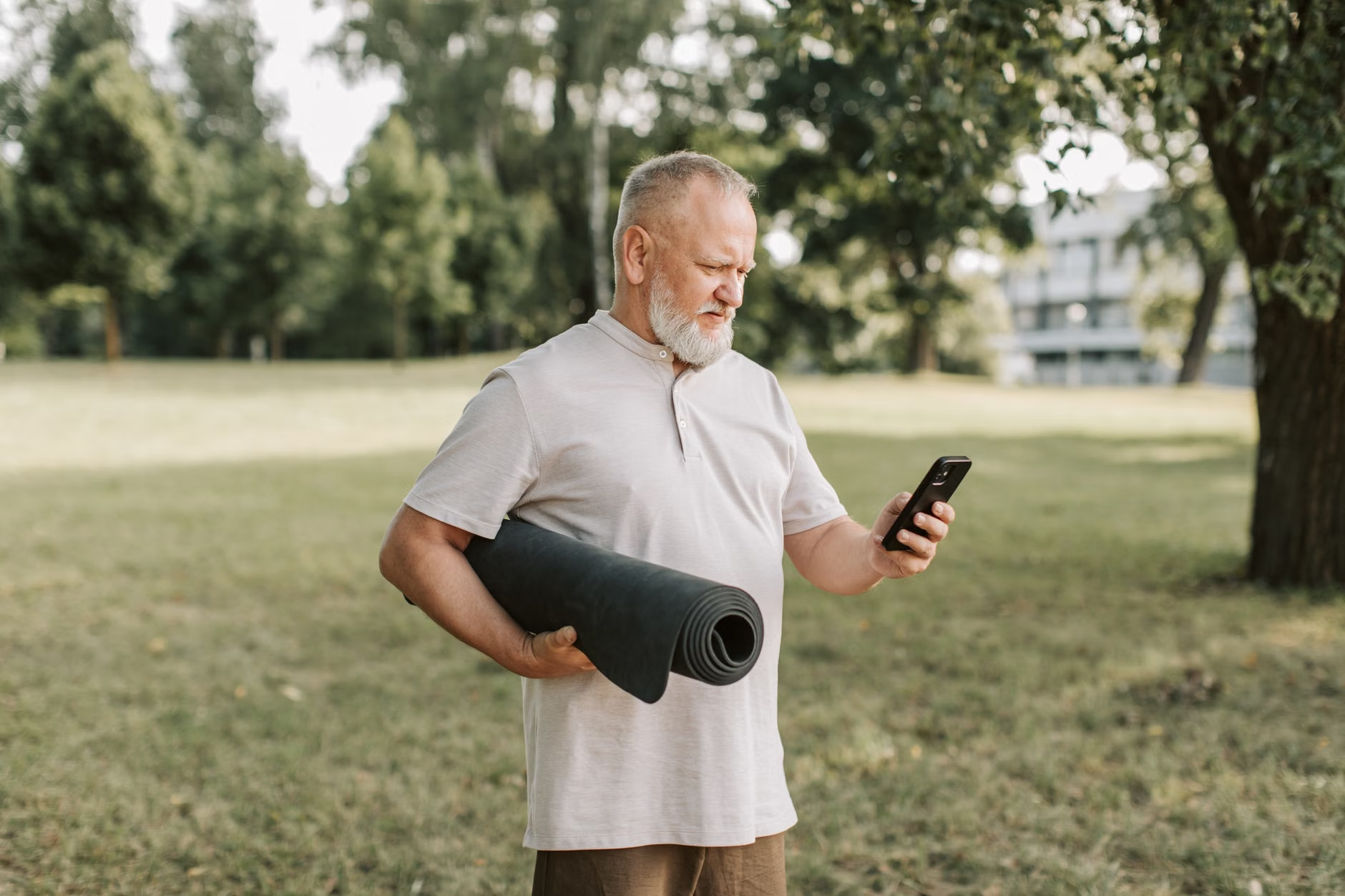
One of the most noticeable changes in 2026 is the replacement of generic “gym equipment” with specialized “kinesthetic recovery stations.” Older adults often find standard outdoor gym equipment—which is frequently designed for younger, stronger users—to be intimidating or even dangerous for joints. The new policy mandates that public fitness zones must include equipment that offers adjustable resistance and, more importantly, clear visual instructions that do not rely on small text.
Safety Features to Look For
- Resistance Control: Look for equipment that allows you to start at zero resistance.
- Stabilization: Equipment must now feature fixed hand-grips or seat belts for those who require extra stability.
- Tactile Feedback: New standards require that the start and stop mechanisms on equipment have a distinct, audible, or tactile “click” so you know when the machine is locked in place.
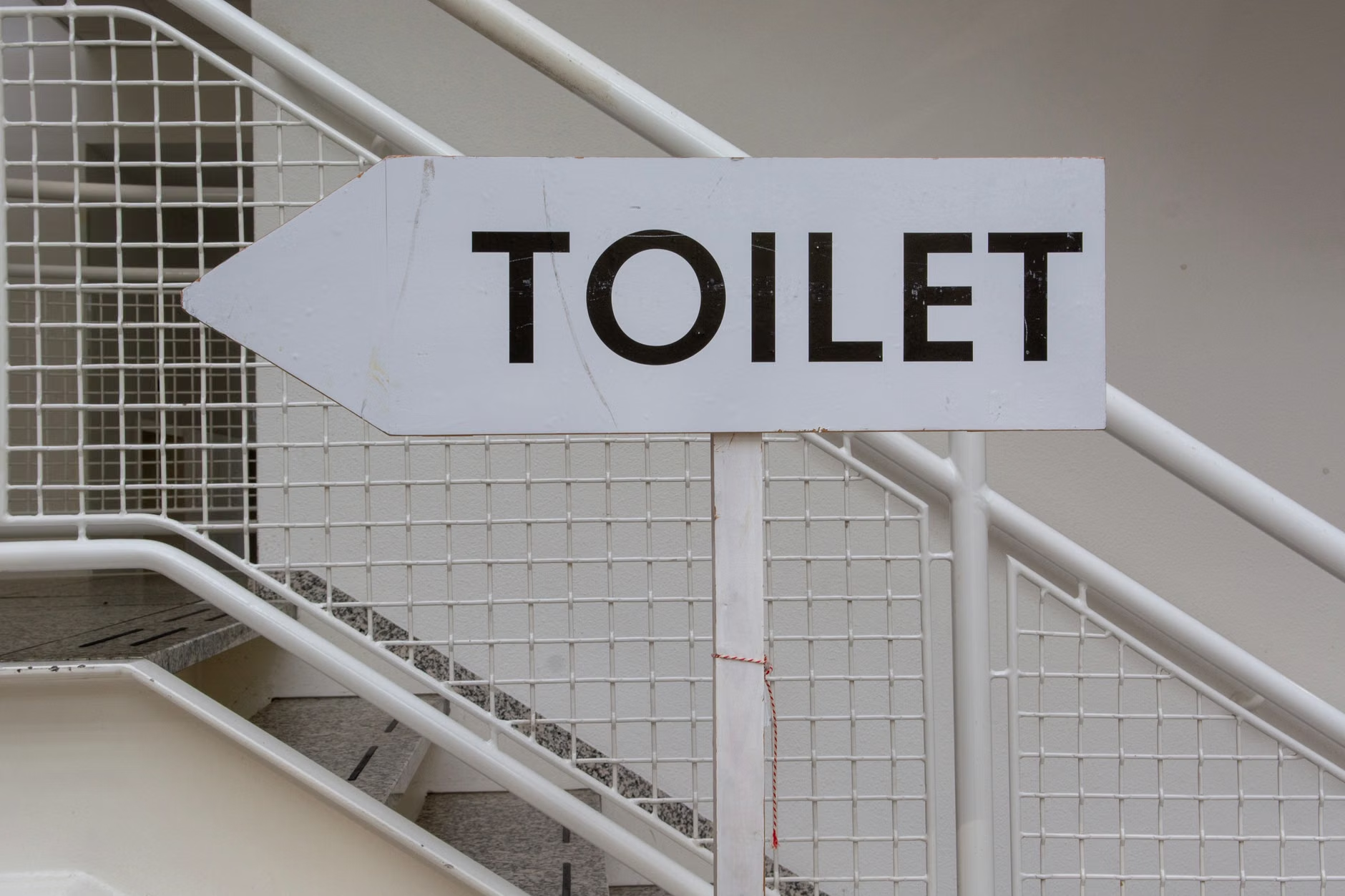
Perhaps the most critical factor in whether an older adult feels comfortable visiting a park is the availability and quality of restrooms. The 2026 updates address the “restroom gap” by requiring that any public park larger than two hectares must have an accessible restroom within a 150-meter walk of any main seating area.
Key Requirements for 2026 Restroom Upgrades
| Feature | 2026 Requirement | Why it Matters |
|---|---|---|
| Door Width | Minimum 90cm | Allows for walkers and mobility aids. |
| Signage | High-contrast, 1.5m height | Reduces eye strain and confusion. |
| Emergency Call | Red cord/button near floor | Immediate help if a fall occurs. |
If you encounter a facility that does not meet these standards, it is often due to the park being in a “legacy” phase of renovation. Local authorities are currently prioritizing high-traffic parks first. You can usually check your local council or municipal website to see if your preferred park is on the 2026-2027 renovation schedule.
The Importance of “Micro-Rest” Zones
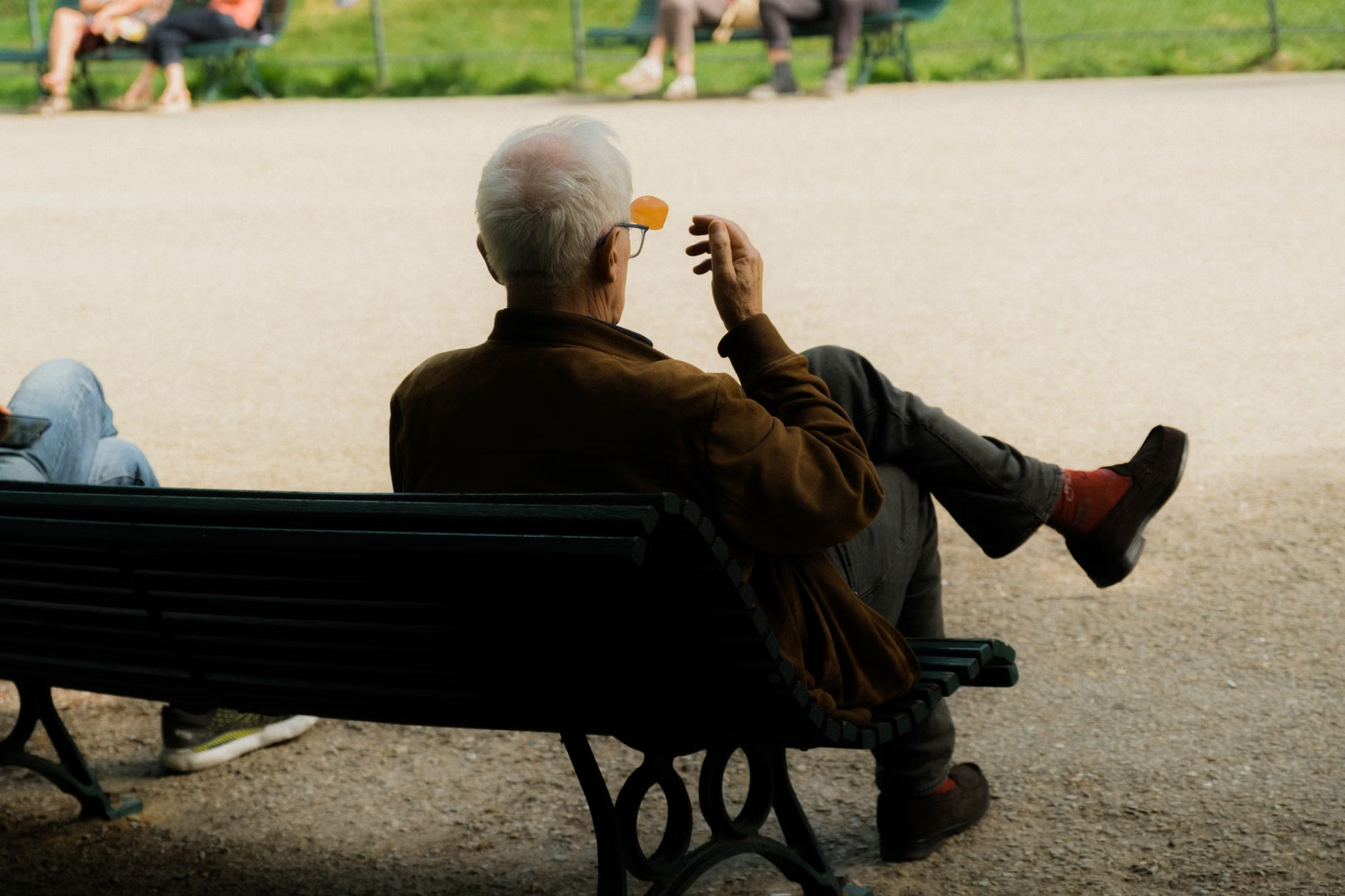
Research published in the 2025 Global Health Urbanism report indicated that older adults are 40% more likely to use public parks if they know there is a place to sit every 50 to 100 meters. The 2026 policy guidelines have officially adopted this “Micro-Rest” strategy. This means that parks are being retrofitted with benches that include armrests on both sides, which are essential for seniors to push themselves up from a seated position.
What to Look For in a Proper Bench
Not all park seating is created equal. A “compliant” bench under the 2026 standards must meet these three criteria:
- Armrests: Must be present on both ends to assist with standing.
- Back Support: Must have a full backrest; flat benches without backs are no longer considered adequate for long-term comfort.
- Foot Clearance: The base must be recessed to allow your feet to be placed directly under your center of gravity when you stand up.
Digital Accessibility: The New Wayfinding Standards
Many cities are rolling out “Smart Park” initiatives in 2026. This involves QR codes at park entrances that lead to a mobile-friendly map. Crucially, these maps now include a “Mobility Filter.” By toggling this on your smartphone, you can see the route through the park that avoids all stairs and steep inclines.
Warning: While technology is helpful, do not rely on it as your sole guide. Always carry a physical or printed map if you are visiting a new or large park, as battery life and poor cellular reception in dense wooded areas can leave you without navigation.
Preparing for Your Park Visit: A Practical Checklist
Before heading out, use this checklist to ensure your visit is safe and enjoyable:
- Check the “Accessibility Map”: Most major cities now have a digital overlay on their park websites showing path gradients.
- Assess Your Stamina: If you are planning a trip, limit your initial visit to 45 minutes to gauge the park’s terrain.
- Hydration and Facilities: Locate the nearest restroom on the map before you leave your home.
- Footwear: Always wear supportive, closed-toe walking shoes, even if the path looks paved. Uneven surfaces can still be a tripping hazard.
Insights into Policy Implementation
One overlooked variable in these new policies is the “maintenance lag.” A policy might state that a park is “fully accessible,” but if the local budget for maintenance is low, cracks in the pavement or overgrown branches can negate those benefits. When visiting a park, look for the “Maintenance Date” on the park’s notice board. If the last inspection was more than six months ago, proceed with extra caution, as infrastructure can degrade quickly, especially in climates with harsh winters.
Furthermore, be aware that “Age-Friendly” is not a static status. A park can lose its certification if the facilities fall into disrepair. If you find a safety issue—such as a broken handrail or a blocked path—most local governments now have a “Report a Problem” feature on their website. Engaging with these systems is the most effective way to ensure your local park remains safe for everyone.
Conclusion: Taking the Next Step
The global shift toward age-friendly park policies in 2026 is a positive step toward ensuring that public spaces remain accessible as we age. By understanding what these standards look like—from the slope of a path to the design of a bench—you can make informed decisions about where to spend your time. Your priority should always be safety and comfort; if a park does not meet your specific mobility needs, do not hesitate to look for alternatives or contact your local representative to advocate for necessary upgrades.
Frequently Asked Questions (FAQ)
1. How do I know if a park in my area meets the 2026 international standards?
Most municipalities have an “Age-Friendly” or “Accessibility” section on their official parks and recreation website. Look for parks that are labeled as “Universal Design” compliant or that specifically mention “Level-Access Paths.” If this information is not published, you can call the local parks office and ask specifically if the park has “continuous level-access paths and ADA/ISO-compliant seating.”
2. Are there specific exercises I should avoid at these new outdoor fitness stations?
If you have pre-existing joint or cardiovascular conditions, avoid any equipment that requires rapid, repetitive movements or heavy lifting. The best practice is to stick to the “mobility” or “stretching” stations, which are designed for slow, controlled movements. Always consult with your primary healthcare provider before starting a new exercise regimen to ensure the movements are appropriate for your current health status.
3. What should I do if I feel unsafe while using a park’s facilities?
If you encounter a safety hazard, such as a damaged path or broken equipment, immediately document it with a photo if possible, and report it to the local park authority or municipal council. If you are in a situation where you feel unsafe due to the environment (e.g., poor lighting or lack of emergency access), leave the area and report the concern so the city can prioritize it for future safety reviews.
Disclaimer: This article provides information on public policy trends and general safety practices. It does not constitute medical advice. Always assess your own physical capabilities and consult with a healthcare professional before beginning new physical activities.
Official Reference Links:
– WHO Global Network for Age-friendly Cities and Communities
– U.S. Access Board – ADA Guidelines for Public Rights-of-Way