- Cognitive and Social Synergy: Book clubs provide a dual benefit by combining the intellectual challenge of analyzing literature with the proven health benefits of regular, structured social interaction.
- Accessibility Matters: When choosing a club, prioritize logistics—such as meeting location accessibility, physical comfort, and group size—to ensure the experience remains sustainable and enjoyable.
- Proactive Participation: You don’t need to be a literary expert; the value lies in active listening, sharing diverse perspectives, and building a consistent routine that combats social isolation.
The Role of Structured Social Engagement in Later Life
For many adults between the ages of 60 and 80, the transition into retirement or a slower pace of life brings a fundamental shift in daily social structures. Workplaces, which often serve as primary hubs for intellectual exchange and routine human contact, are replaced by new environments. Maintaining cognitive vitality and social connection is not merely a matter of leisure; it is a proactive strategy for long-term health. Community book clubs represent an ideal, low-barrier entry point into this type of engagement.
A book club functions as a “third space”—a social environment distinct from home and formal institutions. Unlike casual social gatherings, a book club provides a shared purpose. This purpose acts as a social lubricant, reducing the pressure to “make conversation” and providing a ready-made topic that bridges generational or background divides. By focusing on a text, members can explore complex ideas, share personal histories triggered by narrative themes, and engage in healthy debate, all of which are essential for maintaining neuroplasticity and emotional wellbeing.

Why Book Clubs Offer More Than Just Reading
The benefits of participating in a book club extend significantly beyond the content of the books themselves. Research into social gerontology suggests that consistent, meaningful social participation is linked to lower levels of cortisol—the body’s primary stress hormone—and improved markers of mental health.
Cognitive Stimulation Through Diverse Perspectives
Reading in isolation is a passive activity; reading with the intent to discuss is an active, analytical process. When you read with a group, you are not just consuming information; you are preparing to synthesize it for others. This “anticipatory processing” forces the brain to organize ideas, recall specific details, and formulate arguments. When you hear a fellow member interpret a character’s motivation in a way you had not considered, your brain is challenged to reconcile that perspective with your own. This cognitive flexibility is a key component of healthy aging.
Combating Social Isolation via Routine
Social isolation is a significant risk factor for health decline in older adults. The structure of a book club—meeting at the same time, perhaps on the first Tuesday of every month—creates a “rhythm of connection.” This predictability helps members manage their calendars and reduces the cognitive load of planning social outings. It becomes a standing appointment that you look forward to, which provides a sense of belonging and accountability.
Choosing the Right Club: A Decision Framework
Not all book clubs are created equal. Finding the right fit requires assessing your own needs regarding physical accessibility, group size, and the style of discussion. Below is a framework to help you evaluate which type of club suits your current lifestyle.
| Club Type | Best For | Key Considerations |
|---|---|---|
| Public Library Groups | Those seeking low-cost, professional moderation. | Check if the library provides the books; ensure the facility has elevators and accessible seating. |
| Private/Home Groups | Those seeking intimate, long-term friendships. | Consider mobility barriers (stairs, parking) and the host’s ability to accommodate specific needs. |
| Online/Hybrid Groups | Those with limited mobility or travel constraints. | Requires basic digital literacy and a stable internet connection; check for screen-time fatigue. |
Decision Rule: If you are new to the area or trying to rebuild a social circle, start with a Public Library Group. These are typically open-enrollment, meaning you don’t need an invitation to join. They are also subject to public safety regulations, which generally ensures better lighting, accessible restrooms, and hearing-loop systems.
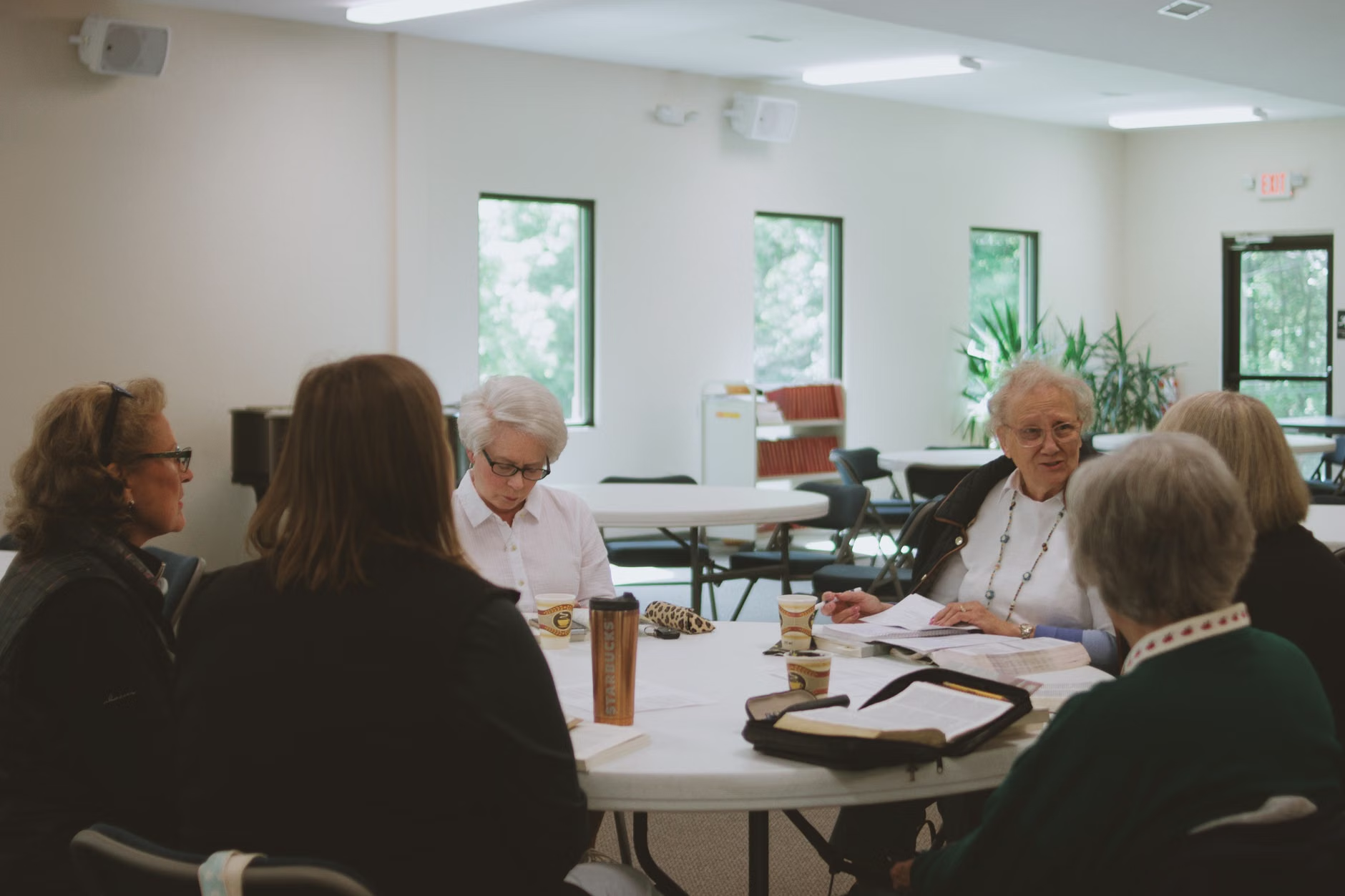
Overcoming Common Barriers to Participation
Even for the most avid reader, the idea of joining a group can be daunting. It is common to feel that you might not “keep up” with the reading or that you are not “literary enough.” These are misconceptions. The most successful book clubs are not academic seminars; they are social groups where the book is the catalyst for conversation, not the subject of a test.
Managing Reading Stamina and Vision
If you find that reading long novels is becoming physically taxing due to eye strain or stamina, consider these practical adaptations:
- Large Print Editions: Most local libraries can order these for you upon request.
- Audiobooks: Many clubs now accept members who listen to the audio version. This is an excellent way to continue participating if reading text for long periods is difficult.
- Short-Form Clubs: Look for groups that focus on short stories, poetry, or essays. These require less time investment and are often easier to manage if you have fluctuating energy levels.
Accessibility and Logistics Checklist
Before committing to a new group, verify the following to ensure the club is sustainable for your needs:
- Physical Accessibility: Ask, “Is the meeting room on the ground floor or served by an elevator?”
- Seating Comfort: “Are there chairs with back support available?” (Avoid groups that meet in cafes with high stools).
- Acoustics: “Is the environment quiet enough for those with hearing aids to follow a discussion?”
- Transit: “Is the location near a bus stop or does it have dedicated, accessible parking?”
The Hidden Value of “Intergenerational” Clubs
While many older adults prefer peer-only groups, there is significant, often overlooked value in intergenerational book clubs. These groups, often hosted by local universities or community centers, bring together adults aged 20s to 80s. The benefit here is the exchange of “lived history” versus “current context.”
When an 80-year-old discusses a historical novel, they bring a perspective of lived experience that younger readers lack. Conversely, younger members often bring insights into modern digital or societal contexts that enrich the older reader’s understanding. This cross-pollination of ideas is one of the most effective ways to keep the mind sharp and prevent the “siloing” of age groups. If you feel comfortable, seek out groups that market themselves as “community-wide” rather than “seniors-only.”

Practical Steps to Join or Start Your Own
If you have decided that a book club is a healthy next step for your social life, follow this roadmap to get started.
Phase 1: Finding an Existing Group
Start by visiting your local public library’s website. Most libraries maintain a list of active clubs. If they don’t have one that fits your schedule, ask the librarian if they know of private groups that use the library space. Websites like Meetup.com (ensure you use the official site) or local community center bulletins are also reliable resources.
Phase 2: The “Trial” Meeting
Never commit to a long-term group without attending one session as a guest. When you attend, observe the following:
- The Power Dynamic: Does one person dominate the conversation, or is the moderator skilled at inviting others to speak?
- The Atmosphere: Is the tone supportive and inquisitive, or is it overly critical?
- The Pacing: Do they spend the entire time discussing the book, or is there time for genuine social connection?
Phase 3: Starting Your Own (If Necessary)
If you cannot find a suitable group, starting one is simpler than it seems. You only need three people to begin. Use your existing social network—neighbors, former colleagues, or fellow church/community members. Keep the group size between 5 and 8 people; this ensures that everyone has a chance to speak without the conversation becoming chaotic.
Pro-Tip: Use a shared digital calendar or a simple email thread to coordinate dates. If technology is a barrier, designate one member to be the “Secretary” who sends a physical or phone reminder one week before each meeting.
Maintaining Long-Term Engagement
The biggest mistake people make is quitting because they didn’t finish the book. It is perfectly acceptable to attend a book club even if you haven’t finished the reading. Most groups are happy to have you participate based on the chapters you managed to read or simply to hear the discussion. The goal is the social connection; the book is merely the guest of honor.
If you find that the books selected are consistently uninteresting to you, suggest a new title. Most clubs operate on a democratic rotation where members take turns choosing the next book. This ensures that the group remains fresh and that everyone’s interests are represented over time.
Conclusion
A community book club is more than a leisure activity; it is a structural support system for your cognitive and social health. By engaging in the regular, structured analysis of literature, you are investing in your brain’s ability to process new information and your life’s capacity for meaningful social connection. Whether you join a large public group or start a small, intimate gathering in your living room, the key is to prioritize consistency and accessibility. Start small, look for groups that match your physical and social needs, and remember that the conversation is always more important than the final page.
Frequently Asked Questions (FAQ)
1. Do I need to be a fast reader to join a book club?
Not at all. Most book clubs meet once a month, which provides ample time to read at your own pace. If you struggle with reading speed or eye fatigue, consider using audiobooks or choosing groups that focus on shorter works like novellas or short story anthologies.
2. What if I feel intimidated by the other members’ knowledge?
It is important to remember that a book club is not a classroom. There are no “right” answers when it comes to literary interpretation. If you find a group that feels elitist or critical, it is not the right group for you. Look for clubs that emphasize “sharing perspectives” rather than “analyzing themes.”
3. How can I ensure the environment is physically accessible?
Always ask specific questions before your first visit. Ask if there are stairs, what the seating is like (e.g., hard wooden chairs vs. cushioned armchairs), and if the location has accessible restrooms. If you are joining a group at a private home, do not hesitate to ask the host about these details—they will likely appreciate your proactive approach to ensuring your comfort.
For further information on the benefits of social activity for older adults, you may refer to resources provided by the National Institute on Aging (NIA) regarding social connectedness and brain health.