- Prioritize Accessibility: Not all historic funiculars are created equal; always verify the “step-free” status and platform-to-carriage gap before arriving.
- Master the Pacing: Use funiculars as a tool to bypass steep inclines, allowing you to save your energy for flat-ground exploration at the summit.
- Plan for Peak Times: Avoid the midday tourist rush to ensure you can board comfortably, sit down immediately, and avoid standing in crowded, narrow aisles.
Funiculars—those iconic cable-driven railways designed to conquer steep urban gradients—are often the most efficient way to explore ancient cities. For travelers aged 60 to 80, they offer a vital lifeline, allowing you to bypass grueling climbs while enjoying panoramic views. However, the antiquity of these systems often clashes with modern accessibility standards. This guide provides a comprehensive framework for navigating these systems safely, efficiently, and with minimal physical strain.
Understanding the Mechanics: Why Funiculars Matter for Mobility
In many historic cities like Lisbon, Budapest, or Quebec City, the geography was never designed for modern foot traffic. Steep hills, cobblestone streets, and narrow stairways can quickly exhaust even the most active senior traveler. A funicular is essentially a counterbalanced rail system where one car goes up as the other comes down, providing a smooth, reliable, and relatively fast transit solution.
For the senior traveler, the primary benefit is energy preservation. By using a funicular to reach the “upper town,” you reserve your stamina for walking through historical sites, museums, or gardens once you reach the summit. Instead of spending two hours hiking up a 15-degree incline, you spend five minutes on a funicular, leaving you with fresh legs for the rest of your day.
The Trade-off: Convenience vs. Infrastructure
While funiculars are a blessing, they are not always perfectly accessible. Many were built in the 19th or early 20th centuries. While some have undergone major modernizations, others remain challenging. You must distinguish between “step-free” and “accessible.” A station might have a lift, but that lift could be out of service or located at the far end of a long tunnel. Always check the official transport operator’s website for “real-time elevator status” before heading out.
Pre-Travel Assessment: Is the Funicular Right for Your Itinerary?
Before you commit to a destination, evaluate the specific funiculars you intend to use. Not all systems offer the same level of comfort or safety. Use the following criteria to make an informed decision:
| Feature | What to Look For | Why It Matters |
|---|---|---|
| Platform Access | Is there a level path or elevator from the street to the platform? | Reduces risk of tripping on stairs or uneven street gradients. |
| Carriage Entry | Is the floor level with the platform? | Ensures safe boarding without needing to step up or down. |
| Seating | Are there dedicated priority seats? | Prevents the need to stand during the ascent/descent. |
| Frequency | How often do they run? | Determines if you can avoid peak-hour crowding. |
If you find that a specific funicular requires climbing a flight of stairs just to reach the platform, it may not be the optimal choice for someone with limited mobility. In such cases, look for alternative bus routes or taxi drop-off points that reach the same summit.
Strategic Planning: The “Off-Peak” Advantage
One of the most common mistakes travelers make is attempting to use funiculars during “rush hours” or prime tourist windows (typically 10:00 AM to 12:00 PM and 3:00 PM to 5:00 PM). During these times, carriages are often packed to capacity, leaving you to stand, hold onto rails, and navigate through crowds—all of which increase the risk of falls.
The Strategy: Aim for the “early bird” or “late afternoon lull.” Most funiculars begin operations early, often by 7:00 AM or 8:00 AM. By heading out early, you gain two advantages: the air is cooler (which is crucial for stamina), and the carriages are significantly emptier. This allows you to choose your seat, typically near the window for the best views, and board without the pressure of a crowd pushing from behind.
Managing the “Last Mile”
Even after you exit the funicular, you are rarely at your exact destination. Ancient city centers often have uneven surfaces. Always account for the “last mile”—the distance between the funicular terminal and your actual destination. If this area is covered in historic cobblestones (often called “setts”), consider wearing shoes with high-traction, shock-absorbing soles. If you use a walking aid, ensure it has a rubber ferrule (tip) that provides good grip on smooth stone, which can become slippery when damp.
Safety Protocols for Senior Travelers
Navigating public transit in a foreign city requires a different level of vigilance. Here are the core safety pillars for using funiculars:
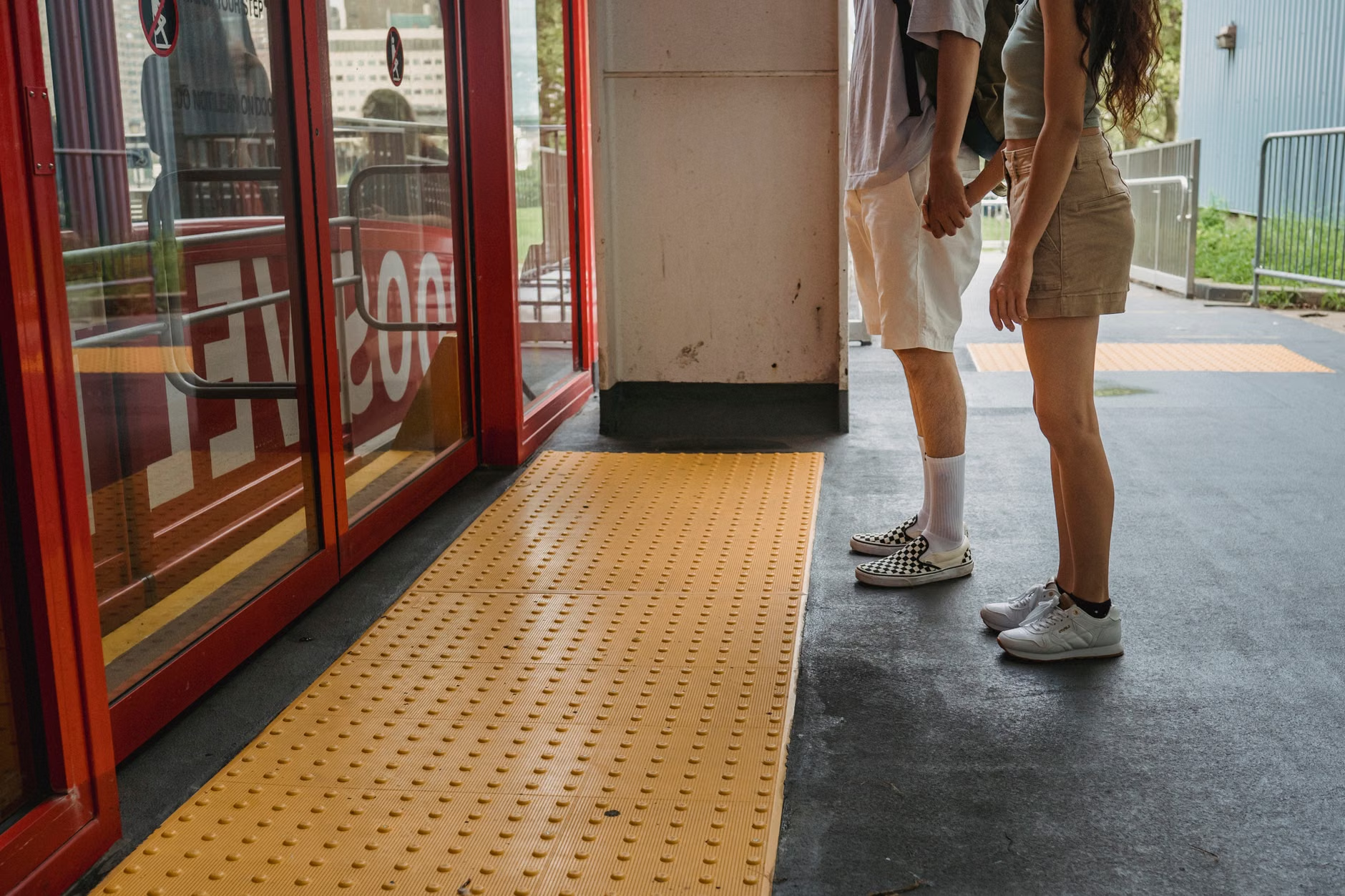
- The Boarding Gap: Even in modern systems, there is often a gap between the platform and the carriage. Always watch your step. If you are traveling with a companion, have them board first to help stabilize you if needed.
- Stabilization: Once inside, find a seat immediately. If no seats are available, position yourself near a sturdy handrail. Avoid standing in the middle of the aisle where sudden movements of the carriage could cause you to lose balance.
- Luggage Management: Avoid bringing large suitcases on funiculars. If you are moving between hotels, use a luggage transfer service or a taxi. A large suitcase significantly increases your center of gravity and makes navigating narrow carriages or stairs nearly impossible.
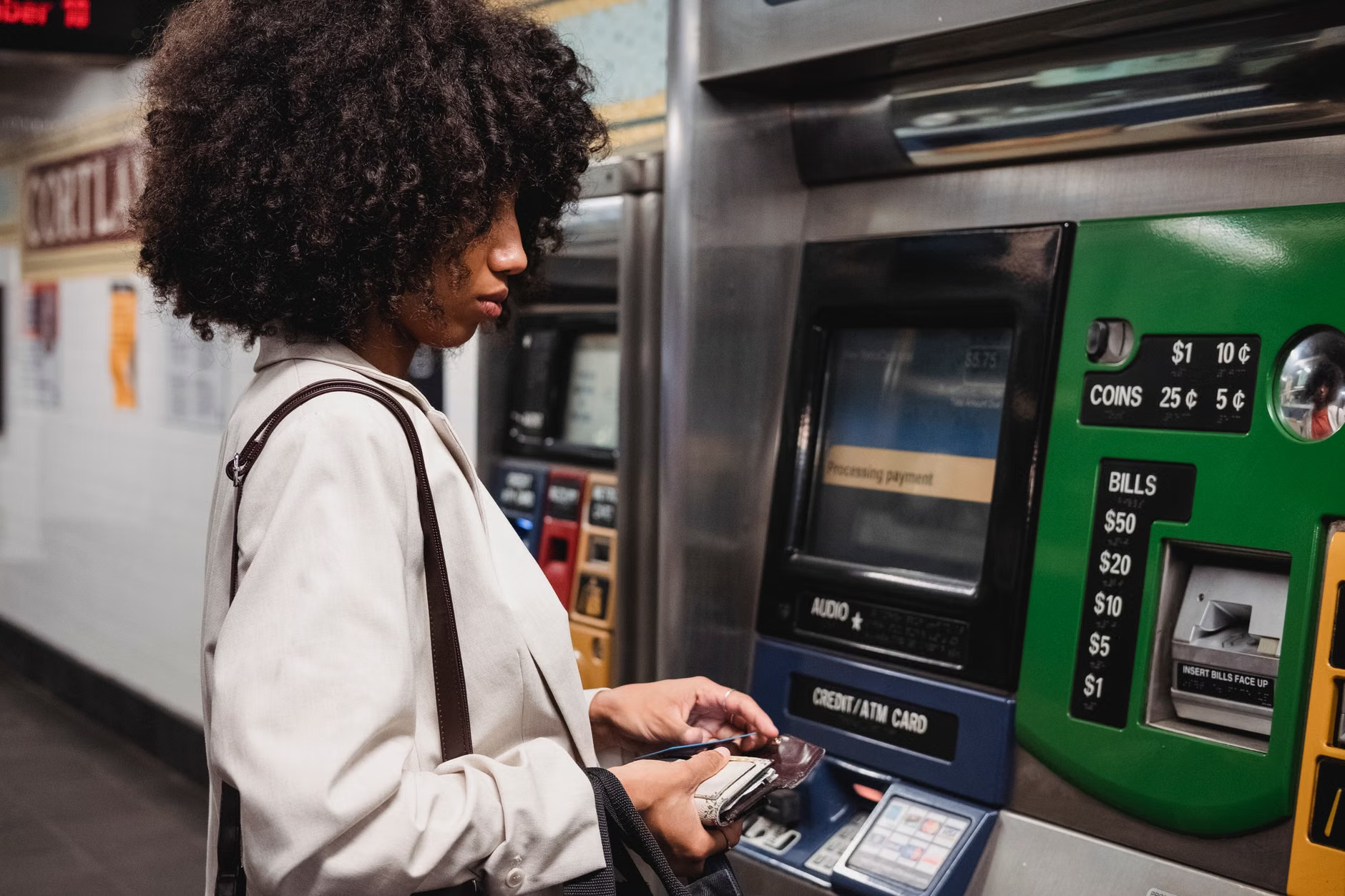
- Digital vs. Physical Tickets: Many cities have shifted to digital apps for transit. While convenient, they can be unreliable if your phone battery dies or if you have connectivity issues. Always carry a physical transit card or enough local currency for a paper ticket as a backup.
When to Opt Out: Recognizing Your Limits
It is perfectly acceptable to decide that a funicular is not the right choice for a particular day. If you are feeling fatigued, if the weather is poor (making outdoor paths slippery), or if the station is reported to have a broken elevator, do not force it.
Alternative transport is often available. In many European cities, “hop-on, hop-off” sightseeing buses or local city buses follow routes that reach the same summits as the funiculars. While you may miss the novelty of the cable ride, you gain the benefit of a direct, seated, and often more accessible journey to your destination. Always prioritize your comfort over the “tourist experience” of a specific transport mode.
The Hidden Variables of Funicular Travel
Beyond the obvious, there are subtle factors that can make or break your experience. One such factor is temperature control. Older funicular carriages often lack air conditioning. On a hot summer day, a small, enclosed carriage can become stifling. If you suffer from heat sensitivity, check if the specific funicular has open-air windows or proper ventilation. If it is a closed, glass-walled carriage in mid-summer, plan to use it only during the coolest hours of the day.
Another overlooked variable is the incline angle. Some funiculars climb at very steep angles. If you have inner-ear issues or vertigo, the sensation of the steep ascent can be disorienting. If you are prone to motion sickness, try to sit facing the direction of travel, or if that is not possible, keep your eyes on the horizon rather than the moving foreground.
Practical Preparation Checklist
Before your trip, follow this checklist to ensure a seamless experience:
- Map the Route: Use Google Maps or local transit apps to see the exact distance from the funicular station to your hotel.
- Check Official Websites: Visit the official operator’s site (e.g., Carris in Lisbon, BKK in Budapest) to check for planned maintenance or accessibility notices.
- Pack Light: Use a cross-body bag for your essentials to keep your hands free for railings.
- Medication and Hydration: Keep your medications and a water bottle in an easily accessible pocket of your bag.
- Emergency Contacts: Have the address of your accommodation written in the local language on a card in your pocket.

Case Study: A Hypothetical Day of Exploration
Imagine a traveler, let’s call her Elena, age 72, visiting a historic city known for its hills. Elena wants to visit a famous cathedral at the top of the “Old Town.” She researches the city’s funicular and finds it is the most popular way up.
Instead of arriving at 11:00 AM, when the lines are long, she arrives at 8:30 AM. She has already checked the transport app and confirmed the elevators at both the bottom and top stations are operational. She uses her transit card to breeze through the gates, boards a mostly empty carriage, and sits near the window. By 9:00 AM, she is at the summit. Because she took the funicular, she has plenty of energy to enjoy the cathedral and a leisurely lunch nearby. By 2:00 PM, she decides she has seen enough and takes a local bus back down, avoiding the afternoon crowds. Elena’s day was successful because she treated the funicular as a tool for efficiency, not just a tourist attraction.
Conclusion
Navigating ancient city funiculars is about balance. It is about using the ingenuity of the past to help you enjoy the beauty of the present. By researching accessibility, timing your trips to avoid crowds, and keeping your physical needs at the forefront of your planning, you can turn a potentially stressful climb into a highlight of your travel experience. Remember, the goal of travel is enrichment and enjoyment; if a particular mode of transport feels like a hurdle rather than an aid, there is always another way to see the city.
For more information on accessible travel, you may find these resources useful:
- European Network for Accessible Tourism (ENAT) – Provides global insights into making travel inclusive for all ages and abilities.
- Lonely Planet’s Accessible Travel Guide – Practical tips for navigating global transport systems.
Frequently Asked Questions
1. Are all historic funiculars equipped with elevators for wheelchair or limited-mobility access?
No. Many historic funiculars are protected by heritage status, which sometimes prevents the installation of modern elevators. Always check the official website of the specific transit authority for that city to verify if the station is “step-free” or “wheelchair accessible” before planning your route.
2. Is it better to buy tickets in advance or at the station?
In most cities, if you have a multi-day city transit pass, it will cover the funicular. If you are buying individual tickets, check if there is an app. Buying in advance via an official app is generally better as it saves you from needing to find a ticket machine or having exact change at the station, reducing stress during boarding.
3. What should I do if I feel overwhelmed by the crowd at a funicular station?
If you arrive at a station and find it unexpectedly crowded, do not feel pressured to board. Step aside to a quieter area, wait for the next carriage, or reconsider your route. There is no shame in choosing a taxi or a bus if the environment feels unsafe or too physically demanding. Your safety and comfort are the top priorities.