- Ergonomic Support: New 2026 standards prioritize armrests that extend to the front of the seat, allowing for safer, leverage-based standing.
- Strategic Placement: Global urban planning now mandates “Rest Intervals,” ensuring seating is available every 100 meters in high-traffic pedestrian zones.
- Inclusion-First Materials: Designs are moving toward temperature-regulated, non-slip surfaces to prevent discomfort and falls regardless of the season.
As we move into 2026, the global approach to public infrastructure is undergoing a significant transformation. For older adults, the humble park bench—once an afterthought in urban planning—has become a focal point of “age-friendly” city initiatives. These design updates are not merely aesthetic; they are evidence-based interventions aimed at promoting physical activity, reducing social isolation, and ensuring that public spaces remain accessible to everyone, regardless of mobility level.
The Evolution of Ergonomic Seating: Why 2026 Designs Matter
Historically, park benches were designed for durability and mass production, often ignoring the biomechanical needs of the aging body. By 2026, international standards, such as those influenced by the WHO’s Age-Friendly Cities framework, have shifted the focus toward “assisted mobility” design. This means benches are no longer just places to sit; they are tools that facilitate the transition between sitting and standing.
Why does this matter? For many individuals between 60 and 80, the primary barrier to enjoying outdoor spaces is the “fear of the sit-to-stand transition.” If a bench is too low, lacks armrests, or is angled incorrectly, the physical effort required to rise can cause joint strain or loss of balance. Modern designs now incorporate specific height requirements—typically between 45 and 50 centimeters—to align with the hip joint, minimizing the torque on knees and lower back muscles.

In real life, this looks like the implementation of “leverage-ready” armrests. Unlike older, thin metal bars, 2026-standard armrests are wider, textured for a non-slip grip, and extend slightly beyond the front edge of the seat. This extension allows you to place your weight forward and push off safely before your feet even touch the ground, effectively turning the bench into a supportive anchor.
Rest Intervals: The New Metric for Urban Accessibility
One of the most significant changes in 2026 is the adoption of “Rest Interval Mapping” by municipal planners in cities across Europe, North America, and parts of Asia. This policy dictates that in designated walking zones, a resting point must be available at least every 100 meters. This distance is calculated based on the average stamina of an adult with mild mobility challenges, ensuring that a walk to the grocery store or the local library is not limited by the lack of a place to pause.
How to Evaluate Your Local Seating Options
When you are out and about, you can judge the quality of public seating by applying the “Three-Point Check.” If a bench meets these criteria, it is designed for your long-term health and mobility:
| Feature | What to Look For | Why It Matters |
|---|---|---|
| Armrest Extension | Does the armrest stick out past the seat edge? | Provides a solid point for pushing up to stand. |
| Backrest Angle | Is it angled at 100-110 degrees? | Reduces strain on the lumbar spine. |
| Seat Depth | Is it between 40-45 cm? | Prevents the “sinking” feeling that makes rising difficult. |
If you find that a bench fails these criteria, it is often better to seek out a different resting spot if your stamina allows, or to use a portable walking stick seat if you frequently encounter poorly designed furniture. The risk of over-exertion while trying to stand from an improperly designed seat is a leading cause of minor falls in public spaces.
Material Science: Beyond Wood and Cold Metal
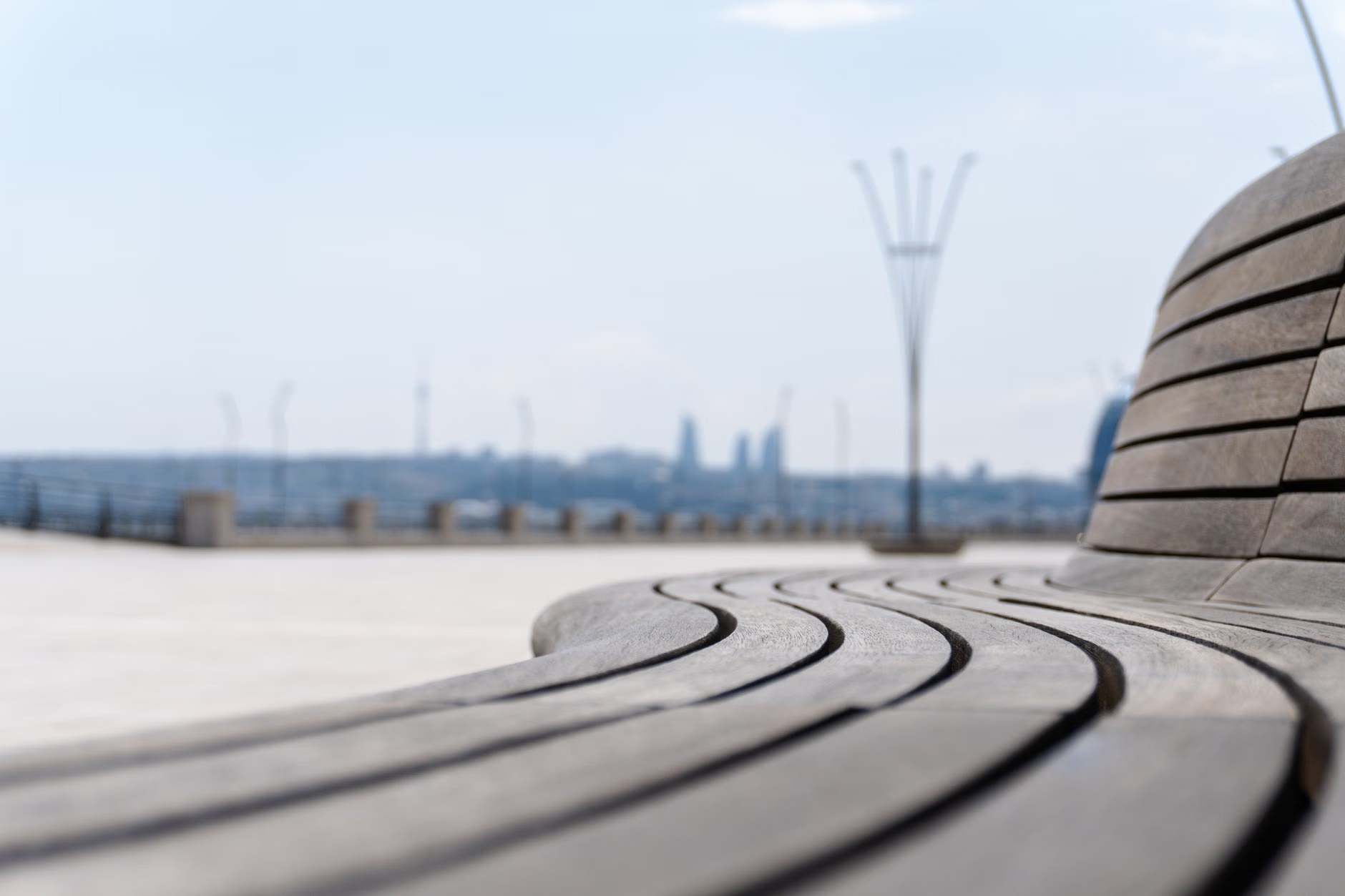
A major trend in 2026 is the move away from untreated timber (which rots) and uninsulated steel (which becomes dangerously hot or cold). New materials being deployed globally include high-density composite polymers that maintain a neutral temperature. This is a crucial, often overlooked variable for older adults who may have sensory sensitivities or thin skin that is prone to irritation from extreme temperatures.
What you can do: When visiting parks in extreme climates, look for benches that use “slatted” designs or composite materials. If you must sit on a cold or hot metal bench, keeping a small, foldable foam cushion in your bag is a practical, low-cost solution. It provides an immediate thermal barrier and adds a small amount of height, making the transition to standing significantly easier.
Social Connectivity and Modular Design
Public health experts in 2026 have emphasized that benches serve a secondary, equally vital purpose: combating social isolation. The “modular” bench is the new standard. These are not just long, straight rows of seats. Instead, they are designed in “L” or “U” shapes, or they feature integrated spaces for wheelchairs, walkers, or strollers to pull up directly alongside the seated area. This allows you to interact with friends or family members without having to move to a different, less accessible chair.

In practice, this means that when you are planning a trip to a park with a companion who uses a mobility aid, you should look for these flexible seating zones. They are often marked with the international accessibility symbol or simply designed with wider gaps between segments. Taking advantage of these spaces ensures you are not forced into a position where you are separated from your group, which is a common source of frustration during outings.
Understanding these trends is only half the battle. As an active participant in your community, you have a role in advocating for better infrastructure. If your local park is lacking in safe, accessible seating, you can often contact your local municipal “Parks and Recreation” department. Most cities have a dedicated portal for reporting infrastructure gaps. When you report a lack of seating, be specific: mention that the lack of armrests or the distance between benches prevents you from using the park safely. Use the term “Age-Friendly Standards” to align your request with current global best practices.
Furthermore, when choosing a destination for travel, check the city’s “Accessibility Map.” Many major cities now provide digital overlays that show where benches, toilets, and ramps are located. This is an essential tool for maintaining your independence while traveling. By planning your route around these assets, you reduce the physical burden of the trip and increase the time you can spend enjoying your destination.
The Future of Smart Seating
As we look toward the remainder of 2026 and beyond, we are seeing the introduction of “Smart Benches” in select pilot programs. These benches include integrated solar-powered lighting for safety during the evening and, in some cases, simple emergency call buttons. While these technologies are still in their infancy, they represent a significant shift in how we view the park bench: not as a static object, but as a piece of connected, supportive infrastructure. For the older adult, this means that the public space is becoming a safer, more responsive environment that actively supports your desire to remain active and connected.
Conclusion: Taking Control of Your Outdoor Experience
The 2026 trends in park bench design represent a fundamental recognition that public space must be inclusive of all ages. By understanding the importance of ergonomic features like armrests, the value of regular rest intervals, and the benefits of modern, temperature-regulated materials, you can make informed decisions about where you spend your time. Your ability to navigate the world with confidence is supported by these design improvements, but it is also reinforced by your own proactive choices—such as carrying a seat cushion, choosing routes with adequate resting points, and advocating for the standards you deserve in your local community.
The transition to a more age-friendly world is a collaborative process. By utilizing these new design standards, you are not only improving your own daily well-being but also contributing to a culture that values the presence and participation of older adults in every corner of our shared public life.
Frequently Asked Questions
1. What is the standard height for an age-friendly park bench?
The global consensus for 2026 is a seat height of 45 to 50 centimeters (approximately 18 to 20 inches). This height is designed to allow the average adult to stand up with minimal strain on the knees and hips, as it allows for a more natural pivot point when transitioning from a seated to a standing position.
2. How can I identify if a bench is safe for someone with mobility issues?
Look for the “Three-Point Check”: solid armrests that extend to the front of the seat, a backrest that provides lumbar support, and a seat surface that is not slippery or overly slanted. If a bench lacks armrests, it is generally not recommended for those who struggle with balance or joint pain, as it offers no leverage for standing.
3. Are these “age-friendly” designs available in all countries?
While the WHO’s Age-Friendly Cities framework is a global guide, implementation varies by jurisdiction. Many European and North American cities have adopted these standards as part of their urban planning codes. In other regions, progress is driven by local municipal initiatives. You can often check your local city council’s website for “Accessibility and Inclusion” policies to see if these standards are being applied to your local parks.
For further information on global age-friendly standards, visit the WHO Global Network for Age-friendly Cities and Communities.