- Botanical sketching acts as “active observation,” shifting the brain from passive looking to deep analysis, which strengthens neural pathways associated with focus.
- You do not need artistic talent to gain cognitive benefits; the value lies in the process of translating visual information onto paper, not the final result.
- A consistent 20-minute daily sketching practice can serve as a meditative tool, reducing cortisol levels and improving fine motor coordination in the hands and wrists.
Botanical sketching—the practice of drawing plants, flowers, and leaves—is far more than a creative hobby. For adults aged 60 to 80, it serves as a powerful cognitive exercise that combines visual perception, spatial reasoning, and fine motor control. Unlike passive hobbies, sketching requires the brain to engage in “active observation,” a process that forces the mind to slow down and categorize the intricate details of the natural world.
The Cognitive Mechanics of Active Observation
When you look at a flower casually, your brain often relies on shortcuts. You identify it as “a rose” and move on. However, when you commit to sketching that rose, your brain must perform a series of complex tasks. You are no longer just identifying; you are analyzing. You must determine the angle of the stem, the curvature of the petals, the overlapping shadows, and the specific texture of the leaves.
This process engages the prefrontal cortex, the area of the brain responsible for complex cognitive behavior, decision-making, and moderating social behavior. By forcing the brain to translate three-dimensional objects into two-dimensional lines, you are effectively engaging in a form of neuroplasticity training. This is not about “drawing well”; it is about the neurological effort required to observe and replicate reality.
Why Detail Matters for Memory
Research into cognitive health often highlights the importance of “novelty and challenge.” Sketching provides both. Every plant is different, meaning your brain cannot rely on a pre-existing template. You must observe the unique growth pattern of each specimen. This heightened state of attention is a form of mindfulness that can reduce the mental clutter often associated with high-stress daily routines.
Getting Started: A Practical Approach to Botanical Sketching
Many people avoid drawing because they believe they lack “artistic talent.” It is critical to distinguish between artistic production and cognitive exercise. For your health, the quality of the drawing is irrelevant. The value is entirely in the effort of observation.
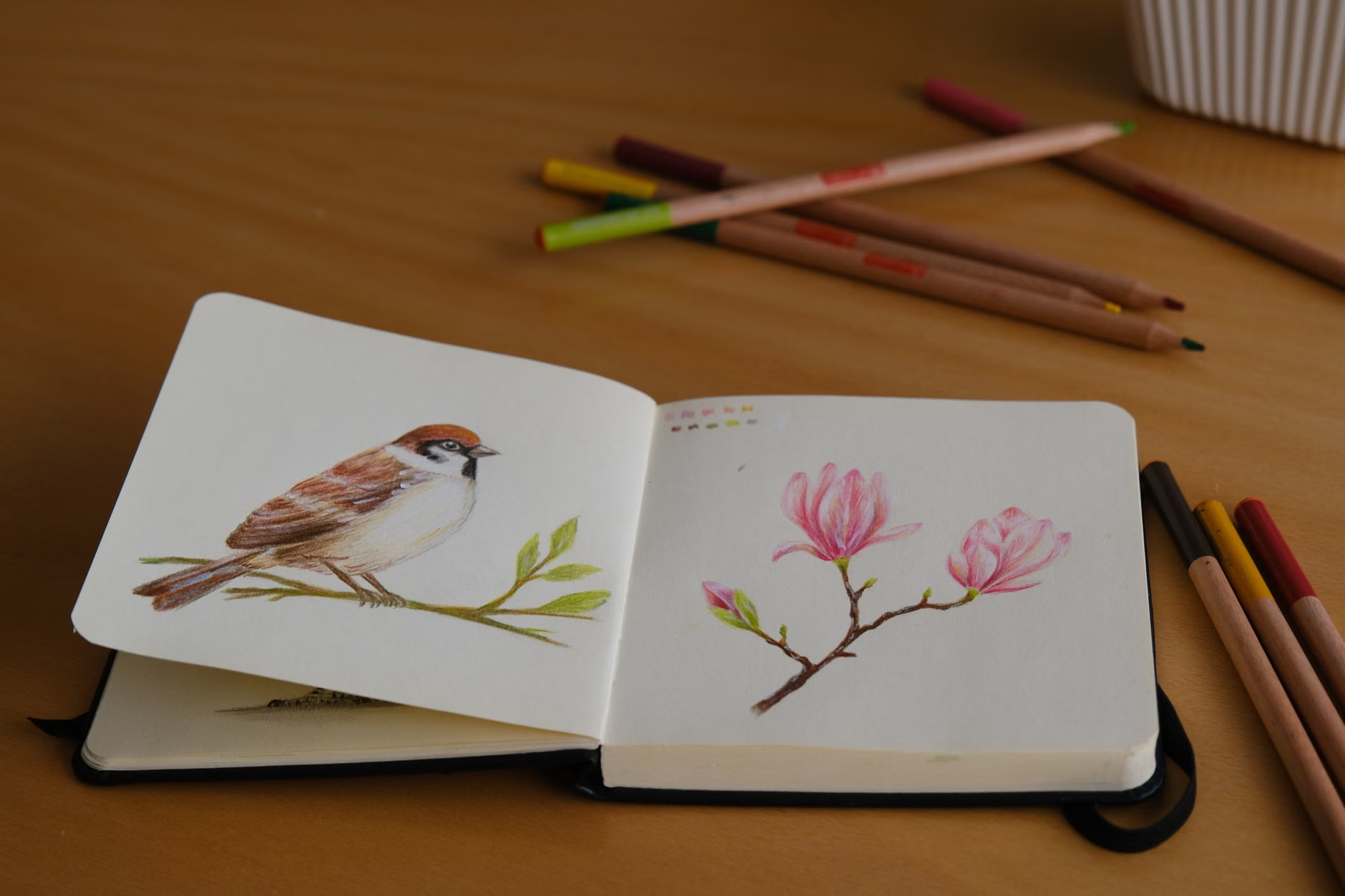
Essential Tools for Beginners
You do not need expensive equipment. In fact, keeping your kit simple reduces the “barrier to entry” and encourages more frequent practice. Here is a recommended starter list:
| Tool | Purpose | Recommendation |
|---|---|---|
| Graphite Pencils | Variable line weight and shading | HB for outline, 2B for shading |
| Sketchbook | Consistent practice surface | A5 size (portable and manageable) |
| Soft Eraser | Correcting alignment | Vinyl or kneaded eraser |
Practical Decision Rule: If you struggle with grip due to arthritis or general joint stiffness, look for “jumbo” or triangular-shaped pencils. These require less pressure and offer a more stable hold, allowing you to focus on the observation rather than the mechanics of holding the tool.
Step-by-Step: The Observation-to-Sketch Workflow
To maximize the cognitive benefits, follow this structured workflow. This prevents the frustration that often comes from trying to draw the “whole” plant at once.
- Selection: Choose a single, simple subject. A single leaf or a small wildflower is ideal. Avoid complex bouquets initially.
- The “Squint” Test: Squint at your subject to ignore color and detail, and identify the “gestalt” or the basic geometric shape (circle, triangle, or oval) that the plant occupies.
- Light Outline: Use an HB pencil to draw the main structural lines very lightly. Do not press hard. These are your “map” lines.
- Detailing: Only after the structure is correct should you begin to add veins, serrated edges, or shadows.
- Reflection: Spend one minute looking back and forth between your drawing and the plant. Ask yourself: “Does my line match the curve I see?”

Integrating Sketching into Daily Wellbeing
Cognitive benefits are cumulative. A single hour-long session once a week is less effective for brain health than 15 to 20 minutes of daily practice. This consistency creates a “cognitive rhythm” that helps lower cortisol levels. When you focus on a leaf, you cannot simultaneously worry about upcoming appointments or household chores. This provides the brain with a necessary “reset” period.
Managing Physical Considerations
For those with limited stamina or mobility, botanical sketching is an ideal “seated” activity. However, maintaining good posture is essential to avoid neck and back strain. Ensure your chair provides adequate lumbar support and that your sketchbook is elevated on a slight incline (a sturdy book or a drafting board) so you are not hunched over the paper for long periods.
Safety Note: If you experience eye strain or headaches, ensure you are working in a well-lit area, preferably near natural daylight. Avoid fluorescent lighting if possible, as the flicker can contribute to fatigue during detailed work.
The Unexpected Benefits: Fine Motor Skills and Spatial Reasoning
While the cognitive benefits for the brain are significant, the physical benefits for the hands are equally valuable. The precise control required to draw a thin line or shade a small area helps maintain dexterity in the fingers and wrists. This is a form of gentle, functional exercise that keeps the small muscles of the hand engaged.

Furthermore, sketching improves spatial reasoning. As you practice, you become better at understanding how objects exist in space—how one petal overlaps another, or how a stem disappears behind a leaf. This spatial awareness is vital for maintaining balance and navigating physical environments, as it relies on the same sensory processing systems that help us understand our position in the world.
Addressing Common Misconceptions
A common mistake is the belief that one must go outside to “find” plants to sketch. While nature is the best source, you can practice with store-bought flowers, house plants, or even a single piece of fruit. The cognitive benefit is identical. The goal is to avoid the convenience of working from a photograph. Drawing from life (a real object) is superior to drawing from a screen because your brain must process the 3D depth and changing light of the real object.
Another misconception is that it is “too late to learn.” Neuroplasticity—the brain’s ability to form new connections—does not stop at age 60, 70, or 80. While the rate of change may vary, the brain remains capable of learning new motor and analytical skills throughout life. Botanical sketching is a low-risk, low-cost intervention that provides a high-value challenge for the aging brain.
Consistency and Progress: A Roadmap
To turn this into a sustainable habit, treat it as a scheduled appointment. If you find yourself losing motivation, try the following:
- The 10-Minute Rule: If you don’t feel like sketching, commit to just 10 minutes. Often, the act of starting is the hardest part. If you want to stop after 10 minutes, you have still achieved your cognitive goal for the day.
- The “Specimen” Log: Keep a record of what you have sketched. Seeing a list of 30 or 40 plants you have observed over a month provides a sense of accomplishment that encourages continuation.
- Join a Local Group: Many community centers or botanical gardens offer “nature journaling” or sketching groups. The social aspect adds another layer of cognitive engagement, as you discuss your observations with others.
Conclusion: A Path Forward
Botanical sketching offers a unique synthesis of mental discipline and physical dexterity. By choosing to engage in the deliberate observation of nature, you are not just creating a picture; you are investing in the maintenance of your cognitive sharpness. The key is to shift your focus from the aesthetic output to the process of observation itself. Start with a single leaf, keep your tools simple, and prioritize the daily practice. Your brain will thank you for the challenge.
Frequently Asked Questions
1. Does it matter if I am “bad” at drawing?
Not at all. The cognitive benefits come from the act of observing, not the final image. Even a simple outline that captures the basic shape of a plant provides the brain with the necessary stimulation to strengthen focus and attention.
2. Can this help with hand arthritis?
Botanical sketching can help maintain dexterity and fine motor control. However, if you have severe arthritis, use larger pencils or add a foam grip to your pencils to reduce strain. Always stop if you feel sharp pain or significant discomfort.
3. How often should I practice to see cognitive benefits?
Consistency is more important than duration. Aim for 15 to 20 minutes of daily practice rather than one long, infrequent session. This keeps the brain in a state of regular, manageable engagement.
Further reading on the cognitive benefits of arts-based activities can be found through official resources like the National Institute on Aging (NIA) regarding the importance of engaging in activities that challenge the brain.