- The thoracic spine (the mid-back) is designed for rotation; maintaining this range of motion is essential for daily tasks like driving, reaching, and looking behind you.
- Seated thoracic twists provide a safe, low-impact way to improve spinal flexibility without the strain often associated with floor-based exercises.
- Consistency is more important than intensity; performing gentle, controlled movements daily is more effective than infrequent, strenuous stretching.
Understanding the Importance of Thoracic Mobility
As we navigate our 60s, 70s, and beyond, the health of our spine becomes a cornerstone of functional independence. Many people focus heavily on lumbar (lower back) or cervical (neck) health, often overlooking the thoracic spine—the middle section of the spine that spans from the base of the neck to the bottom of the rib cage. This region is the primary engine for rotation, which is critical for turning your torso, looking over your shoulder while driving, or reaching across your body to grab an item from a shelf.
When the thoracic spine becomes stiff, the body compensates by putting extra stress on the lower back or the neck. This compensation often leads to discomfort or reduced range of motion in those more vulnerable areas. By focusing on seated thoracic twists, you are not just “stretching”; you are actively maintaining the structural integrity of your mid-back, which in turn protects your posture and reduces the risk of strain during everyday activities.
It is important to note that this exercise is a preventive measure. If you are currently experiencing sharp, shooting pain, numbness, or radiating sensations down your arms or legs, these are indicators that you should consult a physical therapist or a physician before beginning any new movement routine. This guide assumes you are looking to maintain or improve existing mobility in the absence of acute injury.

Why the Seated Position is Ideal for Seniors
For many older adults, getting down to the floor to perform traditional yoga or stretching exercises can be a significant barrier. Whether due to knee pain, hip stiffness, or simple concerns about balance and the ability to get back up, the floor is not always a practical environment for daily movement. The seated thoracic twist is a “high-accessibility” intervention.
The chair provides a stable, grounded base. By removing the need to manage balance, you can direct your full neurological and muscular effort toward the rotation of the spine. Furthermore, the height of a standard chair allows for proper hip positioning, which ensures that the rotation is isolated to the thoracic spine rather than the lower back.
The Mechanics of a Safe Twist
The goal of a thoracic twist is not to see how far you can turn, but to move through your available range with control. When you force a twist, you risk putting unnecessary torque on the facet joints—the small stabilizing joints between your vertebrae. A controlled, gentle movement allows the muscles surrounding the spine to lengthen gradually.
| Feature | What to Prioritize | Why It Matters |
|---|---|---|
| Chair Stability | Use a chair without wheels. | Prevents sliding or accidental movement during the stretch. |
| Spinal Alignment | Keep the crown of your head reaching upward. | Maximizes the space between vertebrae for safer rotation. |
| Breathing | Exhale during the rotational phase. | Helps relax the intercostal muscles between the ribs. |
If you have osteoporosis or significant osteopenia, please be aware that extreme twisting movements (twisting to the absolute limit of your range) are generally discouraged by clinical guidelines. Instead, focus on a “gentle rotation” that stops well before you feel any resistance or tightness. The goal is blood flow and mobility, not maximum range.
Step-by-Step Guide: Performing the Seated Thoracic Twist
Before you begin, ensure you are in a quiet, stable environment. Wear comfortable, non-restrictive clothing that allows you to move your arms freely. If you have a history of spinal surgery, please check with your surgeon regarding which movements are permitted for your specific case.
- Setup: Sit toward the front edge of a sturdy, non-rolling chair. Place your feet flat on the floor, about hip-width apart. Ensure your knees are at roughly a 90-degree angle.
- Posture: Imagine a string attached to the top of your head, gently pulling you toward the ceiling. Your spine should be long and upright, not slumped against the backrest.
- The Hold: Place your left hand on the outside of your right knee. Place your right hand either on the seat of the chair behind you or on the backrest if it is low enough to reach comfortably.
- The Rotation: Inhale deeply. As you exhale, slowly begin to turn your torso toward the right. Start the movement from your mid-back, not your shoulders. Think about your rib cage rotating, rather than just pulling with your arms.
- The Hold: Hold this position for 10 to 15 seconds. Continue to breathe normally. Do not hold your breath, as this increases blood pressure and creates unnecessary tension.
- Return: Slowly return to the center position. Take a full breath before repeating the process on the left side.
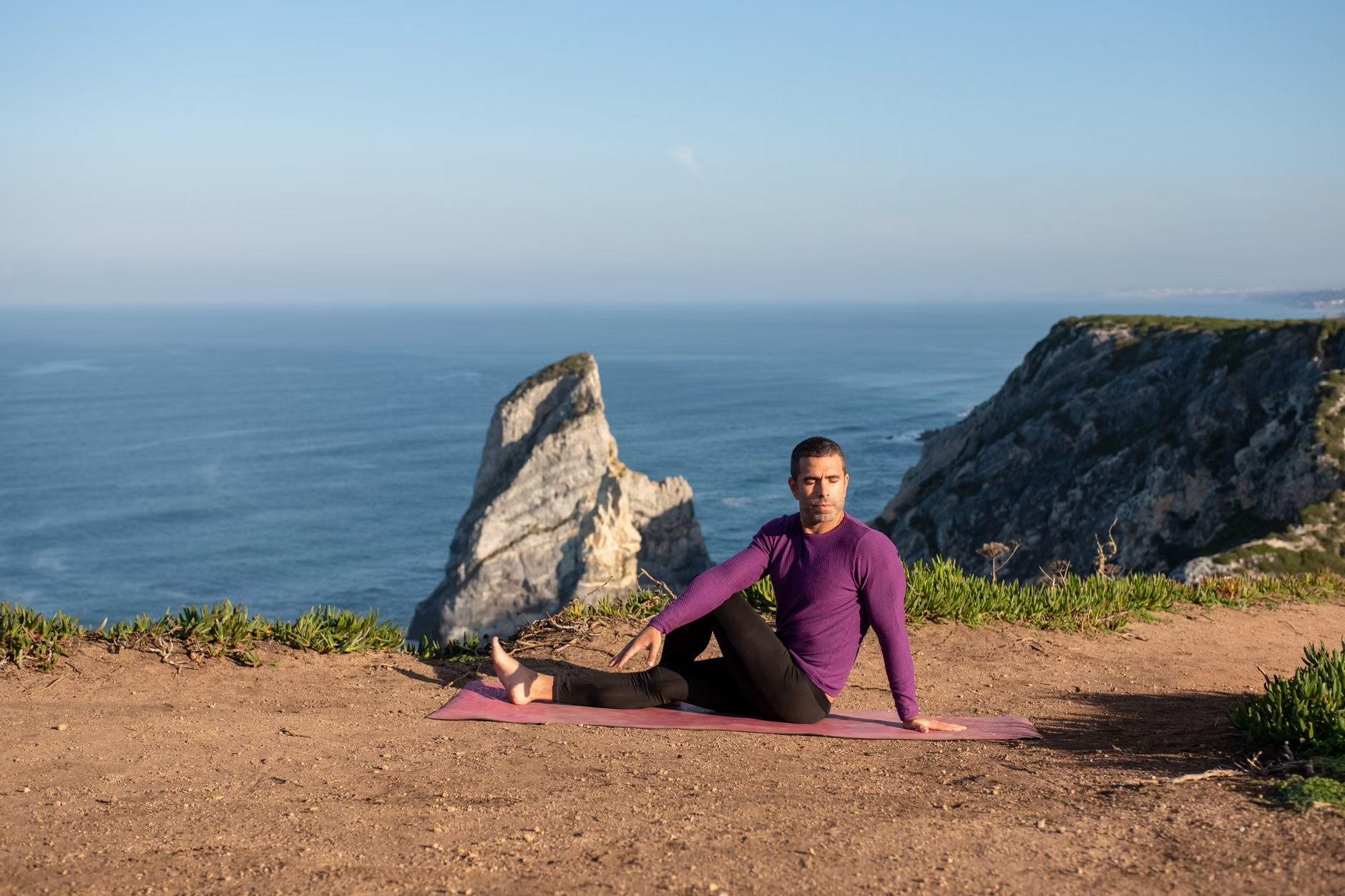
Common Mistakes and How to Avoid Them
Even simple exercises can be performed incorrectly if we are not mindful of our form. Here are three common pitfalls to watch for:
- Pulling with the Arms: Many people use their hands to force their body further into the twist. This turns the exercise into a passive stretch of the arms rather than an active mobilization of the spine. Use your hands only as guides or anchors, not as levers.
- Ignoring the Lower Back: If you feel the twist primarily in your lower back (the lumbar spine), you are likely rotating too far or starting the movement incorrectly. The lumbar spine has very little rotational capacity compared to the thoracic spine. If you feel lower back strain, reduce the intensity of the twist immediately.
- Leading with the Chin: Some people try to look further behind them by cranking their neck. Keep your chin aligned with your sternum (breastbone). Where your chest goes, your head should follow.
The Role of Breath in Mobility
Breathing is often the most overlooked component of spinal health. The muscles of the rib cage (the intercostals) are directly attached to the thoracic spine. When you take a deep, slow breath, you are essentially performing an internal stretch of these muscles. By timing your rotation with your exhalation, you are working with your body’s natural rhythm, which helps the nervous system transition into a state of relaxation, making the muscles more receptive to movement.
Advanced Considerations for Long-Term Spinal Health
Once you have mastered the basic seated twist, you might wonder how to integrate this into a broader lifestyle of spinal care. Movement is not a “one-off” activity. The spine thrives on variety. While the seated twist is excellent for rotational range, it should be complemented by movements that focus on flexion (bending forward), extension (arching back), and lateral flexion (side-bending).
Consider the “mobility budget” of your day. If you spend three hours sitting while reading or using a computer, your spine is essentially fixed in one position. A common mistake is to wait until the end of the day to do all your exercises. Instead, try to “snack” on movement. Perform two or three gentle twists every time you get up to get a glass of water or return from a walk. This breaks up the period of stasis and prevents the tissues from stiffening up.
When to Seek Professional Guidance
While this exercise is intended for general wellness, there are specific scenarios where professional intervention is necessary. If you have been diagnosed with spinal stenosis, a herniated disc, or vertebral fractures, you must not perform these exercises without explicit clearance from your medical team. These conditions have specific contraindications—movements that could worsen the underlying issue.
Furthermore, if you notice a sudden change in your balance, unexplained weakness in your legs, or a change in bowel or bladder function, these are “red flag” symptoms. Do not attempt to manage these with exercise. Seek immediate medical evaluation. For those who simply feel “stiff” and want to improve, a physical therapist can provide a personalized assessment to identify if your stiffness is due to muscular tension, joint restriction, or postural habits, allowing for a more tailored approach.
Integrating Mobility into Your Daily Routine
The best way to ensure consistency is to attach the exercise to an existing habit. Perhaps you perform these twists after your morning coffee, or while waiting for the kettle to boil. By embedding the movement into your existing structure, you remove the need for “willpower” to start the habit. Focus on the quality of the movement—the feeling of the spine lengthening and the rib cage expanding—rather than the number of repetitions. In the realm of senior health, three minutes of high-quality, mindful movement is significantly more valuable than thirty minutes of rushed, distracted exercise.
Remember that your spine is a dynamic structure. It is designed to move, and it adapts to the demands you place upon it. By providing it with consistent, gentle, and controlled rotational input, you are investing in your ability to remain active, independent, and comfortable for years to come.
Frequently Asked Questions
1. How many times a day should I perform these seated twists?
There is no strict rule, but starting with 2-3 repetitions on each side, twice a day, is a safe and effective way to begin. Consistency is more important than volume. If you feel comfortable and have no discomfort, you can gradually increase the frequency throughout the day as you take movement breaks.
2. Can I do this exercise if I have lower back pain?
If you have chronic, diagnosed lower back pain, please consult with your healthcare provider or a physical therapist first. If your pain is minor and related to stiffness from sitting, proceed with extreme caution. If you feel any increase in pain during the twist, stop immediately. The goal is to feel a gentle stretch in the mid-back, not pain in the lower back.
3. What if I feel a “popping” or “cracking” sound during the twist?
Often, this is simply the sound of gas bubbles being released in the joint fluid (cavitation), which is usually harmless. However, if the sound is accompanied by sharp pain, locking, or a sensation of instability, stop the movement and consult a professional. Do not intentionally try to make your back pop.
Disclaimer: This article is for informational purposes only and does not constitute medical advice, diagnosis, or treatment. Always seek the advice of your physician or other qualified health provider with any questions you may have regarding a medical condition or physical exercise program.
Official guidance on physical activity for older adults can be found via the World Health Organization (WHO) Guidelines on Physical Activity and Sedentary Behaviour.