- Prioritize “Vertical Mobility”: Historic mountain villages often feature steep inclines and uneven cobblestones; pack only what you can carry comfortably on a 15-degree slope.
- The Modular Packing System: Use color-coded packing cubes to keep essential health, mobility, and clothing items separated, ensuring you never have to fully unpack in tight, historic lodging spaces.
- Strategic Mobility Aids: Even if you don’t use a cane daily, carrying a lightweight, collapsible trekking pole provides critical stability on uneven stone streets and reduces joint strain.
Planning a trip to a historic mountain village offers a unique connection to heritage, architecture, and nature. However, these destinations—often centuries old—were not designed with modern accessibility standards in mind. For travelers aged 60 to 80, the challenge lies in balancing the desire to explore these charming, often rugged environments with the realities of stamina, mobility, and the practical necessity of being prepared.
This guide focuses on the “why” and “how” of packing for these specific environments. We will move beyond generic lists to address the physics of movement in historic towns and the logistical requirements of maintaining health and independence while away from home.
Understanding the Physical Landscape of Historic Villages
Historic mountain villages typically share three defining characteristics: steep inclines, uneven surfaces (cobblestones or uneven stone paths), and limited vehicle access. Before packing a single item, you must understand how these environmental factors dictate your gear.
The Physics of “Stone and Slope”
When walking on a 10% to 15% grade—common in mountain villages—the force exerted on your knees and hips increases significantly. A backpack that feels light at the airport terminal can feel like a heavy weight halfway up a cobblestone hill. Your packing strategy must prioritize a low center of gravity and total load weight under 15% of your body weight.
The “Last Mile” Logistics
In many historic European or Asian mountain towns, cars are prohibited in the village core. You may need to walk from a taxi drop-off point to your accommodation. If your luggage is a heavy, single-piece suitcase, you risk physical exhaustion before you even reach your lodging. We recommend a “two-bag system”: a small, four-wheeled carry-on for the majority of your items, and a lightweight, ergonomic daypack for your essentials.
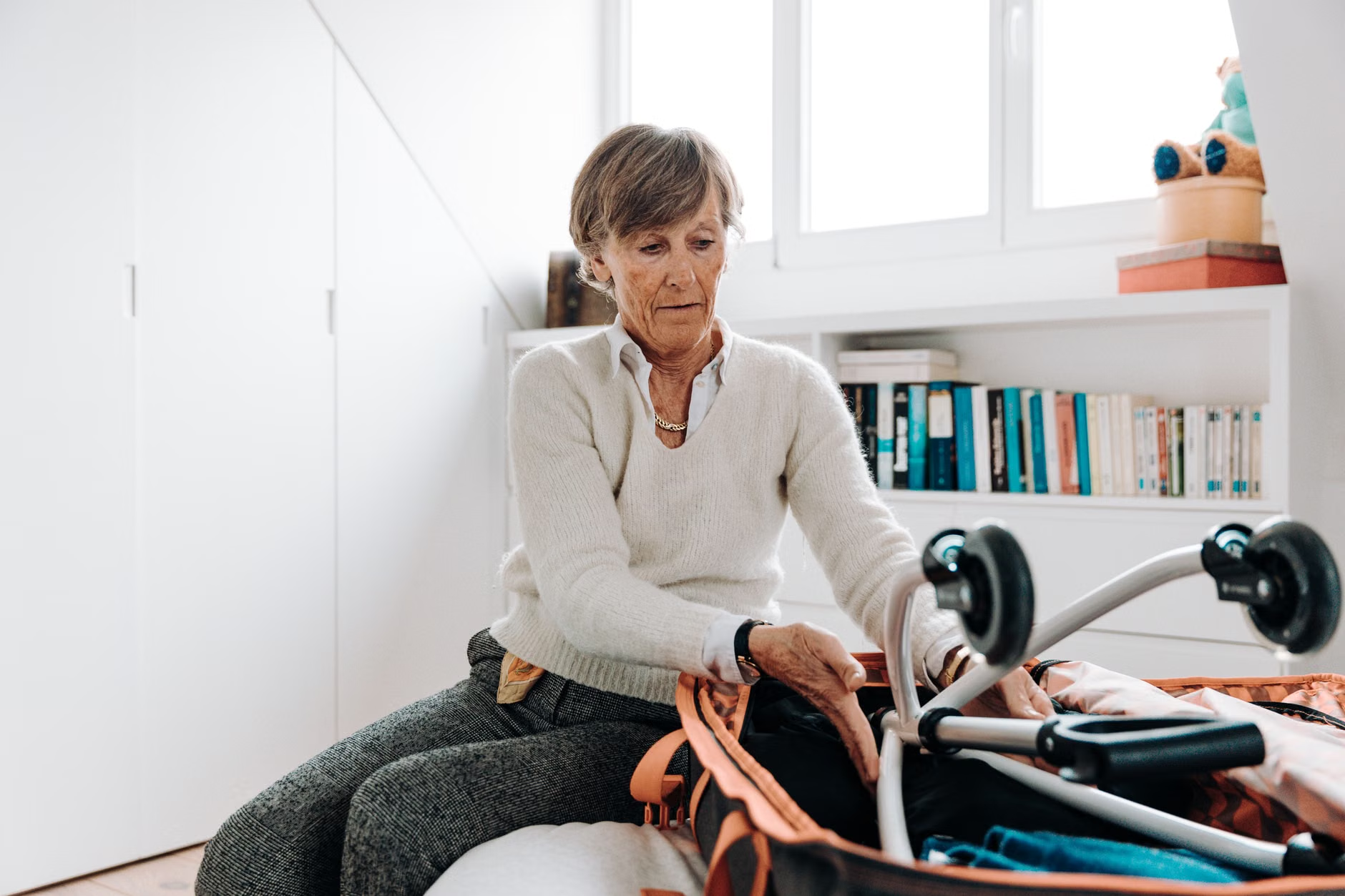
The Essential Packing Checklist for Mobility and Safety
What you carry in your daypack is more important than what you leave in your hotel room. The following checklist is designed to mitigate the risks associated with historic, uneven terrains.
| Item Category | Why It Matters | Practical Tip |
|---|---|---|
| Collapsible Trekking Poles | Reduces impact on joints by up to 25% on slopes. | Ensure they have rubber tips to avoid slipping on stone. |
| High-Traction Footwear | Prevents slips on wet or uneven stone surfaces. | Look for Vibram or similar high-grip rubber outsoles. |
| Modular Packing Cubes | Reduces time spent searching through luggage. | Use one cube exclusively for “emergency” health items. |
Why High-Traction Footwear is Non-Negotiable
Fashionable shoes often feature smooth leather or hard plastic soles. In a historic mountain village, these are a major safety hazard. A sudden rain shower can turn old stone streets into a slick, dangerous path. Choose walking shoes with a deep-lugged rubber sole that offers “grip.” If you are unsure of your shoe’s capability, test them on a wet sidewalk before your trip.
Health Management and Medication Portability
Traveling to remote mountain areas often means limited access to pharmacies or specialized medical services. Your packing must account for both daily maintenance and minor contingencies.
The “Medical Passport” Concept
Beyond your medication, you should pack a summary document. This should include your current medication list, dosage, contact information for your primary care physician, and any known allergies. Keep this in a waterproof, transparent pouch in your daypack. Do not keep all your medication in your checked luggage. Always keep at least 7 days of essential medication in your carry-on in case of lost luggage or travel delays.
Managing Altitude and Hydration
Mountain air is often drier than lowland air, and dehydration can exacerbate fatigue, which in turn increases the risk of falls. A reusable, lightweight water bottle with a clip-on carabiner allows you to stay hydrated without having to dig through your bag. If you are traveling to altitudes above 2,000 meters, consult your doctor about the potential impact on your specific health conditions, as thinner air can affect blood pressure and oxygen saturation.

Leveraging Technology for Accessibility
Modern technology can act as a “virtual guide” to help you navigate around physical barriers. Before you arrive, utilize digital tools to map your path.
Digital Mapping for Slope Avoidance
Standard mapping applications often show the fastest route, which is frequently the steepest one. Use topography-enabled maps or specialized apps that show “accessible routes.” If you are staying in a historic village with a funicular or elevator system, locate these on your map before departure. These systems are often tucked away in less obvious corners of the village.
The “Rest-Stop” Strategy
Don’t wait until you are exhausted to find a place to sit. Use your mapping app to identify public squares, cafes, or benches along your planned route. Treat these as “recovery nodes.” A 10-minute rest every 30 minutes of walking is significantly more effective at maintaining stamina than pushing through for an hour and needing an hour-long recovery session.
Packing for Variable Mountain Weather
Mountain weather is notoriously unpredictable. A sunny morning can turn into a cold, windy afternoon. The best approach is the “layering system.”
- Base Layer: Moisture-wicking fabric (avoid cotton, which stays wet and cold).
- Mid Layer: A lightweight fleece or wool sweater for insulation.
- Outer Layer: A windproof and water-resistant shell.
This system allows you to adapt to temperature changes in seconds. A common mistake is packing one heavy, bulky coat. Two lighter layers are more versatile and easier to pack, as they can be compressed into your luggage or tied around your waist if not in use.
Addressing Potential Challenges: A Proactive Framework
Even with perfect preparation, challenges arise. Here is how to handle common scenarios in historic settings.
Scenario: The “Unexpected Staircase”
You find your path blocked by a set of steep stairs that were not on your map.
Action: Do not attempt to carry heavy luggage up or down. Most historic villages have local service numbers for “porter” assistance or accessible taxi services that can navigate the perimeter of the village. Ask your hotel host for the local “accessible route” map before you venture out.
Scenario: The “Language Barrier” in Medical Situations
If you need to visit a local clinic, carry a small card with your medical conditions written in the local language. You can use translation apps, but a physical card is reliable even if your battery dies or you lose internet connectivity. Include a phrase like “I need to see a doctor for [symptom]” in the local language.
Conclusion: The Value of Pacing
The beauty of a historic mountain village is found in the details—the texture of the stone, the view from a quiet plaza, and the history embedded in the architecture. By packing strategically, you remove the physical burdens that distract from these experiences. Focus on the “two-bag system,” prioritize high-traction footwear, and always maintain a “recovery-first” mindset. Your goal is not to conquer the village, but to experience it at a pace that respects your stamina and ensures your safety.
For more information on accessible travel standards, you may refer to the UN World Tourism Organization’s guidelines on accessible tourism.
Frequently Asked Questions (FAQ)
1. Should I bring a wheelchair or walker to a historic mountain village?
Most historic mountain villages are extremely difficult for standard wheelchairs due to steep, narrow, and uneven cobblestone streets. If you rely on mobility aids, research if the specific village has “accessible pathways” or funiculars. Often, a sturdy, four-wheeled rollator with large, pneumatic tires is more practical than a standard wheelchair, but you must check the width of the village’s narrowest alleys first.
2. How do I manage heavy luggage when there is no vehicle access to my hotel?
Contact your accommodation provider at least one week before arrival. Many historic hotels in mountain villages have established relationships with local luggage transfer services. They may have a small electric cart or a porter service that can meet you at the village entrance to transport your bags for a small fee.
3. How can I verify the “accessibility” of a historic site before I book?
Do not rely on marketing terms like “charming” or “authentic.” Ask specific questions: “How many stairs are there between the street entrance and the room?” or “Is there a continuous handrail on the main walking paths to the town center?” Request photos of the entrance and the path from the nearest parking area to get a realistic view of the terrain.
Disclaimer: This article provides general travel advice and is not a substitute for professional medical or travel planning consultation. Always verify current local regulations and accessibility conditions with your specific destination’s tourism office before travel.