- Extended Clearance Intervals: The 2026 global guidelines mandate longer “walk” and “clearance” times at signalized crossings, specifically calculated for a walking speed of 0.8 meters per second.
- Infrastructure Upgrades: Local authorities are shifting toward “universal design,” requiring wider median refuge islands and flush curb transitions to accommodate mobility aids.
- Active Advocacy: Residents can now formally request “pedestrian-first” signal adjustments from their local municipal engineering departments based on these updated international safety benchmarks.
Navigating the 2026 Global Pedestrian Standards: What Seniors Need to Know
For many adults aged 60 to 80, the simple act of crossing the street represents a complex interaction between personal mobility and public infrastructure. As of 2026, international guidelines for pedestrian safety—driven by organizations like the World Health Organization (WHO) and regional transport departments—have undergone a significant shift. These updates are designed to move away from “vehicle-centric” traffic flow and toward “human-centric” design, acknowledging that walking speed, reaction time, and visibility requirements change as we age.
Understanding these changes is not just about knowing the rules; it is about recognizing your right to safe, accessible passage in your community. This guide explores the 2026 standards, explains why they matter for your daily routine, and provides practical steps to navigate modern urban environments.
The Shift to the 0.8 Meters Per Second Standard
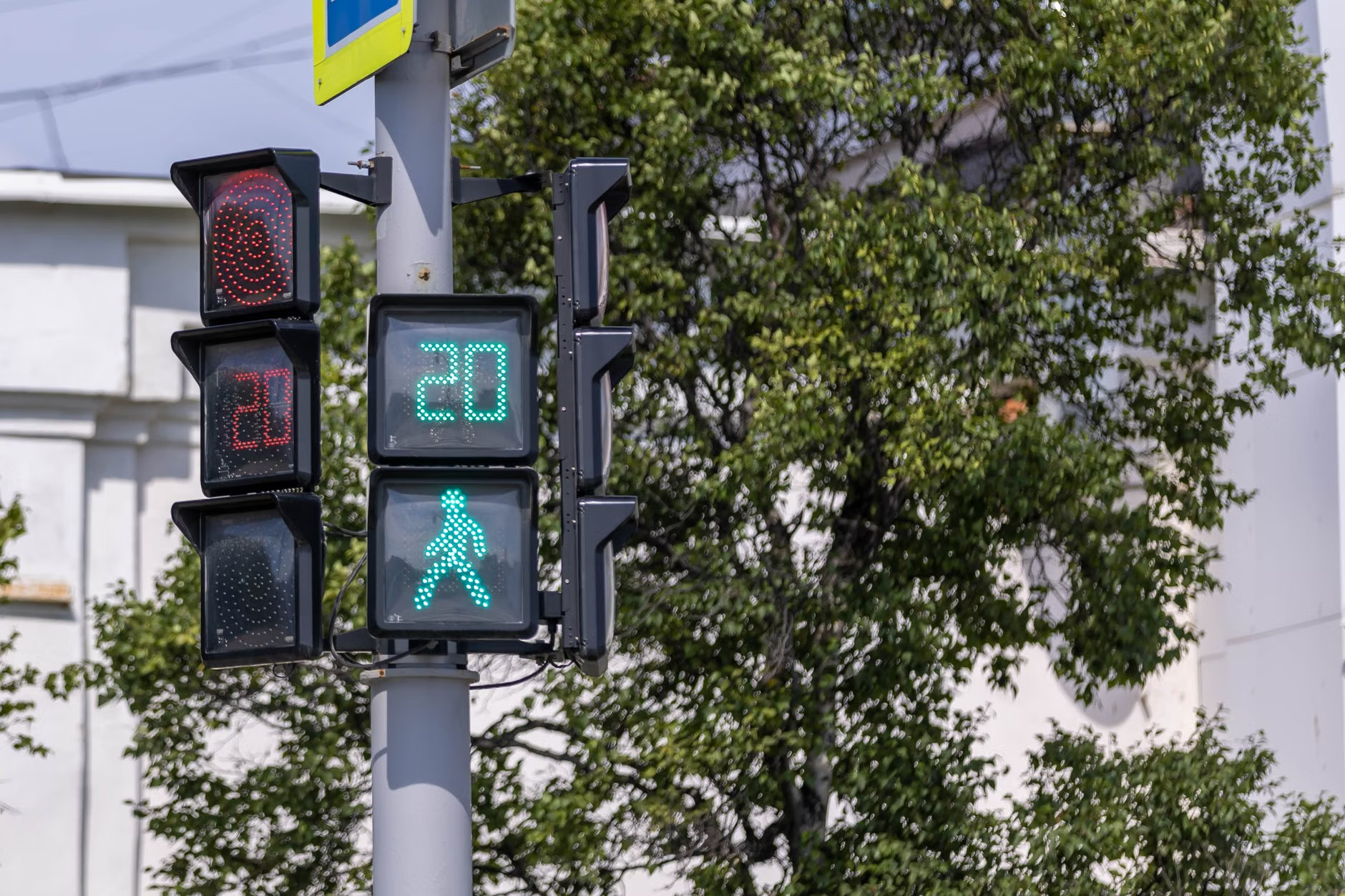
Historically, traffic engineers calculated the “clearance interval”—the amount of time given for a pedestrian to cross after the signal turns green—based on a “normal” walking speed of 1.2 meters per second. Research conducted between 2020 and 2025 demonstrated that this speed is often unattainable for many older adults, especially those using canes, walkers, or those simply pacing themselves for comfort and stability.
The 2026 update establishes a new recommended baseline of 0.8 meters per second for crosswalks in residential zones, areas near senior centers, and major transit hubs. This seemingly small change has a profound impact on your safety.
Why the Speed Calculation Matters
If a street is 15 meters wide:
- Old Standard (1.2 m/s): You are given 12.5 seconds to cross.
- New Standard (0.8 m/s): You are given 18.75 seconds to cross.
That extra six seconds can be the difference between reaching the median refuge or sidewalk comfortably and feeling the pressure to rush, which increases the risk of tripping or falling. When you are out walking, recognize that these signals are now calibrated to give you more time. If you find a specific intersection consistently forces you to hurry, it may be incorrectly calibrated to outdated standards.
Infrastructure Improvements: The “Refuge Island” Mandate
A major focus of the 2026 guidelines is the implementation of median refuge islands. These are raised sections in the middle of a multi-lane road where a pedestrian can stand safely if they cannot complete the crossing in a single signal cycle. By 2026, international urban planning standards strongly encourage the installation of these islands on any road with a speed limit over 40 km/h (25 mph) and more than two lanes of traffic.
In practice, this means:
- Two-Stage Crossing: You only need to cross half the street at a time.
- Enhanced Visibility: These islands are now required to be equipped with high-visibility bollards or reflective markers that are visible in low light.
- Accessibility: If the island is wide enough, it must be flush with the road surface or have a cut-through, allowing someone with a walker or wheelchair to pass through without lifting the device.
Universal Design: Curb Ramps and Tactile Surfaces
The 2026 updates emphasize “Universal Design,” which is the principle that infrastructure should be usable by all people to the greatest extent possible without the need for adaptation. For the pedestrian, this translates to specific changes at the “curb cut”—the transition between the sidewalk and the road.
The “Flush-to-Street” Requirement
Many older, poorly maintained curb ramps have a “lip”—a small vertical rise of an inch or more. This is a common tripping hazard. The new guidelines mandate that all new and rehabilitated curb ramps must be perfectly flush with the road surface. If you encounter a lip greater than 6mm (approx. 0.25 inches), it is officially considered a maintenance failure under the updated safety criteria.
Tactile Warning Strips
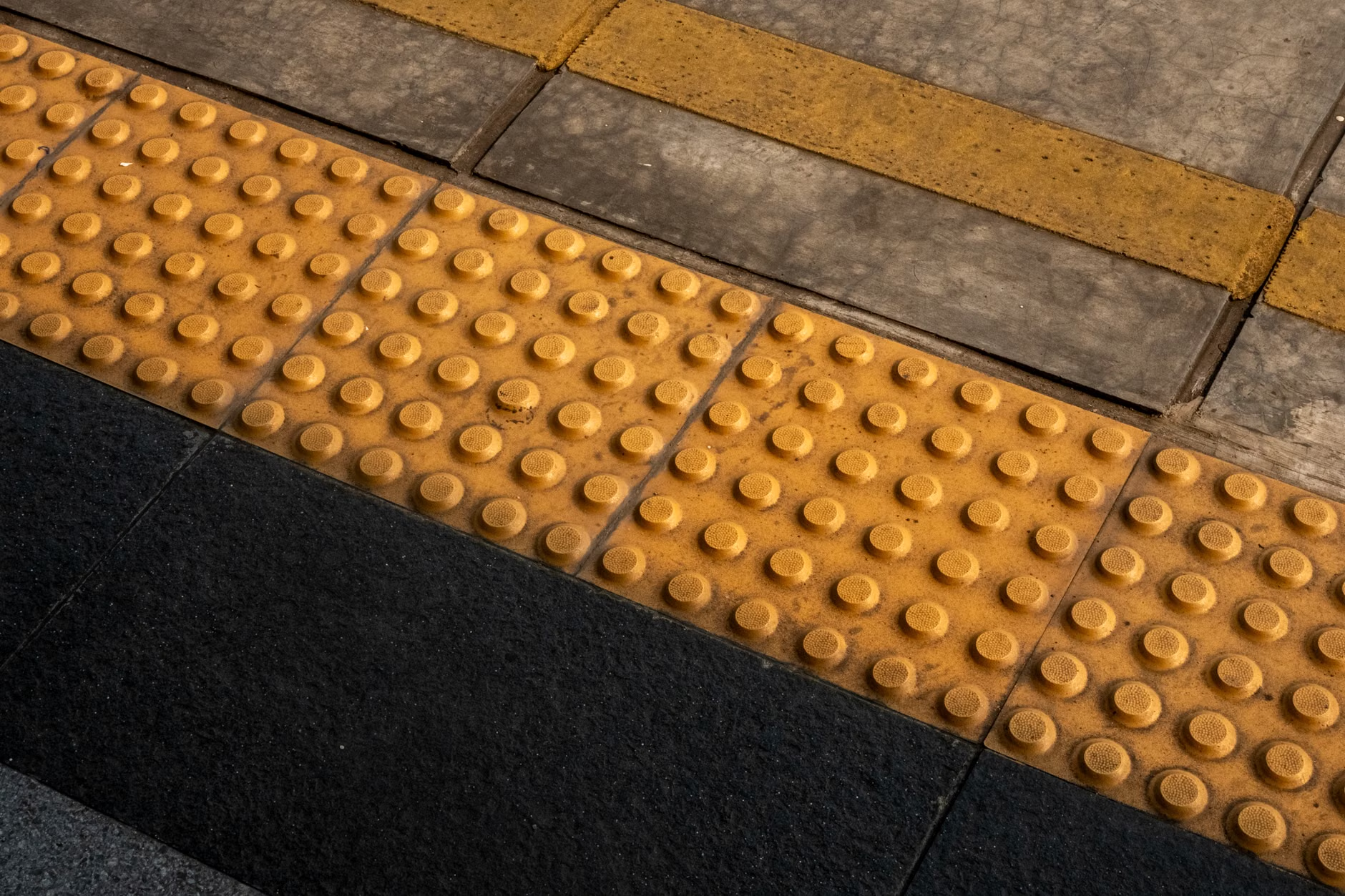
You may have noticed bright yellow, bumpy mats at the edge of sidewalks. These are “Truncated Domes.” The 2026 standards require these to be installed at every intersection to provide both a visual and tactile warning that you are leaving the safety of the sidewalk and entering the roadway. If these are faded, missing, or covered in debris, they lose their effectiveness as a safety tool.
| Feature | Old Standard | 2026 Global Update |
|---|---|---|
| Walking Speed | 1.2 m/s | 0.8 m/s (Recommended) |
| Curb Lip Height | Up to 15mm | Max 6mm (Flush) |
| Crossing Design | Single-stage | Median Refuge Priority |
| Signal Feedback | Audio/Visual | Synchronized High-Contrast |
Understanding the Table: The shift from 1.2 m/s to 0.8 m/s is the most important change. If your local council is still using the 1.2 m/s standard, you are well within your rights to report the intersection as “not compliant with modern safety benchmarks” to your local traffic department.
How to Advocate for Safer Crossings in Your Area
Public infrastructure is managed by local government, and these offices often rely on resident feedback to prioritize maintenance. You do not need to be an engineer to identify a safety issue. If you find a crossing that makes you feel unsafe, follow these steps to initiate a review:
- Document the Location: Note the exact intersection or street name. Take a photo of the crossing, especially if the curb ramp is damaged or the signal timing feels too short.
- Identify the Authority: In most regions, this is the “Department of Transportation,” “Public Works,” or “City Engineering” department. Many cities now have mobile apps or websites specifically for reporting “infrastructure defects.”
- Use the “Standard” Language: When submitting your report, use the terminology of the 2026 guidelines. For example: “This intersection does not meet the 2026 international pedestrian clearance interval of 0.8 m/s, making it difficult for older residents to cross safely.”
- Follow Up: Local governments are more likely to act on requests that are documented and reference official safety standards.
Practical Tips for Daily Mobility
While infrastructure is changing, it will take years for all cities to catch up. In the meantime, use these strategies to maintain your independence and safety:
- The “Look-Back” Rule: When you start crossing, glance back at the traffic signal. Many modern signals have a “countdown timer.” If the timer is already at a low number before you start, wait for the next cycle.
- Positioning: When waiting at a corner, stand back from the edge. Drivers making right-hand turns often cut the corner closely. Standing a few feet back gives you extra reaction time.
- Visibility Gear: During dawn or dusk, wear reflective materials. Even a small reflective strip on a bag or jacket significantly increases the distance at which a driver can see you.
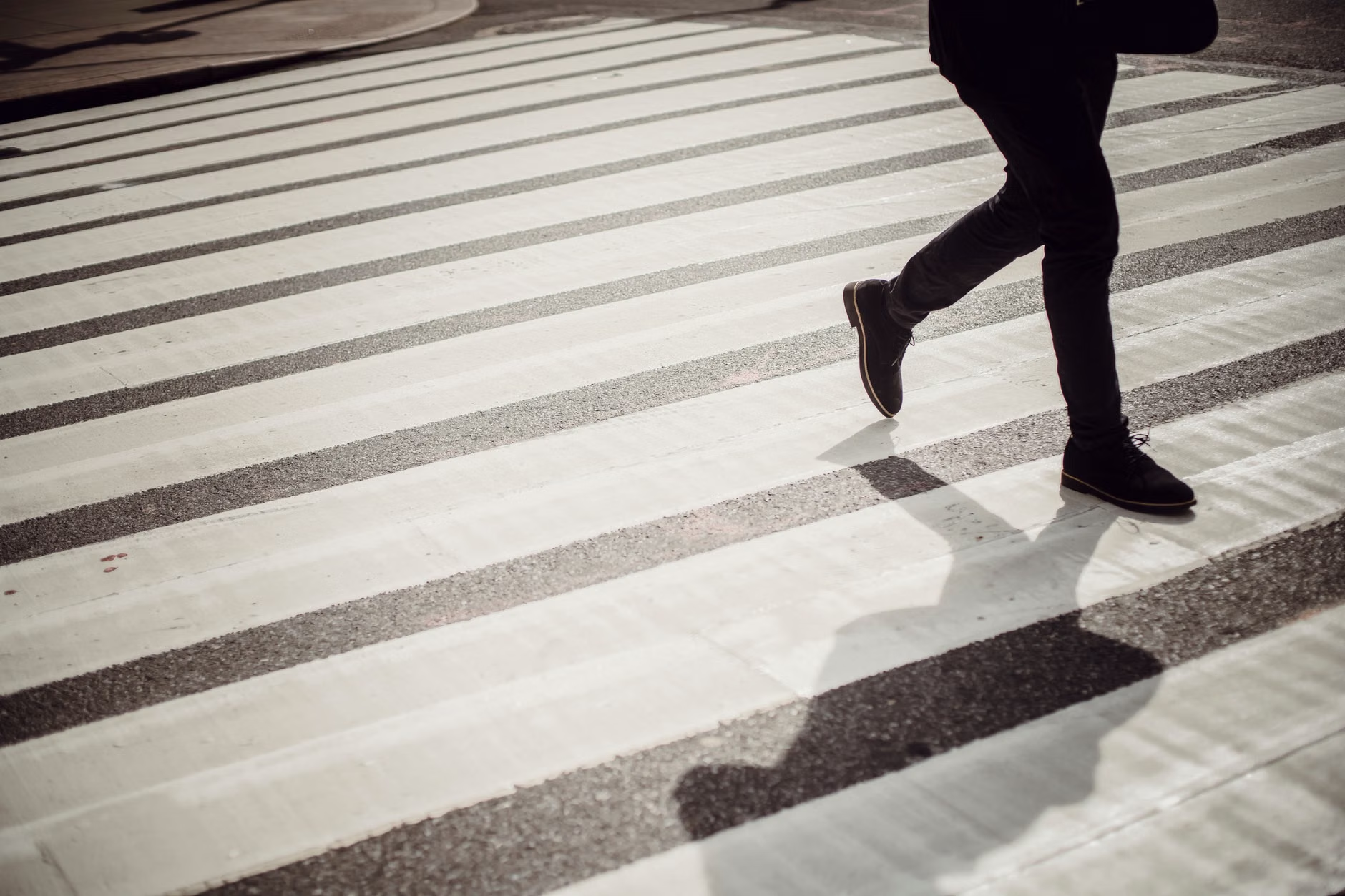
- The “Mid-Block” Trap: Never cross in the middle of a block unless there is a designated mid-block crossing with lights. Drivers are statistically less likely to expect pedestrians mid-block, and the 2026 safety standards for crosswalks do not apply to these informal crossings.
Understanding the Role of Digital Public Services
As cities become “smarter,” many are implementing adaptive traffic signals. These systems use cameras or sensors to detect pedestrians. If you are standing at a crossing and the light does not change, it may be because you are not standing in the “detection zone.”
Look for the markings on the sidewalk or the specific placement of the push-button. In some cities, the signal controller will automatically extend the “green” time if it detects a person is still in the middle of the crosswalk. If you are using a walker or cane, ensure you stay within the marked crosswalk area so the sensor can “see” you.
Addressing Common Misconceptions
There is a common belief that “pushing the button” at a signal does not do anything. In many modern systems, this is false. While some signals are “fixed-time” (they change every cycle regardless), others are “actuated” (they only give a pedestrian signal if someone pushes the button). If you do not push the button, the walk light may never trigger, forcing you to cross during a gap in traffic, which is inherently more dangerous.
Another misconception is that the “walk” symbol (the white person icon) is the only time you can start walking. In most jurisdictions, you can also start during the initial phase of the “flashing hand” (or countdown timer), provided you have enough time to reach the other side. However, if you are unsure, always wait for the solid “walk” signal.
The Future of Pedestrian Safety
The 2026 guidelines are just the beginning of a broader movement toward “Vision Zero”—the international goal to eliminate all traffic-related deaths and serious injuries. As these guidelines are adopted, we should expect to see more “Leading Pedestrian Intervals” (LPIs). An LPI gives pedestrians a 3-to-7 second head start before vehicles are given a green light. This allows you to step into the crosswalk and become visible to drivers before they begin their turns.
If you feel that your local area is ignoring these advancements, consider joining or forming a local “Active Transport” or “Senior Advocacy” group. These organizations often have direct lines of communication with city council members and can lobby for specific safety improvements, such as adding LPIs to dangerous intersections near senior living communities.
Conclusion: Taking Control of Your Environment
Your ability to move freely through your community is a fundamental component of health and wellbeing. The 2026 international guidelines for pedestrian crossings are a significant step forward, acknowledging that our cities should be designed for all ages, not just for the fastest or the most agile. By understanding the new standards for walking speed, infrastructure, and signal timing, you are better equipped to advocate for your safety and navigate your environment with confidence.
Remember that you are not merely a “user” of the street; you are a citizen with a right to safe, accessible infrastructure. If an intersection is failing you, use the tools provided in this guide to report it. Every request for maintenance or an upgrade helps create a safer environment for everyone in your community.
Frequently Asked Questions
Q: What should I do if the pedestrian signal timer starts while I am still in the middle of the street?
A: If you are already in the crosswalk, continue walking at a steady pace. The “clearance interval” (the countdown) is specifically designed to give you enough time to reach the other side. Do not run, as this increases the risk of a fall. If you consistently find that you cannot make it across in time, avoid that intersection and report it to your local department of transportation.
Q: Can I request that my city install a median refuge island on a busy street near my home?
A: Yes. You can submit a request through your city’s public works or traffic engineering department. Reference the 2026 international guidelines regarding pedestrian safety and explain that the current crossing is difficult for older adults. Providing a petition signed by other neighbors can significantly increase the likelihood of the request being reviewed.
Q: Are there any specific apps I can use to report dangerous intersections?
A: Many major cities have their own “311” or “Fix-It” apps. If your city does not have one, you can usually find a reporting form on the official municipal website under “Traffic Engineering” or “Public Works.” Always keep a record of your report number or the date you submitted the request for your own tracking.
Disclaimer: This article is for informational purposes and does not constitute legal or professional advice. Always prioritize your personal safety when navigating traffic. For specific local regulations, please consult your national or municipal transport authority guidelines.