- Prioritize “Plaza Logistics”: Always scout for public restrooms and step-free access routes before settling into a cafe, as historic centers often lack modern infrastructure.
- Manage Your Energy Budget: Use a “one-major-stop” rule per day, allowing for a two-hour rest period in a central plaza to avoid travel fatigue and overexertion.
- Utilize Digital Accessibility Tools: Leverage high-contrast map applications and local transit accessibility apps to identify the flattest routes between transport hubs and your destination.
Introduction: The Art of the Plaza Experience
For many travelers aged 60 to 80, the quintessential European experience is not found in a rushed museum tour, but in the quiet observation of life from a chair in a historic plaza. Whether it is the Piazza Navona in Rome or the Plaza Mayor in Madrid, these spaces serve as the “living rooms” of their respective cities. However, for the senior traveler, these historic sites present unique challenges—uneven cobblestones, limited accessible seating, and a lack of modern infrastructure.
This guide provides a practical framework for navigating these iconic spaces. We will focus on how to maintain mobility, manage stamina, and ensure your comfort without sacrificing the joy of travel. We move beyond the generic “be careful” advice to offer concrete strategies for planning, physical navigation, and selecting the right venue for your specific needs.
Assessing Mobility: The “Cobblestone Reality”
Historic plazas are rarely designed with modern accessibility standards in mind. The primary obstacle is the surface material: cobblestones. While aesthetically pleasing, they pose a significant trip hazard and can cause discomfort for those with joint pain or balance issues.
Evaluating Your Route
Before leaving your accommodation, use satellite imagery (such as Google Maps Street View) to inspect the approach to your target plaza. Look for:
- Smooth Pathways: Many historic cities have installed “stone tracks” or leveled pathways specifically for accessibility. These are often located near the edges of the plaza rather than the center.
- Incline Grades: Plazas built on hillsides can have steep gradients. Research the “lowest access point” to avoid unnecessary uphill walking.
- Transport Proximity: Identify if a taxi or accessible bus can drop you at the very edge of the pedestrian zone. Never assume the closest stop is the most accessible.
Common Mistake: Relying on a map that shows a straight line. In historic districts, a straight line often involves stairs or steep alleyways. Always filter your navigation app for “wheelchair accessible” or “step-free” routes, even if you are not a wheelchair user; these routes are almost always the safest for those with limited mobility.
Selecting the Ideal Cafe: A Decision Framework
Not all cafes are created equal. When choosing where to sit for an hour or two, use the following criteria to ensure safety and comfort.
| Feature | What to Look For | Why It Matters |
|---|---|---|
| Entrance | Flush floor or permanent ramp. | Avoids the need to negotiate steps while carrying items. |
| Seating | Back-supported chairs with armrests. | Essential for maintaining posture and reducing back fatigue. |
| Restrooms | Located on the ground floor. | Crucial for avoiding stairs, which are common in historic building basements. |
| Staff | Table service vs. counter service. | Table service is preferred to avoid standing in queues or carrying trays. |
Insight: If a cafe requires you to order at a counter, ask the staff if they provide table service for those who have difficulty standing. Most staff in tourist-heavy plazas are accustomed to this request and will happily accommodate you. If they refuse, it is a clear signal to move to the next establishment.
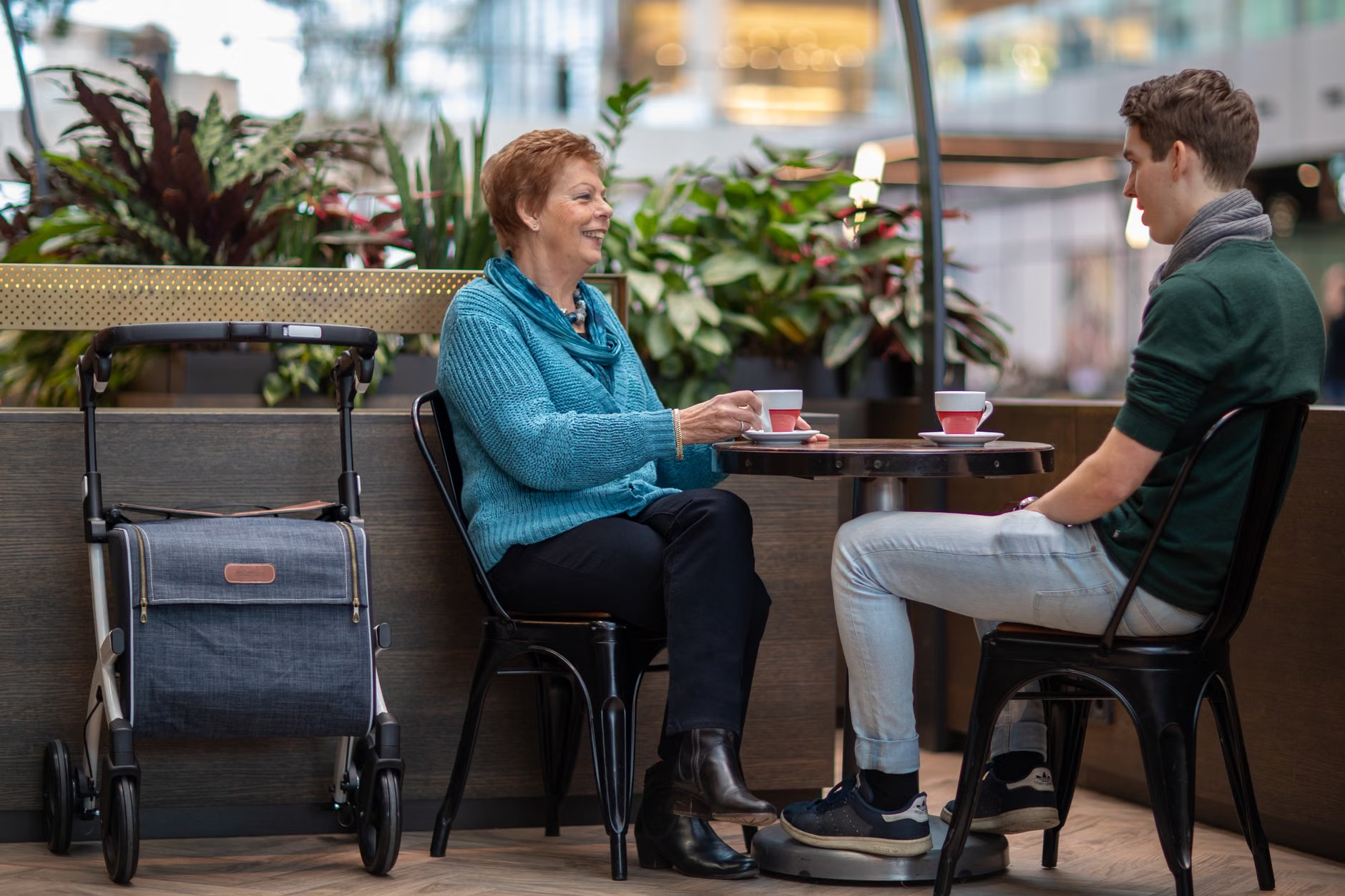
Managing Stamina: The “Two-Hour” Rule
Travel fatigue is cumulative. It is not usually the result of one big walk, but the result of multiple small, unmanaged efforts. The “Two-Hour Rule” suggests that for every two hours of exploration, you should spend at least 45 minutes in a seated, low-stress environment.
Strategic Rest Stops
When planning your day, identify “Anchor Cafes.” These are not necessarily the most famous cafes, but those that meet your accessibility requirements. If you find a cafe with a clean, accessible restroom and comfortable seating, make it your “base” for the day. You can return to this spot between shorter excursions to the surrounding historic sites.
Hydration and Nutrition: Older adults are more susceptible to the effects of dehydration and fluctuating blood sugar. Use your cafe time to drink water and consume a small snack. Do not wait until you feel “weak” to stop; by that point, your recovery time will be significantly longer.
One of the greatest stressors for the senior traveler is the lack of accessible public restrooms. In many historic European cities, public toilets are often located underground or in narrow, historic buildings.
The “Digital Scouting” Method
Use apps like Flush or local municipal websites to locate publicly accessible restrooms before you leave your hotel. Many cities now have “toilet schemes” where businesses allow the public to use their facilities. Look for the “accessible” icon, which signifies a facility that can accommodate walkers or canes.
Safety Note: Keep a digital copy of your medical information and a list of current medications on your smartphone. In the event of an emergency, having this information readily available for local medical services is vital. Ensure your phone is fully charged before leaving your accommodation, and carry a small, portable power bank.
Technology as an Accessibility Companion
Modern technology has leveled the playing field for senior travelers. If you are not comfortable with technology, consider a “travel companion” app that simplifies the interface.
- Large Font Maps: Most smartphone operating systems allow you to increase the system font size. Doing this for your maps app makes reading street names and transit stops significantly easier while on the move.
- Offline Maps: Download offline maps of the city you are visiting. This ensures you are never stranded if you lose cellular signal in the narrow, thick-walled streets of a historic district.
- Translation Apps: If you need to ask for assistance, keep a translation app ready. You can type “Is there a restroom on this level?” in English, and the app will translate it into the local language, which you can show to cafe staff.

Conclusion: Pacing Your Journey
The beauty of a historic plaza is that it does not change. The buildings, the statues, and the atmosphere will be there tomorrow. There is no need to see everything in a single trip. By prioritizing your physical comfort—choosing the right cafe, planning your routes for accessibility, and respecting your own energy limits—you turn a potentially stressful excursion into a restorative experience.
Remember, the goal of travel is enrichment, not endurance. Choose quality of experience over quantity of sights. Your best memories will likely be the hours spent in quiet observation, not the miles walked across uneven ground.
Frequently Asked Questions
- How do I find out if a specific cafe is wheelchair or walker accessible before I get there?
Check the cafe’s official website or Google Business profile. Look for the “Wheelchair accessible entrance” attribute. If it is not listed, look at the uploaded user photos to see if there is a step at the entrance. When in doubt, call the cafe during their off-peak hours (usually 3:00 PM to 5:00 PM) and ask specifically: “Is there a step at the entrance, and is the restroom on the same level as the seating?” - Are there specific times of day that are better for visiting crowded plazas?
Yes. Aim to visit between 9:00 AM and 11:00 AM, or between 3:00 PM and 5:00 PM. These times avoid the peak lunch and dinner rushes, meaning you are much more likely to find a comfortable, quiet table with fewer people moving around, which reduces the risk of accidental collisions. - What should I do if I feel overwhelmed by the noise and crowds in a busy plaza?
Do not feel pressured to “push through.” If a plaza becomes too loud or crowded, look for a side street leading away from the center. Most historic districts have quieter, secondary plazas just a few minutes’ walk away. These often offer the same cultural charm with a fraction of the noise and foot traffic.
Official resources for accessibility information often vary by city. For example, in the UK, visit The Inclusive Transport Strategy for guidance on accessible travel, and for European Union travel, the European Disability Strategy provides a framework for what travelers can expect regarding facility standards.