- Cognitive Engagement: Bookbinding requires sequential planning, spatial reasoning, and sustained attention, which helps maintain executive function.
- Physical Dexterity: The process serves as a structured exercise for fine motor skills, promoting hand-eye coordination and finger strength.
- Accessibility: With minor modifications to tools and workspace ergonomics, bookbinding is a safe and highly adaptable hobby for those with varying levels of physical strength or vision.
Learning the art of beginner bookbinding is more than just a creative outlet; it is a sophisticated cognitive exercise that bridges the gap between mechanical precision and artistic expression. For adults aged 60 to 80, this craft offers a unique combination of mental stimulation, physical dexterity, and the tangible satisfaction of creating a functional, lasting object.
This article explores why bookbinding is an ideal hobby for maintaining mental sharpness, how it functions as a form of physical therapy for the hands, and how you can begin your journey safely and effectively.
The Neurological Benefits of Sequential Crafting
Bookbinding is inherently a process-driven activity. Unlike painting or drawing, which can be improvised, bookbinding relies on a strict sequence of operations—folding, punching, stitching, and gluing. This sequential nature is a powerful workout for the brain’s executive functions.
What it is: Executive function refers to the high-level cognitive processes that allow us to plan, focus attention, remember instructions, and juggle multiple tasks. When you bind a book, you must translate a 2D sheet of paper into a 3D structure. You have to account for grain direction, the thickness of the paper, and the tension of the thread.
Why it matters: As we age, engaging in activities that require “complex sequencing” helps maintain neuroplasticity—the brain’s ability to reorganize itself by forming new neural connections. Research into “cognitive reserve” suggests that hobbies requiring both mental focus and physical movement provide a stronger buffer against cognitive decline than passive entertainment.
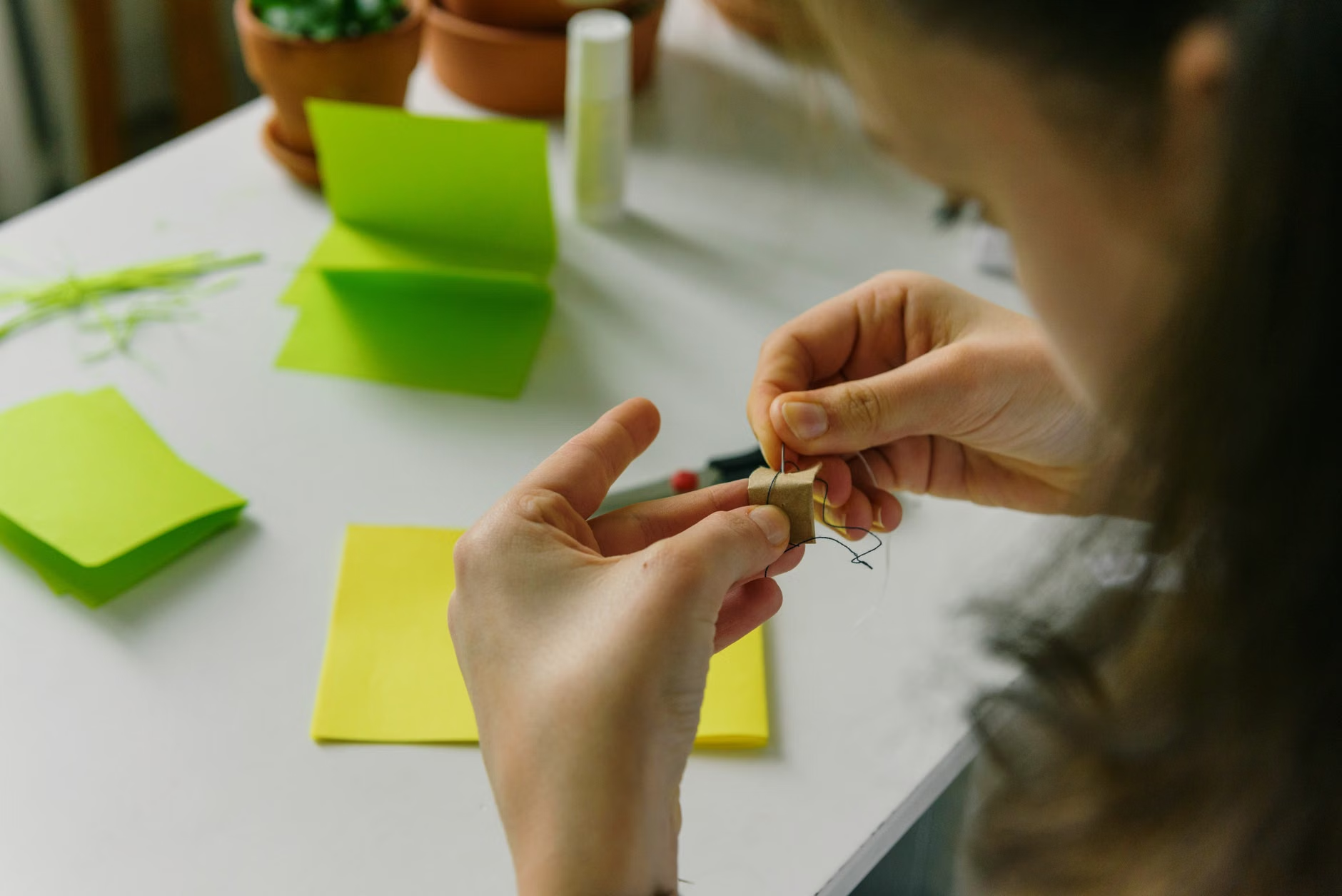
What it looks like in real life: Imagine you are sewing a “signature” (a group of folded pages). You must measure the distance between holes, ensure your needle enters and exits at the correct angle, and maintain consistent tension on the linen thread. If you make a mistake, the book may not close flat. Solving these small, immediate problems keeps the brain active and alert.
What the reader can do: Start with a simple “pamphlet stitch” book. This requires minimal tools and focuses on one main sequence: folding, piercing, and sewing. Mastering this single structure before moving to more complex hardback bindings allows you to build confidence without cognitive overload.
Fine Motor Skills and Hand Health
The hands are one of our most important tools. Maintaining the strength, flexibility, and coordination of the hands is vital for independence in daily life. Bookbinding acts as a structured, purposeful form of hand exercise.
The mechanics of the craft: The repetitive motions involved in using a bone folder to create a sharp crease, or the precise pincer grasp required to manipulate a needle, serve as a gentle yet effective workout for the small muscles in the fingers and palms.
Addressing common concerns: If you experience stiffness or mild arthritis, it is important to modify your tools. Standard needles can be difficult to grip; consider using large-eye needles or even adding a small ergonomic grip to your awl (the tool used to punch holes).
Practical Ergonomic Adjustments for Bookbinding
To ensure this hobby remains a source of joy rather than physical strain, consider the following environmental setup:
| Feature | Adjustment | Reason |
|---|---|---|
| Lighting | Task-specific LED lamp | Prevents eye strain and improves precision. |
| Work Height | Elevated table surface | Reduces neck strain by keeping the work at eye level. |
| Tools | Padded grips/handles | Reduces pressure on joints during repetitive tasks. |
| Pacing | 15-minute intervals | Allows for regular stretching and recovery. |
Decision Criteria: If you have limited wrist mobility, avoid heavy-duty leather binding initially. Focus instead on “paper-over-board” techniques which use lighter materials and require less force to manipulate.

The Role of Mindfulness and Sustained Attention
Modern life is often characterized by rapid digital stimulation. Bookbinding forces the practitioner to slow down. The “analog” nature of the craft requires a level of patience that is inherently meditative.
Why this is useful: Sustained attention is a cognitive skill that can be trained. When you are focused on the alignment of a cover or the smooth application of adhesive, you are essentially practicing a form of “flow state.” This state of deep concentration has been shown to lower cortisol levels and improve mood regulation.
Unexpected Trade-off: It is easy to assume that “easier” is better, but in bookbinding, the slight difficulty of the task is exactly what makes it beneficial. If the process were too simple, the mind would drift. The “right amount of challenge” is where the cognitive benefit lies.
Getting Started: A Step-by-Step Approach for Beginners
You do not need an expensive workshop to begin. Most bookbinding tasks can be performed on a sturdy dining table. The following roadmap is designed for safety, accessibility, and success.
Phase 1: Gathering Minimalist Tools
- Bone folder: Essential for sharp creases without damaging the paper.
- Awl: For piercing holes; look for one with a thick, comfortable handle.
- Linen thread: Strong and durable, easier to handle than synthetic threads.
- Curved needle: Makes sewing signatures significantly easier on the wrist.
- Cutting mat: Protects your table and provides a grid for alignment.
Phase 2: The First Project (The Pamphlet Stitch)
The pamphlet stitch is the foundation of all bookbinding. It involves sewing a single signature of folded paper into a cardstock cover.
- Measure: Mark three points on the fold of your paper.
- Pierce: Use your awl to punch through these marks.
- Sew: Start from the center hole, go out, loop back, and tie off.
Phase 3: Safety and Maintenance
Always keep blades closed when not in use. If you struggle with grip strength, use a metal ruler with a non-slip backing to hold your paper in place while cutting. This prevents the need to press down too hard with your fingers.
Addressing Potential Challenges: When to Seek Assistance
While bookbinding is generally safe, it is important to recognize when your body or eyes require a break. If you notice pain in your wrists or hands, stop immediately. Chronic pain is a signal that your technique or your equipment needs adjustment.
Vision Considerations: If you wear bifocals or progressive lenses, you may find that the “reading” portion of your glasses is not perfectly positioned for looking down at a workbench. A dedicated pair of reading glasses specifically for the working distance (usually 30-40cm from the eyes) can significantly improve your accuracy and comfort.
Professional Guidance: If you have significant tremors or severe arthritis, consult with an occupational therapist. They can suggest specific adaptive tools, such as weighted handles, that allow you to continue crafting comfortably.
Conclusion: The Lasting Value of Your Craft
Bookbinding is a rewarding intersection of art and utility. By engaging in this craft, you are not just making a book; you are investing in your own cognitive longevity. The combination of planning, fine motor movement, and the quiet satisfaction of completing a project provides a holistic benefit that few other hobbies can match.
Start small. Focus on the quality of your creases and the consistency of your stitches. With time, the process will become as natural as the ideas you eventually choose to write inside the books you create.
Frequently Asked Questions
1. Is bookbinding expensive to start?
Not at all. A basic “starter kit” including a bone folder, needle, awl, and thread can often be purchased for under $30 USD. You can use recycled paper and cardstock from around your home for your first few practice projects.
2. Can I do bookbinding if I have arthritis?
Yes, provided you make modifications. Use tools with thicker, ergonomic handles to reduce the need for a tight pincer grasp. Always work in short, 15-minute bursts to avoid joint fatigue. If you experience sharp pain, stop and rest your hands for at least an hour.
3. Where can I find reliable tutorials?
Search for “beginner pamphlet stitch tutorial” on platforms like YouTube or check your local library for books on “book arts.” Look for channels that prioritize safety and clear, slow demonstrations rather than fast-paced, high-production-value edits. Official resources from organizations like the Society of Bookbinders (UK) or the Guild of Book Workers (USA) often provide excellent historical and technical context.
Disclaimer: This article is for informational purposes only and does not constitute medical advice. If you have concerns about your hand health or cognitive function, please consult with a qualified healthcare professional.