- Weight is your primary constraint: For light-rail travel, aim for a total pack weight under 5kg (11lbs) to ensure you can manage stairs, gaps, and long corridors without compromising your stamina.
- Accessibility and Pacing: Use transit apps to verify “step-free” access at your destination stations; prioritize a “hub-and-spoke” travel model where you return to a central base rather than carrying luggage between hotels.
- The “One-Hand” Rule: Pack your items so that one hand is always free to hold a handrail or a mobility aid, significantly reducing your risk of falls during transit stops or sudden acceleration.
Traveling by light rail (tram, streetcar, or modern metro) is one of the most efficient ways for adults aged 60 to 80 to explore a city. It bypasses the stress of car rentals and the physical toll of long-distance walking. However, the secret to enjoying these tours lies in your packing strategy. A heavy bag can transform a delightful urban exploration into a test of physical endurance. This guide focuses on how to pack minimally and smartly, ensuring your light-rail city tours remain accessible, safe, and enjoyable.
The Physics of Mobility: Why Minimalist Packing Matters
When you are 60+, the “cost” of carrying weight is higher than it was in your thirties. Every kilogram you carry adds mechanical stress to your joints—specifically the knees and lower back—and increases the energy expenditure required for simple movements like boarding a train or traversing a station platform.
The Energy Expenditure Trade-off
Consider the “Energy Budget” concept. You have a finite amount of physical energy for the day. If you spend 30% of that energy hauling a heavy suitcase or an overstuffed shoulder bag, you have less energy for exploring museums, parks, or city centers. By adopting a minimalist approach, you are not just saving space; you are investing in your ability to stay out longer and enjoy your destination.
The Fall Risk Factor
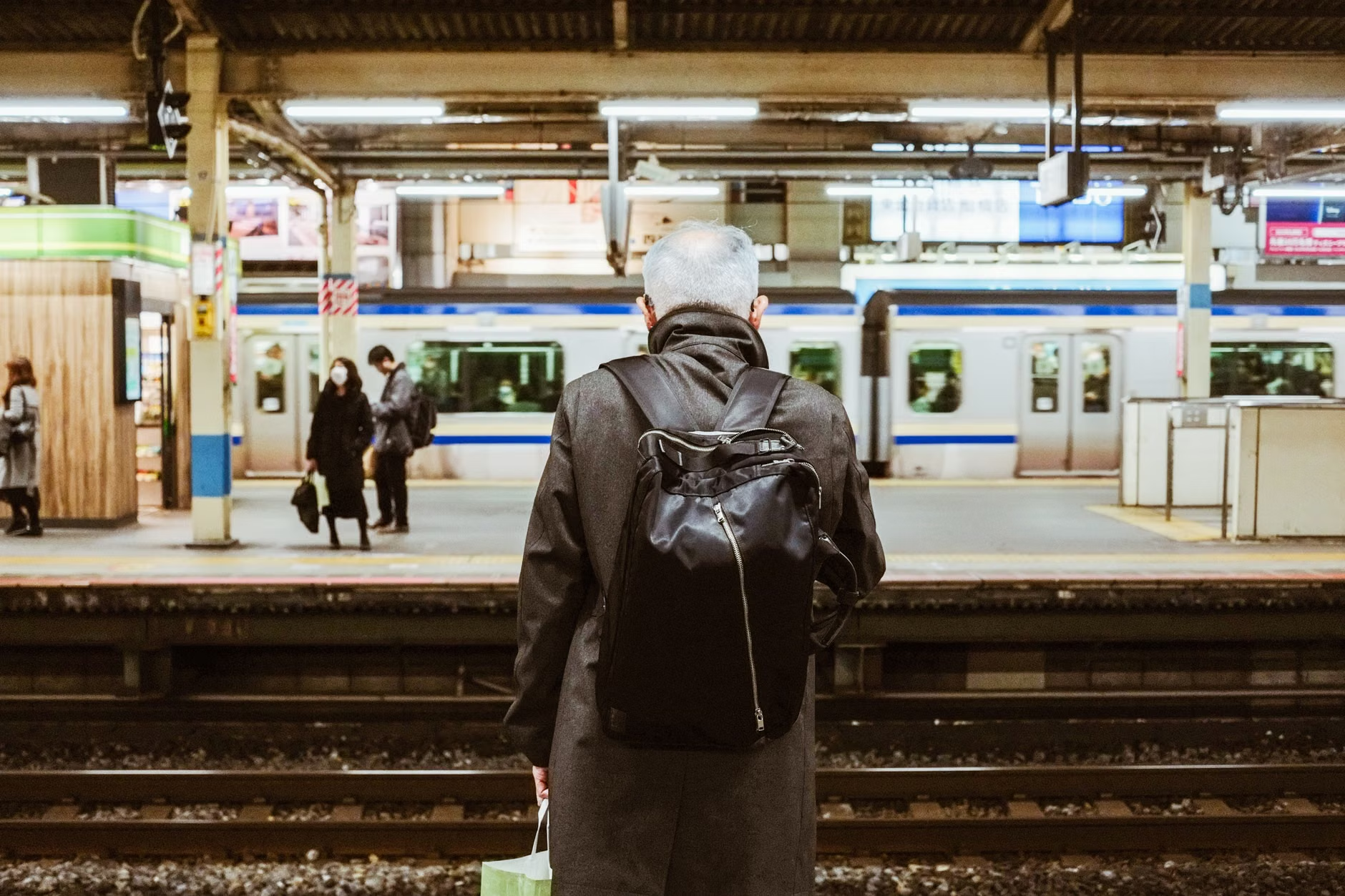
Beyond fatigue, weight distribution is a safety issue. A bulky, unbalanced backpack shifts your center of gravity, which can make you less stable when stepping into a moving train or navigating a gap between the platform and the carriage. A minimalist pack keeps your center of gravity centered, allowing you to maintain better balance.

Building Your Minimalist Packing Kit
To achieve a truly minimalist load, you must shift your mindset from “what if I need this” to “what is essential for today.” For a city tour, you are almost never truly isolated; if you forget something, a local pharmacy or convenience store is likely within reach.
The “Essential Seven” Checklist
Use this table to categorize your daily carry. Keep the total weight under 5kg for maximum maneuverability.
| Category | Item | Why It Matters |
|---|---|---|
| Navigation | Smartphone with offline maps | Reduces anxiety by ensuring you never get lost. |
| Comfort | Foldable walking pole | Provides stability on uneven city streets. |
| Health | Medication organizer & water | Prevents dehydration and ensures medication adherence. |
| Security | Cross-body bag (RFID protected) | Keeps valuables in front of you, reducing theft risk. |
| Tech | Compact power bank | Ensures your phone remains charged for transit apps. |
| Weather | Lightweight, packable shell | Protects against sudden changes in climate. |
| Hygiene | Small sanitizer and tissues | Essential for public transit hygiene. |
Strategic Choices for Your Bag
Do not use a standard laptop bag or a heavy leather purse. Invest in a lightweight, ergonomic backpack with a sternum strap. The sternum strap is crucial—it pulls the weight closer to your back, reducing strain on your shoulders and neck. If you prefer a shoulder bag, ensure the strap is wide and padded to distribute pressure evenly.
Light rail systems vary significantly by country. In cities like Zurich or Melbourne, the systems are exceptionally senior-friendly with low-floor entry. In older cities like Lisbon or parts of San Francisco, you may encounter historic trams with steep steps. Your packing must account for the infrastructure you intend to use.
The “Step-Free” Verification Rule
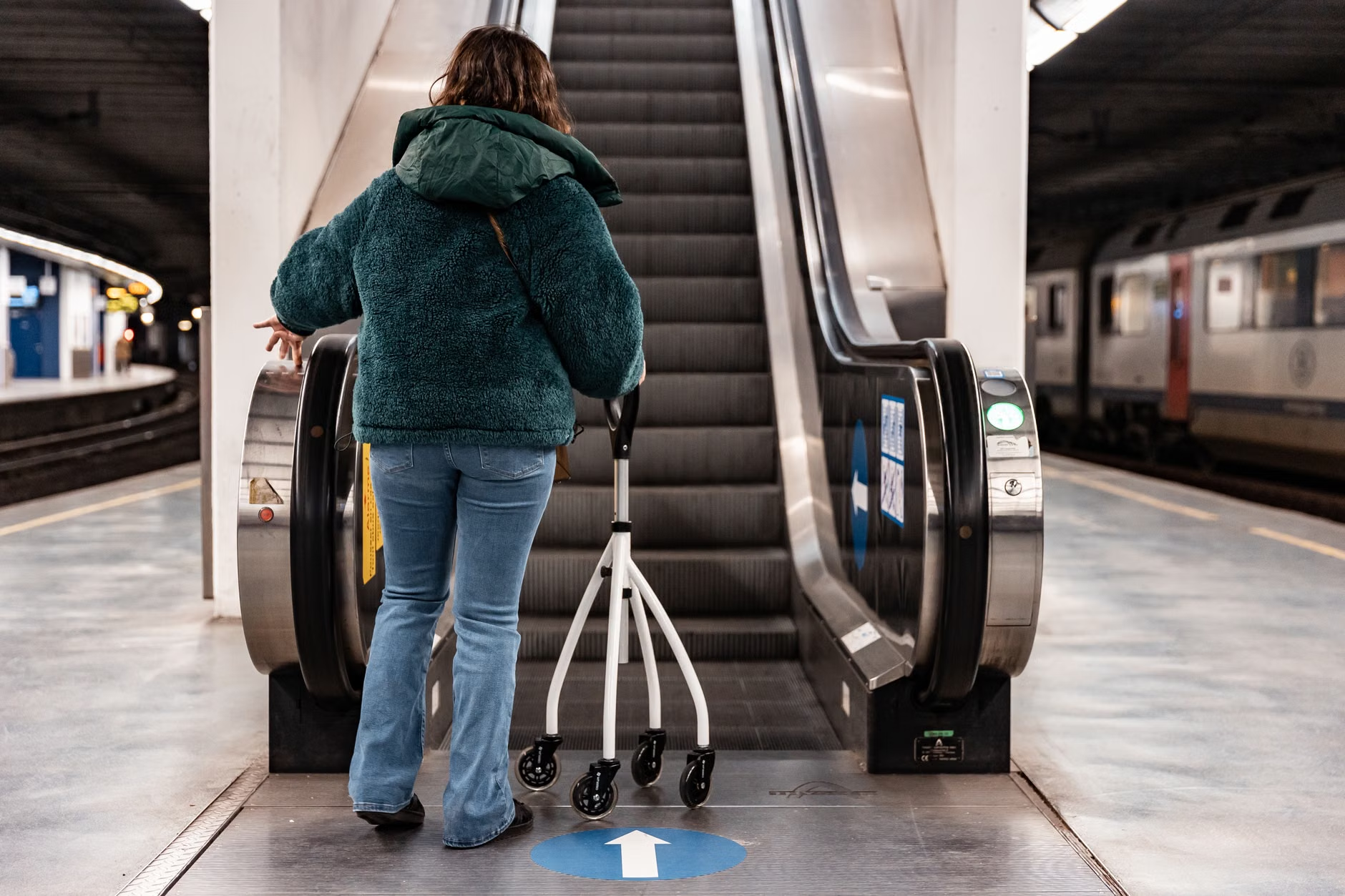
Before leaving your accommodation, use a transit app (such as Google Maps, Citymapper, or the local municipal transit app) to verify that your destination stop is “step-free.” If a station is not accessible, look for an alternative stop nearby. Never assume that a station has an elevator or escalator unless you have verified it on an official transit map.
Boarding and Alighting Safety
When boarding, always aim for the middle carriage, which is often the most spacious. If you are traveling with a companion, keep your bags to the side so you do not block the aisle. If you are traveling solo, keep your bag on your lap rather than the floor. This prevents the bag from sliding during transit and keeps it within your sight at all times.
Common Mistake: Many travellers try to board the first carriage because it is closer to the stairs. However, these carriages are often the most crowded. Walking an extra 30 meters to the middle or rear of the train often yields a quieter, more stable environment with easier access to seating.
Stamina Management and Rest Architecture
A successful city tour is not about seeing the most things; it is about sustaining your energy. This is called “Rest Architecture”—the intentional planning of downtime into your itinerary.
The 90-Minute Rule
Plan for a 15-minute rest period for every 90 minutes of active walking or transit. This does not have to be a full meal; it can be sitting on a park bench, browsing a bookstore, or simply observing the city from a cafe. This reset prevents the accumulation of physical fatigue that often leads to accidents in the late afternoon.
Hydration and Nutrition
Dehydration is a silent contributor to fatigue. Carry a reusable water bottle that fits in an external side pocket of your backpack. Avoid sugary drinks, which lead to energy crashes. If you have specific dietary needs, pack a high-protein snack, such as nuts or a protein bar, to maintain blood sugar levels throughout the day.
Technology as a Mobility Aid
Modern technology has made urban travel significantly safer for older adults. Use these tools to minimize uncertainty:
- Digital Wallets: Use contactless payments (Apple Pay, Google Pay, or contactless cards) to avoid the need for paper tickets or searching for exact change. This reduces your time standing at ticket machines.
- Real-Time Transit Apps: Apps like Moovit provide real-time updates on delays, platform changes, and vehicle arrivals. Knowing exactly when the next train is coming prevents unnecessary standing on platforms.
- Translation Apps: If traveling in a non-English speaking country, keep a translation app like Google Translate ready. It can help you ask for directions or clarify transit routes with station staff.
Hidden Variables and Unexpected Trade-offs
Even with perfect preparation, the city environment is unpredictable. Here are some factors often overlooked by seasoned travellers:
The “Cobblestone Variable”
Many European cities feature historic centers paved with cobblestones. If you are using a walking pole, ensure it has a rubber tip, which provides better grip than a metal tip on slick, uneven stones. Your backpack should be tight against your body to prevent it from swinging and throwing you off balance on uneven terrain.
The Temperature Gradient
Transit systems often have significant temperature differences between the platform (often underground and hot) and the train (often air-conditioned and cold). Dressing in layers is not just for comfort; it is a health necessity to prevent respiratory distress or thermal shock. Always keep your outer layer easily accessible in an external pocket of your bag.
The “Last-Mile” Reality
Most light-rail systems do not take you door-to-door. You will almost always have a “last-mile” walk from the station to your final destination. When planning your route, use Google Street View to look at the path from the station to your destination. Are there steep hills? Are there construction barriers? Adjust your expectations and your pace accordingly.
Professional Care and Medical Considerations
If you have pre-existing health conditions, your travel preparation should include a “Travel Health Folder.” This should be a small, physical folder kept in your bag containing:
- A list of current medications and dosages.
- Contact information for your primary care physician.
- A copy of your travel insurance policy and emergency contact details.
- Any specific medical alerts (e.g., allergies).
Always consult with your physician before planning an intensive trip. They can provide specific advice based on your current health status, such as whether you should avoid high-altitude cities or specific climates. Never treat travel as a way to “walk off” a medical issue; ensure your health is stable before embarking on a journey.
Conclusion: The Joy of Light Travel
Minimalist packing is not about depriving yourself; it is about liberating yourself. By reducing the physical burden of your luggage, you gain the freedom to focus on the experience of the city rather than the mechanics of managing your belongings. Start small—perhaps a half-day trip to a nearby town—to test your kit and refine your habits. With the right preparation, light-rail city tours offer a sustainable, affordable, and deeply rewarding way to continue exploring the world well into your later years.
Frequently Asked Questions
1. How do I know if a city’s light rail system is truly accessible?
Most modern cities publish “Access Maps” on their official transit websites (e.g., Transport for London, MTA in New York, or the VAG in Germany). Look for keywords like “barrier-free,” “step-free,” or “ADA compliance.” If you cannot find this information, contact the local tourism board or transit authority via email before your trip.
2. What should I do if I feel overwhelmed by the pace of the city?
It is perfectly acceptable to step off the main path. Find a public library, a quiet park, or a museum foyer. These are often free, accessible, and climate-controlled environments where you can rest for 30 minutes without the pressure to purchase anything. There is no shame in taking a “mid-day reset” to ensure you have the energy for the evening.
3. Are walking poles allowed on light-rail trains?
Yes, walking poles are generally permitted, but ensure they are collapsible and stored in your bag or strapped to the side when you are on the train. This prevents them from becoming a tripping hazard for other passengers. If you use a permanent walking cane, it is perfectly acceptable to use it while boarding; just be mindful of the gap between the platform and the train.
Official resources for transit accessibility: