- Core Activation: Seated pelvic rocks teach you to find your “neutral spine,” which is the safest position for your back during daily activities like standing, lifting, or reaching.
- Accessibility: This exercise requires no equipment, can be done anywhere with a chair, and is gentle on joints, making it ideal for those managing stiffness or limited mobility.
- Preventive Value: Regular practice helps maintain pelvic floor awareness and spinal flexibility, reducing the risk of lower back strain common in the 60-80 age demographic.
The foundation of movement for any adult, regardless of age, begins at the pelvis. As we navigate our 60s, 70s, and 80s, maintaining the ability to move the pelvis independently of the rest of the spine becomes a critical factor in preventing lower back discomfort and maintaining balance. The “seated pelvic rock” is a fundamental, low-impact exercise designed to reconnect the brain with the muscles of the core and the lower back.
Understanding the Mechanics of the Pelvis
The pelvis serves as the “bowl” at the base of your spine. It houses essential organs and acts as the anchor for the muscles that stabilize your trunk and power your legs. When we spend long periods sitting in soft armchairs or slumping at a desk, the pelvis often becomes “locked” into one position—usually a rounded, backward tilt.
This loss of mobility means that when you eventually stand up or reach for an object, your lower back—which is designed primarily for stability—is forced to compensate for the lack of movement in your hips. Over time, this compensation leads to stiffness, muscle fatigue, and the localized pain that many older adults associate with “just getting older.” In reality, this is often a result of neurological and muscular disuse rather than structural decay.
What is a Pelvic Rock?
A pelvic rock is a controlled movement where you tilt your pelvis forward and backward while remaining seated. It is not a large, swinging motion; rather, it is a subtle, internal shift of your weight on the chair. By performing this, you are effectively “greasing the hinges” of your lumbar spine (the lower back) and waking up the deep abdominal muscles that support your organs and posture.
Step-by-Step Execution: How to Perform Seated Pelvic Rocks
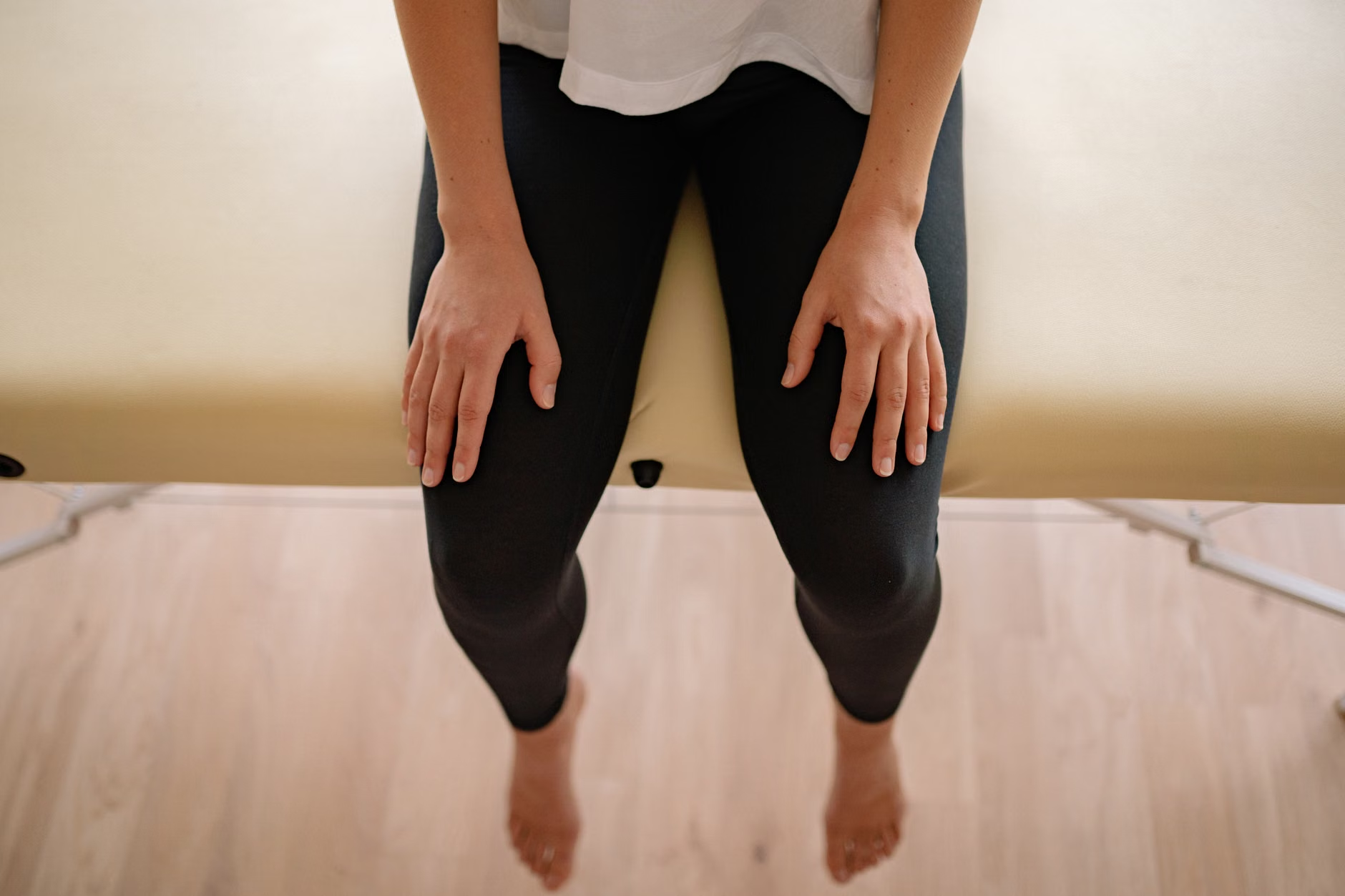
To perform this movement effectively, you need a firm, stable surface. A dining chair or a kitchen chair is ideal. Avoid sofas or deep, cushioned chairs, as they do not provide the structural feedback necessary for this exercise.
| Step | Action | Focus Area |
|---|---|---|
| 1. Positioning | Sit at the edge of a firm chair with feet flat on the floor, hip-width apart. | Stability and alignment |
| 2. The Forward Tilt | Gently arch your lower back, moving your belly button forward. | Anterior tilt |
| 3. The Backward Tilt | Gently round your lower back, pulling your belly button toward the chair back. | Posterior tilt |
| 4. Finding Neutral | Stop in the middle, where your weight is balanced directly over your sitting bones. | Neutral spine |
Common Mistake: Many people attempt to move their entire upper body by leaning forward and backward at the shoulders. Keep your shoulders stacked directly over your hips. The movement should originate entirely from the base of your spine.
Why Pelvic Mobility Matters for Daily Living
Why should you care about your pelvic tilt? For adults aged 60 to 80, the ability to transition smoothly from sitting to standing is the single most important predictor of long-term independence. When your pelvis is mobile, your spine can distribute the load of your body weight evenly. When it is stiff, that load is concentrated on the lumbar vertebrae.
Consider the task of putting on shoes or picking up a grandchild. If your pelvis cannot tilt forward (anterior tilt), you are forced to round your spine to reach the floor. This “spinal flexion” under load is the primary mechanism for disc-related back pain. By practicing pelvic rocks, you are training your body to hinge at the hips instead of the waist.
The Connection to Core Activation
The “core” is not just the rectus abdominis—the “six-pack” muscles. It includes the pelvic floor, the transverse abdominis (a corset-like muscle deep in your belly), and the multifidus (tiny muscles along the spine). Seated pelvic rocks act as a reset button for these muscles. When you find that “neutral” position between the forward and backward tilt, you are essentially engaging your core in its most efficient state.
Practical Application: Integrating Rocks into Your Routine
The beauty of this movement is its invisibility. You can practice pelvic rocks while waiting for a kettle to boil, sitting in a waiting room, or watching television. Because it is a low-exertion movement, it does not require a change of clothes or a “workout” mindset.
Setting a Routine
Start with a simple 3-minute protocol:
- Morning: 10 slow rocks before you get out of your chair for the day. This lubricates the spinal joints after sleep.
- Mid-day: 5 rocks whenever you finish a meal or a period of reading.
- Evening: 10 rocks to release the tension accumulated from daily activities.
Consistency is more important than intensity. You are not trying to strengthen your muscles to the point of exhaustion; you are trying to improve your neuromuscular control. Think of it as “re-programming” your brain to recognize where your pelvis is in space.
Safety Considerations and When to Consult a Professional
While seated pelvic rocks are generally safe, they are not a cure-all for severe conditions. If you have a history of spinal fractures, severe osteoporosis, or recent hip surgery, you must consult with a physical therapist or your primary care physician before starting any new movement routine.
Warning Signs: If you experience sharp, radiating, or “electric” pain down your legs while performing this movement, stop immediately. This could indicate nerve impingement or a disc issue that requires professional diagnostic imaging. Discomfort that feels like muscle “tightness” or “stiffness” is usually acceptable, but sharp, localized pain is a signal to pause and seek guidance.

The Overlooked Variable: The Role of Chair Height
An often-overlooked factor in pelvic health is the height of the chair you use daily. If your chair is too low, your knees will be higher than your hips, forcing your pelvis into a constant posterior (backward) tilt. This makes it nearly impossible to maintain a neutral spine.
If you find that your knees are significantly higher than your hips when you sit, consider placing a firm cushion on the chair seat to elevate your hips. Ideally, your hips should be slightly higher than your knees. This simple change can make the pelvic rock feel significantly easier and more effective, as it naturally encourages the forward tilt required for good posture.
Distinguishing Facts from Myths
There is a common misconception that “core strength” requires high-intensity abdominal crunches or planks. For many adults over 60, these traditional exercises can actually cause more harm than good by putting excessive pressure on the lumbar discs or straining the neck. Pelvic rocks provide the benefits of core activation—stability, organ support, and spinal protection—without the risks associated with high-impact abdominal training.
Furthermore, do not believe the claim that “back pain is inevitable as you age.” While the discs do undergo natural changes, pain is often a result of functional patterns. By maintaining the mobility of the pelvis, you can continue to move with confidence, regardless of your age.
Comprehensive FAQs for Daily Practice
1. How do I know if I am doing the pelvic rock correctly?
Place one hand on your lower belly and one hand on your lower back. As you rock forward, you should feel your lower back arch slightly and your belly move outward. As you rock backward, you should feel your lower back flatten or round and your belly move inward. If you aren’t feeling this shift, try smaller, slower movements until you feel the “hinge” at your hips.
2. Can I do this if I have had a hip replacement?
Generally, gentle pelvic movement is encouraged during recovery, but you must adhere to the specific “movement precautions” provided by your orthopedic surgeon. These often include limitations on how far you can bend your hip. Always verify with your rehabilitation team before adding this to your daily routine.
3. Is there a specific time of day that is best for this?
There is no clinical “best time.” However, performing these when you are already seated—such as at a desk or during a meal—is the most effective way to build a habit. The goal is to integrate the movement into your life so that it becomes an unconscious way to “reset” your posture throughout the day.
Conclusion
The seated pelvic rock is more than just an exercise; it is a tool for body awareness. By mastering this simple, low-impact movement, you are taking proactive control of your spinal health and ensuring that your core remains active and supportive. Start small, focus on the quality of the movement rather than the quantity, and listen to your body’s signals. With consistent practice, you will find that the “stiffness” of aging is not a fixed state, but a variable you can manage with simple, daily actions.
For more information on maintaining mobility as you age, you may find these resources helpful: