Maintaining respiratory capacity is a cornerstone of healthy aging, as it directly influences your stamina, energy levels, and overall resilience during daily activities. As we age, the chest wall can become stiffer and the diaphragm—the primary muscle responsible for breathing—may lose some of its efficiency. By incorporating simple, seated chest-opening exercises into your daily routine, you can promote better posture, improve lung expansion, and support long-term respiratory health without the need for specialized gym equipment.
- Mechanical Advantage: Seated chest-openers counteract the “forward-slump” posture that physically restricts how much air your lungs can take in.
- Consistency Over Intensity: Gentle, daily movements are more effective for respiratory maintenance than infrequent, high-intensity workouts.
- Safety First: Focus on pain-free ranges of motion; if you feel sharp pain or dizziness, stop immediately and consult your healthcare provider.
Why Chest Mobility Directly Affects Your Breathing
To understand the importance of chest-openers, we must look at the mechanics of breathing. Your lungs are housed within the rib cage, which must expand and contract with every breath. When we sit for long periods—whether reading, watching television, or using a computer—our shoulders tend to roll forward. This “kyphotic” or hunched posture compresses the thoracic cavity (the chest area), making it physically harder for the diaphragm to descend and the ribs to flare outward.
When the chest is restricted, we often compensate by breathing shallower, using the smaller muscles in the neck and upper chest instead of the larger, more efficient diaphragm. This leads to faster fatigue, especially during physical tasks like walking or climbing stairs. By practicing chest-openers, you are effectively “resetting” the rib cage and allowing the diaphragm the space it needs to function at its full potential.

The Relationship Between Posture and Respiratory Efficiency
It is a common misconception that breathing issues in later life are solely the result of lung tissue aging. While tissue changes are a natural part of the biological process, a significant portion of reduced respiratory capacity is actually mechanical. Think of your lungs like an accordion; if the frame holding the accordion is bent or constricted, it cannot open fully, regardless of how strong the bellows are.
Identifying the “Forward-Slump”
Many adults develop a habit of rounding the upper back. This position shortens the pectoral muscles in the front of the chest, which then pull the shoulders forward. Once this becomes a resting habit, the muscles in the back become weak and overstretched. This creates a cycle: the tighter your chest muscles become, the more difficult it is to sit up straight, and the more restricted your breathing becomes. Breaking this cycle requires a two-pronged approach: stretching the tight muscles in the front and gently engaging the muscles in the back.
Step-by-Step Seated Chest-Opening Routine
The following exercises are designed to be performed in any sturdy, armless chair. Ensure your feet are flat on the floor and your knees are bent at a 90-degree angle for stability.
| Exercise | Target Area | Duration/Frequency |
|---|---|---|
| The Thoracic Lift | Upper back and chest | 5 repetitions, hold for 5 seconds |
| The Goalpost Open | Pectoral muscles | 10 repetitions, slow and controlled |
| The Seated Side-Bend | Intercostal muscles (between ribs) | 3 repetitions per side |
1. The Thoracic Lift
Sit at the edge of your chair. Interlace your fingers behind your head, keeping your elbows wide. Inhale slowly as you gently lift your breastbone toward the ceiling, looking slightly upward. Do not arch your lower back; focus the movement on the upper and middle back. Exhale as you return to a neutral, upright sitting position. This exercise helps to mobilize the stiff joints of the thoracic spine.
2. The Goalpost Open
Raise your arms to the side, bending your elbows at a 90-degree angle so your arms look like goalposts. As you inhale, draw your shoulder blades together and move your elbows back as far as is comfortable. You should feel a gentle stretch across your chest. As you exhale, slowly bring your forearms toward each other in front of your face. This movement not only stretches the front but also engages the muscles between your shoulder blades.
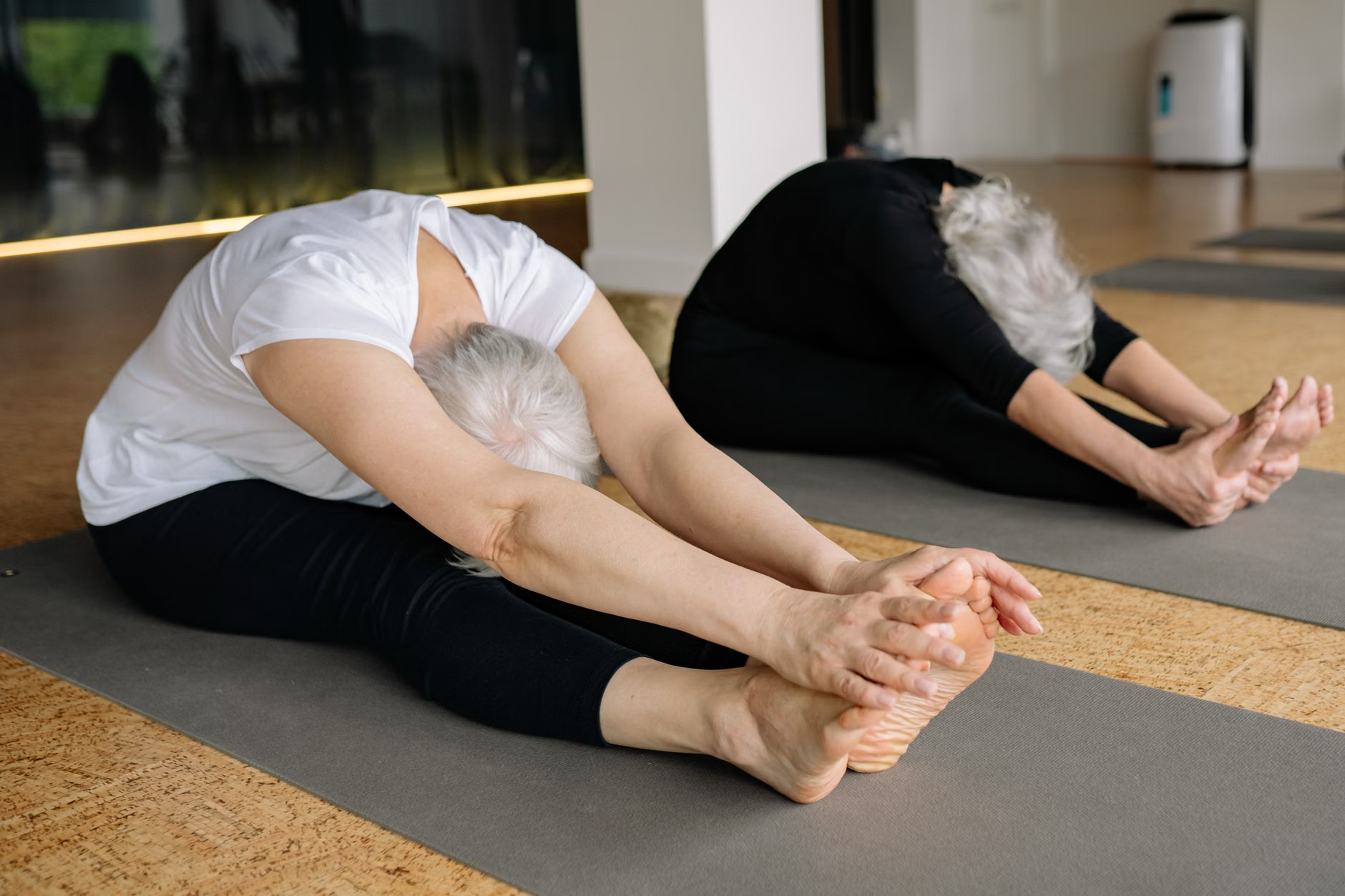
3. The Seated Side-Bend
The muscles between your ribs, known as the intercostal muscles, are vital for rib cage expansion. To stretch these, raise your right arm straight up toward the ceiling. Keep your left hand holding the side of the chair for stability. Slowly lean your torso to the left, feeling a stretch along the right side of your rib cage. Breathe deeply into the side you are stretching. Switch sides after holding for 15-20 seconds.
Common Mistakes and How to Avoid Them
Even with simple exercises, technique is paramount to avoid strain. One of the most frequent mistakes is over-extending the lower back. When people try to “puff out” their chest, they often compensate by arching their lower spine, which can lead to back discomfort. Always think about lengthening your spine upward—as if a string is pulling the crown of your head to the ceiling—rather than pushing your belly button forward.
Another common mistake is holding the breath during the stretch. It is counterintuitive, but many people hold their breath when trying to improve their breathing. Remember that the goal is to expand the chest while breathing. If you find yourself holding your breath, your intensity is likely too high; reduce the range of motion until you can breathe comfortably and deeply throughout the movement.
When to Seek Professional Guidance
While these exercises are generally safe for the majority of adults, they are not a substitute for medical treatment if you are experiencing respiratory distress. If you notice any of the following, consult your doctor before beginning a new exercise regimen:
- Persistent shortness of breath while at rest.
- Chest pain or pressure during movement.
- Dizziness, lightheadedness, or fainting.
- Unexplained wheezing or a chronic, productive cough.
If you have a history of osteoporosis or vertebral fractures, please speak with a physiotherapist before attempting exercises that involve thoracic extension. They can provide modified versions of these movements that prioritize the safety of your spine while still providing the necessary mobility benefits.
Integrating Movement into Your Daily Schedule
The key to seeing results is integration. Instead of treating these as a separate “workout” session, try to associate them with natural breaks in your day. For example, perform three repetitions of the Goalpost Open every time you finish a chapter of a book or every time a television program goes to a commercial break. By making these movements a habitual part of your day, you avoid the fatigue that often comes with trying to perform long, structured exercise sessions.
Consider using a timer or a sticky note on your computer or television to remind yourself to check your posture. When you catch yourself slumped, use that as a cue to sit tall and perform a single, deep, chest-opening breath. This “micro-habit” approach is highly effective for long-term health maintenance.
Scientific Context: The Role of Thoracic Mobility
Research consistently shows that reduced thoracic mobility is strongly correlated with lower forced vital capacity (FVC)—the total amount of air you can exhale after taking a deep breath. As we reach our 60s, 70s, and 80s, the collagen in our tissues changes, and the rib joints can stiffen. This is a normal physiological process, but it is not entirely inevitable or irreversible. Clinical studies in geriatric rehabilitation suggest that structured mobility training can improve chest wall expansion by several centimeters, which translates to a measurable increase in air intake.
Furthermore, improved posture has a secondary benefit: it reduces the workload on your heart. When your lungs are working efficiently, your heart does not need to pump as hard to oxygenate your blood. This synergy between respiratory and cardiovascular health is why even minor improvements in chest mobility can lead to a noticeable difference in your overall energy levels and daily endurance.
Practical Tips for Success
- Use a Mirror: Practice these exercises in front of a mirror at least once to ensure your shoulders are level and you aren’t shrugging them toward your ears.
- Hydration: Being well-hydrated helps maintain the elasticity of your muscles and connective tissues, making stretching more effective.
- Temperature: Muscles are more pliable when warm. If you are doing these in the morning, consider doing them after a warm shower or after you have moved around the house for a bit.
- Consistency vs. Intensity: You should never feel sharp, stabbing pain. A dull, tension-like sensation is normal, but anything sharp indicates you are pushing too far.
Conclusion: Taking Control of Your Breathing
Improving your respiratory capacity is an empowering way to maintain your independence and vitality. By dedicating just a few minutes each day to these seated chest-openers, you are investing in the mechanics of your own body, ensuring that you can continue to enjoy your favorite activities with ease. Remember that your goal is not to perform perfect gymnastics, but to create a daily environment where your lungs have the space they need to support you fully.
Frequently Asked Questions
Q: How long will it take to see improvements in my breathing?
A: Many people notice an immediate, temporary feeling of “lightness” in their chest after a single session. However, structural changes to muscle tightness and joint mobility typically take 4 to 6 weeks of consistent daily practice to become noticeable in your baseline breathing comfort.
Q: Can I use weights while performing these chest-openers?
A: It is generally recommended to start without weights. The primary goal of these exercises is mobility and posture, not muscle building. Adding weight can change your center of gravity and increase the risk of strain. Once you have mastered the form and are pain-free, you may consult a professional about adding light resistance if desired.
Q: I have back pain; should I avoid these exercises?
A: If you have back pain, you must be cautious. These exercises are meant to be gentle. If the movement causes pain in your lower back, stop and focus on sitting tall without the extension component. Always consult your doctor to determine the underlying cause of your back pain before starting any new routine.
Disclaimer: This article is for informational purposes only and does not constitute medical advice. Always consult with a healthcare professional before starting any new exercise program, especially if you have existing health conditions.
Official guidance on physical activity for older adults can be found at the World Health Organization (WHO) physical activity guidelines.