Public park seating is the most critical link in the “mobility chain” that allows adults aged 60 and over to remain active in their communities. By 2026, international standards set by the International Organization for Standardization (ISO) and the World Health Organization (WHO) are expected to drive a massive overhaul of how cities design these rest stops. This shift is not merely about comfort; it is a fundamental requirement for preventing social isolation and maintaining physical health. Understanding these standards allows you to evaluate your local environment and advocate for the infrastructure you deserve.
Key Takeaways
- 1. Standardized Height and Support: New 2026 guidelines prioritize a seat height of 450mm to 520mm and mandatory armrests to ensure safe “sit-to-stand” transitions.
- 2. The 50-Meter Rule: To support those with limited stamina, global age-friendly standards now recommend placing seating every 50 to 100 meters along primary walking paths.
- 3. Thermal and Material Safety: Standards are moving away from heat-conductive metals toward sustainable woods and textured polymers that remain comfortable in extreme weather.
The Biomechanics of the Sit-to-Stand Movement
For many adults, the simple act of sitting down and standing up becomes a complex mechanical challenge as muscle mass naturally changes with age. The 2026 standards for park seating focus heavily on the “sit-to-stand” (STS) movement, which is one of the most demanding daily activities for the lower body. When a bench is too low, the center of gravity is dropped further, requiring significantly more quadriceps strength and hip flexibility to rise. Conversely, a bench that is too high leaves the feet dangling, which can cause pressure on the underside of the thighs and restrict circulation.
Why armrests matter: Armrests are not an optional luxury; they are a safety necessity. In the 2026 framework, armrests must be positioned at a height that allows the user to push upward with their triceps and shoulders, effectively reducing the load on the knee joints by up to 40%. This is particularly vital for individuals with osteoarthritis or those recovering from hip replacements. A bench without armrests is often a bench that an older adult will avoid entirely for fear of being unable to get back up.
Real-life impact: Imagine a local park where the benches are modern “backless” blocks. While they may look stylish to a young architect, they offer no leverage. An older adult walking through this park may cut their walk short because they don’t see a “safe” place to rest. The 2026 standards aim to eliminate this “mobility anxiety” by ensuring that every rest stop provides the mechanical advantage needed to stand up with confidence.

Global Regulatory Frameworks: ISO 21801 and the WHO
The movement toward better seating is governed by ISO 21801-1:2020 (Design and development of accessible products and services) and the WHO Age-Friendly Cities framework. As we approach 2026, these guidelines are being integrated into local building codes worldwide. These organizations recognize that “accessible” does not just mean “wheelchair accessible.” It means “accessible to all,” including those who walk with a cane, those with visual impairments, and those who simply tire easily.
The WHO’s “Decade of Healthy Ageing (2021–2030)” has identified 2026 as a mid-point milestone where municipal progress will be measured. Cities that fail to provide adequate seating may find themselves lower in global livability rankings. This matters to you because it provides a “lever” for advocacy. If your local council claims they lack the budget for new benches, you can point to these international standards as the benchmark for a modern, inclusive city.
What these standards look like in practice is a shift from “ornamental” furniture to “functional” furniture. In the past, park benches were often chosen because they fit a historic aesthetic. Under the new standards, the priority is ergonomics. This includes the “heel space” beneath the seat. To stand up easily, a person needs to be able to tuck their heels slightly back toward the center of the bench. Solid-base benches that block this heel movement make standing up much harder and are being phased out in favor of designs with open space below the seat.
Seating Placement and the “50-Meter Rule”
Even the most perfectly designed bench is useless if it is located 500 meters away from the park entrance. One of the most significant changes in the 2026 global standards is the focus on spatial frequency. For an adult with chronic respiratory issues or limited stamina, the distance between benches determines how far they can explore. The “50-meter rule” suggests that in high-traffic areas, seating should be available every 50 meters. In larger, more natural park settings, this can extend to 100 meters.
What the reader can do: Next time you visit your favorite park, try to count your steps between benches. A standard stride is roughly 0.7 to 0.8 meters. If you are walking more than 150 steps without seeing a place to sit, that park is not meeting the upcoming global standards for age-friendliness. This gap in infrastructure acts as a “soft barrier,” effectively telling older residents that the park is not for them.
Furthermore, the placement must consider the “path of travel.” Benches should be set back from the main walking path so that the feet of those sitting do not trip those walking by. However, they must remain on a firm, level surface (like concrete or compacted gravel) so that someone using a walker or cane can transition from the path to the seat without navigating grass or mud.

Materials and Thermal Comfort: Beyond Metal and Stone
A common mistake in urban design is choosing materials based solely on durability or resistance to graffiti. However, for older adults, the thermal properties of a bench are a major factor in usability. Metal benches can become dangerously hot in the summer sun, potentially causing skin burns, or painfully cold in the winter, which can exacerbate joint stiffness. Stone and concrete benches, while durable, are often too hard and lack the necessary “give” for long-term comfort.
The 2026 standards encourage the use of “low-conductivity” materials. Sustainable timber (like teak or treated oak) is the gold standard because it maintains a relatively neutral temperature and offers a natural texture that is easier to grip. For cities looking for lower maintenance, high-density recycled plastics (poly-lumber) are becoming popular. These materials are engineered to mimic the thermal properties of wood while resisting rot and insects.
Decision Rule: If you are choosing a spot to sit, look for wood or composite materials first. If you must sit on a metal bench in the summer, always test the temperature with the back of your hand first. The 2026 standards also suggest that at least 50% of park seating should be located under “natural or artificial shade” to prevent heat exhaustion, which is a critical safety consideration for those on certain heart or blood pressure medications that affect heat regulation.
Regional Comparisons: How Standards Differ by Country
While the ISO provides a global baseline, different countries have their own specific regulations that will align with the 2026 goals. It is helpful to know which standard applies to your region so you can use the correct terminology when speaking with local officials.
| Region/Country | Primary Standard | Key Requirement for 2026 |
|---|---|---|
| United States | ADA (Americans with Disabilities Act) | Focus on “clear floor space” (760mm x 1220mm) next to benches for wheelchairs. |
| United Kingdom | BS 8300:2018 | Detailed specs on armrest contrast (color) for those with low vision. |
| European Union | EN 17210 | Emphasis on “inclusive design” and seamless transitions from public transport. |
| Australia/NZ | AS 1428.2 | Strict seat height requirements (450mm) and mandatory backrests. |
| Singapore | Code on Accessibility | Integration of “silver zones” with seating every 30-50 meters in residential areas. |
Which standard fits your needs? If you live in the US, the ADA is your strongest tool for legal compliance. In the UK and Europe, the focus is often more on the “sensory” experience, ensuring that benches have high-contrast colors so they are easy to spot for those with cataracts or other visual impairments. In Asia-Pacific regions like Singapore, the focus is on the “integration” of seating into the total walking journey from home to the market or clinic.
Advocacy: How to Improve Your Local Park
If your local park is currently failing to meet these 2026 standards, you do not have to wait for the government to notice. Practical advocacy is often the fastest way to see change. Most municipal budgets for “park improvements” are allocated based on resident feedback. However, a generic complaint like “we need more benches” is often ignored. To be effective, your request should be specific and data-driven.
Step-by-step action plan:
- Conduct a “Seating Audit”: Walk your usual route with a friend. Mark on a map where you feel tired and where a bench is missing. Note the condition of existing benches (e.g., “too low,” “no armrests,” “splintering wood”).
- Gather Signatures: A simple petition signed by 20 or 30 neighbors carries weight. It shows the council that this is a community need, not just one person’s preference.
- Use the “2026 Standard” Language: When writing to your local representative, use phrases like “compliance with ISO 21801” or “WHO Age-Friendly City guidelines.” This tells officials that you are informed and that their current infrastructure may be outdated.
- Highlight the Economic Benefit: Remind the council that age-friendly parks encourage older adults to spend time (and money) in local areas. When people can walk comfortably, they are more likely to visit nearby cafes and shops.
Common Mistake: Don’t just ask for “benches.” Ask for “accessible seating with backrests and armrests.” Without that specific language, the city might install “perch” seating (stools without backs), which provides very little rest for the spine and is difficult for many seniors to use.
The Hidden Connection: Seating and Mental Health
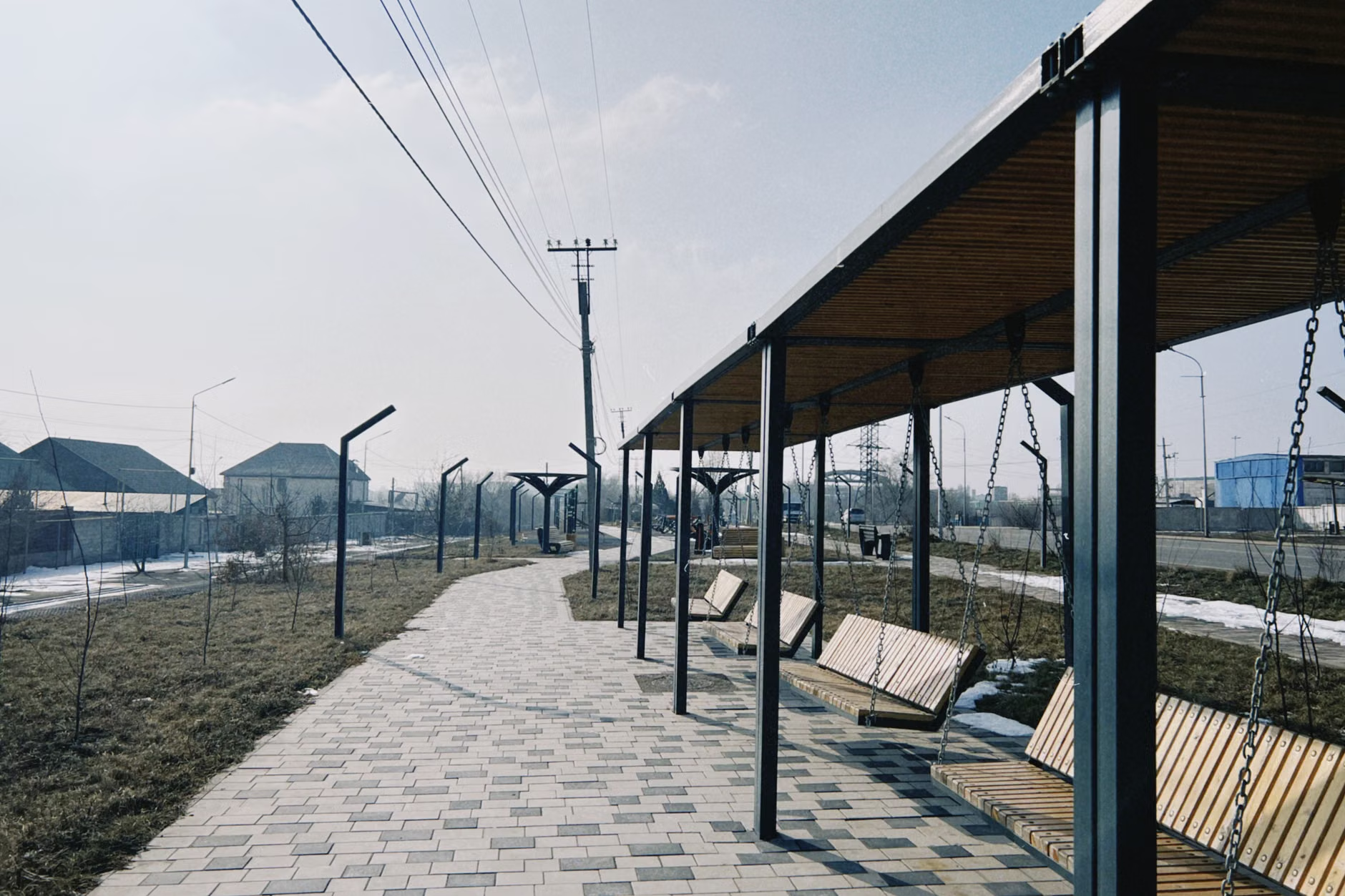
There is a meaningful insight often overlooked in urban planning: seating is a social lubricant. For an older adult living alone, a trip to the park might be their only social interaction of the day. If the seating is arranged in long, straight rows, it discourages conversation. The 2026 standards are beginning to suggest “conversational clusters”—placing two benches at a 90-degree angle to each other.
This layout allows two people to talk without having to crane their necks, which is vital for those with cervical spine issues or hearing loss (as it allows for better lip-reading). When you see benches arranged this way, it is a sign of a truly thoughtful, age-friendly design. It transforms a “rest stop” into a “social hub,” reducing the risk of loneliness, which the WHO has identified as a health risk as significant as smoking 15 cigarettes a day.
Furthermore, seating provides a “psychological safety net.” Knowing there is a place to sit every 50 meters gives a person the confidence to leave their house. This “confidence-to-walk” is a preventive health measure; it keeps joints mobile, improves cardiovascular health, and helps maintain a healthy weight. In this sense, a well-placed park bench is a piece of healthcare equipment.
Future Trends: Smart Benches and Solar Power
As we look toward 2026 and beyond, “smart” seating is entering the public square. While some technology can be intimidating, many new features are designed specifically to help older adults. For example, solar-powered benches can provide integrated lighting. For a senior with declining night vision, a bench that glows softly at dusk is much easier to navigate and reduces the risk of tripping.
Other smart benches include induction charging for mobile phones. Why does this matter for a 75-year-old? It ensures that your phone always has power in case of an emergency or if you need to call a ride-share service to get home. Some advanced designs even include “emergency call buttons” directly integrated into the armrest. While these are not yet universal, they represent the next frontier of the “age-friendly” movement, where the environment itself acts as a guardian for the residents.
However, a trade-off exists: high-tech benches can sometimes be less comfortable or more confusing to use. The 2026 standards emphasize that technology should never come at the expense of basic ergonomics. A solar-powered bench is a failure if it is made of cold, hard steel with no armrests. The “best” choice remains a bench that prioritizes the physical needs of the human body first, with technology as a secondary benefit.
Conclusion: Your Right to a Rest
The 2026 global standards for park seating are a recognition that aging populations deserve a public square that supports their independence. These standards—focusing on height, armrests, material, and frequency—are the blueprint for cities that value all their citizens. By understanding what makes a bench truly “age-friendly,” you can make better decisions about where to spend your time and how to advocate for improvements in your own neighborhood.
Your immediate next action: On your next walk, identify one bench that works well for you and one that doesn’t. Take a photo of the “good” one. This gives you a concrete example to show your local park department or community board. Remember, public spaces are funded by your taxes; ensuring they are accessible to you is not a favor—it is a requirement for a functional, modern society.
Frequently Asked Questions
1. What is the ideal height for a park bench for someone with knee pain?
According to the 2026 standards, the ideal height is between 450mm and 520mm (about 18 to 20 inches). This height allows most adults to keep their feet flat on the ground while keeping the hips slightly higher than the knees, making it much easier to stand up without straining the joints.
2. Why are some new park benches designed without backrests?
Backless benches are often chosen by cities to save space or prevent people from lying down. However, they are generally not considered age-friendly. Older adults require backrests to support the lumbar spine and allow the core muscles to relax during a rest. When advocating for new seating, always specify that backrests are a non-negotiable requirement for senior accessibility.
3. How can I tell if a bench is “safe” before I sit down?
Perform a quick three-point check: First, check the material—if it’s metal and in direct sun, touch it briefly with the back of your hand. Second, check for armrests—ensure they are sturdy and not loose. Third, look at the ground—ensure the area where you will place your feet is level and not slippery (no loose gravel or wet leaves). If it fails any of these, it is better to walk a little further to a safer seat.
Official Sources for Further Reading:
– World Health Organization: Age-Friendly World Framework
– International Organization for Standardization: ISO 21801-1:2020 Guidelines