Maintaining a neutral, lengthened spine while seated is one of the most effective ways to prevent chronic back pain, preserve respiratory capacity, and sustain independent mobility as you age. By consciously managing how you sit, you reduce the mechanical load on your vertebral discs and support the long-term health of your musculoskeletal system.
- Neutral Alignment: The goal is to stack your ears, shoulders, and hips in a vertical line to minimize gravitational compression on the spine.
- Dynamic Sitting: No chair position is perfect for hours; the most important habit is to shift, adjust, and stand up every 30 to 45 minutes.
- Supportive Environment: Proper posture starts with the environment; ensure your feet are flat on the floor and your chair provides adequate lumbar support.
Understanding the Mechanics of Seated Posture
As we age, the intervertebral discs—the shock-absorbing pads between our vertebrae—can lose hydration and elasticity. This natural process often leads to a slight loss of height and a tendency to adopt a “slouched” posture, where the thoracic spine (the upper and middle back) curves forward. This is known as hyperkyphosis.
While some curvature is natural, excessive rounding of the upper back can compress the lungs, reduce abdominal space for digestion, and place undue strain on the neck muscles. Seated spinal-lengthening is not about “standing at attention” while sitting; it is about finding the path of least resistance where your muscles do the least amount of work to keep you upright.
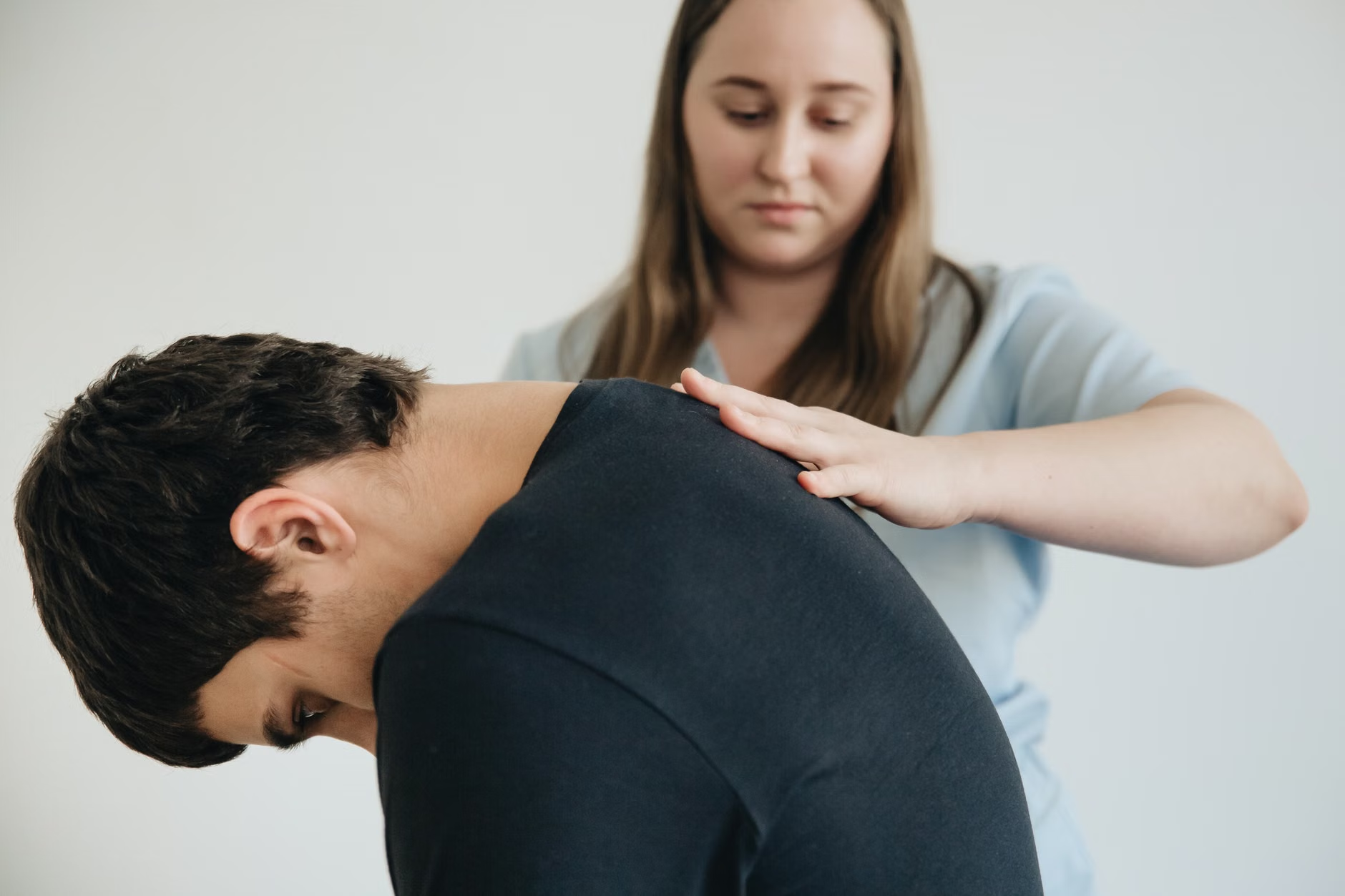
When you lengthen the spine, you are essentially creating space. Imagine a string pulling the crown of your head toward the ceiling. This simple mental cue engages the deep core stabilizers—the transverse abdominis and the multifidus muscles—which protect the spine far more effectively than the superficial back muscles.
The Anatomy of a “Lengthened” Seat
To achieve a lengthened spine, you must address the foundation first: your pelvis. If your pelvis is tucked under (posterior tilt), your spine will naturally collapse into a C-shape. If your pelvis is tilted too far forward (anterior tilt), you will experience a pinching sensation in the lower back.
Step-by-Step Execution
- The Foundation: Sit toward the edge of your chair. Place your feet hip-width apart, ensuring your heels are directly beneath your knees. If your feet dangle, use a footrest or a stack of books to ensure 90-degree angles at the hips and knees.
- The Pelvic Reset: Gently rock your pelvis forward and backward. Find the middle ground where your weight is evenly distributed on your “sit bones” (the ischial tuberosities).
- The Spinal Lift: Imagine the top of your head is being pulled upward by a soft string. Feel your ribcage lift slightly away from your hips. Keep your chest open, but do not puff it out aggressively.
- The Shoulder Reset: Shrug your shoulders toward your ears, then roll them back and down. Let them rest naturally. They should not be held tight.
Environmental Factors: Choosing and Modifying Your Chair
Not all chairs are created equal. A soft, deep sofa may feel comfortable for five minutes, but it is often the enemy of spinal health because it lacks structural support, forcing your spine to compensate for the lack of a firm base.
| Chair Type | Suitability | Key Limitation |
|---|---|---|
| Dining Chair (Firm) | Excellent for daily tasks | Often lacks lumbar contouring |
| Recliner | Good for rest | May encourage “slump” if not adjusted |
| Office Chair (Ergonomic) | Best for long-duration tasks | High cost and complexity |

If you use a standard chair, you can easily create custom support. A small, firm cushion placed at the natural curve of your lower back (the lumbar spine) prevents the pelvis from tucking under. If you do not have a specialized cushion, a rolled-up hand towel works effectively. The goal is to maintain the natural inward curve of the lower back, which acts as a spring to support the weight of the torso.
The Myth of “Perfect” Posture
One of the most common mistakes adults make is believing they must hold a rigid, upright position for hours. This is physically impossible and counterproductive. The human body is designed for movement. Holding any static position—even a “perfect” one—causes blood flow to decrease and muscles to fatigue.
The “Motion is Lotion” Rule: Instead of focusing on holding a position, focus on the “next” position. If you are reading, look up every few minutes. If you are watching television, use the commercial breaks to stand, walk a few steps, or perform a gentle seated twist. These micro-movements ensure that your spinal discs remain hydrated and your muscles remain responsive.
Practical Daily Habits for Spinal Maintenance
Integrating these habits does not require a gym membership or expensive equipment. It requires simple awareness during your routine.
- The 45-Minute Clock: Set a timer. When it rings, stand up. Even 30 seconds of standing resets the pressure on your discs.
- Shoulder Glides: While seated, press your shoulder blades gently toward each other. This counteracts the tendency to “roll forward” while using a tablet or reading a book.
- Chin Tucks: To prevent “tech neck” (forward head posture), gently pull your chin straight back as if creating a double chin. Hold for 3 seconds and release. This strengthens the deep neck flexors.

When to Seek Professional Guidance
While postural adjustments can alleviate mechanical strain, they are not a substitute for medical evaluation if you experience persistent symptoms. You should consult a healthcare professional—such as a physical therapist or a GP—if you notice:
- Radiating Pain: Pain that travels down your arm or leg, which may indicate nerve compression.
- Numbness or Tingling: Persistent pins-and-needles in the extremities.
- Sudden Loss of Balance: If your posture is significantly affecting your gait or stability.
- Inability to Straighten: If you find you are physically unable to sit upright even with support.
When preparing for an appointment, keep a simple log: Note when the pain occurs, what you were doing at the time, and what specific movements provide relief. This information is invaluable for a clinician to differentiate between muscle fatigue, spinal arthritis, or disc-related issues.
Extended Analysis: The Impact of Daily Technology
The ubiquity of smartphones and tablets has introduced a new variable: the “downward gaze.” Looking down at a screen for long periods can exert up to 27 kilograms (60 pounds) of force on the cervical spine. For an adult aged 60-80, this can accelerate the wear on neck vertebrae. To mitigate this, elevate your device to eye level. If you are using a tablet, use a stand or a stack of books. Never tilt your head; bring the world to your eyes, not your eyes to the world.
The Role of Core Strength in Stability
Posture is not just about the spine; it is about the muscles that hold it in place. The core is a cylinder consisting of the diaphragm (top), the pelvic floor (bottom), the abdominals (front), and the spinal erectors (back). If the diaphragm is not used efficiently through deep breathing, the other muscles have to work harder. Practice “diaphragmatic breathing”—breathing into your belly rather than shallow chest breathing—to stabilize the torso from the inside out.
Conclusion: Small Changes, Lasting Impact
Spinal health is a cumulative effort. By prioritizing a neutral pelvis, utilizing external support, and embracing the “motion is lotion” philosophy, you can significantly reduce the risk of posture-related discomfort. These adjustments are not merely about aesthetics; they are about maintaining the internal space necessary for breathing, digestion, and the freedom of movement that defines an active, independent life.
Start today by adjusting your chair for your next meal or reading session. Notice how it feels to have your feet flat and your lower back supported. These minor changes, practiced consistently, become the foundation for a more comfortable and mobile future.
Frequently Asked Questions
- Is it better to sit on a hard chair or a soft chair for my back?
A firm chair is generally superior because it provides a stable base for your pelvis. Soft, deep chairs allow the pelvis to rotate backward, which causes the spine to round. If you must sit on a soft surface, add a firm cushion to elevate your hips slightly above your knees.
- How do I know if I am sitting with a “neutral” spine?
When your spine is neutral, your ears, shoulders, and hips should align vertically. You can test this by sitting against a wall; your head, upper back, and sacrum should all be able to touch the wall comfortably without straining your neck.
- Can I use a back brace to help with my posture?
Back braces should only be used under the specific guidance of a medical professional. Relying on a brace can cause your core muscles to weaken over time, as the brace does the work your muscles should be doing. Focus on building core endurance through gentle movement rather than artificial support.
Official guidance on spinal health and ergonomic standards can be found through the World Health Organization (WHO) aging and health resources and national physical therapy associations.