- Cognitive Stimulation: Analyzing local history requires complex information processing, which helps maintain executive function and memory.
- Social Connectivity: Engaging with historical societies or community projects combats isolation by providing a shared sense of purpose.
- Practical Application: You don’t need academic training to start; simple steps like visiting local archives or interviewing neighbors provide immediate intellectual rewards.
The Intersection of History and Cognitive Health
For many, the study of history is often viewed as a passive academic pursuit—something reserved for classrooms or dusty textbooks. However, for adults aged 60 to 80, engaging with the history of one’s own neighborhood or town is a dynamic cognitive activity. It is not merely about memorizing dates; it is about building a mental map of how a community has evolved, which requires pattern recognition, chronological sequencing, and spatial reasoning.
Recent research in cognitive gerontology suggests that “novel and complex” activities are the most effective at maintaining brain health. When you research local history, you are essentially engaging in a form of investigative journalism. You are analyzing primary sources, cross-referencing information, and synthesizing disparate facts into a coherent narrative. This process stimulates the prefrontal cortex, the area of the brain responsible for executive functions such as planning, focus, and multi-tasking.

Why Local History is a Unique Cognitive Tool
Unlike abstract puzzles or generic memory games, local history provides a “contextual hook.” Because the information is directly related to the environment you inhabit, your brain finds it easier to store and retrieve. This is known as “episodic memory anchoring.” When you learn that the park where you walk your dog was once a bustling train station, you are creating a neural connection between a familiar physical location and new information.
1. Enhancing Executive Function
Executive function refers to the mental processes that enable us to plan, focus attention, remember instructions, and juggle multiple tasks. When you attempt to trace the history of a building or a local family, you are forced to:
- Categorize information: Deciding which sources are reliable and which are hearsay.
- Sequence events: Placing events in a logical timeline.
- Problem-solve: Navigating gaps in records or conflicting narratives.
2. Promoting Social Engagement
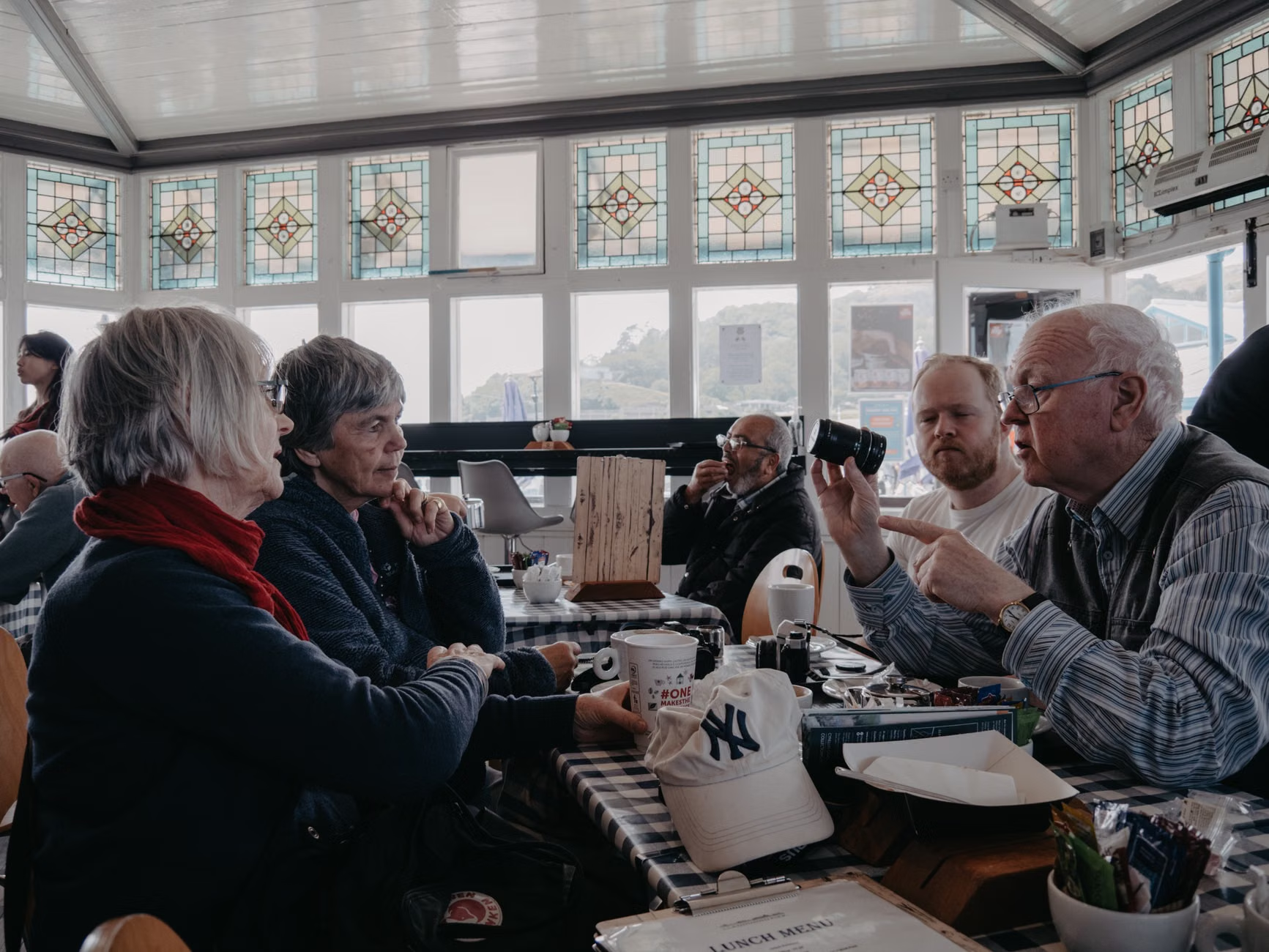
Isolation is a significant risk factor for cognitive decline. Local history is rarely a solitary pursuit. Whether you join a local historical society, participate in a heritage walking group, or simply share stories with neighbors, you are participating in “social cognitive training.” Discussing historical changes requires active listening, perspective-taking, and verbal articulation—all of which are high-level cognitive tasks.
Practical Steps to Begin Your Historical Investigation
You do not need a history degree to start. The best approach is to follow a structured, manageable plan that avoids overwhelm and focuses on curiosity-driven learning.
| Step | Action | Cognitive Benefit |
|---|---|---|
| 1. The “Why” | Pick one building or street that interests you. | Focuses attention and narrows scope. |
| 2. Primary Sources | Visit the local library or municipal archives. | Improves information gathering and critical analysis. |
| 3. Oral History | Interview a long-time resident. | Enhances auditory processing and empathy. |
| 4. Synthesis | Write a summary or create a digital album. | Strengthens memory consolidation. |
The comparison table above illustrates how even simple steps move from passive consumption to active cognitive production. The most effective approach for those with limited mobility is to prioritize digital archives and oral histories, while those with higher mobility can benefit from physical site visits, which incorporate light exercise into the research process.
For many older adults, the biggest hurdle to exploring local history is not a lack of interest, but concerns regarding access. Archives can be physically demanding, and some digital tools have steep learning curves.
Safety and Mobility in Research
If you plan to visit a local museum or archive, call ahead to verify the following:
- Accessibility: Are there elevators? Is there adequate seating in the archive reading room?
- Lighting and Contrast: Many historical documents are fragile and kept in dim lighting. Bring a portable LED light or a high-powered magnifying glass if you struggle with low-contrast text.
- Pacing: Do not attempt to research a complex topic in one day. Plan for 90-minute sessions with mandatory breaks.
Digital Literacy for History Enthusiasts
Many local history records are now digitized. If you are not tech-savvy, focus on one platform at a time. Many libraries offer free workshops on genealogy software or digital archive navigation. Using these tools is, in itself, a form of cognitive training—learning to navigate a new interface is a powerful way to build neuroplasticity.
Common Mistakes to Avoid
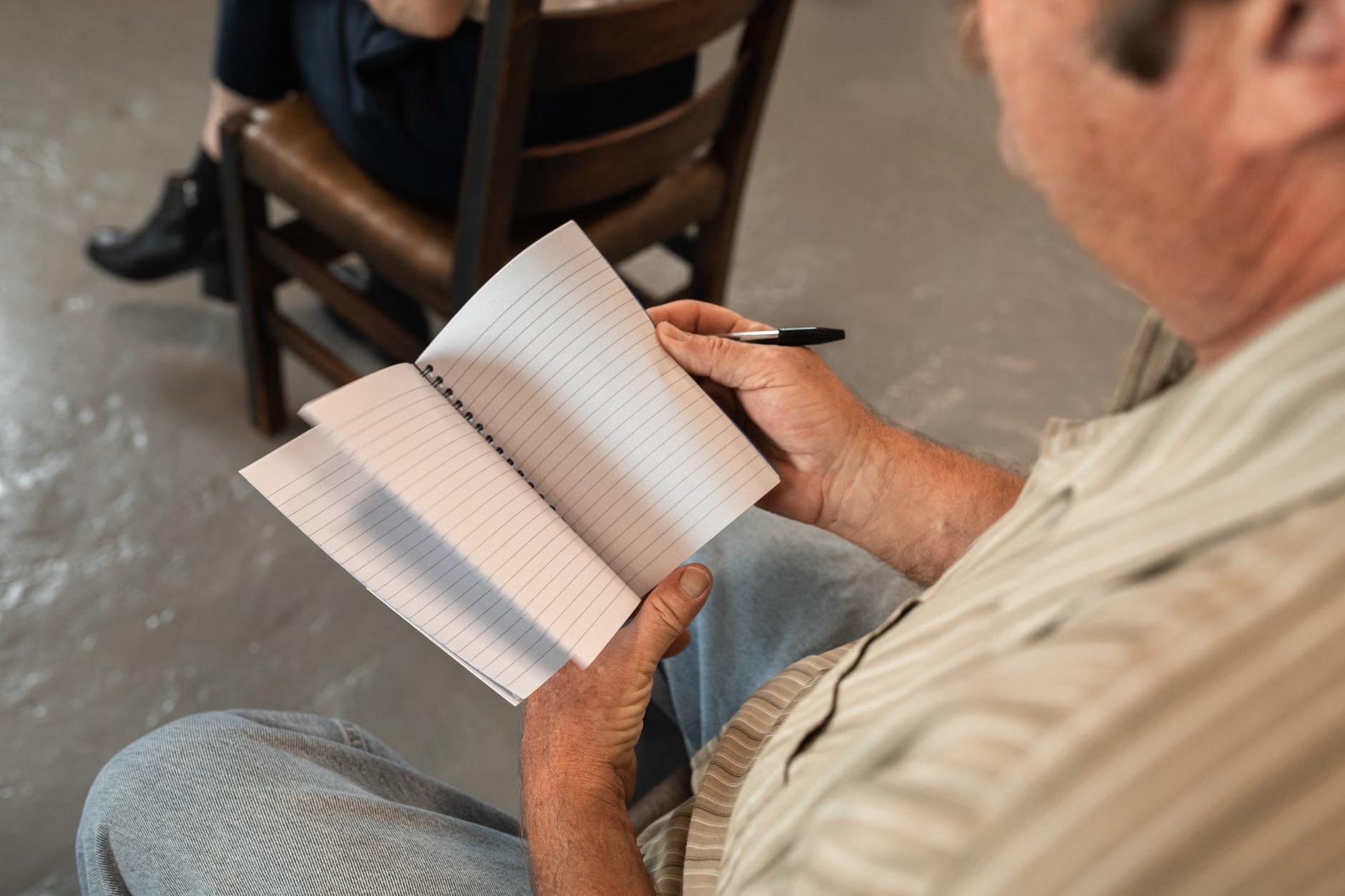
One common mistake is the “collector’s trap”—gathering immense amounts of data without ever processing it. This can lead to frustration rather than stimulation. To avoid this, set a clear goal. For example, instead of “researching the history of the town,” aim to “create a 500-word profile of the local post office’s history from 1950 to 1980.”
Another pitfall is relying solely on the internet. While search engines are useful, they often contain inaccuracies. Always verify information against at least two sources, such as a local newspaper archive or a municipal record. This verification step is crucial for maintaining the critical thinking skills that keep the brain sharp.
Advanced Cognitive Engagement: Writing and Preserving
The final stage of this hobby is synthesis—the act of creating something new from what you have learned. Whether it is a blog post, a scrapbook, or a recorded audio interview, the act of organizing your findings requires the brain to perform complex structural work. By teaching others or documenting your findings, you reinforce the memory traces in your own mind.
Furthermore, consider the “legacy effect.” Knowing that your work will be useful to future generations adds a layer of emotional satisfaction. This sense of purpose is a well-documented factor in longevity and sustained cognitive health. It provides a reason to stay engaged, to keep learning, and to maintain the social connections that are vital for long-term health.
Ensuring Longevity in Your Hobby
To ensure this hobby remains sustainable, follow these guiding principles:
- Consistency over Intensity: Thirty minutes of research twice a week is significantly better for cognitive health than a six-hour marathon once a month.
- Collaborative Learning: If you find the research becoming isolating, find a partner. Working with a peer adds a layer of social accountability and fun.
- Physical Integration: Whenever possible, combine your research with a walk. Connecting historical facts to the physical space you are navigating provides a multi-sensory experience that is highly beneficial for memory retention.
By treating local history as a form of “mental exercise,” you transform a sedentary hobby into a robust health-promoting activity. It requires no expensive equipment, no specific physical strength, and can be adapted to any level of mobility or technical skill. The key is curiosity. As you begin to uncover the layers of your community’s past, you will find that you are not just learning about the world around you—you are actively strengthening your own cognitive foundation.
Frequently Asked Questions
1. What if my town doesn’t have a formal historical society?
Many towns have informal groups or Facebook community pages dedicated to local history. If those don’t exist, start with your local library. Librarians are often the best resource for local history and can guide you to municipal records, old maps, or private collections that aren’t widely advertised.
2. Is it necessary to visit physical archives, or can I do this entirely online?
You can do a great deal of research online through digitized newspapers, census records, and historical society websites. However, visiting a physical archive offers the benefit of social interaction and the potential to see unique artifacts. If your mobility is limited, contact your local archive; many are now offering remote research assistance via email or video call.
3. How do I know if the information I find is accurate?
Historical research requires cross-referencing. If you find a date or event in one source, look for it in at least one other independent source—such as a different newspaper from the same era, a official government document, or a verified family history. If the sources conflict, note the discrepancy; this is part of the analytical process that provides the most cognitive value.
For further reading on local history resources, you can visit the Library of Congress (USA) or similar national archive portals in your country, which often provide guides on how to conduct local research.