Key Takeaways for 2026
- Infrastructure Evolution: Community centers are moving beyond passive recreation to active “Life-Course Hubs” that integrate primary healthcare, digital literacy, and professional networking.
- Reciprocal Value: Modern hubs operate on an exchange model where older adults share skills (mentorship, history, trade crafts) in return for tech support and modern fitness coaching.
- Accessibility as Priority: 2026 standards mandate universal design, meaning physical mobility barriers are being removed to ensure centers are truly inclusive for those with reduced stamina or assistive devices.
As we enter 2026, the concept of the “community center” is undergoing a profound transformation. No longer just static buildings for bingo or occasional exercise, these facilities are evolving into dynamic, intergenerational hubs designed to address the specific challenges of longevity and social isolation. For adults aged 60 to 80, this shift represents a move toward “Integrated Aging,” where health, technology, and social engagement are accessed under one roof.
The Shift from Passive Centers to Active Life-Course Hubs
Historically, municipal community centers were segmented by age—senior centers for older adults, youth clubs for teenagers, and gyms for the general public. The 2026 model breaks these silos. The primary goal of this shift is to mitigate the health risks associated with loneliness while providing a practical environment for “aging in place.”
Why does this matter? Research consistently links social isolation to increased risks of cognitive decline and cardiovascular disease. By merging generations, these hubs create “natural” social environments. In 2026, you will find that these spaces are increasingly designed to be “frictionless”—meaning that the physical layout, the digital interface for booking, and the staff training are all optimized for accessibility.

What This Looks Like in Practice
In a typical 2026 community hub, you might encounter a “Skills Exchange Kiosk.” Instead of a top-down service model, these centers facilitate peer-to-peer learning. For example, a retired engineer might lead a workshop on mechanical design for local university students, while those students provide the engineer with personalized tutorials on advanced smart-home integration or digital health management apps.
| Feature | Legacy Model (Pre-2024) | 2026 Integrated Hub Model |
|---|---|---|
| Social Interaction | Age-segregated groups | Multigenerational collaboration |
| Tech Support | Occasional classes | On-demand “Gen-Z to Senior” tech desk |
| Health Services | Passive information pamphlets | Integrated health screening pods |
| Design Focus | Basic accessibility | Universal design (neuro-inclusive) |
The table above illustrates the shift in priorities. If you are choosing a center to frequent, look for those that offer integrated services rather than just one-off classes. A center that connects you with a local health clinic or a digital public services portal is significantly more valuable than one that only offers passive leisure activities.
A major pillar of the 2026 community center model is the “Digital Bridge.” As governments move their pension, tax, and healthcare portals entirely online, many older adults face a “digital divide.” The 2026 centers are increasingly becoming the official physical hubs for navigating these digital services.
If you have struggled with a government portal, these centers are now equipped with private, secure kiosks where you can access your records with the help of a trained digital navigator. This is a critical development for maintaining autonomy. Instead of relying on family members for every digital task, you can learn to manage your own benefits within a secure, supervised environment.
Practical Steps for Utilizing Digital Hubs
- Verify Privacy Protocols: Before using a kiosk, ask the center manager about their data privacy policy. A legitimate hub will never store your passwords or personal login credentials.
- Schedule Dedicated Time: Do not just walk in. The best hubs now use booking systems that allow you to reserve a 30-minute block with a “Digital Guide” who is specifically trained to assist with government websites.
- Prepare Documentation: Always bring your official ID and any relevant reference numbers for the services you are trying to access.
Health and Mobility: The Move Toward Preventive Infrastructure
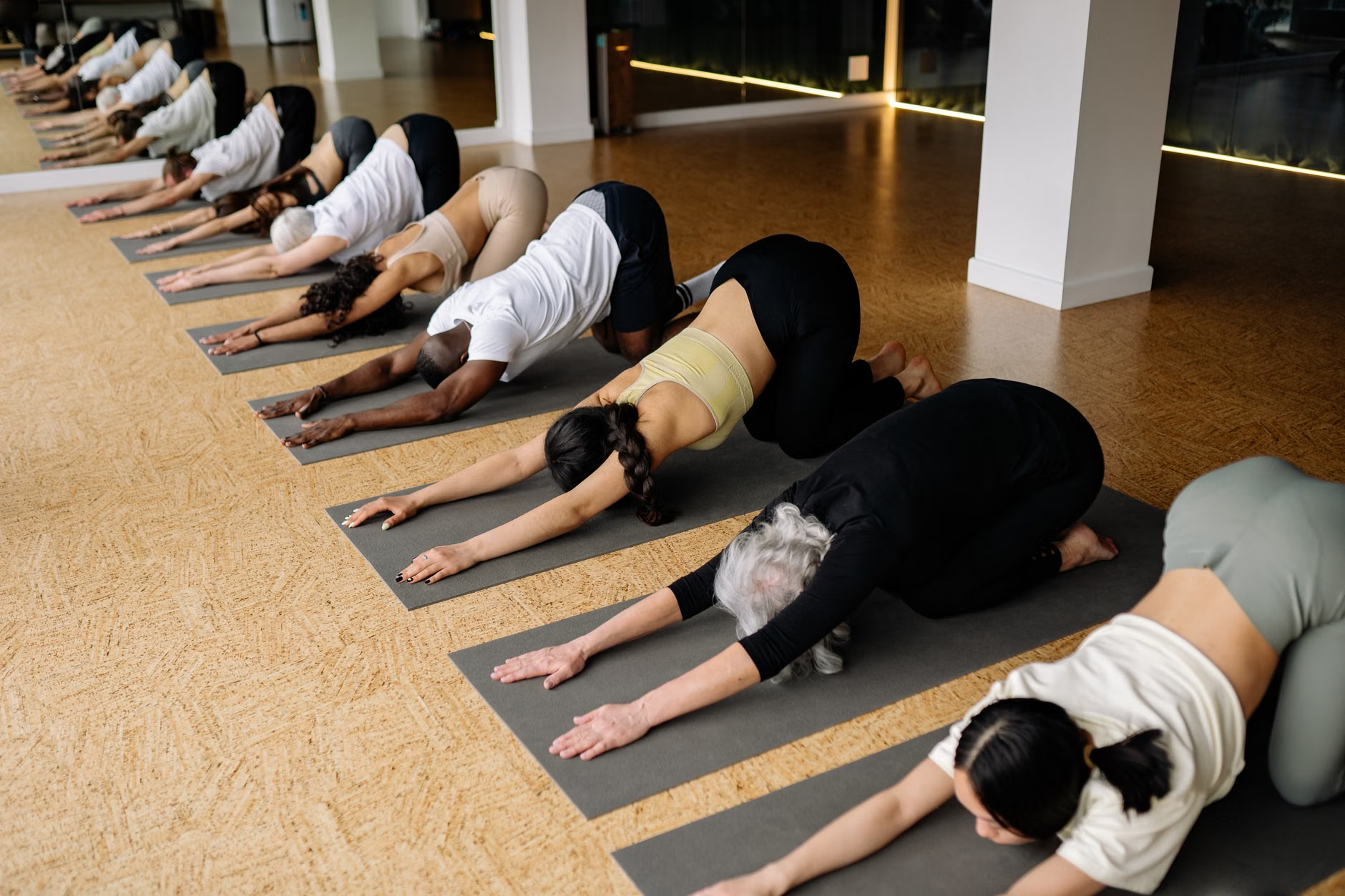
The 2026 model prioritizes “preventive movement.” Rather than high-intensity gym equipment that may not be suitable for all joints, these centers are investing heavily in “mobility-focused fitness.” This includes balance-training circuits, resistance equipment designed for low-impact strength building, and floor surfaces engineered to reduce fall risk.
Common Mistake: Many older adults avoid community centers because they assume the physical activities are too intense or not suitable for their specific mobility level. In 2026, the standard is to provide a “Mobility Assessment” upon joining. This is not a medical exam, but a functional check that allows the instructors to tailor their advice to your current stamina and balance capabilities.
What You Can Do
When you visit a potential center, look for the following signs of a high-quality, inclusive facility:
- Clear Wayfinding: Are there high-contrast signs, and is the floor plan easy to navigate without excessive steps?
- Accessible Seating: Are there chairs with armrests placed at regular intervals along corridors?
- Staff Competency: Do the staff members know how to assist someone with a mobility aid (like a cane or walker) without being patronizing?
The Economics of Intergenerational Centers: Cost and Value
You might wonder if these new, upgraded facilities come with higher costs. Interestingly, the shift toward intergenerational models often lowers individual costs. By sharing the facility with younger users (who might use the space in the evening for co-working or study), the operational costs are spread across a larger, more diverse user base. Many municipalities are subsidizing these centers as a way to reduce long-term public health spending on elderly care.
For the user, this often means that membership fees are either flat, low-cost, or covered by municipal health grants. If you are in a country like the UK, Canada, or Australia, check if your local council or health board has a “Social Prescribing” program. This is where a doctor can “prescribe” a community center membership as part of your health management plan, often making the cost fully subsidized.
Deep Dive: Overcoming the “Hidden Inconvenience”
While the benefits of these 2026 hubs are clear, there is an “overlooked variable”: sensory overload. As centers become more active and multi-purpose, they can become noisy and visually busy. If you are someone who finds high-stimulus environments draining, you must advocate for your needs.
Most modern centers now include “Quiet Zones” or “Low-Stimulus Rooms.” These are specifically designed for reading, quiet meditation, or one-on-one meetings. Do not hesitate to ask for these spaces if you find the main hall too chaotic. It is not a sign of frailty to request a quiet environment; it is a sign of self-awareness and effective boundary setting.
Practical Decision Framework: Is a Specific Hub Right for You?
To determine if a center is a good fit, use this three-point evaluation:
- Accessibility Score: Can you reach the center easily via public transport? If you drive, is there dedicated, accessible parking that doesn’t require a long walk?
- Skill-Match: Does the center offer programs that align with your current interests (e.g., tech, gardening, history, fitness) rather than just generic “senior” activities?
- Safety Culture: Does the center have clear, transparent protocols for reporting issues and a staff that is trained in basic emergency response?
If you find that a center fails on these three points, look for another. The 2026 landscape is competitive, and you should not settle for a facility that does not meet modern standards of dignity and utility.
Conclusion: Taking the Next Step
The transition toward integrated community hubs in 2026 is a positive development for those aged 60 to 80. By treating these centers as essential infrastructure for your health and social life, you can gain better access to digital services, maintain your physical strength through guided, safe exercise, and build meaningful connections with people of all ages.
Your next step is to contact your local municipal office or visit the official government website for your region (such as the NHS in the UK, Medicare.gov in the US, or your local council portal) to search for “Integrated Community Hubs” or “Social Prescribing programs.” Don’t wait for a formal invitation; these are public services that you have a right to access and influence.
Frequently Asked Questions
1. Are these new community hubs free to use?
Most municipal hubs are either free or heavily subsidized through local taxes. However, specialized classes (like professional-led workshops) may have a nominal fee. Always check for “concession rates” for seniors or those on fixed incomes.
2. What if I don’t feel comfortable in a “multigenerational” environment?
It is perfectly normal to prefer quiet spaces. As mentioned, look for centers that offer “Quiet Zones” or dedicated times for specific age groups. You can participate in the broader community without having to be in the middle of a noisy event.
3. How do I report a lack of accessibility in my local center?
Every municipality has a designated ombudsman or a disability rights coordinator. If a public facility is not meeting accessibility standards, you have the right to file a formal request for an audit. This is a powerful way to ensure that your local center remains inclusive for everyone.
Official sources for tracking local policy:
– UK: Find your local council (gov.uk)
– USA: Local government resources (usa.gov)
– Australia: My Aged Care (myagedcare.gov.au)