Selecting the right accommodation is the single most important factor in ensuring a stress-free European vacation. While historic boutique hotels offer charm and central locations, their older architecture often poses challenges for travelers with mobility needs. This guide provides a systematic approach to evaluating accessibility, ensuring your choice balances aesthetic appeal with practical necessity.
- Historic building status often exempts hotels from modern accessibility codes; always confirm specific room features rather than relying on general “accessible” labels.
- Prioritize “level access” (no steps at the entrance) and elevator dimensions over aesthetic star ratings when booking.
- Direct communication with the hotel manager via email is the most reliable way to verify if a room meets your specific mobility requirements.
Understanding the “Historic Building” Paradox
Many boutique hotels in cities like Rome, Paris, or Prague are housed in buildings dating back centuries. While these structures offer an immersive cultural experience, they present a fundamental conflict with modern accessibility standards. In many European jurisdictions, heritage protection laws prevent structural changes like widening doorways or installing heavy-duty elevators.
What this means for the traveler is that a hotel might be “accessible” in its public areas but entirely inaccessible in its guest rooms, or vice versa. Never assume that because a hotel has a lift, it is fully accessible. Older European lifts are often tiny—sometimes barely fitting a single person—and may have “step-up” thresholds that are invisible in online photos.
The Importance of “Level Access” vs. “Wheelchair Accessible”
In the travel industry, the term “accessible” is often used loosely. To avoid disappointment, look for the specific term “level access.” A level access entrance means there are no steps between the street and the elevator. Even a single step at the entrance can be a significant barrier for those using canes, walkers, or wheelchairs. If you see a review mentioning “charming cobblestones” or “a few historic steps at the entrance,” verify if there is a secondary service entrance with a ramp.
Evaluating Hotel Infrastructure: A Checklist for Mobility
When researching hotels, do not rely on marketing copy. Instead, treat your search like a technical audit. Use the following criteria to evaluate every potential booking.
| Feature | What to Look For | Why it Matters |
|---|---|---|
| Entrance | Step-free access from curb to lobby. | Prevents fatigue and trip hazards. |
| Elevators | Must fit a mobility aid + one person. | Avoids being stranded in the lobby. |
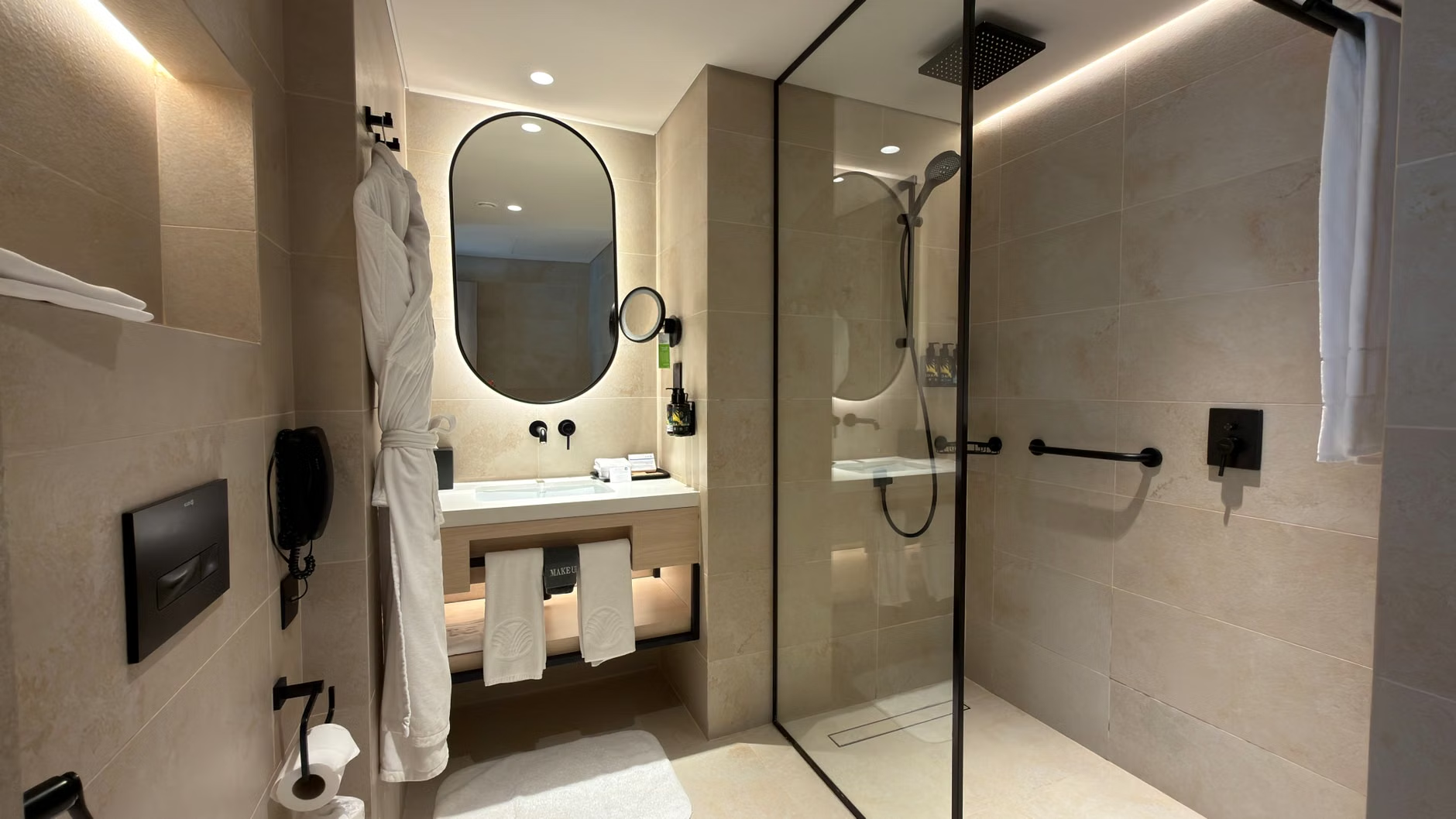
| Bathroom | Walk-in shower, grab bars, non-slip floor. | Reduces fall risk during morning routines. |
| Room Layout | Clear 360-degree turn space around the bed. | Ensures comfort and ease of movement. |

The Art of the Pre-Booking Inquiry
Before confirming your reservation, send a direct email to the hotel. Do not use the automated booking platform’s “special requests” box, as these are often overlooked until your arrival. A direct email creates a paper trail and forces the staff to verify the room’s actual layout.
Sample Inquiry Template
“I am traveling to [City] and am interested in booking a room at your hotel. Due to mobility requirements, I need to ensure the following: Does the hotel entrance have steps? Is the elevator wide enough to accommodate a mobility aid? Does the room feature a walk-in shower with grab bars? Could you please send a photo of the specific bathroom layout for the room I am considering?”
If the hotel is hesitant to provide photos or clear answers, this is a major warning sign. A truly accessible property will have this information readily available and will be eager to assist you in ensuring your stay is comfortable.
Strategic Location: Minimizing Daily Transit
In historic European centers, the “best” location is not always the one right in the middle of the crowded tourist square. While proximity to major sites is appealing, these areas are often the most difficult to navigate due to uneven cobblestones and high pedestrian traffic, which can be exhausting.
Consider staying slightly on the periphery of the main historic district. Boutique hotels in these areas often occupy larger buildings with more modern renovations, meaning better elevators and wider hallways. You can easily reach the major attractions via a short, flat taxi ride or a well-connected tram line, saving your energy for the actual sightseeing.
Hidden Variables: What Most Travelers Overlook
Beyond the room itself, consider the “micro-accessibility” of the neighborhood. A hotel might be perfect, but if the surrounding streets are steep hills or have uneven, broken paving, your mobility will be severely restricted.
The “Cobblestone Factor”
Cobblestones are a hallmark of European history, but they are unforgiving for anyone with balance issues or those using walking aids. Use Google Maps “Street View” to virtually walk the route from the hotel to the nearest public transport or main square. If you see narrow, steep, or heavily uneven surfaces, consider looking for a hotel that offers a shuttle service or is located near a flat, main thoroughfare.
Staffing and Support
In smaller boutique hotels, staff availability is key. Ask if there is 24-hour reception. In the event of a minor issue—such as a misplaced bath mat or a malfunctioning electronic key—having someone on-site at 10 PM is vital for your peace of mind and safety.

Maximizing Safety and Stamina
Travel stamina is a finite resource. When planning your itinerary, the “hotel-first” approach is essential. Schedule a “rest period” in your room every afternoon. By choosing a hotel that is comfortable and easy to access, you allow yourself the luxury of returning to your room to recover without feeling like you are “giving up” on the day’s activities.
Furthermore, check for the availability of in-room amenities that support your health. Does the hotel provide a kettle? Is the room climate-controlled? Staying hydrated and maintaining a comfortable body temperature are critical for preventing fatigue and managing chronic health conditions while traveling.
Conclusion: Taking Control of Your Experience
Selecting an accessible boutique hotel in Europe is not about finding the “perfect” building, but about finding the right fit for your specific needs. By prioritizing level access, verifying details through direct communication, and considering the neighborhood’s topography, you can enjoy the charm of historic Europe without compromising on safety or comfort. Remember, the goal is to create a home base that supports your exploration, not one that limits it.
Frequently Asked Questions
1. How can I verify if a European hotel’s elevator is large enough for my needs?
Most European hotel websites do not list elevator dimensions. You must email the hotel and ask for the width of the elevator door and the interior depth. If they cannot provide this, ask them to compare it to a standard suitcase size or provide a photo of the elevator interior.
2. Are “accessible rooms” in Europe automatically the same as ADA-compliant rooms in the US?
No. European accessibility standards vary significantly by country and building age. A room labeled “accessible” in a 16th-century Italian hotel may still have small thresholds or non-compliant grab bars. Always request specific photos or a detailed description of the bathroom and entrance.
3. What should I do if I arrive and the hotel room does not meet my accessibility needs?
If you have confirmed your needs in writing (via email) and the hotel fails to provide them, you have a strong case for requesting a room change or, if necessary, assistance in finding alternative accommodation at their expense. Always keep a copy of your email correspondence with the hotel manager in your travel documents.
Official resources for accessibility information:
– European Network for Accessible Tourism (ENAT)
– European Commission: Rights of Persons with Disabilities
Note: This article is for informational purposes and does not constitute professional travel advice. Always verify accessibility requirements directly with the service provider before booking.