- Social Vitality: Repair Cafés provide a low-pressure, collaborative environment that combats social isolation by fostering intergenerational and peer-to-peer relationships.
- Economic & Environmental Impact: Repairing items extends their lifespan, saving money and reducing waste, which aligns with modern sustainable living practices.
- Skill Preservation: These spaces honor the technical knowledge of older generations while allowing for the transfer of practical skills to younger community members.
For many, the act of throwing away a broken toaster or a wobbly chair feels like a failure—not just of the object, but of our ability to maintain the things we own. In an era of “throwaway culture,” the Repair Café movement has emerged as a powerful antidote. For adults aged 60 to 80, these community gatherings offer more than just a way to fix household items; they provide a vibrant social hub where expertise, stories, and companionship are exchanged freely over a cup of coffee.
What is a Repair Café and Why Does It Matter?
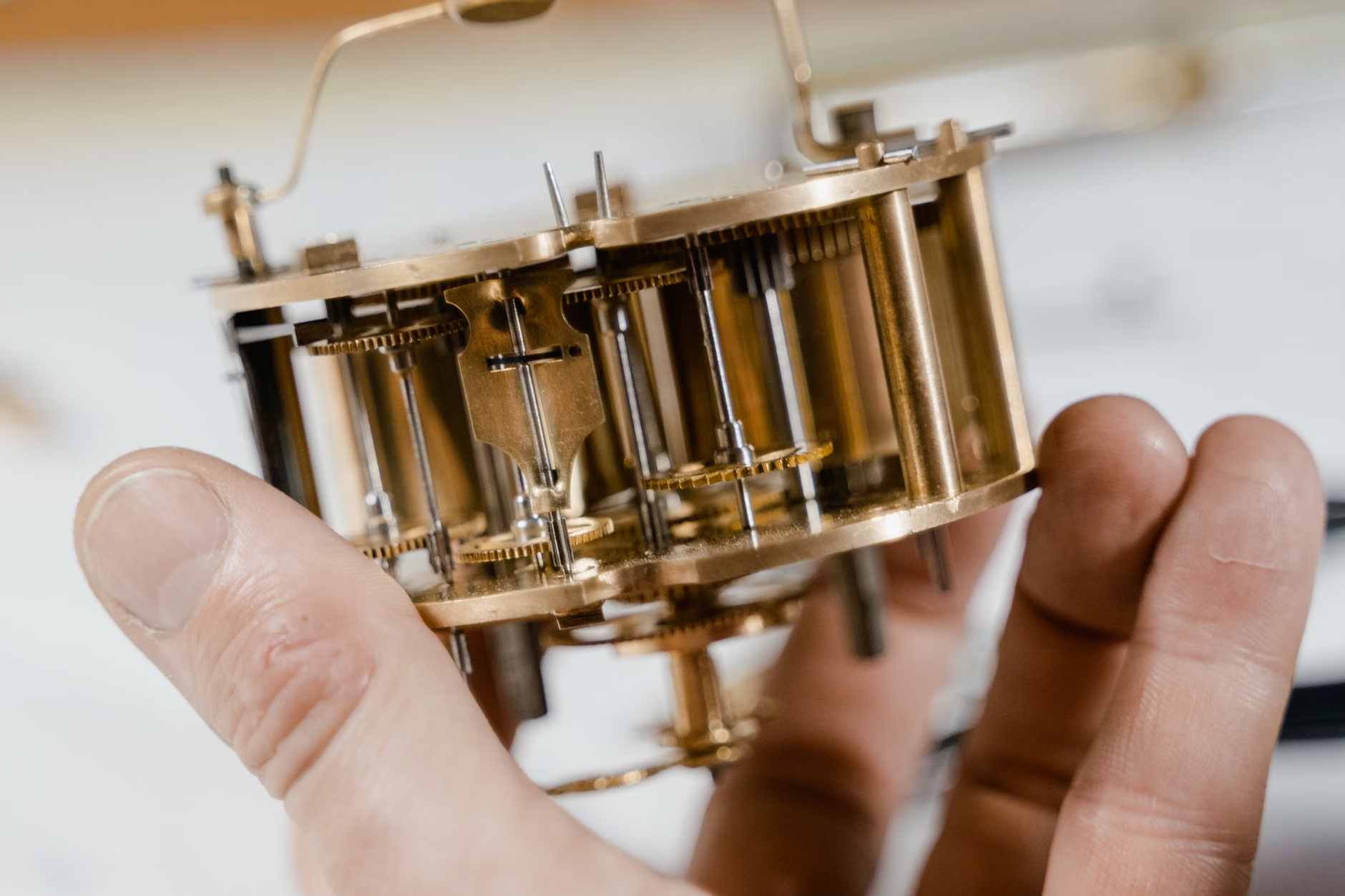
A Repair Café is a free, volunteer-run event where community members bring their broken household items—anything from electronics and clothing to furniture and bicycles—to be repaired by skilled volunteers. The core philosophy is not just to fix the item, but to teach the owner how to fix it, or at least how it works. This collaborative process shifts the dynamic from a transactional service to a community-building activity.
For older adults, the value of these events is twofold. First, it provides a practical way to manage household maintenance without the high costs of professional repair services or the frustration of navigating complex warranty systems. Second, and perhaps more importantly, it offers a structured social environment. Unlike a crowded shopping mall or a busy cafe, a Repair Café is centered on a task. This shared focus lowers the social barrier to entry, making it easier to strike up a conversation with someone while you are both watching a volunteer open up a blender.
Participating in a collective activity reduces the pressure of “making conversation.” When you are standing at a workbench, the focal point is the item being repaired. This allows individuals to engage at their own pace. For retirees, this environment can be particularly rewarding. It is a space where a lifetime of experience—whether in engineering, sewing, woodworking, or simple home maintenance—is not only respected but actively sought after.
How to Find and Evaluate a Local Repair Café
Finding a local group is the first step. Most Repair Cafés are independent, grassroots organizations, though many are affiliated with the international Repair Café Foundation. When searching for one in your area, consider the following checklist to ensure the venue is suitable for your needs:
| Feature | What to Look For | Why it Matters |
|---|---|---|
| Accessibility | Ground floor access, elevators, and wide doorways. | Ensures comfort for those with mobility aids or reduced stamina. |
| Seating Availability | Ample chairs near workstations. | Allows for resting while waiting for your turn or watching a repair. |
| Noise Levels | Is there a quiet zone or a separate area for coffee? | Important for those who find high-decibel tool noise overstimulating. |
| Volunteer Expertise | Does the group specialize in electronics, textiles, or furniture? | Ensures your specific item can actually be addressed by the available team. |
Practical Tip: Before attending, check the group’s website or social media page to see if they require an appointment. Many popular events operate on a first-come, first-served basis, meaning you may have to wait for an hour. If you have limited energy or stamina, arriving early or choosing a weekday session (if available) can significantly improve your experience.
Preparing for Your First Visit: A Guide to Success
Attending a Repair Café for the first time can be intimidating, especially if you aren’t sure if your item is “fixable.” The most important thing to remember is that the goal is to learn and connect, not necessarily to achieve a factory-perfect repair.
Step-by-Step Preparation
- Gather Documentation: If you have the original manual or a quick-start guide, bring it. It helps volunteers understand the internal wiring or assembly of the product.
- Clean the Item: Please ensure the item is reasonably clean. A dusty or greasy object is difficult to handle and respectful to the person volunteering their time to help you.
- Prepare Your Questions: Are you looking to fix it yourself, or do you just want to see if it can be salvaged? Be clear about your goals so the volunteer knows how much to involve you in the process.
- Be Patient: Repair Cafés are not professional service centers. Volunteers are doing this for free, and some repairs may take longer than expected, or may ultimately be deemed “beyond repair.”
Common Mistake: Many visitors assume that a Repair Café is a place to “drop off” items. This is incorrect. The model is built on participation. You are expected to stay with your item, watch the repair, and assist where possible. This prevents the event from becoming a dumping ground for broken goods and keeps the focus on the social and educational aspects.
The Hidden Benefits: Cognitive Engagement and Intergenerational Connection
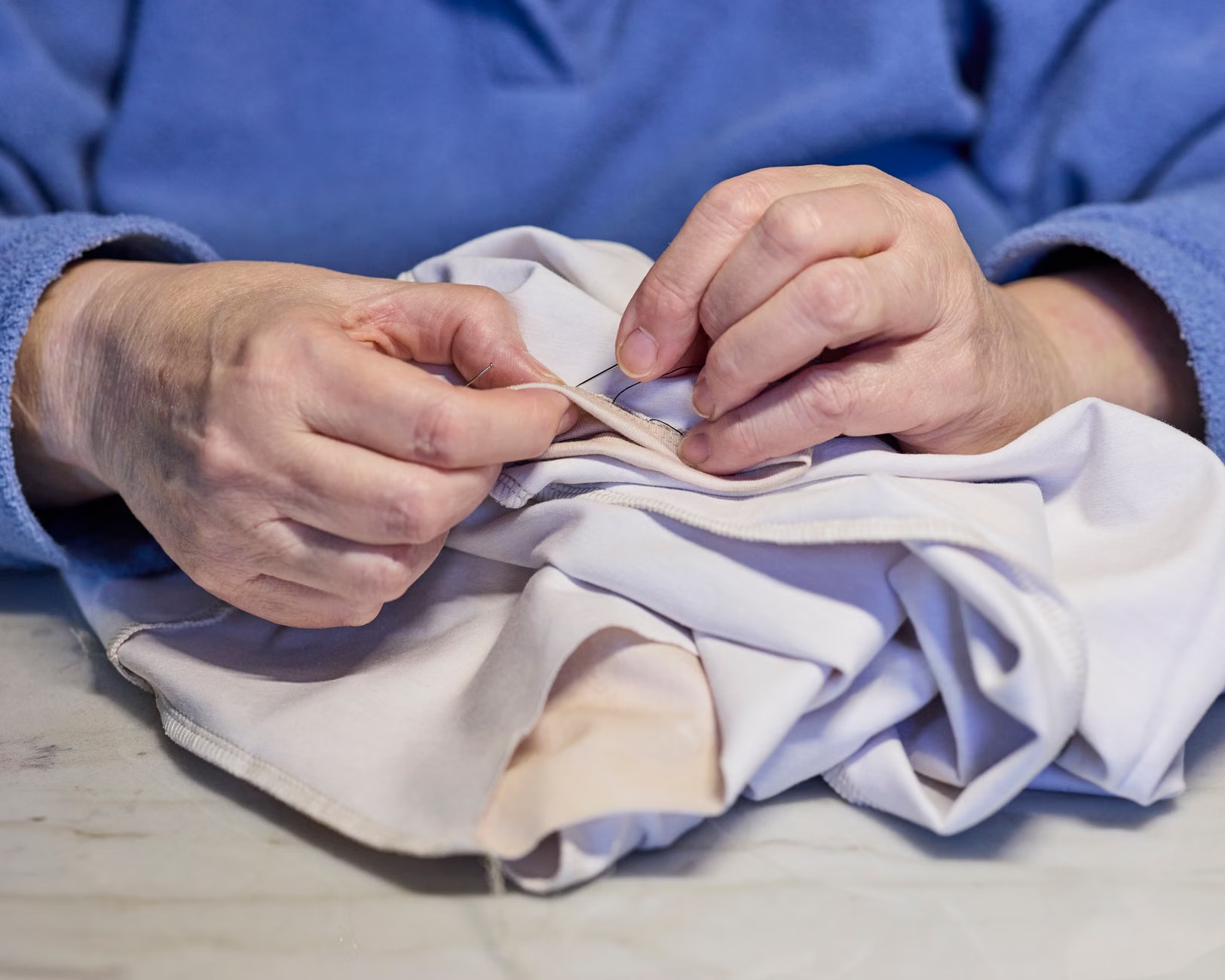
One of the most profound benefits of the Repair Café movement is the opportunity for intergenerational exchange. It is not uncommon to see a retired engineer working alongside a university student, or a grandmother teaching a young professional how to replace a zipper. This exchange breaks down age-related silos that often exist in modern society.
Keeping the Mind Active
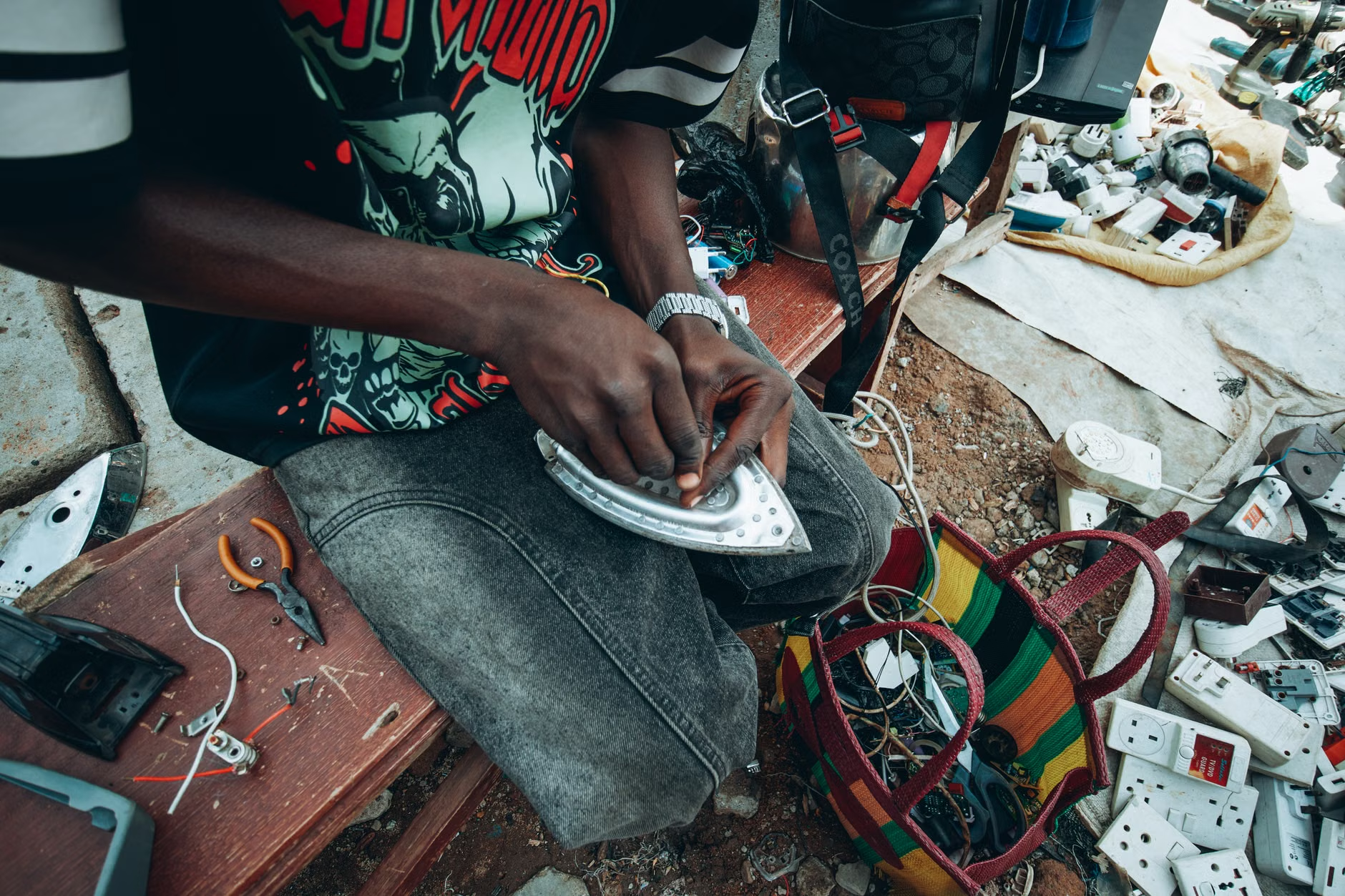
Engaging in complex, manual tasks is a proven way to maintain cognitive health. When you watch a volunteer disassemble a device, you are engaging in observational learning. You are analyzing the problem, understanding the mechanism, and observing the solution. This is a form of “active leisure” that is far more beneficial for mental acuity than passive entertainment.
Safety Considerations for Older Adults
While Repair Cafés are generally safe, they are working environments. Be mindful of the following:
- Lighting: If you have vision limitations, ensure you choose a workstation with adequate task lighting. Don’t hesitate to ask for a portable desk lamp.
- Ergonomics: If standing for long periods is difficult, ask for a stool. Most organizers are happy to accommodate this, but it is always best to mention it when you arrive.
- Tool Safety: If you are nervous about handling tools, it is perfectly acceptable to be an observer. You do not need to perform the repair yourself if you are not comfortable.
Beyond the Repair: Sustainability and Community Advocacy
When you participate in a Repair Café, you are participating in a global movement toward a circular economy—an economic system aimed at eliminating waste and the continual use of resources. For many older adults, this is a return to the values of their youth, when “repair” was the default response to a broken item, not “replacement.”
By bringing your items to these events, you are setting an example for younger generations. You are demonstrating that items have value beyond their purchase price and that our relationship with our possessions can be one of care rather than consumption. This acts as a form of community advocacy, showing that even small, local actions can contribute to broader environmental goals.
Not everything can be fixed. Sometimes, a part is obsolete, or the item is built in a way that makes opening it impossible without destroying it. If a volunteer tells you an item cannot be fixed, do not take it as a personal failure. In fact, knowing that an item is truly beyond repair is valuable information—it allows you to make an informed decision about recycling or disposing of it responsibly, rather than keeping it in a closet for years “just in case.”
Furthermore, if you find that your local Repair Café is too crowded or the environment is not suitable for your specific needs, consider starting your own or suggesting a more accessible venue to the organizers. Many of these groups are constantly looking for new volunteers to help manage the flow of people, coordinate the coffee station, or handle the intake desk. This is a fantastic way to contribute to your community without needing to be a master tinkerer.
Finding Resources
To learn more about the global movement and find a map of locations near you, visit the Repair Café Foundation. They provide extensive resources for both visitors and those looking to start their own local chapter.
Conclusion: The Joy of the “Second Life”
The true joy of a Repair Café is not found in the newly functioning toaster, but in the conversation that happened while it was being fixed. It is found in the shared laughter when a stubborn screw finally gives way, and in the quiet satisfaction of knowing you have saved something from the landfill. For the older adult, it is a space to remain relevant, active, and deeply connected to the pulse of the community. Whether you go to learn, to teach, or simply to enjoy the company of neighbors, the Repair Café offers a unique and meaningful way to spend your leisure time.
Frequently Asked Questions
1. Do I need to bring my own tools to the Repair Café?
Generally, no. Most Repair Cafés are equipped with a comprehensive set of tools, including screwdrivers, soldering irons, sewing machines, and glue guns. However, if your item requires a very specific, proprietary tool, it is always a good idea to bring it along or check with the organizers beforehand.
2. Is there a charge for participating in a Repair Café?
Repair Cafés are almost exclusively free to attend. Most operate on a donation basis to help cover the costs of consumables like solder, tape, or glue, and the rental of the venue. You are never under any obligation to pay, though a small donation is often appreciated if you have the means.
3. What if my item is too heavy or large to bring to the venue?
Most Repair Cafés focus on portable items that can be carried to a table. Large appliances like refrigerators or washing machines are usually not accepted due to space and safety constraints. If you have a large item, it is best to contact the organizers via their website or social media page before attempting to bring it, as they may be able to offer advice or point you toward a professional service that specializes in larger repairs.