Stamp collecting, or philately, is far more than a simple pastime of gathering paper squares; it is a sophisticated cognitive exercise that engages memory, historical analysis, and fine motor precision. For adults aged 60 to 80, this hobby offers a unique blend of intellectual stimulation and tactile satisfaction that remains accessible regardless of one’s physical mobility or location.
- Cognitive Engagement: Philately promotes neuroplasticity by requiring constant visual scanning, categorization, and the retrieval of historical or geographical information.
- Low Barrier to Entry: Starting a collection requires minimal financial investment and can be adapted to any budget or living space, making it ideal for those seeking a manageable indoor hobby.
- Methodical Organization: The process of sorting, identifying, and cataloging stamps provides a structured sense of achievement and a tangible way to track personal growth and knowledge.
The Cognitive Benefits of Philately
The human brain thrives on patterns and categorization. Stamp collecting is essentially a lifelong puzzle that exercises several key cognitive domains simultaneously. When you examine a stamp, you are not just looking at a design; you are performing a complex series of neural operations.
Visual Processing and Pattern Recognition
Every stamp is a miniature canvas. To identify a stamp, one must observe nuances in perforation, watermark, color shade, and printing technique. This constant visual discrimination helps maintain high levels of acuity. Research suggests that engaging in activities that require sustained attention—such as sorting a collection—can help preserve executive function. Unlike passive entertainment, philately requires you to make constant decisions: “Does this stamp belong with this country? Does it belong in this chronological series?”
Memory Retrieval and Historical Context
Philately is a gateway to history. Each stamp acts as a primary source document, reflecting the political, social, and technological landscape of the era in which it was issued. As you build your collection, you naturally associate stamps with specific historical events, figures, or geographical shifts. This act of contextualizing information is a powerful tool for memory maintenance. It moves beyond rote memorization into the realm of “narrative learning,” where facts are anchored to physical objects.
Getting Started: A Practical Framework
One of the most common mistakes for beginners is attempting to acquire everything at once. This often leads to overwhelm and a lack of focus. Instead, consider these steps to build a meaningful collection that brings you consistent joy.
Defining Your Scope
A collection is more satisfying when it has a theme. You might choose to collect based on:
- Geography: Stamps from a specific country or region where you have traveled or have family roots.
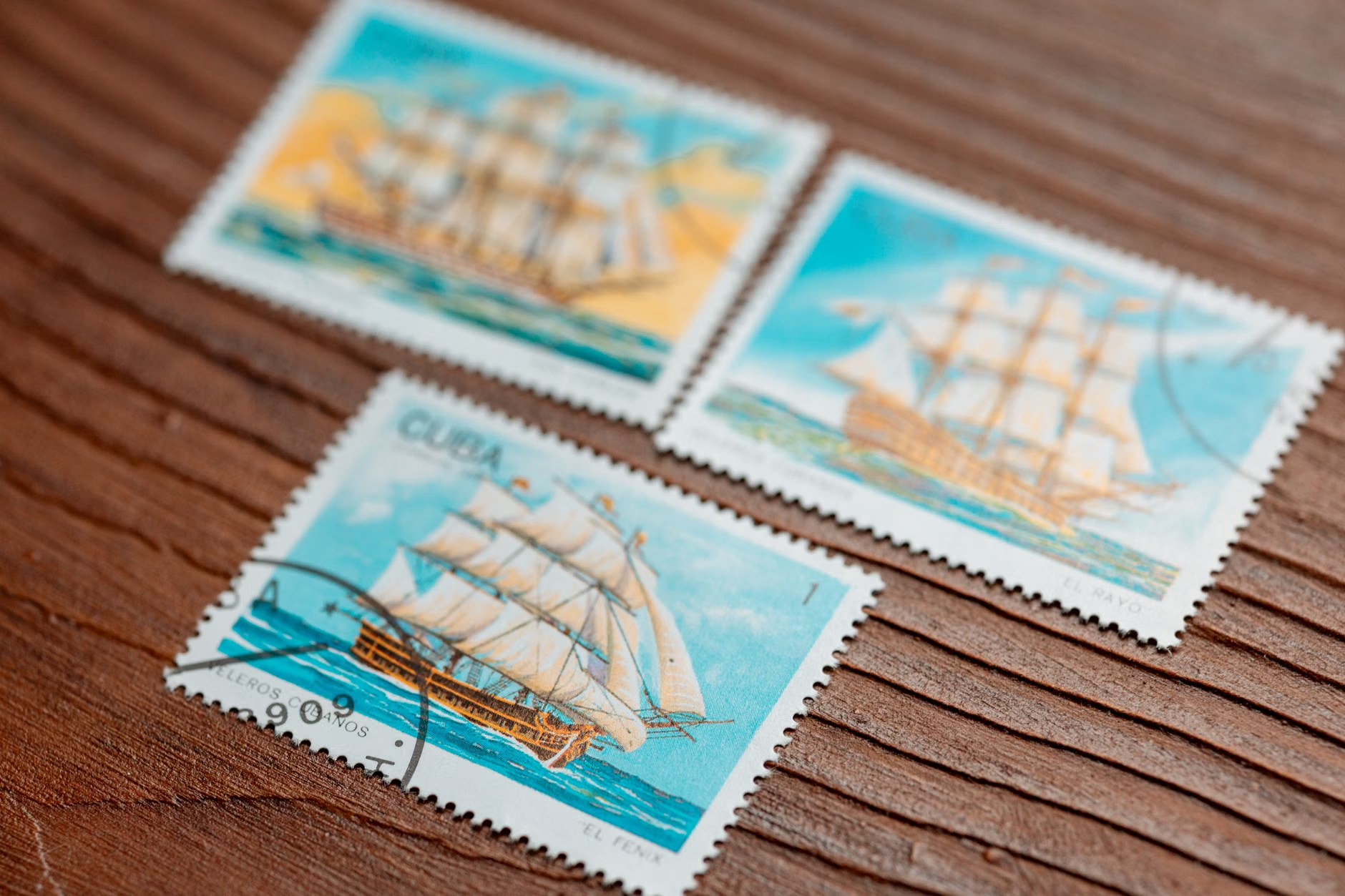
- Topical/Thematic: Stamps featuring birds, ships, space exploration, famous paintings, or botanical illustrations.
- Chronology: Stamps issued during a specific decade of your life, connecting your personal history to global events.
Essential Tools for the Modern Collector
You do not need an expensive setup to begin. However, using the right tools protects your collection and makes the process more enjoyable. Avoid using standard household glue or tape; these materials will destroy the value and physical integrity of the stamps.
| Tool | Purpose | Recommendation |
|---|---|---|
| Stamp Tongs | Prevents oils from your fingers from damaging the adhesive or ink. | Use blunt-ended tongs to avoid tearing the paper. |
| Magnifying Glass | Allows for the inspection of fine details and condition. | A 5x or 10x handheld magnifier is usually sufficient. |
| Stockbook | Safe, organized storage without the need for individual mounts. | Look for acid-free, archival-quality pages. |
Note: The table above outlines the basic requirements for a beginner. If you progress to high-value collecting, you may eventually require a watermark detector or a digital scale, but these are not necessary for the first few years of the hobby.
It is important to understand that “value” in philately is highly subjective. While some collectors focus on market value, others find more joy in the aesthetic or historical value. If you are collecting for pleasure, do not feel pressured to seek out “investment-grade” items.
Understanding Stamp Condition
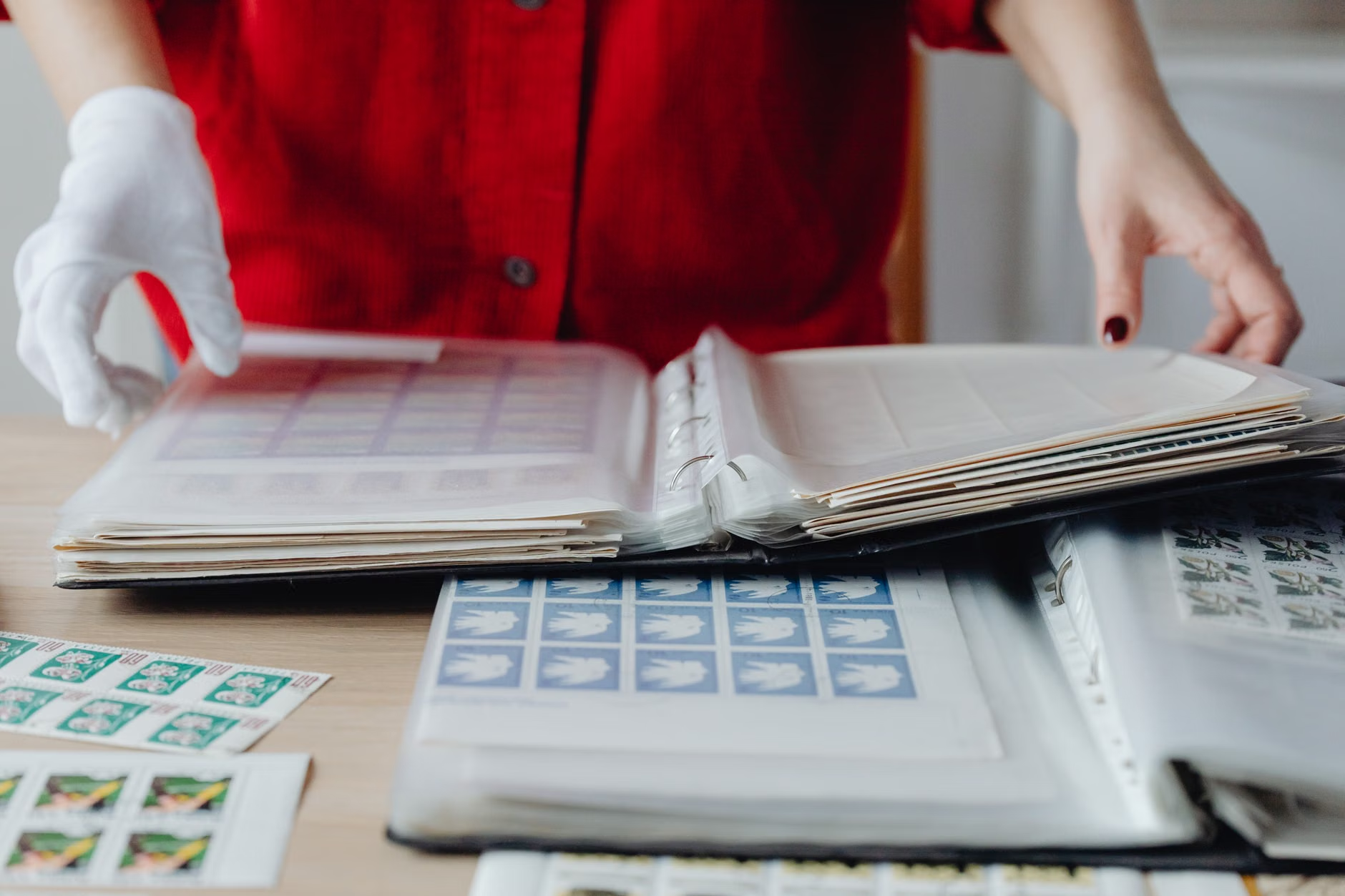
The condition of a stamp is determined by its centering, the state of its perforations (the little holes on the sides), and the presence of its original gum (the adhesive on the back). A common mistake is to handle stamps with bare fingers. The natural oils and moisture on your skin can cause discoloration over time. Always use your tongs, and practice picking up the stamp by the edges rather than the center.
The Importance of Archival Storage
Humidity and sunlight are the greatest enemies of a stamp collection. Store your albums in a climate-controlled environment—avoid attics or basements where temperature fluctuations are severe. A shelf in a living room or office that is away from direct sunlight is ideal. This ensures that your collection remains a source of pride rather than a source of stress due to degradation.
Social and Community Engagement
Stamp collecting does not have to be a solitary pursuit. Many local philatelic societies offer a space for social connection. For those with limited mobility, the internet has revolutionized the hobby. There are numerous online forums and digital communities where collectors share high-resolution images of their finds, discuss historical context, and trade duplicates.
Finding Your Community
If you prefer in-person interaction, search for your national philatelic federation. For example, in the United States, the American Philatelic Society provides resources for finding local clubs. In the UK, the Royal Philatelic Society London offers extensive digital resources. Engaging with others allows you to exchange knowledge, which is a vital part of the cognitive benefit of the hobby. Teaching someone else what you have learned about a specific stamp is one of the most effective ways to solidify your own understanding.
Addressing Potential Challenges
Like any hobby, philately requires a degree of stamina and fine motor coordination. If you find that working with tiny stamps causes hand fatigue, consider using a desk-mounted magnifying lamp. This provides both the magnification you need and the necessary lighting, reducing the strain on your eyes and neck. Take breaks every 30 to 45 minutes to stretch your hands and look at distant objects, which helps prevent eye strain.
Managing Costs
It is easy to get caught up in the “chase” of rare items. Remember that the joy of philately is in the discovery, not the price tag. You can build a magnificent collection of common stamps for a very low cost. Many collectors find that the most rewarding part of the hobby is finding a beautiful, historically significant stamp in a “mixture” or “packet” that costs only a few dollars. Focus on the stories behind the stamps rather than their monetary appraisal.
Conclusion: A Path to Lifelong Learning
The cognitive joy of stamp collecting lies in its demand for curiosity. It forces us to look closer, to research more, and to organize our world in a way that makes sense to us. It is a hobby that grows with you, providing a sense of purpose and a tangible connection to the broader world. By keeping your tools organized, focusing on your specific interests, and engaging with the community, you transform a simple collection of paper into a lifelong intellectual journey.
For further resources, you may wish to consult the American Philatelic Society, which provides comprehensive guides for beginners, or the Royal Philatelic Society London for deeper historical research.
Frequently Asked Questions (FAQ)
1. Is stamp collecting an expensive hobby?
Not necessarily. While some rare stamps can cost thousands, the vast majority of stamps are quite affordable. You can start a meaningful collection with stamps found in mixed packets or by saving stamps from your own incoming mail. The cost is entirely dependent on your personal goals and budget.
2. How do I know if my stamps are valuable?
Most stamps found in casual collections have more sentimental or historical value than monetary value. To determine the market value, you would need to consult a specialized catalog (such as Scott or Stanley Gibbons) and have the stamp professionally examined. For most amateurs, the best approach is to enjoy the stamps for their beauty and history rather than their potential resale price.
3. Can I still collect stamps if I have limited vision or hand dexterity?
Yes, with some adjustments. Using a desk-mounted magnifying lamp with a large viewing area can significantly assist those with vision changes. For hand dexterity, using tweezers with a wider grip or a specialized stamp-handling tool can make the process easier. The most important aspect is the intellectual engagement, which remains fully available regardless of minor physical limitations.