Joining a local history circle offers a unique blend of intellectual stimulation and social integration that can significantly enhance your quality of life in retirement. By participating in these groups, you move beyond passive leisure, becoming an active contributor to the preservation of your community’s narrative while building meaningful relationships with peers who share your interests.
- Cognitive Engagement: Researching local history acts as a form of “cognitive training,” requiring critical thinking, pattern recognition, and memory recall.
- Social Resilience: History circles provide a structured environment for social interaction, which is a proven buffer against the health risks associated with social isolation.
- Community Contribution: Your personal memories and lived experiences are valuable historical data that help bridge the gap between archival records and the reality of the past.
The Cognitive Benefits of Historical Inquiry
Engaging with local history is far more than just reading dusty books. It is an active intellectual pursuit that keeps the brain flexible. When you research a specific building, a past local industry, or the evolution of your neighborhood’s layout, you are engaging in complex cognitive tasks.
Unlike passive entertainment, such as watching television, history circles demand synthesis. You must compare archival documents with your own memories, verify dates, and construct a narrative that makes sense. This process, often referred to as active learning, has been shown to support neuroplasticity—the brain’s ability to form new neural connections even in older age.

Why Historical Research Stimulates the Mind
The “detective work” involved in local history requires several high-level brain functions:
- Executive Function: Organizing research, planning trips to archives, and categorizing information.
- Episodic Memory Retrieval: Recalling personal events that align with historical milestones.
- Spatial Reasoning: Interpreting old maps and comparing them to current urban landscapes.
When you share these findings with a group, you must explain your logic clearly, which reinforces the information and improves communication skills. It turns a solitary research task into a collaborative mental workout.
One of the most significant challenges in the 60 to 80 age bracket is maintaining a diverse and active social circle after retirement. Workplace colleagues are often replaced by a smaller, more insular group of friends. History circles provide a “third space”—a location that is neither home nor work—where you can meet people based on shared intellectual curiosity rather than proximity alone.
Social isolation is a recognized health risk factor, linked to increased blood pressure, heart disease, and depression. A history circle acts as an antidote by providing a regular, predictable social structure. Because these groups usually meet monthly or bi-weekly, they create a rhythm that helps structure your calendar, reducing the risk of aimless days.
The Value of Intergenerational Connection
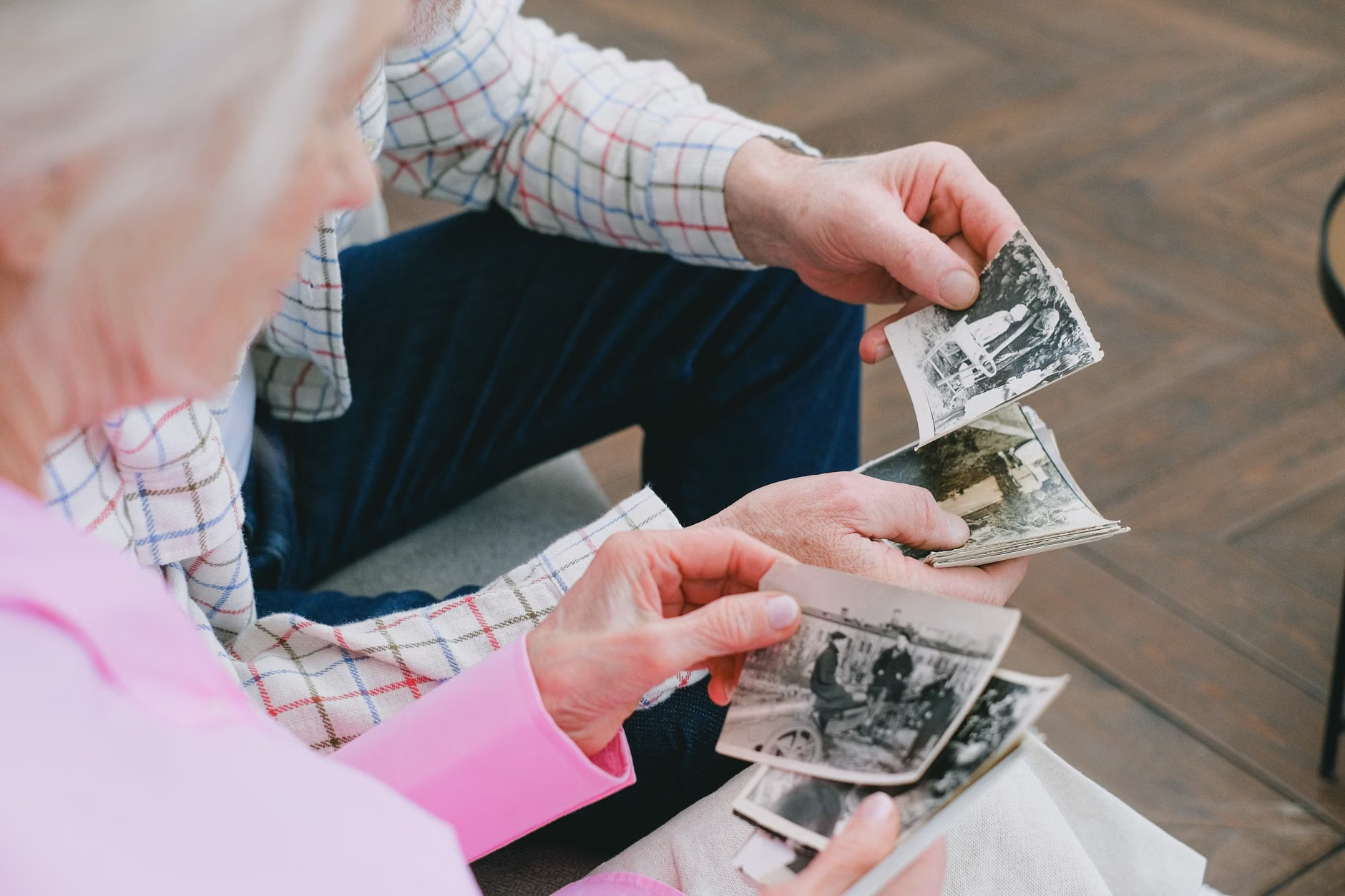
While many history circles consist primarily of seniors, they often interact with local museums, schools, or historical societies. This provides a platform for you to act as a mentor or a “living library.” Sharing your knowledge with younger generations who are interested in local heritage provides a sense of purpose and legacy—two factors that are highly correlated with psychological well-being in later life.
Getting Started: How to Find or Form a Group
Finding a group does not need to be a complex technical task. Most communities have existing infrastructure that can lead you to the right place. Here is a step-by-step approach to finding your niche:
| Source | Action Step | What to Look For |
|---|---|---|
| Public Library | Ask the reference librarian | Check for bulletin boards or lists of local interest clubs. |
| Local Museum | Visit the front desk | Museums often host volunteer groups or “Friends of the Museum” circles. |
| University/College | Check Continuing Education departments | Some offer “third-age” courses or history seminars for seniors. |
If you cannot find an existing circle that matches your interests, consider starting a small one. You do not need professional credentials. You only need a quiet space, such as a community room or even a café, and a shared topic of interest. A common mistake is trying to make the group too broad. Start with a specific focus, such as “The History of Our Town’s Main Street” or “Post-War Neighborhood Development,” to attract like-minded individuals.
Practical Considerations for Accessibility and Stamina
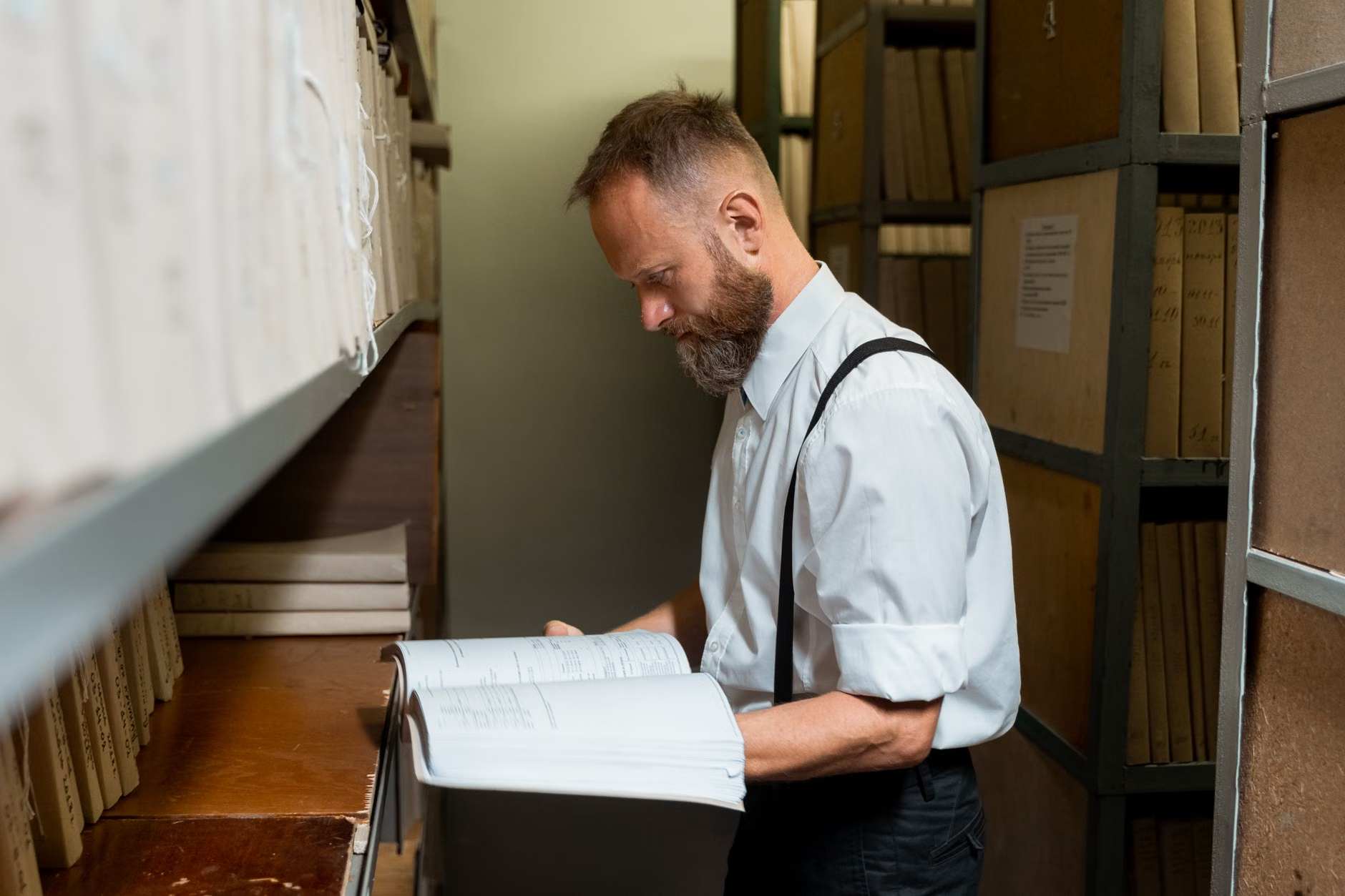
While history circles are generally sedentary, they often involve field trips to archives, heritage sites, or historic buildings. As an older adult, it is important to assess the physical demands of these activities before committing.
Mobility and Safety Checklist
- Accessibility: Does the meeting location have step-free access? Are there elevators if the meeting is on an upper floor?
- Facility Amenities: Are there accessible, clean toilets nearby? Is there adequate seating, preferably with back support, for longer meetings?
- Lighting and Acoustics: As we age, vision and hearing changes are common. Ensure the meeting space is well-lit and that members are willing to speak clearly or use assistive technology if needed.
- Transport: Is the venue near public transit? If you drive, is there designated parking that minimizes walking distance?
Always communicate your needs to the group leader. If you have limited stamina, suggest shorter, more frequent meetings rather than long, all-day excursions. Most groups are happy to adapt to keep members involved.
The Role of Digital Literacy in Historical Research
Modern history circles often use digital tools to augment their research. While this can seem daunting, it is an excellent opportunity to build your digital confidence in a supportive, low-pressure environment.
Many local history societies now use platforms like Google Drive for sharing documents, or Facebook Groups for coordinating meetings. Learning to use these tools for a hobby you love is much more effective than learning them for “tech’s sake.” If you are uncomfortable with technology, look for a group that values paper-based records or is willing to help you learn the basics of digital research at your own pace.
Common Misconceptions and Reality Checks
One common misconception is that you need to be an academic or a “history buff” to join. In reality, the most successful groups are those with diverse backgrounds. A retired engineer might look at a historic bridge differently than a former schoolteacher or a local business owner. This diversity of perspective is precisely what makes the research rich and accurate.
Another misconception is that local history is only about the distant past. Your own life—what you remember about the town from 40 or 50 years ago—is a vital historical resource. Do not undervalue your own narrative; it is exactly what historians call “oral history,” and it is the foundation of many community projects.
Integrating History into Your Daily Life
You do not need to wait for the next meeting to engage with history. Make it a part of your daily routine. Take a different route to the supermarket and note the architectural features of the buildings you pass. Look up a local landmark on a trusted historical database or your local library’s website. By keeping your curiosity active, you ensure that your participation in the history circle remains vibrant and fulfilling.
If you feel overwhelmed by the amount of information available, focus on one small project at a time. Perhaps you want to document the history of your own home or trace the lineage of a local park. Small, manageable goals prevent burnout and keep the hobby enjoyable.
Conclusion: Your Contribution Matters
Joining a local history circle is a commitment to your own cognitive health and your community’s legacy. It provides a structured, social, and intellectually stimulating environment that respects your experience while encouraging new learning. By taking the first step to find or form a group, you are choosing to remain an active, contributing member of your society. Your memories and your curiosity are the threads that weave the tapestry of local heritage; by sharing them, you ensure that the story of your community continues for the next generation.
Frequently Asked Questions
Q: I have no background in history. Will I feel out of place?
A: Absolutely not. Most local history circles are composed of enthusiasts, not academics. They value curiosity and personal perspective far more than formal education. Your unique life experience is your “qualification.”
Q: Is there a cost associated with joining these groups?
A: Many local history groups are free or have very low annual membership fees to cover basic administrative costs. If a group is run by a museum or historical society, there may be a fee, but it is usually modest. Always ask about concessions or senior discounts.
Q: What if I have mobility issues that make field trips difficult?
A: Many groups are moving toward hybrid models, where research and meetings can be done online or in fully accessible venues. When looking for a group, be transparent about your mobility needs so they can suggest the best way for you to participate comfortably.
Official resources for finding local history societies: