Strengthening your core through seated torso leans is one of the most effective ways to improve balance and prevent falls without the strain of floor-based exercises.
Key Takeaways:
- Core stability is the foundation of mobility: A strong core protects the spine and allows for safer movement during daily tasks like reaching, walking, and standing up.
- Seated exercises provide a safety net: Performing torso leans in a chair eliminates the fear of falling during the workout, making it accessible for those with limited stamina or balance issues.
- Precision beats range of motion: Moving just a few inches with proper muscle engagement is more beneficial and safer than leaning too far with poor posture.
Understanding the Core: More Than Just “Six-Pack” Abs
When we talk about the “core,” many people immediately think of the abdominal muscles visible on the surface. However, for adults aged 60 and older, the core represents a complex system of muscles that act as a natural corset for the torso. This system includes the rectus abdominis (front), the obliques (sides), the transverse abdominis (the deepest layer), and the erector spinae (lower back muscles).
As we age, muscle mass naturally tends to decline—a process known as sarcopenia. The core muscles are often the first to weaken because modern life involves a lot of sitting without active engagement. This weakness can lead to a “slumped” posture, which shifts your center of gravity forward and increases the risk of tripping. Seated torso leans specifically target these deep stabilizing muscles by using the weight of your own upper body as resistance.
Why it matters: A weak core doesn’t just affect your looks; it affects how you breathe, how you digest food, and how safely you can move through your home. By engaging in preventive core exercises, you are essentially “armoring” your spine against the everyday stresses of movement.
The Anatomy of a Seated Lean
When you sit on a chair and lean your torso in any direction, your brain must coordinate several muscle groups to prevent you from simply toppling over. This coordination is what builds “functional strength.”
- Forward Leans: Primarily engage the lower back and the deep transverse abdominis to control the descent.
- Side Leans: Focus on the obliques, which are crucial for maintaining balance when you step sideways or reach for an object on a shelf.
- Backward Leans: Challenge the front abdominal wall to hold the weight of the torso against gravity.

Why Seated Exercises Are Superior for Preventive Health
For many adults in the 60-to-80 age bracket, traditional core exercises like planks or sit-ups can be discouraging or even dangerous. Getting down to the floor and back up again requires a level of knee and hip mobility that may not be present. Furthermore, exercises that put direct pressure on the neck or lower back can exacerbate existing conditions like osteoarthritis or degenerative disc disease.
Seated torso leans offer a “controlled environment.” By sitting in a sturdy chair, you have a fixed base of support. This allows you to focus entirely on the muscle contraction rather than worrying about losing your balance. It also allows you to perform these exercises anywhere—while watching the news, waiting for a pot to boil, or sitting at a desk.
Comparison: Seated vs. Standing Core Work
| Feature | Seated Torso Leans | Standing Core Exercises |
|---|---|---|
| Fall Risk | Very Low (Fixed base) | Moderate (Requires active balance) |
| Spinal Load | Low (Controlled by seat) | Higher (Full body weight on joints) |
| Accessibility | High (Can be done by most) | Moderate (Requires steady gait) |
| Focus Area | Deep core and stability | Full-body integration |
While standing exercises are excellent for those with high mobility, seated torso leans are the better choice for preventive health if your goal is to build a consistent daily habit without the risk of overexertion or injury. They serve as a perfect “entry point” for rebuilding strength after a period of inactivity.
Step-by-Step Guide: The Three Essential Torso Leans
Before beginning, ensure you are sitting on a sturdy, armless chair (or use the arms only for safety) with your feet flat on the floor, hip-width apart. Avoid chairs with wheels or deep, soft cushions that swallow your hips.
1. The Forward Hinge (The “Reaching” Motion)
This movement mimics the action of leaning forward to pick up a newspaper or reach for a coffee cup. It strengthens the lower back and the deep abdominals.
- The Setup: Sit at the front edge of the chair. Imagine a string pulling the top of your head toward the ceiling.
- The Action: Keeping your back perfectly straight, lean forward from the hips. Do not round your shoulders.
- The Limit: Stop when you feel your abdominal muscles “catch” or tighten. For most, this is only a 20-to-30-degree angle.
- The Return: Exhale and use your stomach muscles to pull your torso back to the upright position.
2. The Side-to-Side Tilt (The “Oblique” Engager)
This is vital for lateral stability. If you ever feel “wobbly” when walking around corners, this exercise is for you.
- The Setup: Place your hands on your thighs or let them hang at your sides.
- The Action: Slowly lean to the right, as if you are trying to touch the floor with your right fingertips. Keep both “sit bones” firmly planted on the chair.
- The Return: Use the muscles on the left side of your waist to pull yourself back to center. Repeat on the other side.
- Common Mistake: Lifting a hip off the chair. If your left hip lifts when you lean right, you have gone too far.
3. The Backward Lean (The “V-Sit” Preparation)
This is the most challenging of the three because it works directly against gravity.
- The Setup: Cross your arms over your chest or hold the sides of the chair for extra security.
- The Action: Keeping your spine straight, lean back toward the backrest of the chair, but do not touch it.
- The Hold: Stay in the leaned-back position for 2 to 3 seconds.
- The Return: Pull yourself forward to the starting upright position.
Common Mistakes and Safety Precautions
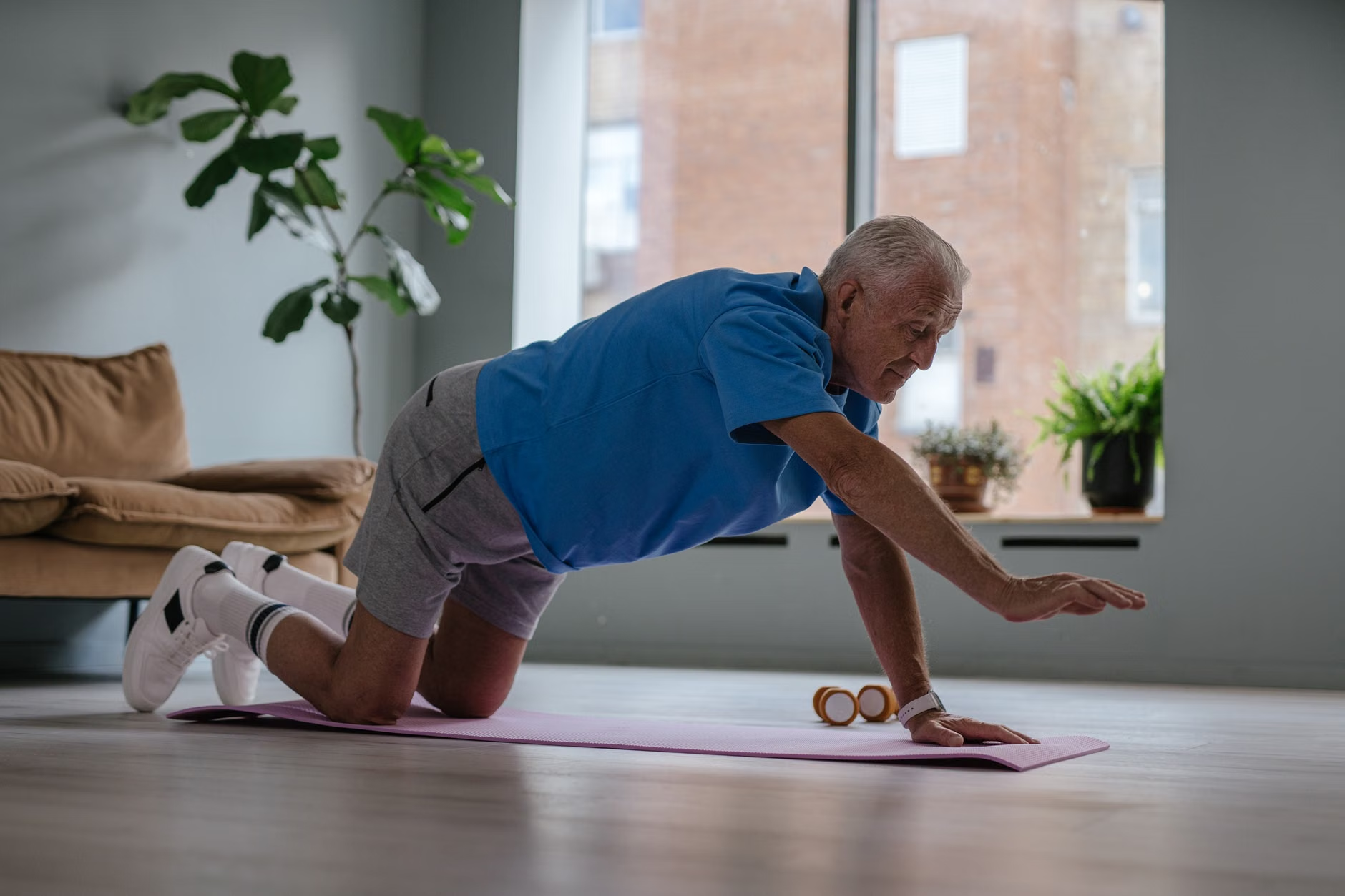
Even a low-impact exercise can cause discomfort if performed incorrectly. The most frequent error is rounding the spine. When the spine rounds (slumping), the pressure shifts from the muscles to the intervertebral discs. This can lead to back pain rather than back strength.
The “Checklist” for Safe Execution
- Breathe: Never hold your breath. Exhale during the “work” phase (when you are pulling back to center).
- Neck Alignment: Keep your chin tucked slightly. Don’t look up at the ceiling or down at your feet; keep your gaze forward.
- Feet Placement: Your feet are your anchors. If your toes are lifting, you are leaning too far.
- Slow Tempo: Use a “2-2-2” count. Two seconds to lean, two seconds to hold, and two seconds to return. Momentum is the enemy of muscle growth.
When to Stop: If you feel a sharp, stabbing pain in your lower back, or if you feel dizzy, stop immediately. A “dull ache” or a “burning sensation” in the muscles is normal—it means they are working. Sharp pain in the joints is a signal to reduce your range of motion or consult a professional.
Creating a Sustainable Routine
Consistency is more important than intensity. You do not need to spend an hour on these exercises. In fact, ten minutes a day is often enough to see significant improvements in posture and balance over the course of a month.
A Sample Weekly Schedule
| Day | Routine Focus | Duration |
|---|---|---|
| Mon/Wed/Fri | Full Set: 10 Forward, 10 Side (each), 10 Backward | 10 Minutes |
| Tue/Thu | Focus on Mobility: 5 slow circles in each direction | 5 Minutes |
| Sat/Sun | Active Rest: Mindful posture while sitting and eating | N/A |
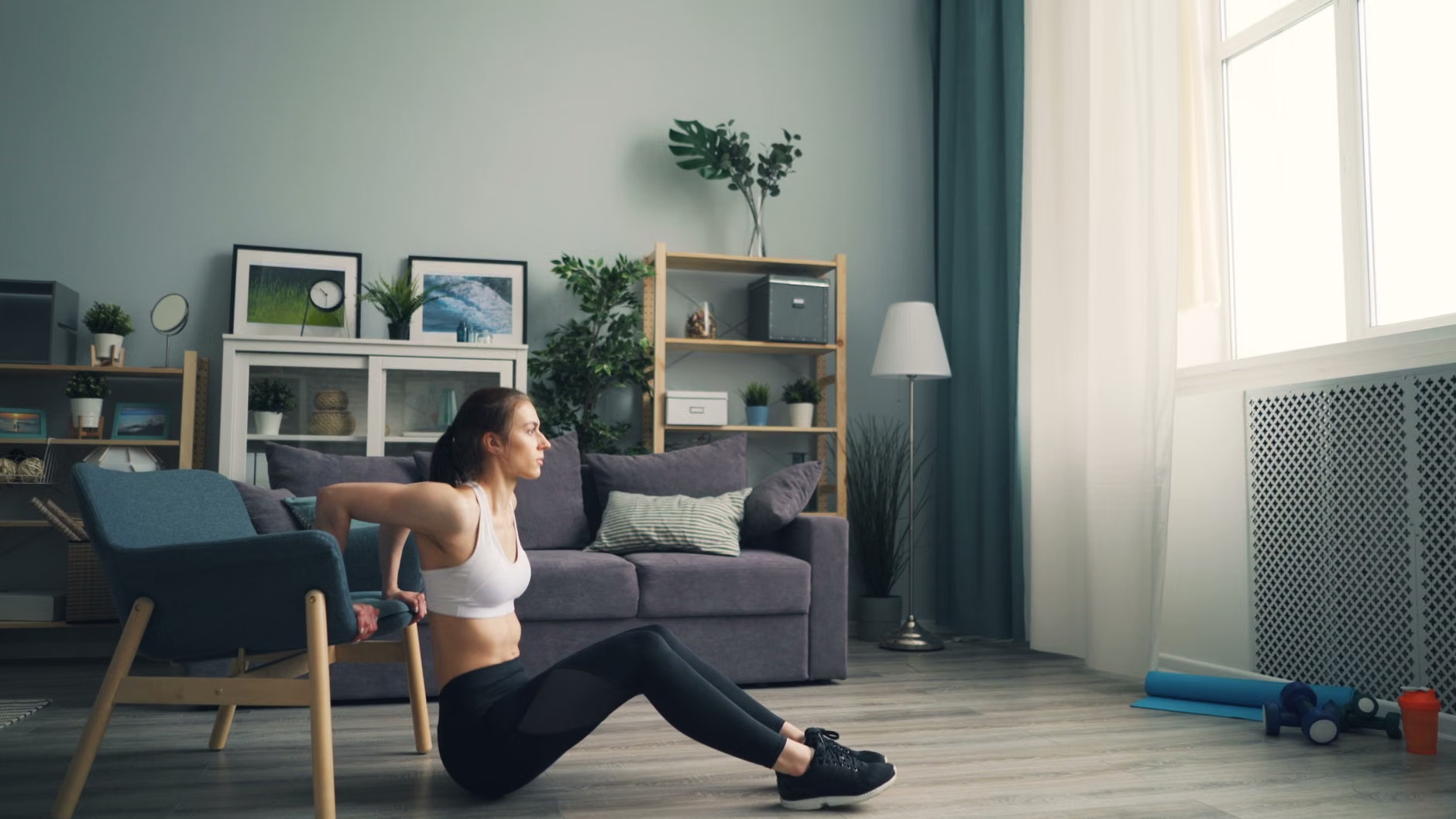
The Overlooked Variable: The Pelvic Floor. For many seniors, core engagement is inextricably linked to pelvic floor health. When performing these leans, try to gently “lift” the pelvic floor muscles (the muscles used to stop the flow of urine). This creates an internal “pillar” of support that makes the exercise much more effective and helps with bladder control.
Integrating Core Health into Daily Life
The goal of seated torso leans is not just to get better at the exercise itself, but to make your daily life easier. Think about the “What it looks like in real life” scenarios:
Scenario A: Putting on Shoes. Instead of struggling to reach your feet, a strong core allows you to hinge forward safely, maintaining balance while you tie your laces. This reduces the risk of a “head-rush” or falling off the chair.
Scenario B: Getting Out of a Car. This requires a combination of a side lean and a twist. By practicing side leans, you strengthen the obliques that allow you to swing your legs out of the car door without straining your back.
Scenario C: Carrying Groceries. Even if you carry bags in your hands, your core is what keeps you upright. If your core is weak, the weight of the bags will pull your shoulders down and forward, leading to neck pain.
Practical Decision Rule: Should You Progress?
How do you know when to make the exercise harder? Use the “Comfortable Ten” rule. If you can perform ten repetitions of a backward lean with perfect form and no shaking, you are ready to progress. You can progress by:
- Holding a small bottle of water against your chest to add resistance.
- Extending your arms straight out in front of you during the lean.
- Increasing the “hold” time at the furthest point of the lean from 2 seconds to 5 seconds.
The Connection Between Core Strength and Cognitive Health
An emerging area of research suggests that balance and cognitive health are closely linked. The brain’s cerebellum is responsible for both motor control and certain types of cognitive processing. When you challenge your balance through torso leans, you are also engaging your brain’s spatial awareness and proprioception (the sense of where your body is in space).
For seniors, this “brain-body” connection is a vital part of preventive health. By focusing intently on the movement of your torso, you are practicing a form of “moving meditation” that can reduce stress and improve mental clarity. Maintaining a strong core is, in many ways, an act of maintaining independence.
Conclusion: Your First Step Toward a More Stable Future
Preventive health does not require a gym membership or expensive equipment. It begins with the decision to move mindfully within the environment you already have. Seated torso leans are a powerful tool because they respect your current physical limits while actively working to expand them.
Your immediate next action: Find a sturdy chair right now. Sit upright, plant your feet, and perform just five slow forward hinges. Pay attention to how your muscles feel. That small sensation of engagement is the first step toward better balance, a healthier spine, and the confidence to keep moving through the world safely.
Frequently Asked Questions
1. Can I do these exercises if I have a history of sciatica or a herniated disc?
Seated leans are generally safer than standing ones, but if you have active sciatica, you must keep the range of motion very small. Focus on the “upright” engagement rather than the deep lean. Always consult your physical therapist to ensure the “hinging” motion doesn’t pinch the nerve further.
2. How soon will I notice a difference in my balance?
Most people report feeling “sturdier” or more “upright” within two to three weeks of daily practice. The initial improvements are neurological—your brain is getting better at communicating with your muscles. Physical muscle thickening takes slightly longer, usually 6 to 8 weeks.
3. Is it better to do these in the morning or the evening?
Morning is often best for preventive health exercises because the spine is well-hydrated from sleep, but the muscles may be stiff. A gentle morning routine can “wake up” your core for the day’s activities. However, the best time is whenever you can be consistent. Just avoid doing them immediately after a heavy meal to prevent digestive discomfort.
References for further reading:
- National Institute on Aging: Four Types of Exercise for Seniors
- Harvard Health Publishing: The real-world benefits of strengthening your core
- Mayo Clinic: Core exercises: Why you should strengthen your core muscles