- Prioritize Terrain over Aesthetics: Always verify the percentage of paved vs. unpaved paths, as gravel and mulch significantly increase fatigue and fall risks.
- Leverage Infrastructure: Use garden websites to identify “mobility-friendly” routes, shuttle services, and the availability of manual or electric wheelchair rentals before you arrive.
- The 60-Minute Rule: Plan for 60 minutes of activity followed by 15 minutes of seated rest to maintain stamina and avoid physical strain.
Introduction: The Joy of Accessible Nature
Visiting a botanical garden is one of the most rewarding ways to engage with nature, offering a blend of exercise, fresh air, and aesthetic beauty. For adults aged 60 to 80, these spaces provide a sanctuary that is often safer and more controlled than wild hiking trails or rugged national parks. However, the term “accessible” is subjective. A garden that is accessible for someone with mild arthritis may be challenging for someone using a mobility aid or managing stamina fatigue.
This guide provides a systematic approach to evaluating, selecting, and navigating botanical garden tours. We will move beyond marketing brochures to look at the practical reality of surface types, slope gradients, and the logistical support you should demand from tour operators and garden management.
Evaluating Terrain: Beyond the Pavement
The most significant variable in a successful garden visit is the quality of the walking surface. Many gardens claim to be “accessible” because they have a single paved loop, but the majority of their collection may be located on soft mulch, loose gravel, or uneven stone steps.
The Surface Hierarchy
Not all ground is created equal. Understanding the physical toll of different materials is essential for planning your day.
| Surface Type | Stability | Effort Level | Suitability |
|---|---|---|---|
| Paved (Concrete/Asphalt) | High | Low | Ideal for all users. |
| Compacted Dirt | Moderate | Moderate | Okay in dry weather; risky when wet. |
| Loose Gravel/Mulch | Low | High | Avoid if using canes or walkers. |
Practical Decision Rule: If you use a cane or walker, filter your search by “ADA-compliant” (in the US) or “wheelchair-accessible” (globally). If a garden website does not explicitly mention “paved, level paths,” call their guest services and ask: “Can I navigate the entire collection with a wheeled walker without encountering gravel or steep inclines?”
Infrastructure and Support Services
Modern botanical gardens are increasingly recognizing the needs of an aging population. However, the availability of support services varies wildly between municipal gardens and private conservatories.
What to Look For
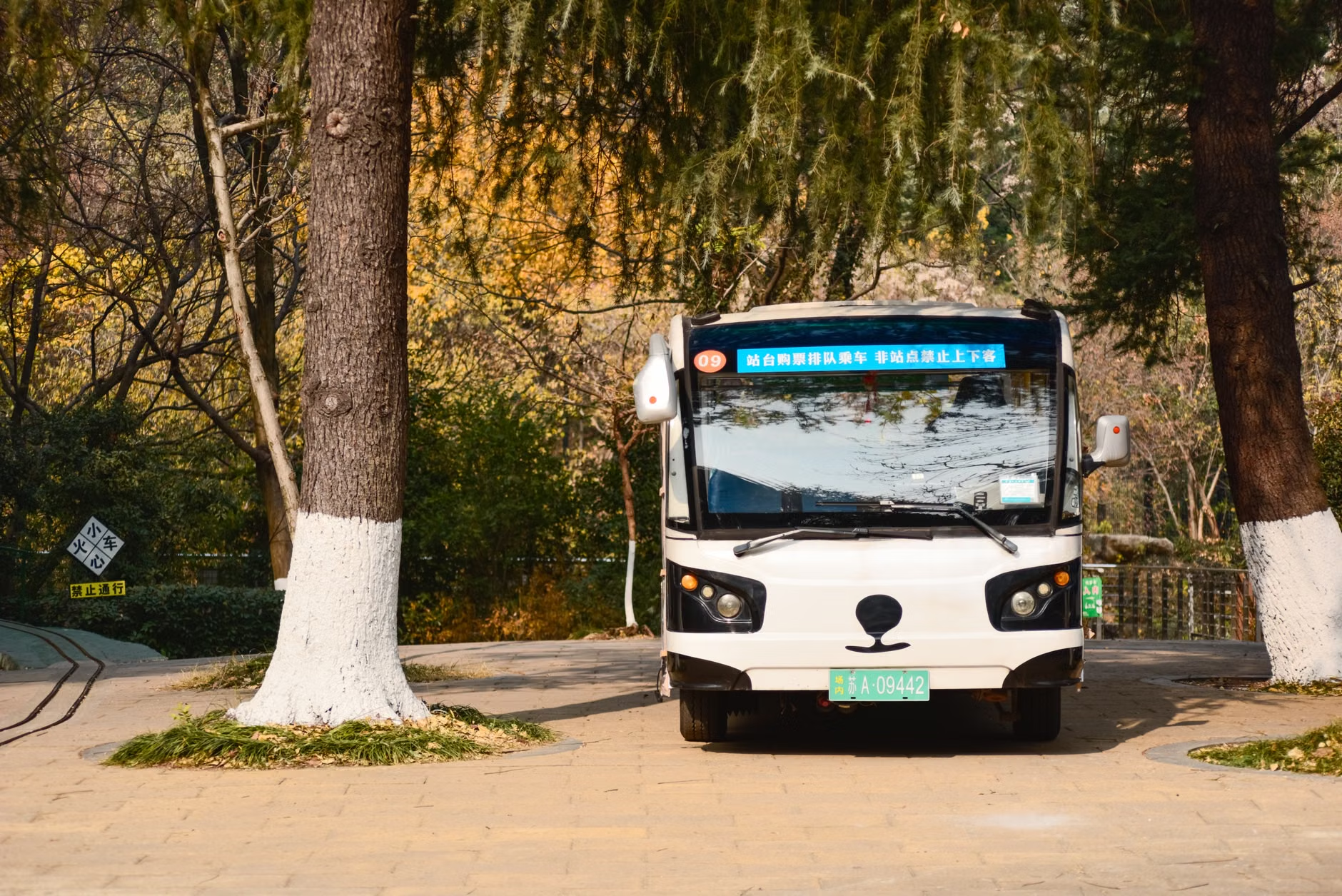
- Electric Shuttle Services: Many large-scale gardens offer hop-on, hop-off shuttles. This is not a sign of weakness; it is a strategic way to conserve energy so you can spend your “stamina budget” walking through the specific areas you truly wish to see.
- Wheelchair and Scooter Rentals: Check if these are available for free or for a nominal fee. Important: Always reserve these at least 48 hours in advance. Do not assume they are available upon arrival, as demand often exceeds supply on weekends.
- Restroom Frequency: A garden that has restrooms only at the entrance is a poor choice for a full-day visit. Look for maps that clearly mark restrooms at intervals throughout the park.
The “Hidden” Inconveniences
Even if a path is paved, it may be narrow. A path width of less than 36 inches (approx. 90 cm) can be difficult to navigate if you are using walking poles or if there is two-way traffic. When researching a destination, look for photos of the main pathways. If you see narrow, winding trails with dense overgrowth, it is likely a high-exertion environment that may not be suitable for those with limited balance.

Pacing and Stamina Management
The biggest mistake older travellers make is attempting to see an entire garden in one visit. Botanical gardens are often vast, and the cumulative effect of small inclines can lead to significant fatigue by the afternoon.
The 60-Minute Strategy
Apply the 60-minute rule: Plan to walk for 60 minutes, then commit to a 15-minute rest period. Use this time to hydrate and evaluate your energy levels. If you are feeling tired, this is the time to head toward the exit or locate the nearest shuttle stop.
Environmental Considerations
Heat and humidity are significant factors for adults 60+. Botanical gardens are often “greenhouse” environments, which can be significantly hotter than the surrounding area. Check the temperature inside the conservatory before entering. If it is significantly higher than the outside temperature, consider skipping the indoor portion or visiting it first thing in the morning when you are at your peak energy level.
When booking a guided tour, you are essentially outsourcing your navigation to someone else. This can be a huge benefit, but it also carries risks if the guide is not trained in accessibility.
Questions to Ask Tour Operators
- “What is the total walking distance of this tour?”
- “Are there any stairs on the route, and if so, is there an alternative ramp or elevator?”
- “How many scheduled stops are there where seating is provided?”
- “Is the guide willing to adjust the pace if the group is moving too quickly?”
If the operator cannot answer these questions, they are likely not prepared for a senior-friendly experience. A professional, high-quality tour operator will have these details mapped out as part of their standard safety protocol.
Health Preparation and Safety
Visiting a botanical garden is a physical activity. Preparing your body and your gear is as important as choosing the right location.
Footwear and Stability
Regardless of how “flat” a garden is, you will be walking on varied surfaces. Wear shoes with non-slip soles and adequate arch support. If you use a folding cane, ensure the rubber tip is not worn down; a smooth, worn tip is a major slip hazard on smooth, polished conservatory floors.
Managing Medications and Hydration
If you take medications that require consistent timing or have side effects like dizziness, ensure your visit is timed to avoid the peak heat of the day. Carry a small bag with your medication list, a bottle of water, and a high-protein snack. Even if the garden has a café, it may be crowded or closed, and having your own supplies prevents unnecessary stress.
Insights into Garden Accessibility
One often overlooked variable is the “sensory experience.” Some gardens are designed with high-contrast signage or Braille, which can be helpful for those with vision impairments. Conversely, some gardens use dark, uneven wood-chip paths that can be disorienting. Always check the garden’s accessibility page—not just for mobility, but for sensory support. If a garden has a “sensory garden” section, these are often the most accessible, as they are specifically designed for close-up engagement and usually feature raised beds, meaning you don’t have to bend down to see the plants.
Conclusion: Crafting Your Perfect Visit
Accessibility in botanical gardens is not just about avoiding stairs; it is about autonomy. By researching the surface types, verifying the availability of shuttle services, and adhering to a strict pacing schedule, you can transform a potentially exhausting day into a restorative experience. Remember, the goal is to enjoy the beauty of the flora, not to test your physical limits. Choose your path wisely, plan for rest, and prioritize your comfort above the desire to see “everything.”
Frequently Asked Questions (FAQ)
1. How can I verify if a botanical garden is truly accessible before I travel there?
Do not rely solely on the “Accessibility” tab on a website, as it is often a generic legal disclaimer. Instead, search for recent reviews on platforms like TripAdvisor or Google Maps using keywords such as “walker,” “wheelchair,” or “steep.” Additionally, look for the garden’s map on their website; if the map shows a “suggested accessible route,” that is a strong indicator of genuine planning.
2. Is it better to visit a botanical garden alone or as part of a group tour?
For those with mobility concerns, a small-group tour can be beneficial because the guide is responsible for the route. However, you must confirm the group size. A group of 20 people often moves too fast. A private tour or a small group (under 8 people) is ideal, as it allows for a more personalized pace and easier communication with the guide regarding your needs.
3. What should I do if I find myself exhausted halfway through a garden visit?
Most large botanical gardens are designed with a “hub and spoke” layout. If you feel exhausted, immediately consult your paper or digital map to find the nearest “rest station” or shuttle stop. Do not try to complete the loop back to the entrance if you are feeling fatigued. Many gardens have emergency protocols where they can dispatch a golf cart to pick up a visitor in distress—do not hesitate to ask a staff member if this service is available.
Official resources for planning accessible travel include the Americans with Disabilities Act (ADA) information site for US-based travel, and international organizations like ENAT (European Network for Accessible Tourism), which provides guidance on accessible standards across Europe.
To truly understand how to select a garden, we must look at the structural design. Many historic gardens were designed in the 18th or 19th centuries, often featuring long, sweeping gravel paths intended for horse-drawn carriages. These are notoriously difficult for modern mobility aids. Conversely, gardens built or renovated in the last twenty years are often designed with “Universal Design” principles. Universal design means the space is usable by all people to the greatest extent possible without the need for adaptation.
Identifying Universal Design
When looking at a garden’s website, look for these indicators of Universal Design:
- Raised Planters: These allow visitors to view and smell flowers without bending over, which is crucial for those with back or hip issues.
- Wide Turning Radii: Paths that are at least 5 feet (1.5 meters) wide, allowing for two people to walk side-by-side or for a scooter to turn around without reversing.
- Consistent Signage: Signs that are at eye level, have high-contrast text, and use non-reflective materials to prevent glare.
The Impact of Weather on Accessibility
Even a perfectly paved path can become a hazard. Moisture, whether from rain or morning dew, can make stone pavers and concrete extremely slippery. If you are visiting a humid climate, look for paths that have a “broom finish” or textured surface, which provides better traction than smooth, polished stone. If you are unsure about the conditions, contact the garden early in the morning on the day of your visit. Staff are usually very helpful in providing real-time updates on which sections of the garden are currently the safest to traverse.
The Social Aspect of Garden Tours
Travel is inherently social, and botanical gardens are popular venues for intergenerational trips. When travelling with family, it is easy to fall into the trap of “keeping up” with younger, faster family members. Communicate your needs clearly before the trip begins. A “check-in” system, where you agree to pause every 30 minutes to ensure everyone is comfortable, can prevent the frustration of feeling like you are holding others back. Remember, the family member who is walking slowly to accommodate you is likely enjoying the conversation and the scenery just as much as those who are rushing ahead.
Advanced Planning: The Digital Toolkit
Before you leave, prepare a digital “garden kit.” This should include:
- A Saved Map: Download the garden map to your phone so you can access it offline.
- Contact Information: Save the guest services phone number for the garden in your contacts.
- A Mobility Note: If you use a specialized device, such as a foldable electric scooter, check the manufacturer’s specifications for its turning radius and battery life. Ensure you have the charger packed in your day bag.
By treating your garden visit with the same level of logistical preparation as a long-haul flight, you remove the “surprise factor” that often leads to stress. The goal is to reach a point where your focus is entirely on the blooming lilies or the architecture of the greenhouse, rather than the logistics of your next step.
The Psychological Benefits of Botanical Immersion
Beyond the physical activity, the psychological benefits of spending time in nature are well-documented. For older adults, this is often referred to as “biophilia”—the innate human instinct to connect with nature. Studies have shown that even short periods in green spaces can lower blood pressure and reduce cortisol levels. When selecting a garden, prioritize the “quiet zones.” Many gardens have designated areas for meditation or quiet reflection. These spots are usually less crowded and offer a more profound experience than the main, high-traffic thoroughfares. If you find a garden that has a dedicated “Zen garden” or “woodland sanctuary,” make these your primary destination.
Managing Expectations: The “Off-Season” Advantage
One of the most effective ways to ensure an accessible experience is to visit during the “shoulder season” or off-peak hours. Gardens are at their most accessible when they are not crowded. A narrow path that is perfectly navigable at 9:00 AM on a Tuesday can become an obstacle course at 2:00 PM on a Saturday. If your schedule allows, aim for mid-week visits. The staff will be more available to assist you, the shuttle buses will be less crowded, and you will have more space to move at your own pace without feeling pressured by the flow of other visitors.
The Role of Technology in Modern Gardens
Keep an eye out for “Virtual Tours” or “App-guided” experiences. Many gardens now offer audio tours that can be downloaded to your smartphone. This is an excellent way to learn about the plants without having to stop and read small signs at every turn. You can listen to the history of a specific section while walking at your own pace, or even while sitting on a bench. This technology makes the garden experience more inclusive, as it accommodates those with visual impairments or those who prefer a more relaxed, educational pace.
Final Thoughts on Long-Term Enjoyment
As you build your list of “accessible favorites,” keep a small journal or a digital note of the gardens you have visited. Note what worked and what didn’t. Did the garden have enough shade? Was the shuttle service reliable? Did you feel rushed? This personal database will become an invaluable resource for your future travels. Over time, you will develop a “travel profile” that allows you to quickly assess whether a new destination meets your personal mobility and comfort standards. This is the essence of independent, empowered travel in your 60s, 70s, and beyond.