- Intergenerational housing in 2026 is moving away from informal arrangements toward professionally managed, legally binding co-living models that prioritize privacy and autonomy.
- Financial sustainability depends on understanding the difference between equity-based co-ownership and service-based rental models.
- Legal vetting of “house rules” and exit clauses is the most critical step to prevent conflicts in shared living environments.
As we head deeper into 2026, the concept of “intergenerational housing”—living in a shared environment with people of vastly different ages—has shifted from a niche social experiment to a structured, institutionalized housing option. For adults aged 60 to 80, this represents a departure from traditional “age-segregated” retirement communities, offering a model that emphasizes social integration, mutual assistance, and shared resources.
The primary driver of this shift is not merely social preference, but a response to rising property costs, the desire for “aging in place” with social support, and a growing recognition that multi-generational interaction improves cognitive and emotional wellbeing. However, moving into a shared space requires a rigorous assessment of legal, financial, and personal compatibility factors.

Understanding the Three Core Models of 2026
Not all intergenerational housing is the same. To make an informed decision, you must distinguish between the structural and legal frameworks currently dominating the market. Understanding these models allows you to align your housing choice with your long-term health and financial goals.
| Model | Primary Benefit | Financial Structure | Best Suited For |
|---|---|---|---|
| Equity Co-Housing | Ownership and Control | Individual ownership of a unit; shared ownership of common areas. | Those seeking long-term stability and asset retention. |
| Service-Linked Co-Living | Flexibility and Care | Monthly rental fee; service contracts for cleaning, meals, or support. | Those desiring low maintenance and professional support. |
| Homeshare Partnerships | Affordability | Reduced rent in exchange for companionship or light assistance. | Those seeking social connection and cost-effective living. |
Equity Co-Housing: The Ownership Approach
In 2026, many older adults are opting for equity co-housing. This model involves a group of residents who collectively design or purchase a building. You own your private space—usually a self-contained apartment—but share common areas like kitchens, gardens, and workshops. The “intergenerational” aspect is often baked into the development plan, requiring a mix of age groups in the bylaws.
What it looks like in real life: Imagine a complex where you own a one-bedroom apartment, but have full access to a commercial-grade kitchen and a library. You might participate in a weekly “community dinner” that is mandatory or highly encouraged. The trade-off is the time commitment required for community management, such as serving on the board or maintenance committees.
Service-Linked Co-Living: The Rental Approach
This model is increasingly popular in urban centers. Managed by professional firms, these developments offer private units alongside “lifestyle services.” Unlike traditional assisted living, these are designed for active adults. The intergenerational component is facilitated by shared workspaces or university-linked programs where students receive discounted rent for living in the same building as seniors.
Evaluating Financial and Legal Safeguards
The greatest risk in any shared housing arrangement is a lack of clarity regarding exit strategies and conflict resolution. Before committing to any contract, you must perform a “stress test” on the legal documents provided by the operator or the community association.
The Exit Clause Audit
In 2026, standard housing contracts often include “exit clauses” that dictate how you can sell or leave your unit. If you are in an equity-based model, check if you are required to sell your unit back to the community at a fixed rate, or if you can sell on the open market. Never sign an agreement that does not explicitly state how your equity is protected if you need to move into a higher level of care.

One of the most common mistakes is assuming that “community living” implies a high level of care-giving from neighbors. In most modern intergenerational models, your neighbors are not your caregivers. You must ensure that your own health and mobility needs are met independently of the community arrangement. If you require assistance with daily tasks, verify whether the housing model integrates with local professional home-care services or if you must arrange these privately.
Mobility and Accessibility Standards
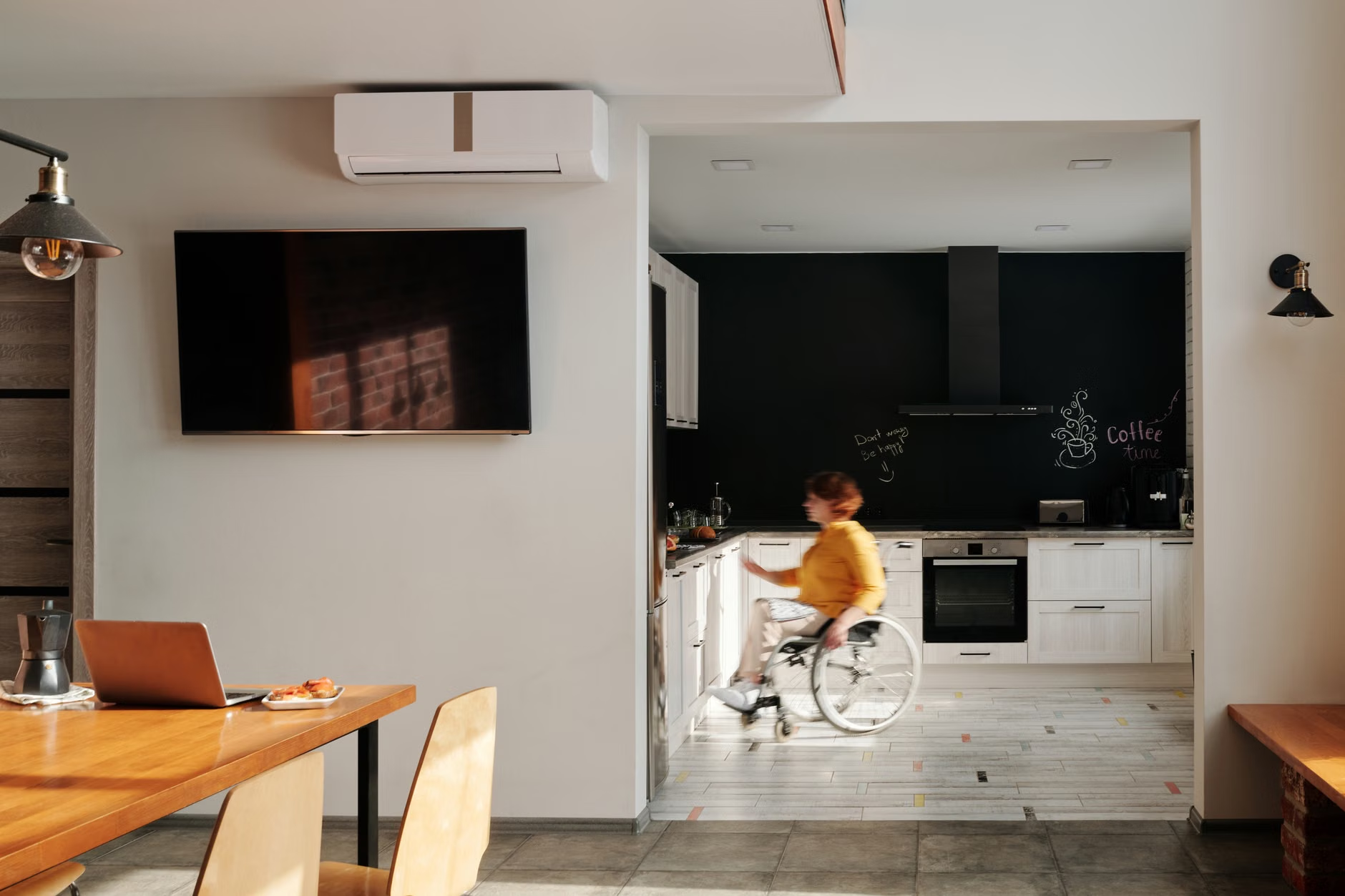
Regardless of the social benefits, the physical environment must meet your current and future mobility needs. In 2026, “Universal Design” is the industry standard for high-quality intergenerational housing. When visiting potential sites, look for the following non-negotiable features:
- Step-free access: All common areas and private units must be accessible via ramps or elevators. Avoid any property that relies on stairs for daily movement, even if you currently have high mobility.
- Doorway widths: Standard doorways should be at least 32 to 36 inches (81–91 cm) wide to accommodate potential future use of mobility aids like walkers or wheelchairs.
- Lighting levels: Look for high-contrast, non-glare lighting in hallways and bathrooms. Proper lighting is a primary factor in fall prevention.
- Proximity to essential services: Evaluate the “walkability score” of the neighborhood. Can you reach a pharmacy, grocery store, and public transport hub within a 10-minute walk?
Practical Steps for Transitioning
If you are considering a move, follow this structured approach to ensure you are making a decision based on data rather than just the appeal of the community concept:
- The Trial Period: If the model is a rental or a homeshare, negotiate a 3-month “trial” period. This allows you to experience the noise levels, the community dynamic, and the real-world accessibility of the space before fully committing.
- Review the Bylaws: Read the “Community Covenant” or “House Rules” document. Pay close attention to rules regarding guests, noise, and the use of common spaces. If the rules seem too restrictive or too vague, this is a red flag.
- Health Integration: Ask the management: “How does this community integrate with local healthcare providers?” A well-managed facility will have established relationships with local medical services, even if they do not provide the care themselves.
- Financial Disclosure: Ask for a three-year forecast of management fees. Shared housing often involves common area maintenance (CAM) fees that can rise significantly over time.
The Hidden Trade-offs of Intergenerational Living
While the benefits—such as reduced isolation and increased security—are well-documented, there are “hidden” variables that many prospective residents overlook. First is the “Social Fatigue” factor. Living in a high-engagement community requires a certain level of social stamina. If you are someone who thrives on solitude, a high-intensity co-living environment may lead to burnout.
Second, consider the technology gap. Many modern intergenerational models rely on apps for building management, booking common rooms, or reporting maintenance issues. If you are not comfortable using these digital tools, ensure there is a physical, human-based alternative for managing your living space.
Third, assess the policy stability. In many jurisdictions, intergenerational housing is a relatively new zoning category. Check if the building is permanently zoned for this use, or if the developers are operating under a temporary permit. You want to ensure that your home remains a stable asset for the long term.
Conclusion: Making the Decision
The move toward intergenerational housing in 2026 is a positive trend that reflects a more integrated approach to aging. However, success in these environments is not accidental; it is the result of careful selection. Focus on housing that provides legal security, physical accessibility, and a clear understanding of the boundaries between community participation and personal privacy.
Your primary goal should be to find a living arrangement that supports your autonomy. Whether you choose an equity-based co-housing model or a service-linked rental, ensure that the contract protects your right to age in place, that the facility is physically designed for your future mobility, and that you have a clear understanding of the financial obligations involved. By treating your housing decision as a professional investment in your future wellbeing, you can enjoy the benefits of a vibrant, multi-generational community while maintaining the independence you value.
Frequently Asked Questions (FAQ)
1. Does intergenerational housing provide medical care for seniors?
Generally, no. Most intergenerational housing models are designed for independent living. They focus on social and structural support rather than medical intervention. If you require medical care, you will likely need to coordinate with local home-health services or choose a facility that specifically offers a “continuum of care” model.
2. How do I protect my financial investment in a shared co-housing model?
Always have a real estate attorney review the “Articles of Incorporation” or the “Homeowners Association (HOA) Bylaws.” Ensure the contract clearly defines your rights to the equity of your unit and the process for selling your interest if you decide to leave the community.
3. Are these communities noisy or disruptive for older adults?
While mixing generations can be lively, well-designed modern housing projects use acoustic engineering to minimize noise transfer between units. During your site visit, ask to spend time in your potential unit during peak hours (e.g., in the evening or on a weekend) to assess the sound insulation levels yourself.
Disclaimer: This article is for informational purposes only and does not constitute financial, legal, or medical advice. Always consult with qualified professionals before making significant housing or financial decisions.
Official Resources for Further Research:
– For general information on co-housing principles, visit the Cohousing Association of the United States.
– For guidance on accessible home design, review the Americans with Disabilities Act (ADA) Standards for Accessible Design (or your local equivalent building code authority).