- Starting a local history club is a low-cost, high-impact way to foster intergenerational connections and preserve the unique character of your neighborhood.
- Success relies on clear organization: define your scope (e.g., oral histories, architecture, or genealogy) and establish a consistent meeting rhythm that respects members’ stamina and mobility.
- Digital tools, such as local archives and simple recording apps, can bridge the gap between physical memory and modern accessibility for future generations.
A local history club is more than a gathering of enthusiasts; it is a living repository of the memories, architecture, and social changes that have shaped your neighborhood over the decades. For adults aged 60 to 80, this hobby provides a unique opportunity to act as the stewards of local heritage while building robust social networks that transcend generational lines.
Defining the Scope: What Kind of History Will You Preserve?
Before recruiting members, you must decide the specific focus of your club. A broad goal like “saving the past” is difficult to execute, whereas a specific focus ensures that meetings remain productive and engaging. Consider the following categories:
| Focus Area | Activity Examples | Suitability |
|---|---|---|
| Oral Histories | Recording interviews with long-term residents. | Best for those who enjoy conversation and social interaction. |
| Architectural Heritage | Documenting the history of specific homes or local landmarks. | Best for those with mobility for short, local walking tours. |
| Genealogy & Families | Mapping local family trees and migration patterns. | Best for detail-oriented researchers with access to a computer. |
| Ephemeral Collections | Digitizing old menus, local newspapers, and event flyers. | Best for those who enjoy organizing and archiving physical items. |
If you have limited mobility, focus on “Oral Histories” or “Genealogy,” which can be conducted from the comfort of a home or a local library. If you enjoy light physical activity, “Architectural Heritage” allows you to incorporate short, slow-paced walks around the neighborhood as part of your research.

Step-by-Step: Launching Your Club
Starting a group does not require significant funding or complex technology. Follow this structured approach to ensure sustainability:
1. The Outreach Strategy
Start small. Reach out to three or four like-minded neighbors. You can advertise your intent through local community boards, neighborhood social media groups, or senior centers. Avoid generic posters; instead, use a specific hook, such as, “Seeking stories about the construction of the Old Mill Road bridge in 1965.” Specificity attracts people who are genuinely invested in the topic.
2. Choosing a Meeting Venue
Accessibility is the most critical factor. Choose a location that is central, has ample seating, is well-lit, and provides easy access to toilets. Public libraries are often the best choice, as they frequently offer free meeting rooms for community groups and have built-in resources for historical research.
3. Establishing a Routine
Consistency is key to keeping members engaged. A monthly meeting is usually the “sweet spot”—frequent enough to maintain momentum, but infrequent enough to prevent fatigue. Ensure that the meeting time accounts for traffic patterns and daylight, especially during winter months when shorter days can impact travel safety.

The Role of Oral History in Neighborhood Preservation
Oral history is perhaps the most valuable contribution a local club can make. Many historical documents record events, but they rarely capture the feeling of a place—the smell of the old bakery, the sound of the trains, or the way the neighborhood changed during a specific economic shift.
When conducting interviews, the most common mistake is asking “Yes/No” questions. Instead, use open-ended prompts:
- “Can you describe what the main street looked like when you first moved here?”
- “How did the community respond when the local school was renovated?”
- “What are your favorite memories of the neighborhood festivals?”
Safety and Comfort Note: When interviewing, always ensure the environment is quiet to minimize background noise. If you are using a digital recorder or a smartphone app, practice using it beforehand to ensure you are comfortable with the interface. Most modern smartphones have a high-quality “Voice Memo” app that is perfectly adequate for this purpose.
Archiving and Sharing: Ensuring Your Work Lasts
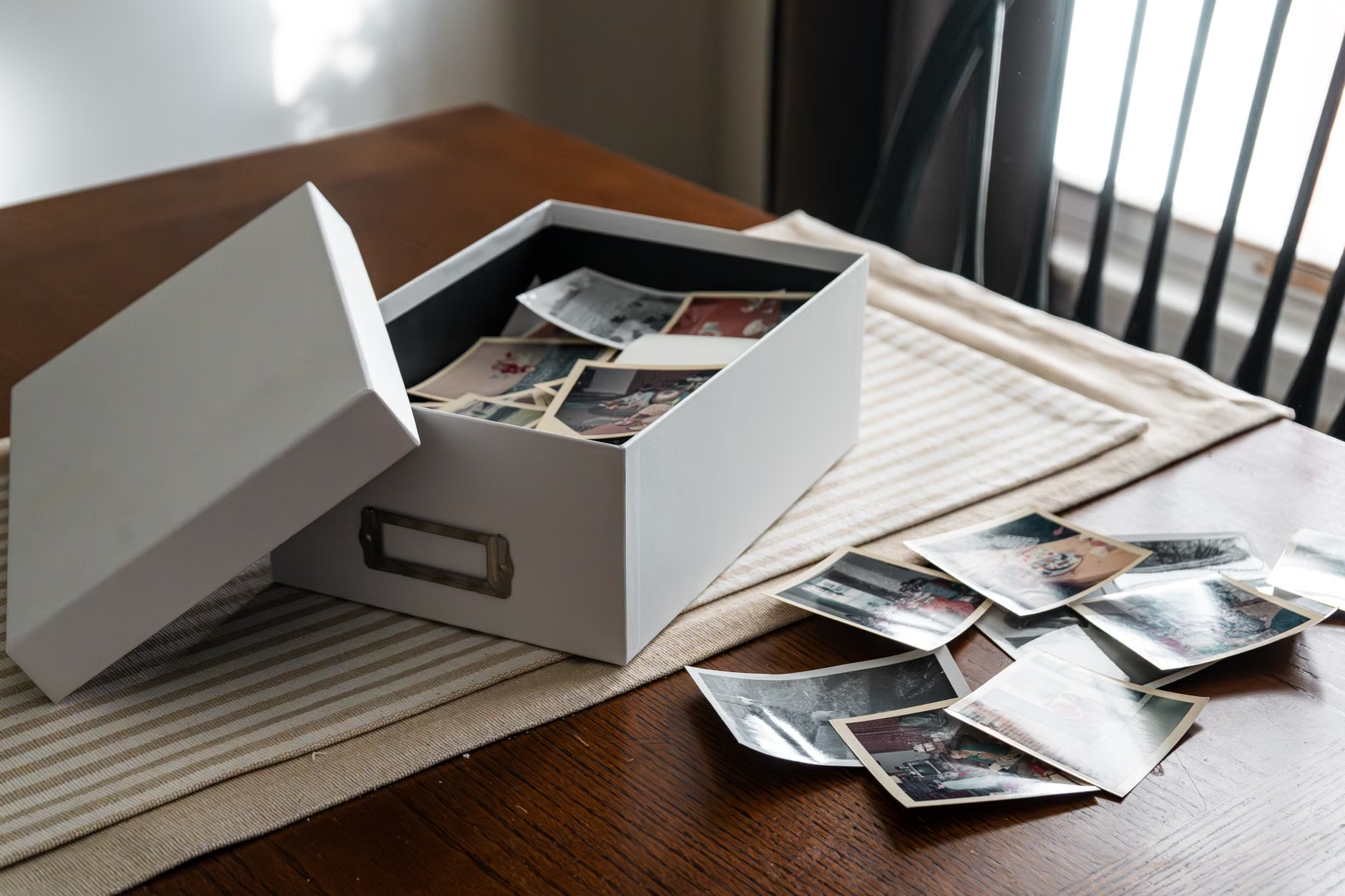
Collecting information is only half the battle; preserving it ensures that future generations can access it. Consider creating a “Neighborhood Archive Binder.” This can be a simple physical binder kept at the local library, or a digital folder shared via a cloud storage service like Google Drive or Dropbox.
If you choose to use digital tools, ensure that at least two members of the club have the passwords and know how to access the files. This avoids the “single point of failure” issue, where all the collective knowledge is lost if one individual becomes unavailable.
Overcoming Unexpected Challenges
Even with good intentions, clubs can face hurdles. Here is how to navigate them:
- Disagreements on History: Memory is subjective. If two members recall an event differently, document both accounts. Label them as “Personal Recollection: Member A” and “Personal Recollection: Member B.” This adds depth to your records rather than creating conflict.
- Technical Barriers: Do not let a lack of computer skills deter you. Assign roles based on strengths. If one member is tech-savvy, they can handle the digital archiving, while another member with excellent social skills can lead the interviews.
- Stamina and Energy: If a project becomes too large, scale it down. The goal is enjoyment and community building, not professional-grade historical publishing.
The Hidden Benefits: Cognitive and Social Health
Participating in a history club offers significant cognitive benefits. The process of gathering data, synthesizing information, and engaging in deep conversation stimulates memory and analytical thinking. Furthermore, the social bonds formed through these clubs combat the isolation that can sometimes accompany retirement.
By connecting with neighbors, you are not just preserving the past; you are actively participating in the present. You become a resource for new residents who are curious about the history of their homes, and you foster a sense of belonging that strengthens the entire community fabric.
Practical Next Step: This week, identify one local landmark or historical detail in your neighborhood that you know little about. Conduct a 15-minute search at your local library or online to find its origin. This simple act of curiosity is the first step toward launching your club.
Frequently Asked Questions
1. How do I handle copyright if we want to publish our findings?
If you plan to publish your findings, such as in a neighborhood newsletter or a small book, ensure you obtain written consent from any individuals interviewed. If you use photos from a local museum, check their specific licensing agreements. Most local archives are happy to let you use materials for non-commercial, community-based projects, but it is always best to ask for permission in writing.
2. What if no one shows up to the first meeting?
Do not be discouraged. It often takes two or three attempts to gain traction. Try changing the time of day, the meeting location, or the way you advertise. Sometimes, partnering with an existing group—such as a gardening club or a book club—can provide a ready-made audience interested in local history.
3. How do we store our physical collections safely?
For physical items like old photos or letters, avoid storing them in basements or attics where moisture and temperature fluctuations can cause damage. Use acid-free sleeves and boxes, which are available at most office supply stores. If your collection grows large, consider donating it to your local historical society or library, where they can be preserved in a climate-controlled environment while still being accessible to you.
For further guidance on preserving local history, you may consult resources from organizations like the American Association for State and Local History or your country’s national archives website, which often provides toolkits for community-led heritage projects.