- Prioritize Accessibility: Not all historic funiculars are fully ADA or EU-standard accessible; always check official transit websites for “step-free” or “level-boarding” designations before finalizing your route.
- Manage Your Energy: Funiculars are excellent for bypassing steep inclines, but the walk to and from the station often involves cobblestones or elevation changes—budget for extra rest periods.
- Off-Peak Advantage: Traveling during mid-morning or mid-afternoon avoids the high-density tourist crowds, ensuring you have the space and time to board and disembark safely.
For many travelers aged 60 to 80, the charm of historic cities—from Lisbon’s hills to Budapest’s Buda Castle—is often accompanied by the physical challenge of steep, uneven terrain. Funiculars, those ingenious cable-driven railways, are the perfect solution for bypassing vertical climbs. However, navigating these systems requires more than just a ticket. This guide provides a comprehensive framework for incorporating funiculars into your travel plans while prioritizing safety, mobility, and comfort.
Understanding Funiculars as a Mobility Tool
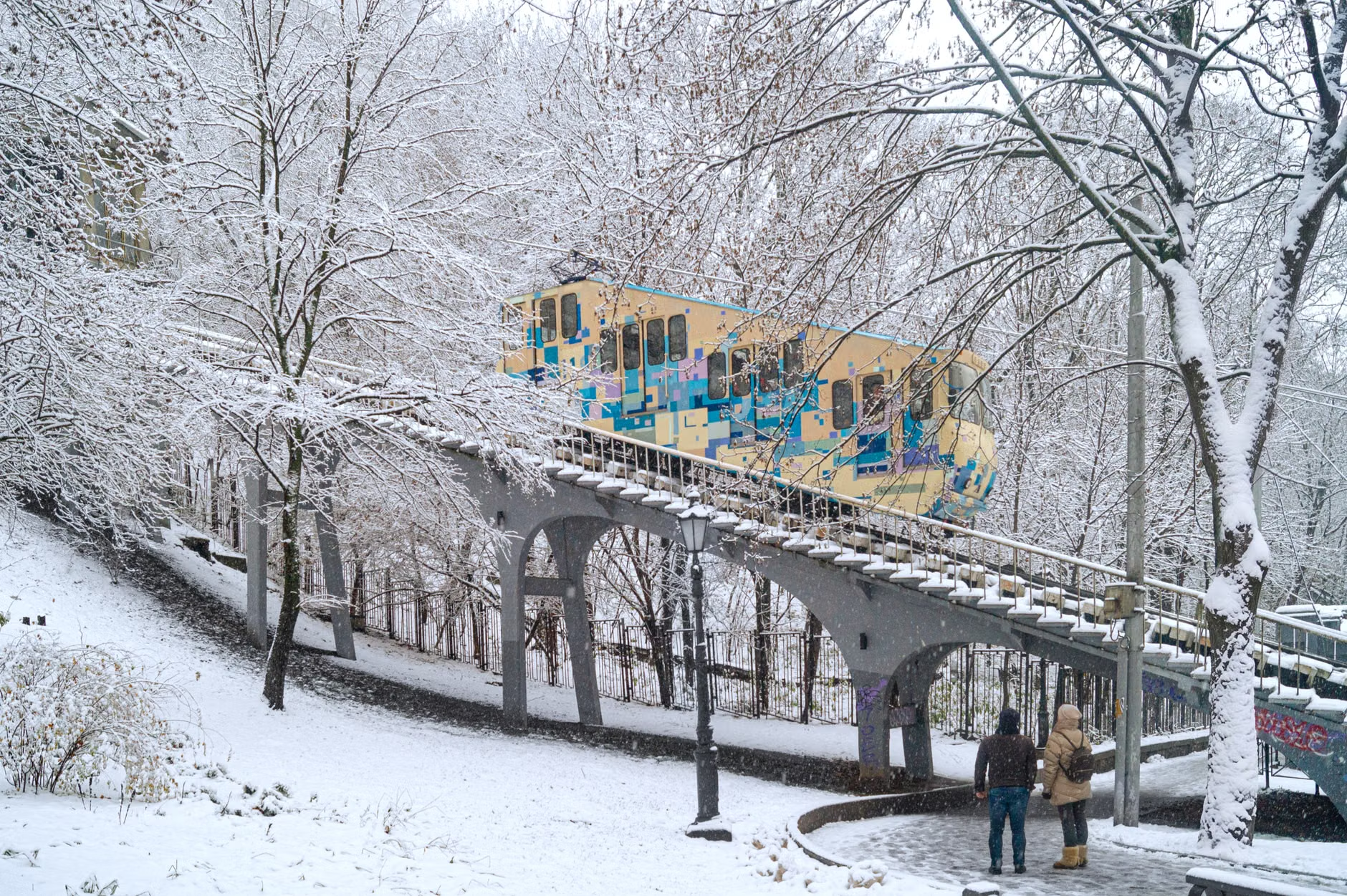
A funicular is a system where two counterbalanced passenger cars are pulled up and down a steep slope by a single cable. Unlike elevators, which move vertically, or trams, which operate on varied horizontal tracks, funiculars are specifically designed for the topography of “hill cities.”
Why they matter for senior travel: They effectively neutralize the “vertical tax” of ancient cities. A climb that might take 20 minutes of strenuous walking—often on slippery cobblestones—can be completed in two minutes of seated transit. This preserves your stamina for the actual sightseeing, rather than exhausting your energy merely reaching the destination.
The Difference Between “Historic” and “Modernized”
It is a common misconception that all funiculars are equally accessible. There is a sharp distinction between a restored historic funicular and a modernized transit system:
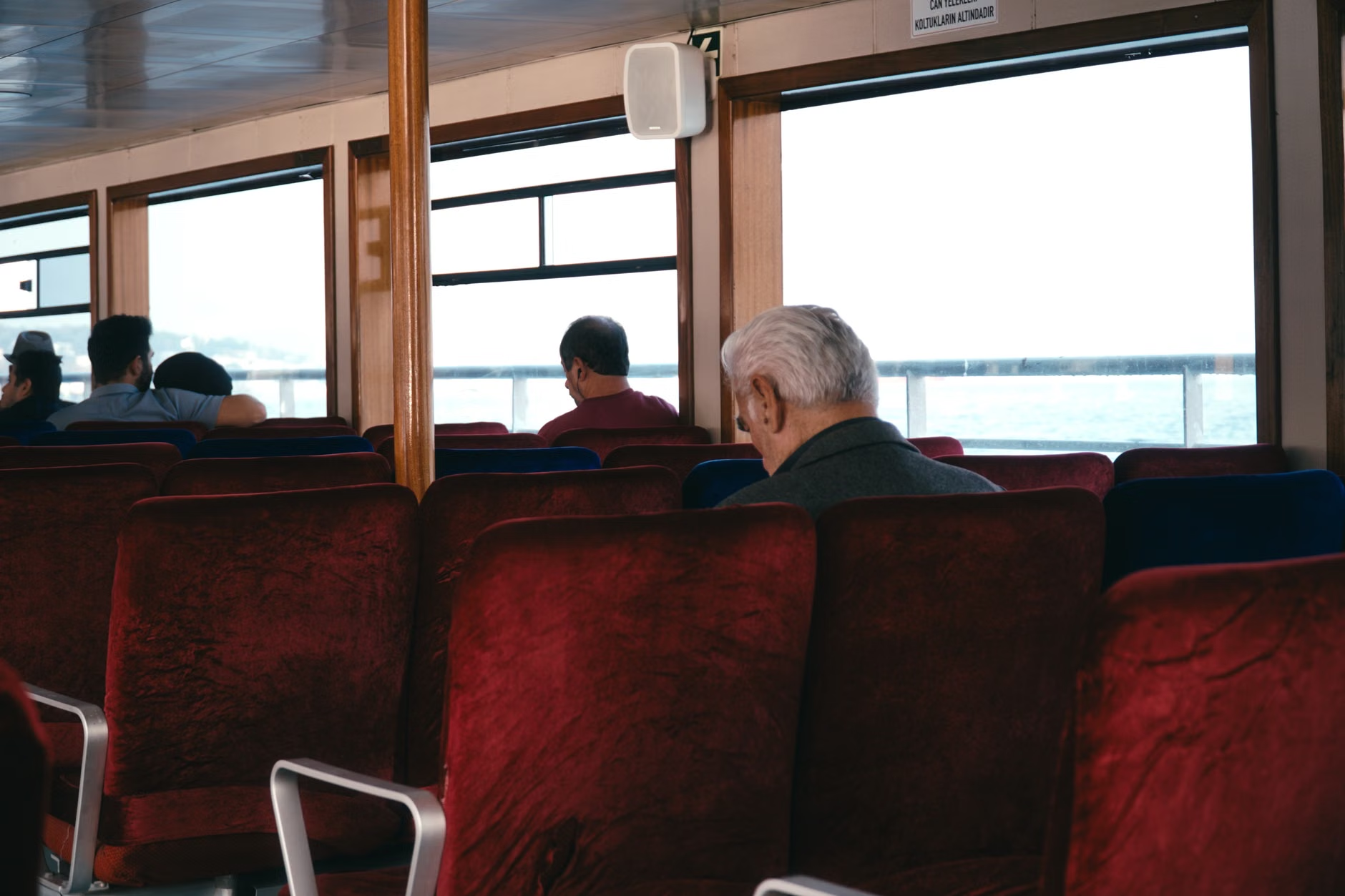
- Historic/Vintage Systems: Often feature small, narrow wooden doors, significant steps at the threshold (the gap between platform and car), and tight, cramped seating. These can be challenging for those with limited mobility or balance issues.
- Modernized/Integrated Systems: These have been retrofitted with level-boarding platforms, automated doors, and dedicated spaces for mobility aids like walkers or canes.
Decision Rule: If you use a walking aid or have balance sensitivities, prioritize funiculars that are part of the city’s official public transit network. These are more likely to meet modern safety and accessibility standards compared to privately operated tourist funiculars that retain their 19th-century structural limitations.
Pre-Travel Assessment: Checking Accessibility Before You Go
Do not rely on travel brochures, which often use the term “accessible” loosely. You need specific data points to determine if a funicular matches your physical requirements.
| Feature to Check | What to Look For | Why It Matters |
|---|---|---|
| Step-free Access | Is there a ramp or elevator to the platform? | Many historic stations are built into cliffs, requiring stairs to even reach the boarding area. |
| Platform-to-Car Gap | Is the boarding area level with the cabin floor? | A 10cm gap can be a significant tripping hazard for those with limited mobility. |
| Peak Hours | Are you traveling at 9:00 AM or 11:00 AM? | Crowded cars increase the risk of being jostled or having to stand for the duration of the trip. |
| Operating Status | Check the transit authority’s live status page. | Funiculars are prone to maintenance closures. Don’t build a day around a closed line. |
Before you depart, visit the official website of the local municipal transport authority (e.g., TMB in Barcelona, Carris in Lisbon). Look for the “Accessibility” or “Accessibility Map” section. If the website is unclear, search for the station name on Google Maps and look at the “Street View” to see if there are visible stairs leading to the entrance.
Strategic Planning: The “Last Mile” Problem
The most overlooked variable in funicular travel is the “last mile”—the distance from your hotel to the funicular station, and from the funicular station to your final destination. A funicular gets you up the hill, but the streets at the top may still be uneven.
The “Buffer Zone” Strategy:
- Map the Grade: Use apps like Google Maps or specialized topographical maps to check the incline of streets surrounding the funicular terminal.
- Public Transit Integration: Often, the top station of a funicular connects to a bus line or a flat pedestrian plaza. Plan your itinerary so that you arrive at the funicular, take it up, and immediately transition to a secondary, low-impact form of transport if the destination is further away.
- The “Return Trip” Factor: If you are tired, the funicular is your best friend. However, ensure you know the last operating time. Many funiculars close earlier than subways or buses.
Safety and Mobility Best Practices
Navigating these systems requires a proactive approach to physical stability. When you are on board, treat the funicular like a moving vehicle—because it is one.
- Seating First: Even if the ride is short, always secure a seat. Funiculars can experience sudden jerks upon starting or stopping.
- Handholds: If you must stand, identify the handrails immediately upon boarding. Do not rely on “leaning” against the walls, which may be padded or slippery.
- The Cane/Walker Protocol: If you use a folding walker, ensure it is locked in the closed position before boarding. If you use a cane, keep it close to your body and avoid placing it in the aisle where it could slide.
Common Mistake: Attempting to board with large luggage. Funiculars, especially in historic districts, are often small. If you are traveling with significant luggage, use a taxi or a funicular-adjacent bus service instead. Maneuvering a suitcase onto a vintage funicular is a recipe for physical strain and frustration.
Accessibility laws vary significantly by region. Understanding these differences can help you set realistic expectations.
European Union (EU)
Under EU regulations, new public transport infrastructure must be accessible. However, “heritage” sites often receive exemptions. In cities like Lisbon, the famous yellow funiculars are historic icons; they are charming but notoriously difficult for those with limited mobility. Conversely, newer funiculars in cities like Lyon or Salzburg are often fully integrated into the modern transit system and are highly accessible.
North America
In the U.S. and Canada, funiculars (such as the Duquesne Incline in Pittsburgh or the Angel’s Flight in Los Angeles) are often managed as historical landmarks or tourist attractions. While they strive for accessibility, they are not always subject to the same strict daily-use transit regulations as urban subways. Always call ahead if you have specific accessibility needs.

Managing Stamina and Recovery
Even with the best planning, a day of sightseeing involves more walking than a typical day at home. The “Funicular-First” itinerary is a specific travel philosophy:
- Early Morning: Use the funicular to reach the highest point of your destination early.
- Midday Decline: Spend the middle of the day in a flat, high-interest area (e.g., a museum or a park).
- Afternoon Return: If you choose to walk back down, be aware that descending steep hills is often harder on the knees than ascending. If your knees are sensitive, take the funicular back down.
Insight: Many travelers forget that the descent is a major trigger for joint pain. If a destination offers a funicular, do not feel compelled to walk down for the “experience.” The preservation of your joint health for the next day of your trip is far more important.
Practical Checklist for Your Trip
Before heading to a funicular station, check this list:
- Does the transit authority website explicitly mention “wheelchair access” or “step-free”?
- Is there a backup plan (bus/taxi) if the funicular is closed for maintenance?
- Do you have your transit pass or the correct local currency for the ticket machine?
- Have you checked the weather? Rain makes metal tracks and historic cobblestones dangerously slippery.
Conclusion
Funiculars are one of the most effective tools for inclusive travel in historic cities. By moving from a “tourist” mindset to a “transit-planner” mindset—verifying accessibility, mapping the last mile, and prioritizing your physical stamina—you can enjoy the architectural wonders of the world without the unnecessary physical toll of steep climbs. The key to a successful trip is not to see everything, but to see what you choose with comfort and confidence.
Frequently Asked Questions (FAQ)
1. Are funiculars safe for people with balance issues?
Generally, yes, provided you board during off-peak hours and secure a seat. If you have significant balance concerns, look for systems that offer level-boarding platforms to avoid the gap between the platform and the car. Always hold onto the provided handrails during the short transit.
2. Should I bring my collapsible cane or walker on a funicular?
Yes. If you use a mobility aid, bring it. However, if you use a walker, ensure it is one that can be easily folded. If your mobility aid is heavy or cumbersome, consider whether the specific funicular station has enough space on the platform to maneuver it safely. When in doubt, contact the local transit authority via their website to ask about specific dimensions.
3. How can I find out if a funicular is currently operational?
Most major cities have an official transit website or a dedicated app (e.g., Citymapper or the local transit authority’s mobile app) that provides real-time updates on line closures. Avoid relying on third-party travel blogs, as they may contain outdated information regarding maintenance schedules or service disruptions.