- Local history clubs provide structured cognitive stimulation by requiring members to research, categorize, and narrate past events, which supports brain health.
- These groups serve as a vital social bridge, connecting long-term residents with newcomers and fostering a sense of belonging through shared regional identity.
- Participation in history clubs often leads to tangible community contributions, such as digital archiving or preservation advocacy, providing a strong sense of purpose.
Engaging in local history is far more than a sentimental journey into the past; it is a dynamic, multi-faceted hobby that promotes cognitive agility and social integration for adults aged 60 to 80. While retirement often brings a shift in daily structure, joining a neighborhood history club offers a unique blend of intellectual rigor and social connection that is difficult to replicate in other leisure activities.
The Cognitive Benefits of Historical Inquiry
Engaging with history requires active mental processing. Unlike passive entertainment, such as watching television, local history clubs demand active participation. When you research a specific building, a historical figure, or a shift in local industry, you are practicing what neurologists call “cognitive reserve.”
What it is: Cognitive reserve is the brain’s ability to improvise and find alternative ways of getting a job done. Researching history—reading archival documents, cross-referencing dates, and interviewing long-time residents—forces the brain to synthesize new information, categorize data, and recall specific details.
Why it matters: As we age, the brain benefits from “novelty and challenge.” If you have lived in your neighborhood for decades, looking at it through a historical lens transforms the mundane into the fascinating. A street you walk down every day for groceries becomes a timeline of architectural evolution or economic change. This shift in perspective keeps the mind alert and adaptable.
In real life: Consider a hypothetical scenario where a club decides to digitize local church records from the 1950s. The members must learn to use scanning software, organize digital files, and verify names against census data. This combines technical learning with historical research, providing a dual-layered cognitive workout.
Practical Steps for Cognitive Engagement
- Start with a specific question: Don’t just “study history.” Ask, “How did the local train station change the population of this town between 1920 and 1950?”
- Document your findings: Keep a journal or a digital folder. The act of writing down observations helps cement memory and creates a legacy project.
- Collaborate on narratives: Presenting a 10-minute talk to your club about a specific historical event is a powerful way to organize your thoughts and practice public speaking.
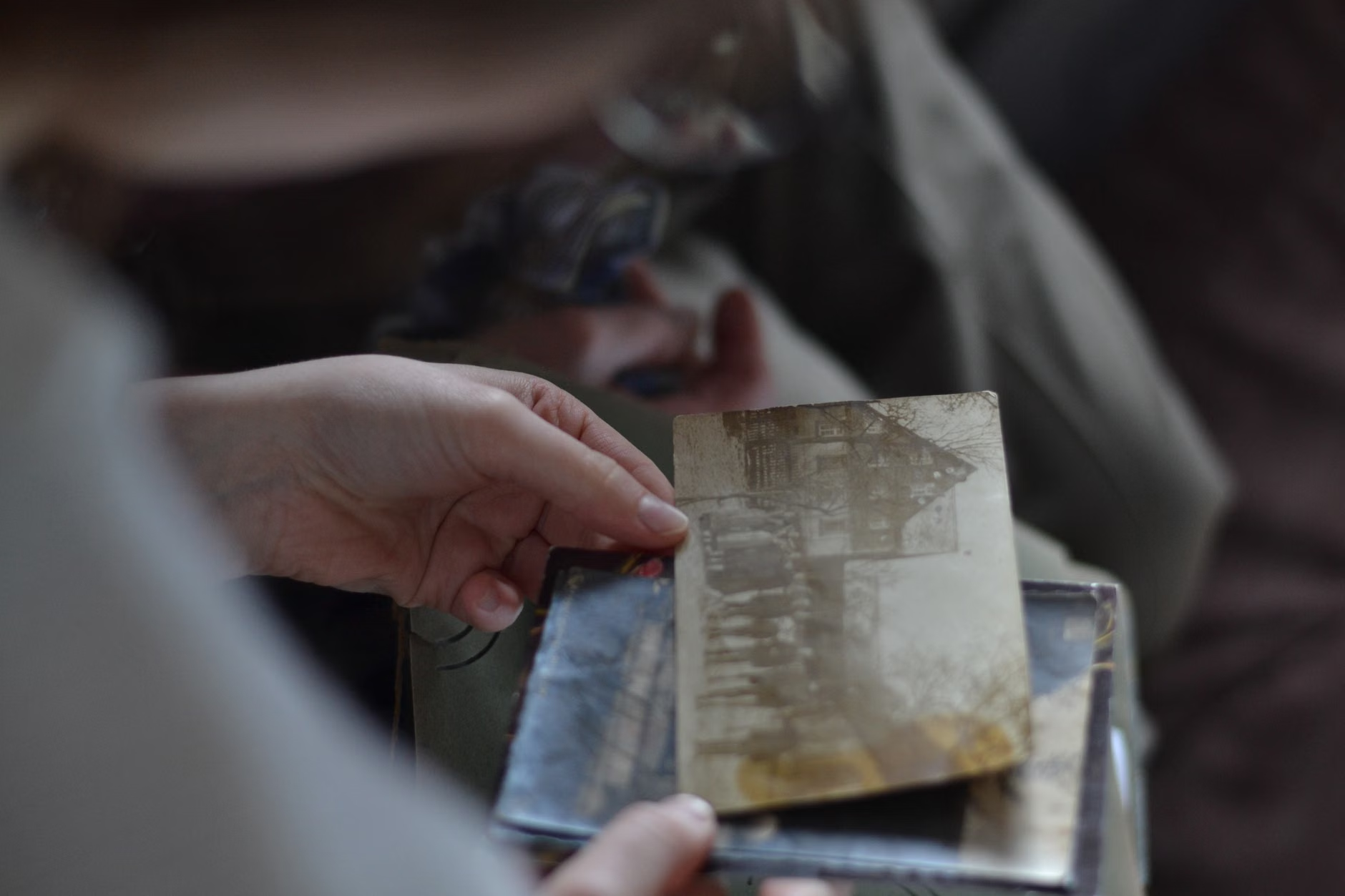
Loneliness and social isolation are risks that many older adults face during transitions like retirement or the loss of a spouse. Local history clubs are uniquely positioned to address this because they provide a “third space”—a location that is neither home nor work where people can gather.
The “Shared Interest” Effect: Unlike general social clubs, history clubs are mission-oriented. The focus is on the object of study, which lowers the barrier to entry for introverts. You don’t need to be a “social butterfly” to join; you simply need to have an interest in the topic. This shared goal creates a natural conversation starter.
Bridging Generations: Many history clubs now partner with local schools or libraries. This allows members aged 60-80 to interact with younger generations, sharing oral histories that textbooks often miss. This intergenerational exchange provides a sense of continuity and value that is essential for emotional well-being.
Comparison of Social Group Types:
| Group Type | Primary Benefit | Social Intensity |
|---|---|---|
| History Club | Intellectual & Community Legacy | Moderate (Task-focused) |
| Fitness/Walking Group | Physical Health | Low to Moderate |
| Book Club | Social & Literary | Moderate to High |
For those who prefer a structured environment where the conversation flows naturally from a common task, the history club is often more sustainable than a purely social group, as the “work” keeps the momentum going even when conversation lulls.

The Practical Side: How to Find and Evaluate a Club
Not all history clubs operate in the same way. Before committing your time, it is important to evaluate the group’s focus and accessibility. You want a group that matches your energy levels and interests.
Checklist for Evaluating a Local History Club
- Accessibility: Does the meeting space have elevators, accessible restrooms, and adequate seating? If they conduct “field trips” to old sites, are these sites mobility-friendly?
- Meeting Frequency: Is it a monthly commitment or a weekly project? Be honest about your schedule to avoid burnout.
- Focus: Is the group purely academic, or do they focus on advocacy and preservation? Decide if you want to write papers or physically help save local landmarks.
- Cost: Many local history clubs are non-profits or community-run. Ask if there are membership fees and if those fees support the preservation of local archives.
An overlooked variable: Look for clubs that have a digital presence or offer hybrid meetings. If you have days when mobility is an issue or the weather is poor, a club that allows you to participate via Zoom or contributes to a community website ensures you remain connected without the stress of travel.
Contributing to Your Community’s Future
One of the most rewarding aspects of a history club is the ability to influence how a community remembers its own story. As an older adult, you are a “living archive.” Your personal memories of the town’s changes over the last 50-60 years are primary source material.
Preservation Advocacy: Often, local history clubs are the first to notice when a historic building is slated for demolition. By joining a club, you gain a platform to voice concerns to local government and planning committees. This is a form of civic engagement that utilizes your life experience to shape the future of your neighborhood.
Digital Archiving: If you are tech-savvy, many clubs are desperate for volunteers to help digitize old records, photos, and maps. This work is crucial for ensuring that local history is preserved for future generations. It is also a way to learn new software skills, keeping your digital literacy sharp.

Addressing Potential Challenges
While the benefits are significant, it is important to navigate potential pitfalls. Some clubs can become “stuck” in a specific way of thinking or may lack diversity in their approach to history. If you find a club that feels exclusionary or overly rigid, do not be afraid to look for another group or even start a smaller, informal “history circle” with friends.
Common Mistake: Trying to do too much. It is easy to get overwhelmed by the amount of history to preserve. Start by focusing on one small project—perhaps the history of your specific street or a local park. Success in small projects creates the motivation to continue.
Safety Note: If your local history club involves site visits to old, potentially hazardous buildings or uneven terrain, always prioritize your safety. Never enter a site that isn’t officially open to the public or that appears structurally unsound. If you have concerns about mobility, stick to archives, libraries, and indoor meeting spaces.
The Long-Term Impact on Well-being
The cumulative effect of participating in a local history club is a stronger sense of “place.” When you understand the layers of history beneath your feet, you feel more rooted in your environment. This sense of belonging is a powerful antidote to the feeling of being “left behind” in a rapidly changing world.
Furthermore, the social bonds formed through these clubs are often deep and long-lasting. You are meeting people who share your values and your curiosity. You are not just filling time; you are building a community.
Final Action Plan:
- Search online: Use search terms like “[Your City/Town] historical society” or “[Your County] local history group.”
- Visit a meeting: Most groups welcome guests. Go to one meeting without the pressure to join immediately.
- Assess the vibe: Do the members seem interested in your input? Is the atmosphere welcoming?
- Start small: Volunteer for a minor task to see how the group operates before making a long-term commitment.
Frequently Asked Questions (FAQ)
1. Do I need a background in history to join a local history club?
Absolutely not. Most local history clubs are composed of enthusiasts, not professional historians. The desire to learn and contribute is far more important than formal academic training. You will find that your life experience and local knowledge are actually more valuable than textbook history.
2. What if I have limited mobility? Can I still participate?
Yes. Many modern history clubs have shifted to hybrid models. Even if in-person meetings are held in older buildings with stairs, you can often contribute by researching online, digitizing documents from home, or participating in Zoom meetings. Always ask the club coordinator about their accessibility accommodations before your first visit.
3. How do I start a history club if there isn’t one in my neighborhood?
Starting a club is simpler than you might think. You can contact your local library or community center to see if they would host a “Local History Interest Meeting.” Advertise it through local community boards or social media. You only need two or three people to start a meaningful conversation about your shared neighborhood history.
For further reading on the importance of community engagement and cognitive health, visit the World Health Organization’s resources on the mental health of older adults and the National Institute on Aging’s guide to cognitive health.