- Lubrication through movement: Seated knee circles stimulate synovial fluid production, which acts as a natural lubricant for aging joints.
- Safety first: Always use a chair with a solid, non-slip base and ensure your spine is supported to prevent secondary strain.
- Consistency over intensity: Small, controlled daily movements are significantly more effective for joint health than infrequent, high-intensity workouts.
Understanding the Mechanics of Joint Lubrication
As we navigate our 60s, 70s, and beyond, the health of our joints becomes a primary factor in maintaining independence. The knee joint, a complex hinge, relies heavily on a substance called synovial fluid. Think of this fluid as the “oil” in a car engine; it reduces friction between cartilage surfaces, allowing for smooth, pain-free movement. However, as we age, the production and viscosity of this fluid can change, often leading to the sensation of stiffness or “creaking” upon waking or after sitting for long periods.
Seated knee circles are a low-impact, highly effective method to encourage the circulation of this fluid. By moving the joint through its range of motion without the burden of full body weight, you encourage the synovial membrane to release more lubricant. This process is not about “fixing” a structural injury; it is about preventive maintenance to ensure that your joints remain functional for your daily activities, such as walking to the store, gardening, or traveling.
The Physiology of “Stiffness”
Many adults report that their knees feel “stiff” in the morning. This is often because the synovial fluid has become more viscous (thicker) during the hours of inactivity while sleeping. When you perform gentle, controlled movements like seated circles, you are physically warming the joint. This warmth decreases the thickness of the fluid, allowing it to coat the articular cartilage more effectively. This is a fundamental concept in geriatric physical therapy: motion is lotion.
Unlike high-impact activities like running or jumping, which can put significant stress on worn cartilage, seated circles allow you to control the arc of motion. If you experience a “clicking” sound, it is often just gas bubbles popping in the synovial fluid or tendons sliding over bony prominences. While usually harmless, it is a signal that your joints appreciate a gentle warm-up before you engage in more vigorous activity.
Step-by-Step: How to Perform Seated Knee Circles
To maximize the benefits of this exercise, technique and environment are paramount. Follow these steps to ensure you are performing the movement safely.
| Step | Action | Purpose |
|---|---|---|
| 1. Positioning | Sit on a firm chair with feet flat on the floor. | Provides a stable base and prevents hip misalignment. |
| 2. Engagement | Lift one foot slightly off the ground by extending your knee. | Isolates the knee joint from the floor surface. |
| 3. The Circle | Rotate your lower leg in a slow, controlled circular motion. | Distributes synovial fluid evenly across the joint. |
| 4. Repetition | Perform 10 circles clockwise, then 10 counter-clockwise. | Ensures balanced engagement of the supporting muscles. |
Common Mistake: Many people try to make the circles as large as possible. This is unnecessary and can strain the ligaments if the movement is jerky. Focus on small, controlled, and fluid circles. Imagine you are drawing a circle the size of a dinner plate with your big toe.
Integrating Mobility into Your Daily Routine
Consistency is the secret to seeing results. Integrating this into your morning routine—perhaps while waiting for the kettle to boil or sitting at your desk—ensures it becomes a habit rather than a chore. If you find yourself sitting for extended periods, such as during a long flight or a train journey, performing these circles every 60 minutes can significantly reduce post-travel joint stiffness.
When to Consult a Professional
While seated knee circles are generally safe, they are not a substitute for medical intervention if you have underlying conditions. You should seek advice from a physical therapist or a general practitioner if:
- You experience sharp, shooting pain during the movement.
- There is visible, persistent swelling around the knee joint.
- Your knee “gives way” or locks, making it impossible to complete the movement.
- You have recently undergone knee surgery (always follow your surgeon’s specific rehabilitation protocol).
The Role of Environment in Preventive Care
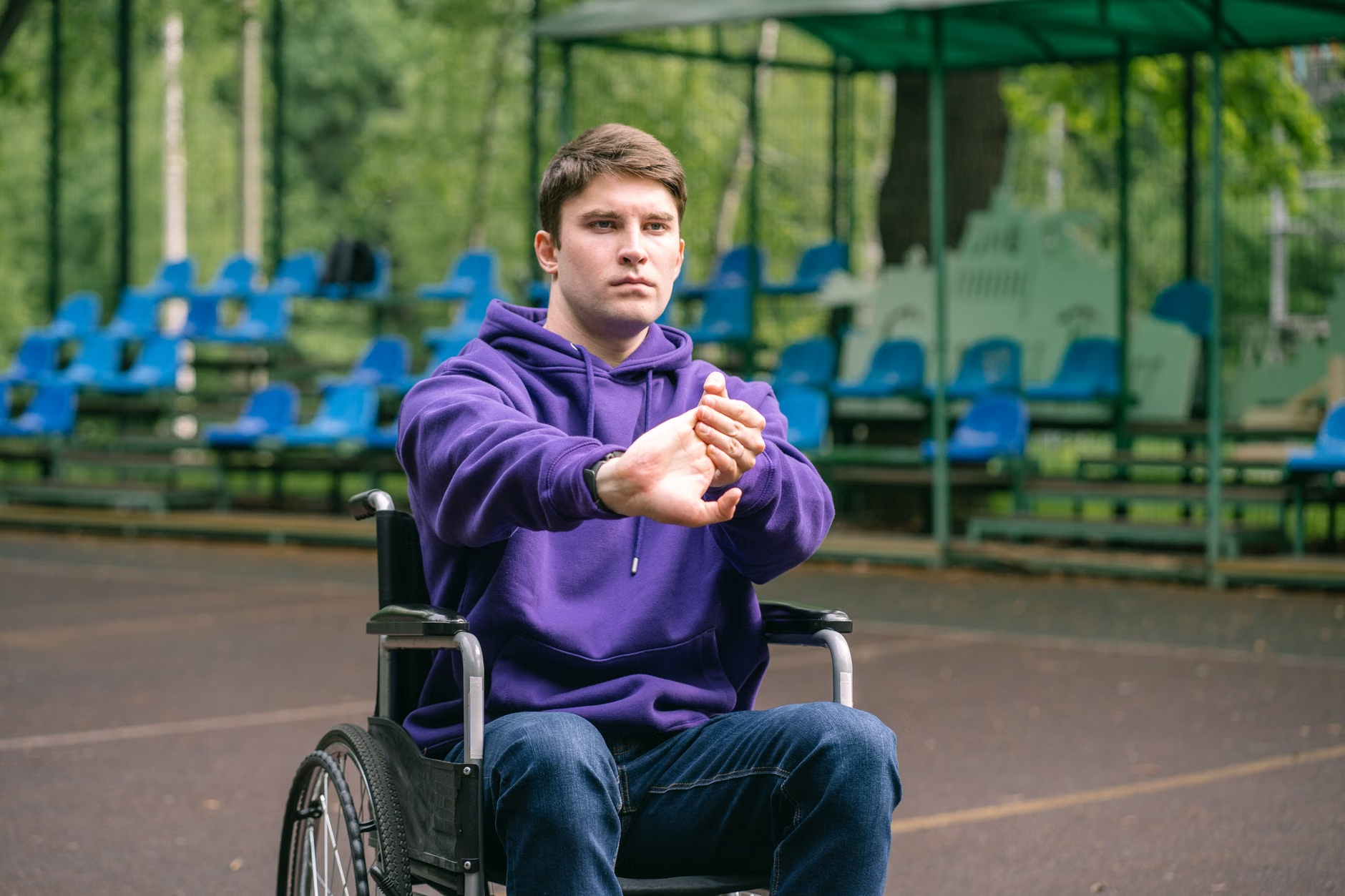
The chair you choose matters. A soft sofa or a deep armchair is unsuitable for these exercises because it lacks the structural support required to maintain proper spinal alignment. When you sit on a surface that is too soft, your pelvis may tilt, which alters the angle of your knee and reduces the effectiveness of the exercise. Use a dining chair or a firm office chair. If your feet do not comfortably reach the floor, place a folded towel or a small stool under them to ensure your hips and knees are at a 90-degree angle.
Beyond the Knees: A Holistic Approach
While we focus on the knees, it is important to remember that the body functions as a kinetic chain. Tightness in the hips or ankles can place additional, unnecessary stress on the knee. As you progress with your seated knee circles, consider adding gentle ankle pumps (flexing and pointing the toes) and seated hip marches. These movements work in tandem to keep the entire lower limb lubricated and mobile.
Furthermore, hydration plays a silent but critical role. The synovial fluid is largely water-based. Dehydration can lead to a decrease in the volume of this fluid, making your joints feel “dry.” Ensure you are drinking adequate water throughout the day, especially if you are physically active or living in a dry climate.
Practical Decision Criteria for Daily Exercise
How do you know if you are doing enough? Use the following decision matrix to evaluate your daily routine:
- The “Morning Test”: If you feel significant stiffness for more than 30 minutes after waking, your daily movement routine may need to be increased or adjusted.
- The “Pain Threshold”: If the exercise causes pain that lingers for more than an hour after you finish, you are likely overdoing the intensity or range of motion. Reduce the number of repetitions.
- The “Travel Rule”: If you are planning a trip involving long hours of sitting, prioritize your mobility exercises during transit to prevent the “stiffness cycle” from ruining your arrival.
Addressing Common Misconceptions
There is a prevailing myth that “exercise wears out the joints.” In reality, the opposite is true for most people. The cartilage in our joints is avascular, meaning it has no direct blood supply. It receives nutrients through the compression and decompression of movement. If you stop moving, you essentially “starve” the cartilage of the nutrients it needs to maintain itself. Seated knee circles provide the necessary compression and decompression without the risks associated with high-impact activities like jogging on concrete.
Conclusion
Maintaining joint health in your 60s, 70s, and beyond is about small, intentional actions. Seated knee circles are a low-cost, high-reward habit that requires nothing more than a stable chair and a few minutes of your time. By prioritizing daily lubrication of your joints, you are investing in your long-term mobility and independence. Start today by performing a few gentle rotations, and observe how your body responds over the coming weeks.
Frequently Asked Questions
1. Can I do these exercises if I have arthritis?
Yes, in many cases, gentle movement is recommended for arthritis to keep the joints lubricated. However, always consult your physician to ensure the specific type of movement is appropriate for your individual condition.
2. Does the time of day matter?
The best time is whenever you can be consistent. Many find that doing them first thing in the morning helps reduce “start-up” stiffness, while others prefer doing them before bed to wind down.
3. Are there any tools I should use?
No special equipment is needed. In fact, using resistance bands or weights is generally discouraged for this specific exercise, as the goal is joint lubrication rather than muscle hypertrophy. Keep it simple and focused on the movement.
Official guidance on physical activity for older adults can be found through the World Health Organization (WHO) guidelines on physical activity and sedentary behaviour. Always tailor these general recommendations to your personal health history and consult with your medical provider for specific concerns.