- Social Integration: Seed-swapping provides a low-pressure environment for intergenerational interaction, reducing isolation and building local networks.
- Cognitive and Physical Health: Gardening and seed saving encourage regular light physical activity and provide cognitive stimulation through learning about plant biology and local climate adaptation.
- Practical Sustainability: Participating in local seed libraries helps preserve heirloom plant varieties that are better suited to your specific regional microclimate than mass-produced alternatives.
Seed-swapping is more than a horticultural hobby; it is a powerful social practice that builds community resilience and improves individual wellbeing. For adults aged 60 to 80, this activity offers a unique intersection of physical activity, cognitive engagement, and social connection. By exchanging seeds, you are not just trading plants—you are exchanging knowledge, history, and local adaptation strategies.
The Evolution of Seed-Swapping as a Social Hub
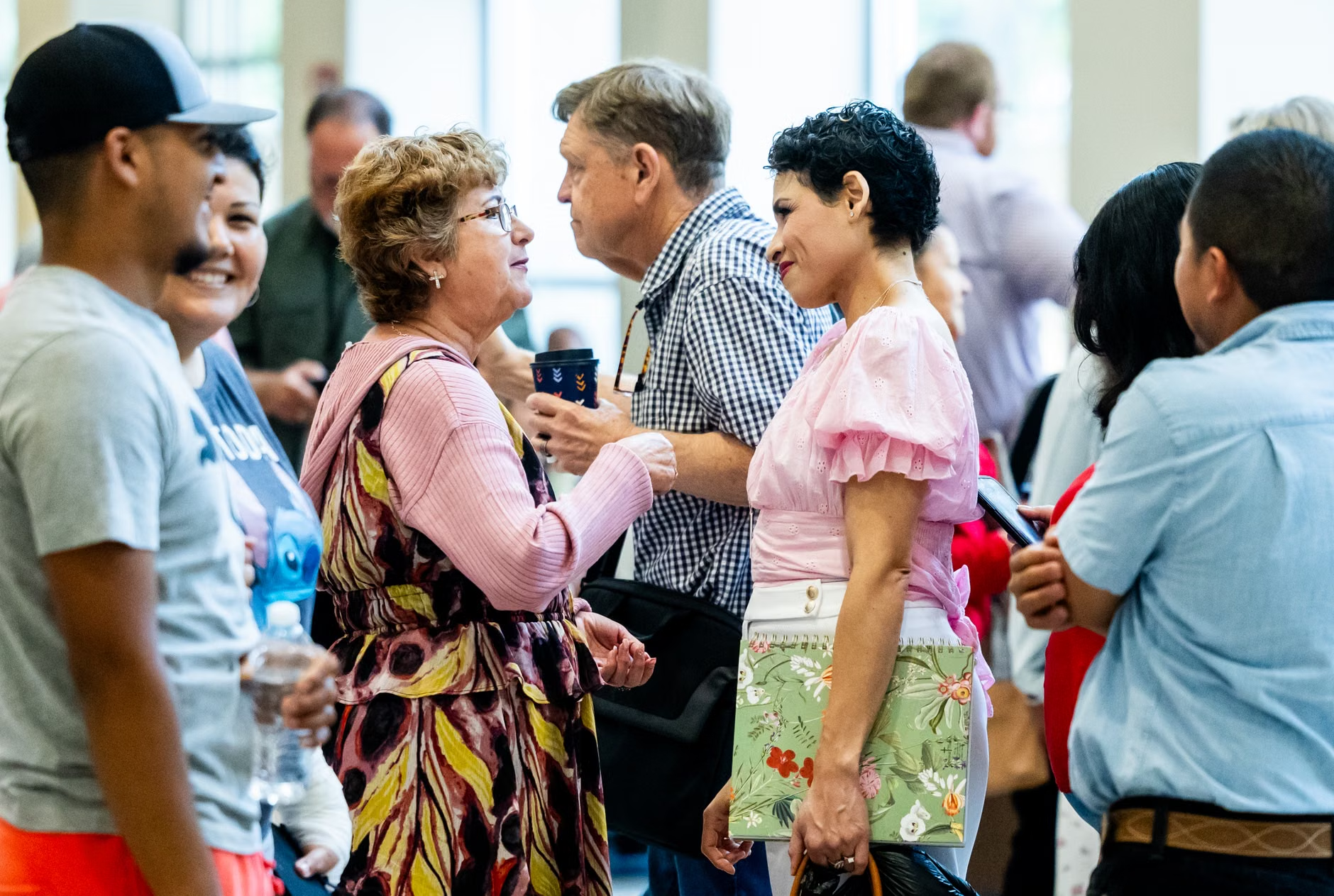
Historically, seed saving was a necessity for survival. Today, it has transformed into a vibrant hobby that serves as a cornerstone for community building. When you attend a seed-swap event, you are entering a space where the barriers to conversation are naturally lowered. Unlike a busy marketplace, a seed-swap event is centered on shared values: stewardship of the land and the joy of watching something grow.
For the older adult, these events provide a structured social opportunity that feels meaningful rather than performative. You are there to share your expertise—perhaps you have successfully grown a specific variety of tomato for thirty years, or you have mastered the art of drying beans. This transfer of knowledge between generations is a vital component of social health. It validates your years of experience while allowing you to learn new methods from younger gardeners who may be experimenting with vertical gardening or hydroponics.
Cognitive and Physical Benefits: Why Gardening Matters
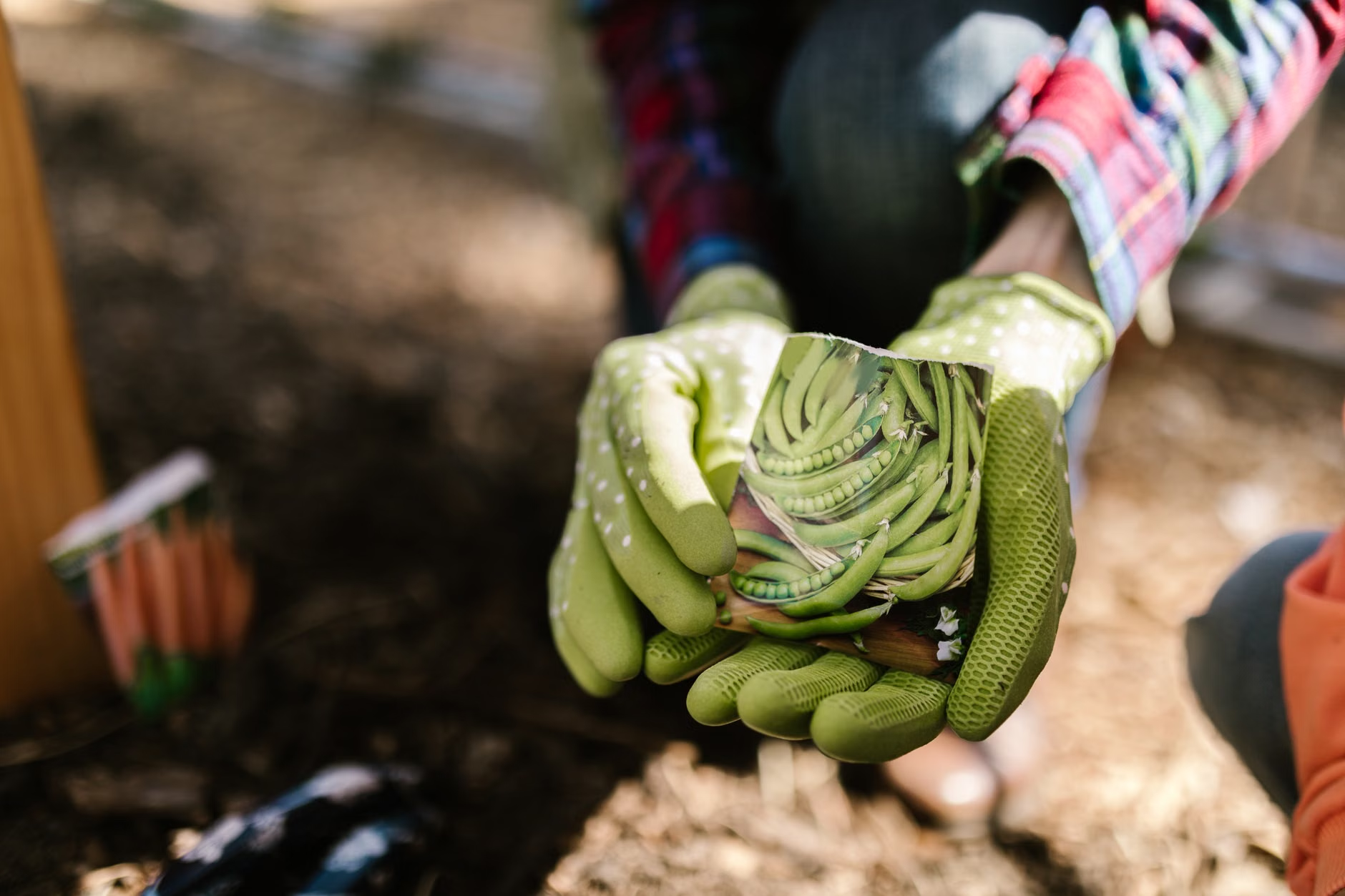
The act of gardening, coupled with the organizational task of seed saving, provides a comprehensive workout for both the body and the brain. Physical activity is often framed as “exercise,” but gardening offers “functional movement.” This includes squatting, reaching, bending, and fine motor work such as sorting tiny seeds, which helps maintain dexterity in the fingers and wrists.
The Cognitive Load of Seed Saving
Seed saving requires attention to detail. You must track harvest dates, understand the cross-pollination risks of different plant families, and master the drying and storage processes to ensure viability. This is a form of lifelong learning. Research suggests that engaging in complex, novel tasks—such as learning the specific pollination requirements of cucurbits versus nightshades—is an effective way to maintain cognitive health. It is not just about growing a vegetable; it is about managing a biological system.
Managing Physical Stamina and Safety
While gardening is rewarding, it must be approached with an awareness of your physical limits. If you are participating in a community garden or hosting a swap, consider these safety measures:
- Ergonomics: Use raised beds or vertical planters if bending to the ground causes back or knee strain.
- Hydration and Pacing: Always carry water and schedule gardening activities for the cooler parts of the day.
- Tool Selection: Opt for tools with ergonomic, non-slip grips and extended handles to reduce the need for reaching or heavy lifting.
How to Start or Join a Local Seed-Swap Network
You do not need an acre of land to participate in the seed-swapping community. Many people start by joining local “Seed Libraries” or community garden groups. These organizations are often hosted by public libraries, community centers, or botanical gardens.
Step-by-Step Guide to Your First Swap
- Inventory Your Seeds: Start with what you have. If you have saved seeds from last year’s harvest, ensure they are thoroughly dried. If you are buying seeds, buy high-quality, open-pollinated varieties.
- Prepare Your Labels: A seed packet is useless without information. Clearly mark the common name, the variety (e.g., “Roma Tomato”), the harvest year, and any specific growing tips you discovered.
- Find a Local Group: Use search terms like “[Your City] Seed Library” or “[Your County] Community Gardening Group.” If no physical group exists, check social media community pages or notice boards at local garden centers.
- The Exchange: Approach the swap with an open mind. Don’t worry if your seeds aren’t “professional.” The goal is the exchange, not the perfection of the product.
Understanding the Environmental and Economic Impact
There is a hidden, deeper benefit to seed-swapping: the preservation of biodiversity. Modern commercial seeds are often bred for uniformity, shipping durability, and appearance. In contrast, heirloom seeds passed down through swaps are often selected for flavor, nutritional density, and, most importantly, climate resilience.
When you swap seeds with a neighbor, you are exchanging genetic material that has already proven it can thrive in your local soil and weather patterns. This is far more effective than buying a generic packet of seeds shipped from a different climate zone. By keeping these varieties in circulation, you are contributing to a local “living library” of plants that are uniquely adapted to your region.
Comparison: Commercial Seeds vs. Swapped Heirloom Seeds
| Feature | Commercial Seeds | Swapped Heirloom Seeds |
|---|---|---|
| Adaptability | General, designed for broad regions. | High, adapted to local microclimates. |
| Cost | Recurring purchase required. | Typically free or minimal cost. |
| Biodiversity | Promotes monoculture. | Promotes variety and resilience. |
| Social Value | Transactional/Individual. | Relational/Community-focused. |
As the table above illustrates, while commercial seeds are convenient for a quick start, swapped seeds offer a sustainable long-term strategy for both your garden and your social life. For older adults on a fixed income, this also represents a smart way to manage gardening costs, as you can continuously produce your own supply for future seasons.
While the benefits are significant, it is important to be aware of potential pitfalls to ensure a positive experience.
Common Misconceptions and Mistakes
- Assumption of “Easy” Plants: Not all seeds are easy to save. Some, like squashes, cross-pollinate easily, meaning the seeds you save might not produce the same fruit next year. Start with “true-to-type” crops like beans, peas, and lettuce, which are much more straightforward for beginners.
- Over-committing: Start small. You do not need to manage a large collection of seeds. Focus on one or two types of plants you enjoy growing.
- Storage Issues: Seeds are living organisms. If they are stored in a humid environment, they will mold. Always store them in a cool, dry, and dark place. Using silica gel packets in your storage container is a simple, low-cost trick to keep moisture levels low.
Practical Steps for Long-Term Engagement
If you find that seed-swapping brings you joy, consider how you can deepen your involvement. This might mean volunteering to organize a small event at your local community center or teaching a short, informal session on how to harvest seeds from common vegetables. These roles provide a sense of purpose and allow you to leverage your life experience in a way that benefits the wider community.
Remember that the “social” in social benefits is about consistency. Attending one event is a start, but becoming a regular face in your local gardening circle is where the true sense of belonging is fostered. It creates a routine, provides a reason to get out of the house, and connects you with a diverse group of people you might otherwise never meet.
Checklist for Successful Seed Storage
- Dryness: Ensure seeds are bone-dry before storing. If they bend instead of snap, they need more drying time.
- Container Choice: Glass jars with rubber gaskets or simple paper envelopes are best. Avoid plastic bags, which can trap moisture.
- Labeling: Include the plant name, date of harvest, and any notes on the plant’s performance (e.g., “high yield,” “pest resistant”).
- Environment: Keep in a dark cupboard. Avoid the kitchen or bathroom where humidity levels fluctuate.
Conclusion: Cultivating Your Future
Seed-swapping is a bridge between the past and the future. It allows you to preserve the heritage of your local food system while creating meaningful, present-day connections with your neighbors. Whether you are an experienced gardener or someone looking for a new hobby to fill your leisure time, the community seed-swap offers a low-barrier, high-reward path to better health and a stronger community.
By taking that first step—perhaps by simply setting aside a few seeds from your next harvest or visiting your local library to see if they host a seed library—you are participating in a global movement of sustainability and friendship. The seeds you share today will grow into the gardens and the relationships of tomorrow.
Frequently Asked Questions
1. Is it safe to grow seeds I got from a stranger at a swap?
Generally, yes. Most community seed-swaps have a culture of honesty and transparency. However, it is always wise to ask the donor about the plant’s history and whether they used any chemicals or pesticides. If you are concerned about potential plant diseases, start by planting a small test batch in a separate container to observe how they grow before integrating them into your main garden.
2. Do I need to be an expert gardener to join a seed-swap group?
Not at all. In fact, many groups thrive because of the diversity of experience. Beginners are often welcomed with open arms because they bring enthusiasm and are eager to learn from more experienced members. You will find that most gardeners love to share their “failures” as much as their successes, as that is how everyone learns.
3. What if I have limited mobility? Can I still participate?
Absolutely. Seed-swapping is largely an indoor or tabletop activity. You do not need to be physically active in a garden to participate. You can focus on the organizational side—sorting, labeling, and packaging seeds—which can be done from the comfort of your home. You can also advocate for events to be held in accessible venues, such as local community centers with ramps, elevators, and plenty of seating, ensuring that everyone can participate regardless of their physical capabilities.
For further information on starting a community seed library, you may consult resources from organizations like the Seed Savers Exchange, which provides comprehensive guides on seed saving and community organization.