- Seated leg lifts effectively target the quadriceps and hip flexors, providing a low-impact method to build the strength necessary for standing, walking, and fall prevention.
- Correct form—specifically maintaining a neutral spine and controlled movement—is more important than the number of repetitions or the height of the lift.
- Consistency over intensity is the primary driver for progress; performing these movements daily or every other day yields better stability results than sporadic, high-intensity sessions.
Lower body stability is the cornerstone of independent living. For adults aged 60 to 80, the ability to rise from a chair, navigate stairs, and maintain balance while walking depends heavily on the strength of the quadriceps (the muscles at the front of the thigh) and the hip flexors. Seated leg lifts offer a safe, accessible, and highly effective way to condition these muscle groups without the joint stress often associated with standing exercises.
Understanding the Mechanics of Seated Leg Lifts
A seated leg lift is a functional movement that isolates the muscles responsible for knee extension and hip stabilization. Unlike standing exercises, which require significant balance and core engagement to prevent falling, the seated position provides a stable base. This allows you to focus entirely on the quality of the contraction in your target muscles.
Why it matters: As we age, the fibers in our quadriceps can undergo a process known as sarcopenia, or age-related muscle mass loss. Weak quadriceps are a primary contributor to “chair-rise difficulty,” which is a clinical indicator often used by physical therapists to assess fall risk. By performing seated leg lifts, you are essentially training your body to perform the final phase of standing up—the moment when your knees lock into a stable, upright position.
The Anatomy of the Movement
When you lift your leg while seated, you are engaging the rectus femoris, a major part of the quadriceps, and the iliopsoas, the primary hip flexor. If you perform the movement with a flexed foot (toes pulled toward your shin), you also recruit the muscles of the lower leg, which aids in ankle stability.
Step-by-Step Execution for Maximum Safety and Efficacy
To derive the most benefit from this exercise, you must prioritize alignment. Poor posture during the movement can shift the strain to your lower back, defeating the purpose of the exercise.
- Chair Selection: Choose a chair that is firm and stable. Avoid sofas or deep armchairs that cause your hips to sink lower than your knees, as this puts undue pressure on the spine.
- Posture Check: Sit toward the front edge of the seat. Plant both feet firmly on the floor, hip-width apart. Sit tall, imagining a string pulling the crown of your head toward the ceiling. Your shoulders should be back and down, away from your ears.
- The Lift: Slowly extend one leg straight out in front of you. Keep your thigh resting against the chair for the first half of the movement, then fully extend the knee until the leg is parallel to the floor.
- The Hold: Hold the position for 2–3 seconds. This isometric contraction is where the real strengthening occurs.
- The Lowering: Lower the leg back to the starting position with control. Do not let the leg “drop” or swing; the lowering phase is just as important for muscle engagement as the lifting phase.
Common Mistake: Many individuals lean backward to compensate for weak hip flexors. If you find yourself leaning back, reduce the range of motion. Lift the leg only as high as you can while keeping your torso perfectly vertical. If you cannot keep your back straight, perform the lift with a slightly bent knee until your strength improves.
Progression and Scaling: How to Advance Safely
Once you can comfortably perform 15 repetitions on each leg without fatigue or discomfort, you may look to increase the challenge. However, it is vital to remember that “more” is not always “better.” Stability is built through controlled tension, not through exhaustion.
Comparison of Progression Methods
| Method | Best For | Key Consideration |
|---|---|---|
| Isometric Holds | Improving endurance | Increase the hold time from 3 seconds to 10 seconds. |
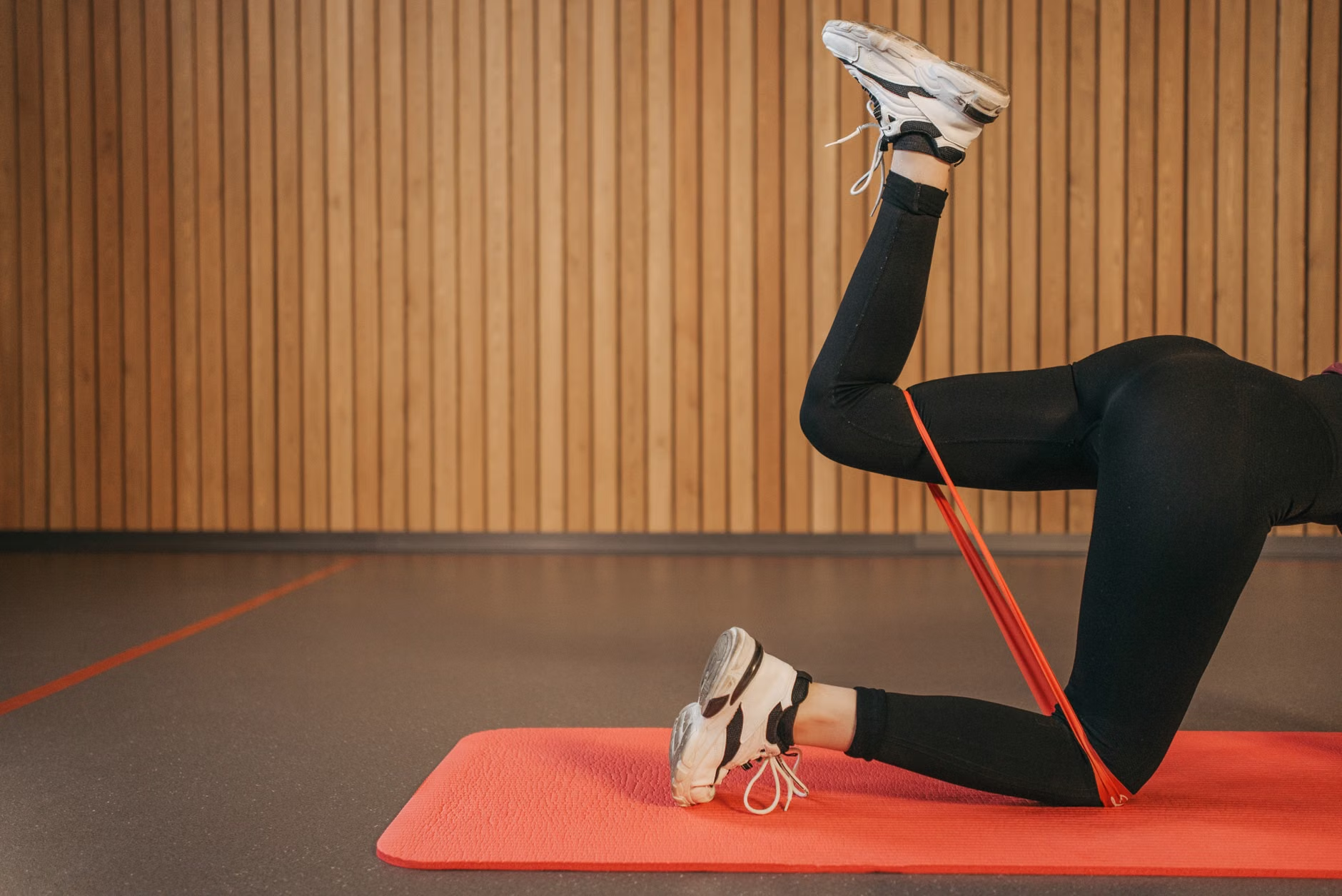
| Resistance Bands | Building muscle mass | Use a light-resistance loop around the ankles; ensure the band does not snap the leg back. |
| Ankle Weights | Maximum strength | Start with 0.5kg (1lb) weights. Do not exceed 2kg without professional guidance. |
Which option is right for you? If you are recovering from a minor injury or have joint sensitivity, stick to Isometric Holds. The lack of external equipment reduces the risk of over-straining a joint. If you are generally healthy and looking to improve your functional strength for hiking or long walks, Resistance Bands offer a safer, more dynamic challenge than rigid ankle weights.
Hidden Variables in Lower Body Stability
While leg lifts are excellent, they are not a “cure-all.” Your stability is influenced by factors that are often overlooked. For instance, the health of your feet and the quality of your footwear play a massive role. If your feet are improperly supported, your body will subconsciously adjust its gait, which can lead to hip and lower back misalignment. Even when performing seated exercises, wearing supportive shoes is recommended to maintain proper foot mechanics.
Another overlooked variable is hydration and protein intake. Muscles cannot recover or grow without adequate hydration and sufficient protein. For older adults, the body becomes less efficient at processing protein. Aiming for high-quality protein sources—such as lean poultry, fish, beans, or lentils—at each meal is a necessary complement to any exercise routine.
Integrating Leg Lifts into Your Daily Routine
The most successful routine is one that feels like a natural part of your day. You do not need a gym setting. You can perform these lifts while waiting for the kettle to boil, watching the news, or sitting at your desk.
A Practical Daily Schedule
- Morning (Awakening): Perform 10 slow lifts per leg while sitting on the edge of your bed to “wake up” your hip flexors before you stand.
- Mid-day (Maintenance): Three sets of 10 lifts during a television commercial break.
- Evening (Cool-down): Gentle stretching of the hamstrings and quadriceps to maintain flexibility.
If you experience sharp pain during any of these movements, stop immediately. Discomfort that feels like a dull ache in the muscle is normal after exercise, but sharp, shooting pain in the joint or spine is a signal to stop and consult a physical therapist or your primary care physician.
When to Consult a Professional
Preventive health is about knowing when to seek expert guidance. You should schedule an appointment with a physical therapist if you notice:
- A persistent, uneven gait or “shuffling” when you walk.
- Any loss of balance that results in a “near-fall.”
- Pain that radiates down the leg, which could indicate a nerve issue rather than a muscle weakness.
When you see a professional, bring a list of your daily activities. Ask them specifically: “Are these leg lifts the most efficient way to improve my specific stability concerns, or are there other movements that would better address my unique anatomy?”
The Role of Consistency in Long-Term Mobility
Consistency is the primary driver of success. Research into geriatric physical therapy consistently shows that low-intensity, high-frequency exercise programs are more effective at preventing falls than high-intensity, low-frequency programs. By choosing to perform seated leg lifts regularly, you are investing in your long-term independence. You are not just building muscle; you are maintaining the neural pathways that allow your brain to communicate effectively with your legs.
As you progress, keep a simple log. Note not just the number of repetitions, but how your body felt during the movement. Did you feel steady? Was the movement smooth? This subjective data is invaluable when discussing your health with a doctor or physical therapist.
Ultimately, stability is a dynamic state. It is not something you achieve once and keep forever. It requires ongoing attention, just like your nutrition or your social life. By incorporating these simple, seated movements into your day, you provide your body with the foundation it needs to continue exploring, traveling, and enjoying an active life well into your later years.
Frequently Asked Questions
1. Can I do these exercises if I have knee arthritis?
Yes, but with caution. Seated leg lifts are often recommended for those with arthritis because they strengthen the muscles around the joint without the impact of standing. However, ensure you do not “lock” your knee at the top of the lift. Keep a very slight, soft bend in the knee to protect the joint. If you experience inflammation, scale back the repetitions and consult your doctor.
2. How long will it take to see improvements in my stability?
Most individuals notice a difference in their ability to rise from a chair within 4 to 6 weeks of consistent, daily practice. Stability is a neuromuscular skill, meaning your brain is learning to recruit muscle fibers more efficiently. Patience and consistency are key.
3. Are there specific sources I should follow for further guidance on senior mobility?
For evidence-based information on physical activity for older adults, the World Health Organization’s guidelines on physical activity provide an excellent framework for understanding the types and amounts of activity necessary for health. Additionally, local government health services, such as the National Institute on Aging (USA), offer extensive, free resources on safe exercise techniques for older adults.
Disclaimer: This article is for informational purposes only and does not constitute medical advice. Always consult with a healthcare professional before beginning any new exercise program, especially if you have pre-existing health conditions or mobility limitations.