- Prioritize “Micro-Planning”: Don’t try to see the whole garden; focus on specific zones to conserve energy and avoid physical fatigue.
- Leverage Accessibility Tools: Most major gardens offer shuttle services or mobility rentals; confirm these at least 48 hours in advance to ensure availability.
- Strategic Pacing: Use the “20-minute rule”—rest before you feel tired to maintain stamina throughout your visit.
Introduction: The Joy of Botanical Exploration
Botanical gardens offer a unique blend of physical activity, sensory stimulation, and mental relaxation. For many seniors, these spaces provide a perfect environment for light exercise and connection with nature. However, the sheer size and complexity of world-class botanical gardens can be daunting. Navigating gravel paths, steep inclines, and sprawling layouts requires more than just a pair of comfortable shoes; it requires a strategic approach to mobility and time management.
This guide provides a comprehensive framework for planning a visit to a botanical garden, ensuring that your experience remains enjoyable, safe, and stress-free. By understanding how to evaluate accessibility features and manage your physical energy, you can focus on the beauty of the flora rather than the logistics of the terrain.
Assessing Garden Accessibility Before You Depart
The most common mistake visitors make is assuming that all public gardens are uniformly accessible. In reality, garden layouts vary significantly based on their age, terrain, and management philosophy. Before you commit to a visit, you must perform a “feasibility audit” of the site.
1. Evaluating Terrain and Path Composition
Not all paths are created equal. A “paved” path in one garden might be smooth asphalt, while in another, it could be loose, uneven gravel that is difficult for canes, walkers, or wheelchairs to traverse. Look for the following indicators on the garden’s official website:
- Topography Maps: Many gardens provide a topographical overlay. If you see contour lines packed closely together, expect steep inclines that may tax your cardiovascular health or knee joints.
- Surface Descriptions: Look for terms like “ADA-compliant,” “wheelchair accessible,” or “firm, level surface.” If a garden only mentions “woodland trails,” assume these are unpaved and potentially hazardous for those with balance issues.
2. The Importance of Mobility Rental Services
Many large-scale botanical gardens, such as the Royal Botanic Gardens, Kew (UK) or the New York Botanical Garden (USA), offer mobility aids. However, these are rarely available on a “first-come, first-served” basis during peak seasons.
Actionable Step: Call the visitor services department three days before your visit. Ask specifically: “Are there manual wheelchairs or electric scooters available for rent, and can I reserve one in advance?” Also, confirm the pickup location. Some gardens require you to pick up equipment at a gate that is not the main entrance.
| Feature | What to Look For | Why It Matters |
|---|---|---|
| Path Surface | Concrete, asphalt, or packed stone | Stability for canes and walkers. |
| Incline Grade | Less than 5% slope | Prevents excessive exertion and strain. |
| Rest Stations | Benches every 50-100 meters | Critical for managing heart rate and stamina. |
| Shuttle Service | Internal tram or golf cart | Allows you to bypass long, flat distances. |
Strategic Pacing: Managing Your Energy Budget
Think of your physical energy as a finite daily budget. When you arrive at a massive botanical garden, it is tempting to see “everything.” This is the primary cause of post-visit exhaustion and joint pain. Instead, adopt a “Zone-Based Strategy.”
The Zone-Based Strategy
Most gardens are divided into distinct thematic sections (e.g., Rose Garden, Tropical Conservatory, Japanese Garden). Before you enter, pick two primary zones you want to see. Everything else should be considered an “optional bonus.”
By limiting your scope, you reduce the pressure to rush. If you arrive at your first zone and realize you are already fatigued, you have the flexibility to skip the second zone and head straight to the cafe or exit. This prevents the “sunk cost fallacy” where visitors force themselves to keep walking simply because they paid for a ticket.
The 20-Minute Rule
Physical fatigue often sneaks up on us. By the time you feel the need to sit, your muscles are already over-extended. The 20-minute rule suggests that you should pause for a short rest every 20 minutes of walking, regardless of how you feel. Use these moments to hydrate and observe your surroundings. This proactive approach keeps your heart rate stable and prevents the buildup of lactic acid in your legs.

Even with perfect planning, botanical gardens present unique challenges. Understanding how to handle these in real-time is essential for maintaining your independence and safety.
Dealing with Weather and Humidity
Many botanical gardens feature glass-enclosed conservatories. These structures are often kept at tropical temperatures and high humidity to support exotic plants. This environment can be physically demanding for seniors, particularly those with respiratory conditions or those sensitive to heat-related stress.
Practical Decision Rule: If you have heart or lung conditions, visit the conservatory first when the outside air is cooler, or visit it last so you can immediately exit into the fresh air afterward. Always check the weather forecast; a hot, humid day in a glasshouse can lead to rapid dehydration.
Managing “Hidden” Inconveniences
One of the most overlooked variables is the distance between the parking lot and the actual entrance. In some large gardens, this can be a 15-minute walk on its own. Always research the “drop-off” policy. Many gardens allow you to be dropped off by a family member or taxi directly at the main entrance, saving your energy for the garden itself.
Technical and Logistical Preparation
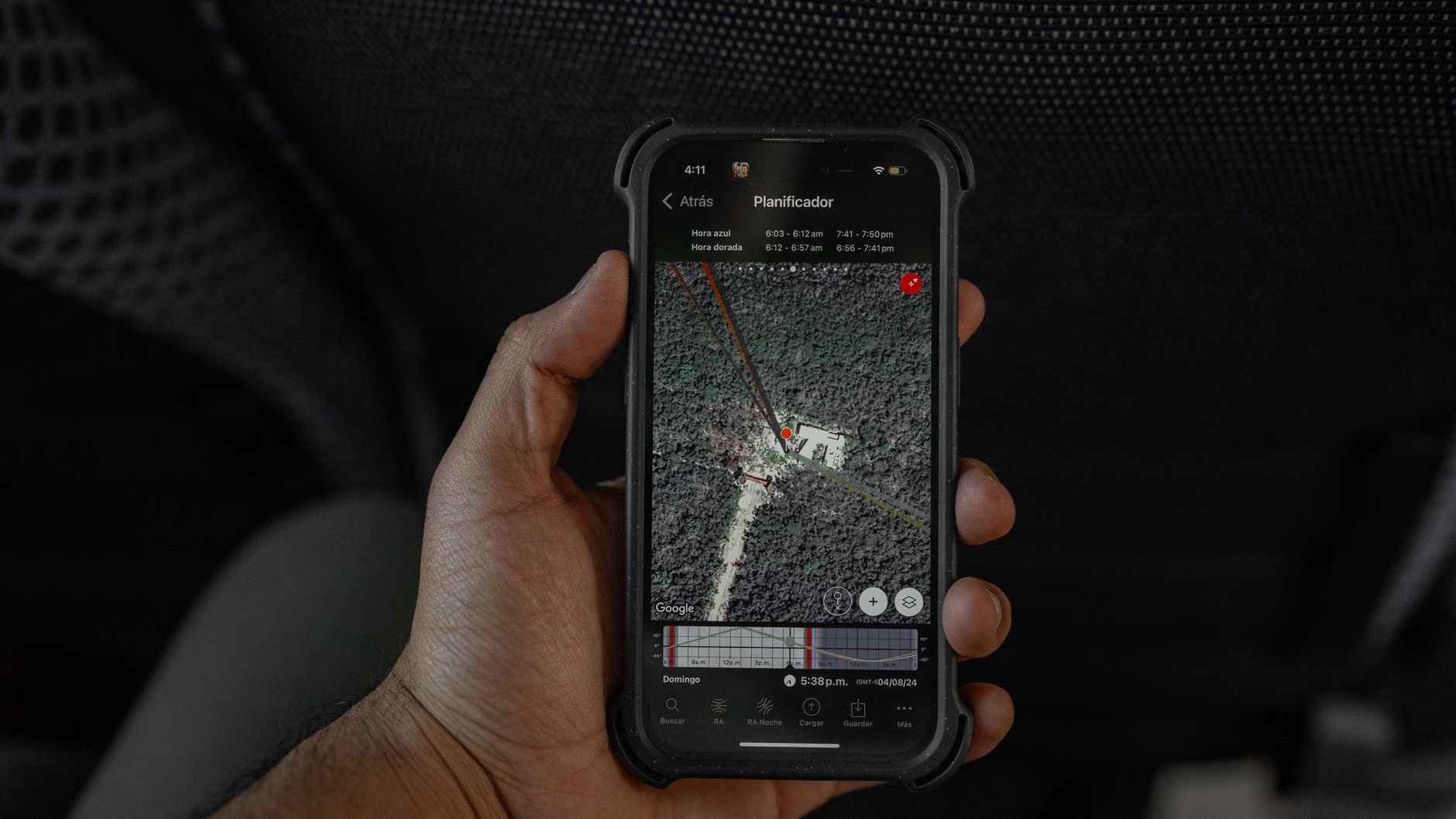
Modern technology can significantly improve your experience, but only if you are prepared to use it effectively. Do not rely solely on paper maps provided at the gate, as these are often not to scale and lack accessibility information.
Digital Mapping and Offline Access
Most major botanical gardens have an app or a high-resolution PDF map on their website. Download this at home, where you have a strong Wi-Fi connection. Ensure that your phone is fully charged. If you are traveling alone, consider bringing a portable power bank, as using GPS and screen-viewing drains battery life quickly.
Safety Note: If you have a condition that requires medication, keep it in a small, easily accessible bag that stays on your body—not in a backpack that you might leave on a bench or in a locker.
Choosing the Right Footwear
Botanical gardens often feature varied terrain, from manicured lawns to transition areas between woodchips and pavement. Avoid open-toed sandals, which offer little protection against uneven ground or accidental trips. Instead, wear walking shoes with:
- Good arch support: To reduce foot fatigue.
- Non-slip soles: Critical for damp, mossy, or wet stone paths.
- Breathability: To prevent moisture buildup during a long day.
The Role of Caregivers and Family Members
If you are visiting with a family member or caregiver, it is vital to communicate your needs clearly before you arrive. A common issue is the “pacing gap,” where one person walks faster than the other. Establish a simple system: the person with the slower pace leads the way. This ensures that the walker feels in control of their own speed, rather than feeling “chased” or hurried.
Communication Tip: Use phrases like, “I would like to rest at the next bench,” rather than waiting for the other person to notice you are tired. Proactive communication eliminates the anxiety of feeling like a burden.
Conclusion: Enhancing Your Experience
Visiting a botanical garden should be a source of rejuvenation, not a test of endurance. By auditing the terrain, planning your route in advance, and prioritizing rest, you can transform a challenging outing into a series of beautiful, manageable moments. Remember that the goal is not to cover the most ground, but to enjoy the most beauty. Focus on your comfort, respect your personal limits, and enjoy the natural world at a pace that works for you.
Frequently Asked Questions (FAQ)
1. Is it better to visit a garden on a weekday or a weekend?
For seniors, weekdays are almost always better. Weekends attract larger crowds, which can make navigating paths more difficult and increase the likelihood of mobility equipment (like scooters) being unavailable. Additionally, weekends can be noisier, which may be less conducive to the quiet, reflective nature of a garden visit.
2. Should I bring my own mobility aid if the garden offers rentals?
If you have a personal mobility aid that you are comfortable with, it is generally better to bring it. Rental equipment can vary in quality, and if you are used to a specific cane, walker, or lightweight wheelchair, using your own ensures that the height, grip, and maneuverability are perfectly suited to your needs.
3. What should I do if I experience sudden fatigue or pain while in the middle of a large garden?
Most large gardens have an internal transport system, such as a shuttle bus or tram. Familiarize yourself with the shuttle stops on the map as soon as you enter. If you feel tired, head to the nearest stop. If no shuttle is available, do not hesitate to ask a staff member for assistance; most gardens have protocols to help visitors who are struggling with exhaustion or mobility issues.
For further information on accessibility standards, you may consult the Americans with Disabilities Act (ADA) guidelines or your local equivalent for public park accessibility.