- Pre-departure verification: Always check the “station map” or “accessibility profile” on the national rail operator’s official website to identify lift locations and step-free routes before you arrive.
- The 20-minute rule: For regional travel, arrive at the station at least 20 minutes before departure to account for potential platform changes and navigating unfamiliar station layouts.
- Assistance booking: Most major rail networks offer “Passenger Assistance” services that can be booked 24–48 hours in advance, providing staff support for boarding and platform transfers.
Regional train stations are the arteries of global travel, yet their layouts can be daunting for even the most experienced traveler. Unlike major international hubs that are often designed with standardized, high-traffic flows, regional stations vary wildly—some are historical landmarks with steep stairs, while others are modern, minimalist structures with confusing signage. For adults aged 60 to 80, navigating these spaces is not just about stamina; it is about strategic planning and understanding the infrastructure before you even step onto the platform.
This guide provides a comprehensive framework for mastering regional station layouts, ensuring that your journey is defined by the destination, not the stress of the transit process.
Understanding Station Layouts: The “Flow” Concept
Most regional train stations follow a standard logic, even if the architecture differs. Understanding this “flow” allows you to predict where facilities are located, reducing the need for unnecessary walking. Most stations are divided into three main zones: the Entry/Concourse, the Transition, and the Platform.
1. The Entry and Concourse Zone
The concourse is where you purchase tickets, check departure boards, and find information desks. In many older European or North American stations, the concourse is on the ground level, while the platforms are elevated or underground. Common mistake: Many travelers head straight for the first staircase they see. Instead, look for the “Information Desk” or “Customer Service” signage immediately upon entry. These are almost always placed centrally, offering the best vantage point for the entire station layout.
2. The Transition Zone: Lifts vs. Escalators
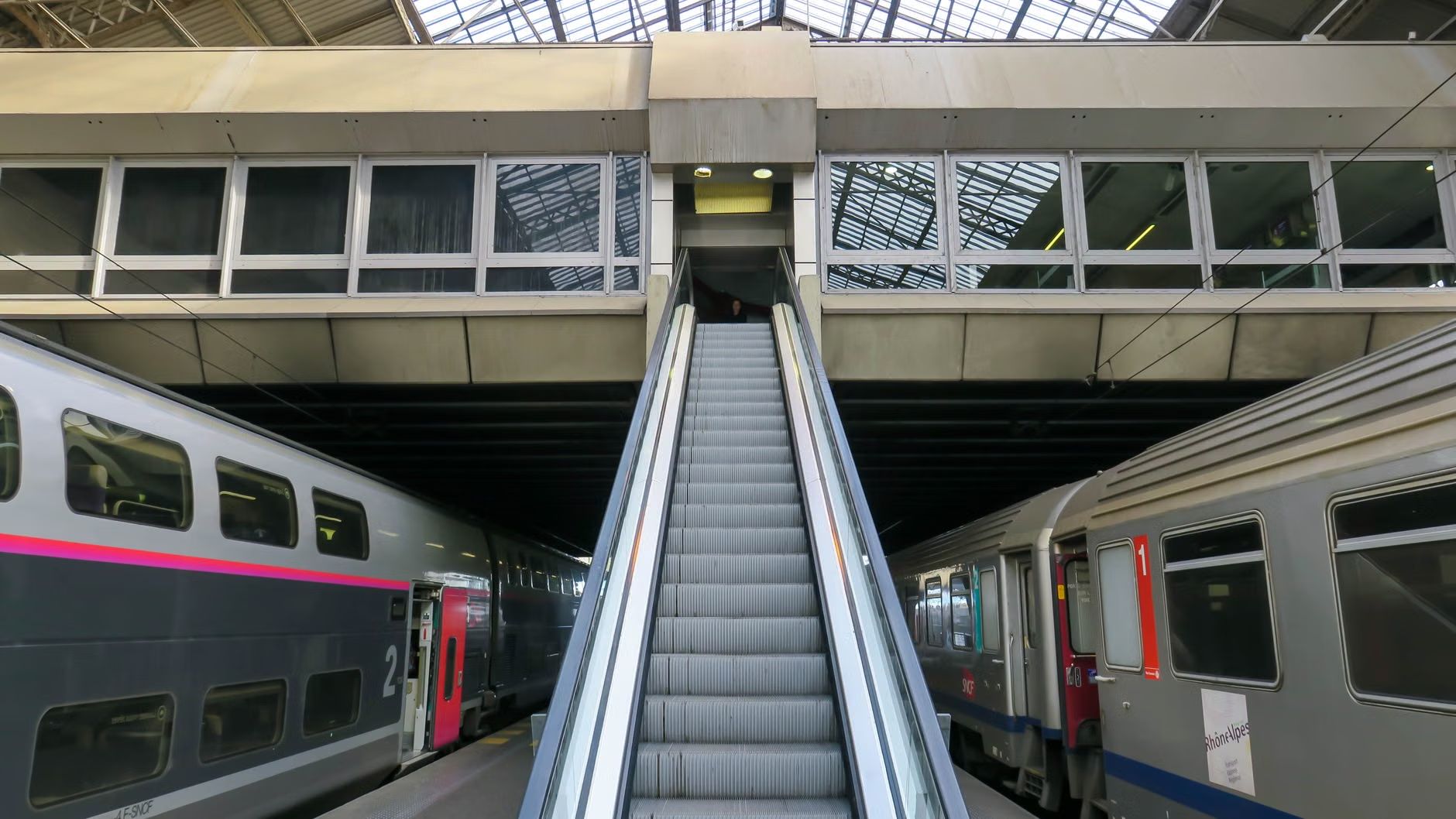
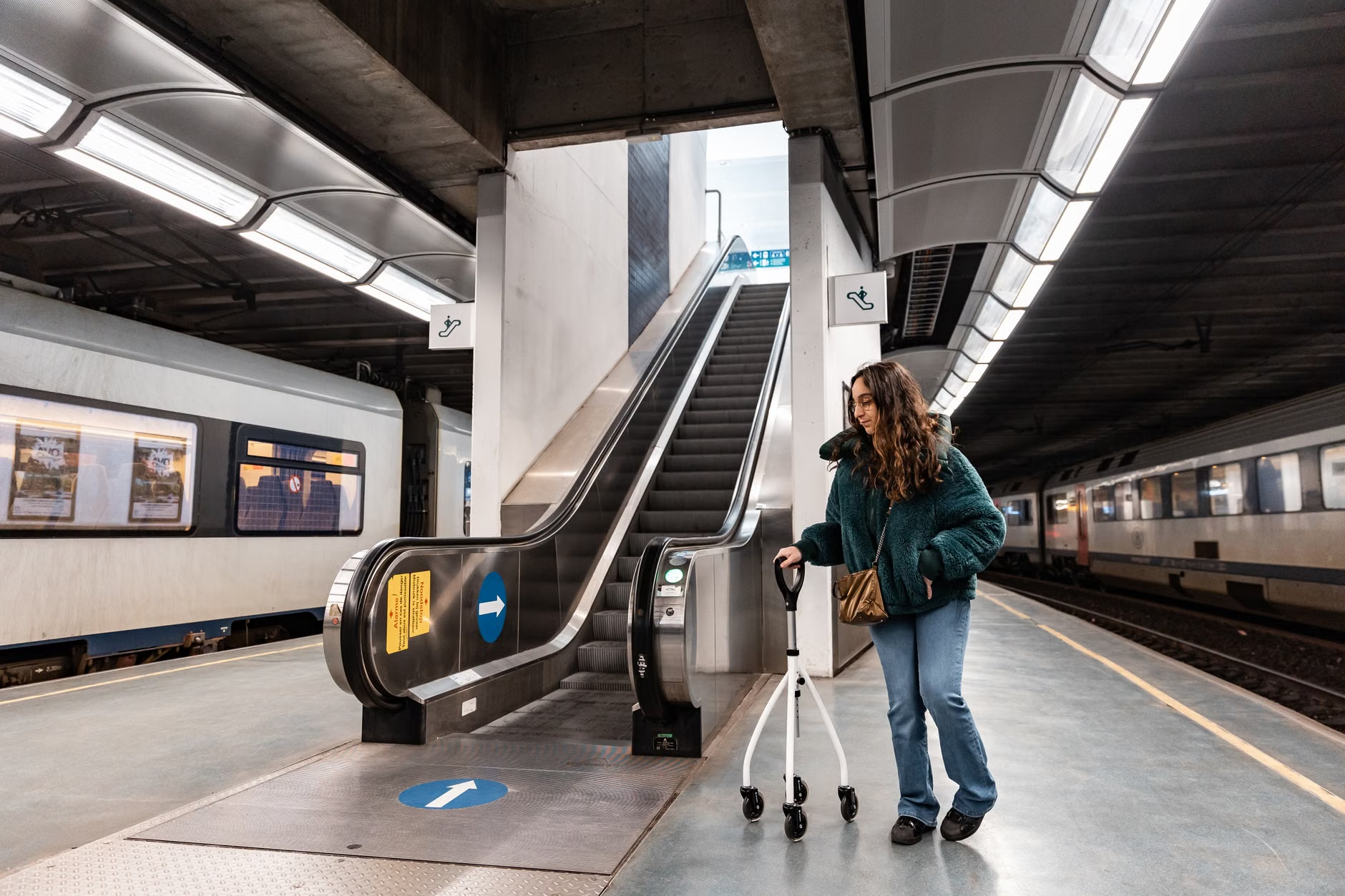
The transition zone (the path from the concourse to the platform) is where mobility challenges are most apparent. It is important to distinguish between escalators and lifts (elevators). While escalators move more people, they are often prone to maintenance closures. Lifts, while sometimes slower, are the safest option if you are carrying luggage or have limited stamina. Before traveling, check your rail operator’s mobile app or website for “Station Accessibility” features. Most major operators, such as Amtrak in the US or Deutsche Bahn in Germany, provide real-time status updates on lift functionality.
3. The Platform Zone
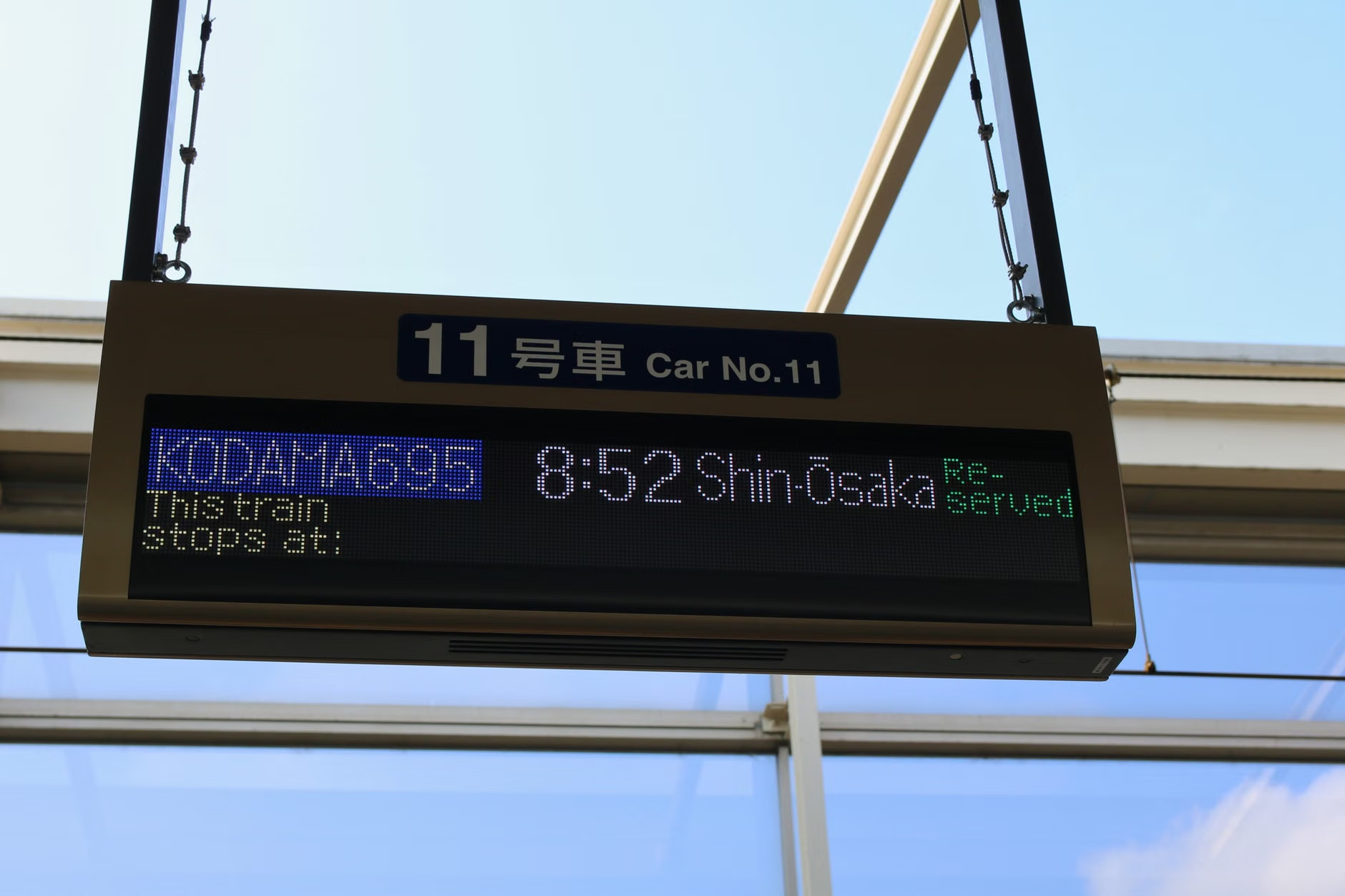
Platforms are often the most confusing part of a journey. Regional stations frequently use “island platforms,” where one platform serves two tracks (one on each side). Insight: Always check the departure board for the “Platform Number” and the “Direction.” Sometimes, the same platform number is used for two different tracks separated by a central walkway. Arriving early allows you to verify your specific track without rushing.
Strategic Preparation: Before You Leave Home
Preparation is the greatest tool for ensuring a smooth travel experience. By managing variables at home, you remove the pressure of making decisions while in a crowded, noisy station.
The “Station Map” Audit
Do not assume the station is fully accessible just because it is a “major” hub. Some historic stations have “step-free” access that involves a long, circuitous route. Spend five minutes on the official website of the rail provider. Look for keywords like “Step-free access,” “Tactile paving,” and “Accessible toilets.”
| Feature | What to Look For | Why It Matters |
|---|---|---|
| Lift/Elevator | “Step-free” indicator | Essential for travelers with heavy luggage or mobility aids. |
| Assistance Point | “Meeting point” signage | Where staff wait to assist with boarding ramps. |
| Walking Distance | Platform length/distance | Helps determine how much extra time you need to reach the train. |
If you have a mobility concern, the information in the table above is your checklist. If a station is listed as “limited accessibility,” it often means the lift is only available during staffed hours. Always verify your departure time against the station’s staffed hours.
Managing Luggage and Stamina
The weight and design of your luggage play a critical role in your ability to navigate station layouts. The rule of thumb for senior travelers is: If you cannot lift your bag onto a luggage rack independently, it is too heavy.
Luggage Strategy
- Four-wheel spinners: These are significantly easier on your wrists and shoulders than two-wheel rollers.
- The “One-Hand” Rule: Ensure your main bag has a handle that allows you to pull it with one hand, leaving the other free to hold a handrail or a cane.
- Backpack vs. Carry-on: If you struggle with stairs, a lightweight backpack distributes weight evenly, keeping your center of gravity stable.
Pacing Your Journey
Station navigation is a physical activity. If you are traveling between cities, do not plan to arrive at the station 5 minutes before the train leaves. The “20-minute buffer” is the gold standard for senior travelers. This allows you time to find the platform, locate your specific coach number, and settle in before the train begins to move. If you feel fatigued, do not hesitate to use the designated “Waiting Area.” These are often located near the platform and are quieter than the main concourse.
Utilizing Station Assistance Services
Many travelers, regardless of physical ability, are hesitant to request assistance. However, “Passenger Assistance” is a professional service provided by rail operators to ensure safety and efficiency. It is not just for those with visible disabilities; it is for anyone who needs extra time or guidance.
What Assistance Includes
When you book assistance (usually 24-48 hours in advance), the service typically includes:
- Platform meeting: A staff member meets you at a designated point in the concourse.
- Boarding support: Staff use a portable ramp to bridge the gap between the platform and the train.
- Luggage assistance: Staff can help you move your luggage to your designated seat.
How to Book
Each country has its own system. In the UK, for example, the National Rail website coordinates assistance across all operators. In the US, Amtrak offers a dedicated “Accessible Travel Services” line. Always have your train departure time, station name, and ticket number ready when calling. If you are traveling internationally, check if the “Assistance” service is unified across the rail network of the country you are visiting.
Handling Unexpected Disruptions
Even with perfect planning, disruptions occur. Platform changes, delays, and cancellations are part of the reality of train travel. The key is to remain in a “low-stress” area of the station when a disruption occurs.
What to do during a delay:
- Stay near the information board: Do not wander off to a coffee shop if a delay is announced. Changes can happen rapidly.
- Locate a staff member: If the boards are confusing, ask a staff member specifically for the “next available step-free route” to your platform.
- Use official apps: Download the official app of the rail operator. They often send push notifications about platform changes faster than the overhead announcements.
Warning: Avoid relying solely on third-party travel aggregators for real-time updates. They often experience a lag. Always use the official website or app of the rail carrier operating your specific train.
Practical Tips for International Travel
If you are traveling abroad, station layouts will change significantly. European stations, for instance, often have high platforms that require you to step up, while some Asian stations have very specific “color-coded” queuing systems that dictate exactly where you stand on the platform.
Color-Coded Boarding
In many modern stations, the platform floor is marked with colors or numbers that correspond to the coach numbers on your ticket. Look for these markings while you wait. Standing in the correct “zone” ensures that you are directly in front of your train door when it arrives, preventing a frantic scramble down the platform.
The “Toilet” Factor
In many regional stations, toilets are located outside the ticketed area or require a small fee. Always prioritize using the facilities before you pass through the ticket barrier, as toilets on regional trains can be cramped and difficult to access if the train is moving or crowded.
Common Misconceptions About Train Travel
There is a common belief that “express” trains are always better. For senior travelers, this is not always true. Express trains often have shorter dwell times at stations, meaning you have less time to board. Regional trains, which make more stops, often have longer dwell times, providing a more relaxed boarding experience. If you are not in a rush, consider choosing a route with slightly more stops for a less stressful departure.
Another misconception is that you must carry all your luggage at once. Many larger stations offer “luggage storage” or “locker” services. If you have a long layover, storing your heavy bags can make a massive difference in your ability to explore the station or the immediate area without fatigue.
Safety and Comfort Beyond the Station
Your journey does not end when you leave the station. When planning your trip, consider the “last mile.” How will you get from the station to your accommodation? In many cities, taxis or ride-shares are located at a specific “taxi rank.” Research the location of this rank relative to the station exit. Some stations have multiple exits—the wrong one could result in a 15-minute walk when a taxi was only 2 minutes away.
Staying comfortable also means dressing in layers. Stations can be drafty, and trains can be overly air-conditioned. A lightweight, warm layer that you can easily remove or put on is essential for maintaining your body temperature throughout the transit process.
Conclusion
Navigating regional train stations is a skill that improves with practice and preparation. By understanding the standard layout of concourses, transitions, and platforms, and by utilizing the support services offered by rail operators, you can transform what might be a stressful experience into a seamless part of your journey. Remember that your primary goal is to maintain your comfort and safety. Take your time, use official resources for planning, and do not hesitate to ask for assistance when needed. Travel should be a source of joy and discovery; with the right approach, the train station is simply the gateway to your next experience.
Frequently Asked Questions (FAQ)
1. How far in advance should I book “Passenger Assistance” services?
It is generally recommended to book assistance at least 24 to 48 hours before your journey. While some stations can provide assistance on the day, booking in advance ensures that staff are available to meet you and that any necessary equipment, such as ramps or wheelchairs, is ready for your specific train.
2. What should I do if my train platform is changed at the last minute?
If a platform change is announced, remain calm and check the digital departure board immediately. If you have booked assistance, alert a staff member as soon as the announcement is made. They are trained to manage these situations and will ensure you are guided to the correct new platform safely, often using a staff-only lift or route to save time.
3. Are there accessible toilets in all regional train stations?
Most modern regional stations have accessible toilets, but they are not universal, especially in older or smaller historic stations. Before you travel, check the station’s “Accessibility Profile” on the rail operator’s official website. If a station lacks accessible facilities, plan your route to ensure you have used a restroom at your previous location or on the train before arriving.
For further information on specific rail networks, you can visit the official portals for your region, such as National Rail (UK), Amtrak (USA), or Deutsche Bahn (Germany).