- Pre-visit planning is essential: Always contact the museum in advance to reserve mobility equipment like wheelchairs or portable stools, as supply is often limited.
- Strategic pacing prevents fatigue: Limit visits to two hours or fewer, and utilize the “rule of three” to prioritize only the exhibits that truly interest you.
- Leverage accessibility services: Most major international museums offer dedicated accessibility entrances, sensory-friendly hours, and floor plans specifically designed for those with limited mobility.
Museums are windows into history, culture, and art, but their sheer scale can turn a delightful afternoon into an exhausting ordeal if you have limited mobility or stamina. For the active traveler aged 60 to 80, navigating cavernous halls, polished marble floors, and labyrinthine corridors requires more than just interest—it requires a tactical approach to physical management. By shifting your focus from “seeing everything” to “experiencing with ease,” you can enjoy world-class collections without compromising your physical well-being.
The Anatomy of an Accessible Museum Visit: Pre-Departure Preparation
The most successful museum visits begin long before you step through the entrance. Many travelers assume that because a building is open to the public, it is automatically easy to navigate. However, historic structures often pose challenges like uneven flooring, heavy doors, or long distances between galleries.
1. Validating Accessibility Infrastructure
Before booking your trip, check the museum’s official website for an “Accessibility” or “Visitor Information” page. Do not rely on third-party reviews, as individual experiences vary significantly based on personal fitness. Look for specific keywords: step-free access, lift dimensions, loaner wheelchair availability, and seating frequency.
2. The “Loaner” Equipment Dilemma
Many museums offer free manual wheelchairs or rollators. However, there is a hidden variable: availability is usually on a first-come, first-served basis. If you rely on these, you risk arriving to find them fully committed. If you use your own aid, ensure it is in top condition. If you are flying, check your airline’s policy on gate-checking mobility aids; most allow you to use your own device until the aircraft door, which prevents the stress of navigating airport terminals without it.
3. Mapping Your Route
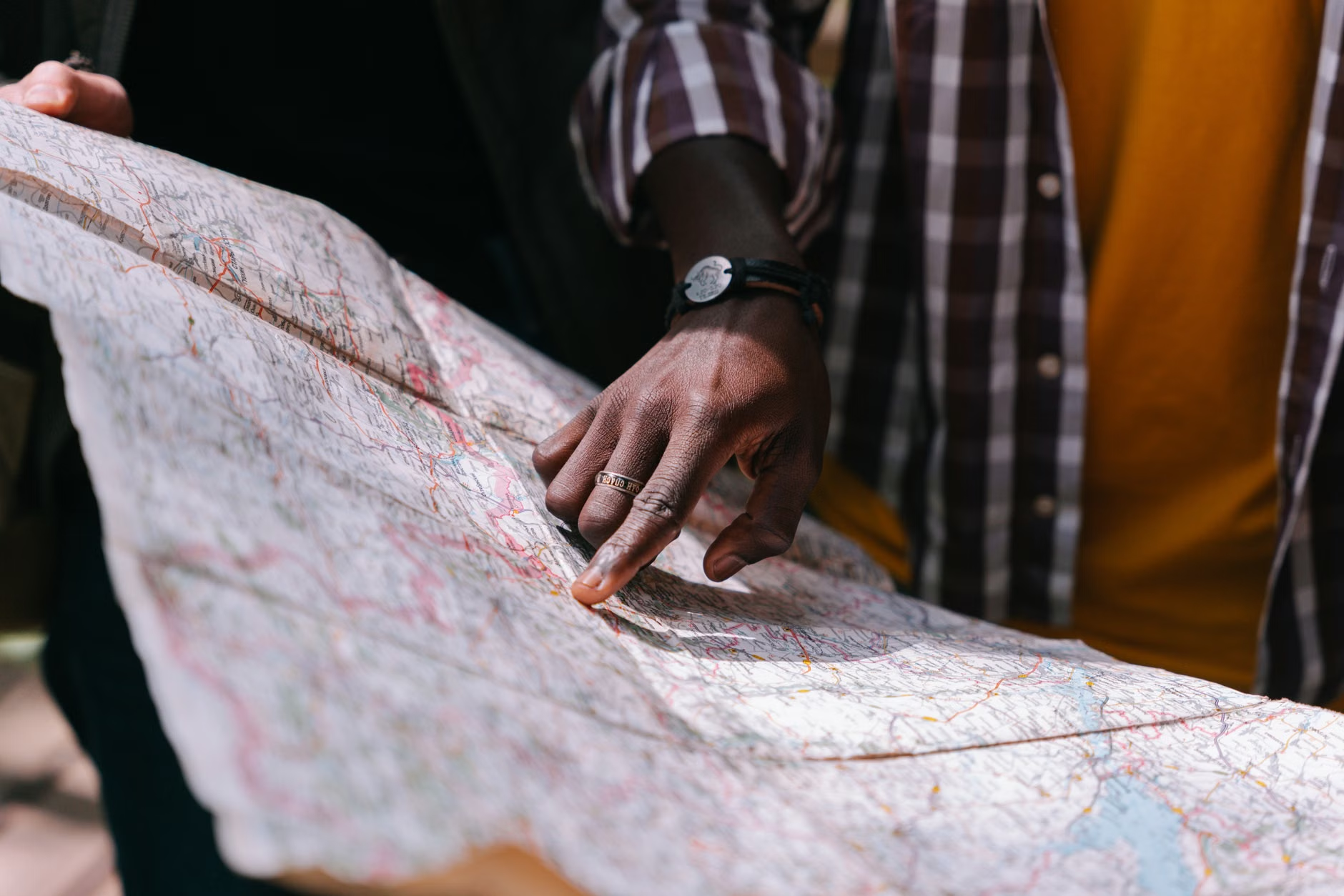
Large museums like the Louvre or the Met are not designed for linear movement. Download the museum’s map in advance and identify the locations of lifts, accessible toilets, and resting zones. Many museums now offer digital apps that allow you to filter for “accessible routes,” which prioritize elevators over stairs and avoid high-traffic bottlenecks.
Managing Physical Stamina: The “Two-Hour Rule”
A common mistake is attempting to traverse an entire museum in a single visit. Even for those with excellent mobility, the “museum fatigue” phenomenon is real. It is a combination of physical exertion from walking and cognitive overload from processing vast amounts of visual information.
| Strategy | Benefit for Seniors | Implementation Rule |
|---|---|---|
| The Two-Hour Cap | Prevents physical collapse | Schedule one hour of viewing, 30 minutes rest, 30 minutes viewing. |
| Curated Selection | Reduces unnecessary walking | Select only 3-4 “must-see” exhibits per visit. |
| Strategic Seating | Allows muscle recovery | Identify gallery benches on the map before entering. |
The table above serves as a framework for your visit. By capping your time, you ensure that you leave the museum with positive memories rather than physical resentment. If you find yourself enjoying an exhibit, do not feel pressured to “finish” the floor. The art will be there tomorrow, but your physical comfort is your most valuable travel asset.
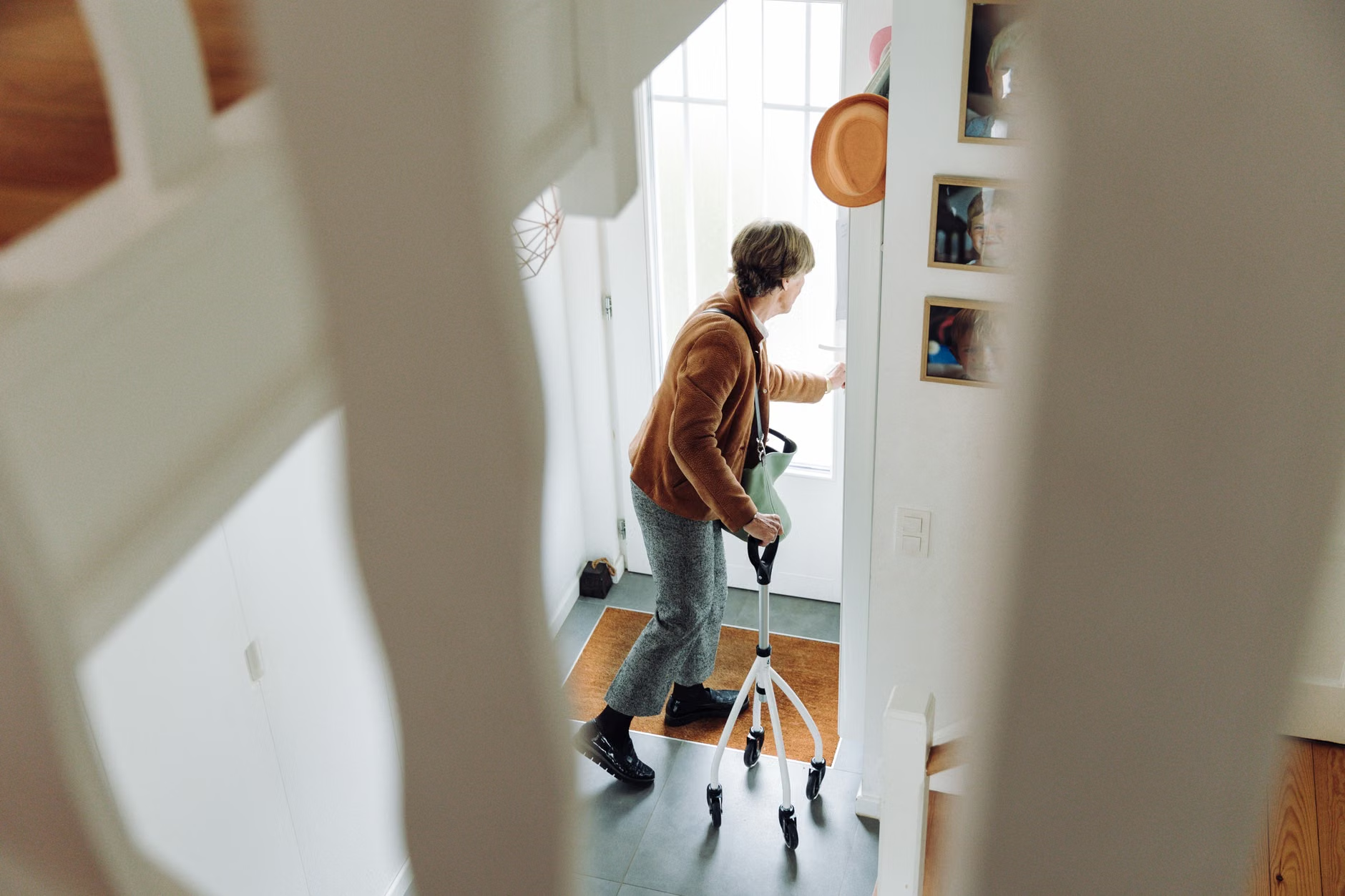
Using a cane, walker, or rollator in a crowded space requires a blend of situational awareness and confidence. The primary challenge in a museum is the “stop-and-start” nature of the crowds. People often stop abruptly to examine artifacts, which can lead to collisions if you are not prepared.
The “Right-of-Way” Mindset
Do not be afraid to politely request space. Most visitors are lost in their own experience and are not intentionally blocking you. If you are using a rollator, keep it close to your body to maintain a narrow profile. In extremely crowded rooms, it is often safer to position yourself at the periphery of the crowd rather than pushing into the center, where your visibility—and your mobility aid—might be bumped by others.
Portable Seating: The Ultimate Travel Hack
If you have difficulty standing for long periods but do not require a wheelchair, consider a “cane chair” or a lightweight, collapsible tripod stool. These are invaluable in museums where seating is frequently absent in the middle of large galleries. Verify the museum’s policy on portable stools before arriving; most major institutions allow them, but some have restrictions on items that could potentially damage floors or impede traffic.
Infrastructure Nuances: What to Expect in Different Regions
Accessibility standards are not universal. While the Americans with Disabilities Act (ADA) in the United States sets a strict baseline for public buildings, standards in Europe, Asia, and South America vary significantly based on the age of the building.
- Historic European Buildings: Many museums in cities like Rome or Paris are housed in centuries-old palaces. While they have been retrofitted with elevators, the paths to these elevators may be circuitous or involve cobblestone transitions. Always ask staff for the “step-free path” rather than following the main visitor signs.
- Modern Asian Museums: Often built with high-tech accessibility, these institutions usually offer excellent lift access and spacious layouts. However, they may be prone to higher tourist volume, making the “off-peak” strategy (visiting on weekday mornings) critical.
- Regional Differences: In some regions, “accessible” may simply mean there is a ramp, but the slope of that ramp may be steep. If you have concerns about a specific location, look for photos of the entrance on platforms like Google Maps to gauge the incline yourself.
The Role of Technology in Accessible Tourism
Modern technology has drastically improved the museum experience for seniors. Audio guides are no longer just for historical facts; many now include “accessibility tracks” that describe the physical layout of rooms or suggest the most accessible path through a collection.
Furthermore, many museums now offer “virtual tours” on their websites. This is not a replacement for the real thing, but it is an excellent way to pre-screen a museum. By exploring the layout virtually, you can identify which galleries are worth the effort of walking to and which you can safely skip. This reduces the “decision fatigue” that often occurs once you are inside the building.
Communication with Museum Staff
Museum staff are your best allies. If you are feeling overwhelmed, approaching an information desk is your most effective next step. Do not hesitate to ask: “What is the most accessible route to the Impressionist collection?” or “Are there any galleries that are currently less crowded?”
Staff members are often aware of “hidden” elevators or side entrances that are not prominently featured on maps but are much closer to specific exhibits. They can also provide information on where to find the quietest restrooms, which is a frequent concern for travelers managing their hydration and stamina.
Safety and Emergency Preparedness
While museums are generally safe environments, they can be disorienting. If you are traveling solo, ensure you have a simple “emergency card” in your pocket that lists your hotel address, a local contact number, and any critical health information. In the event of a medical emergency, museum security is well-trained, but they will need this information to assist you effectively.
Additionally, always wear comfortable, supportive footwear. Even if you are using a mobility aid, the floors in museums are often hard (marble, stone, or polished wood), and the cumulative impact of walking—even short distances—can be significant. If you are prone to foot fatigue, consider using orthotic inserts or compression socks to improve circulation and comfort throughout the day.
Advanced Mobility Considerations: The “Hidden” Variable
One overlooked factor in museum travel is the environmental temperature. Large museums often have climate-controlled environments to preserve artifacts. This can mean the air is significantly cooler than the outside temperature. For seniors, this sudden shift in temperature can cause joint stiffness or discomfort. Dressing in layers is not just a fashion choice; it is a vital strategy for maintaining mobility. A light cardigan or shawl can make the difference between an enjoyable hour in a gallery and a painful one.
Another variable is lighting. Galleries are often dimly lit to protect light-sensitive artworks. If you have any degree of vision impairment or balance sensitivity, the transition from bright natural light in the lobby to dark galleries can be disorienting. Take a moment to stand in the transition zone of a gallery entrance to allow your eyes—and your equilibrium—to adjust before moving forward.
Conclusion: Redefining the Museum Experience
Navigating a museum as a senior traveler is about managing your energy as much as it is about appreciating the collection. By prioritizing your physical needs, planning your route, and utilizing the resources available, you can maintain your independence and continue to enjoy the world’s most significant cultural sites. Remember that the goal is not to see everything, but to see what matters to you in a way that respects your physical capabilities. When you plan with intent, the museum becomes a space of inspiration rather than a test of endurance.
Frequently Asked Questions (FAQ)
1. Should I bring my own wheelchair or rent one at the museum?
If you have a lightweight, folding wheelchair that you are comfortable operating, it is almost always better to bring your own. This ensures reliability and allows you to use it in other parts of your travel, such as airports and city streets. Renting at the museum is a backup option, but you should call 48 hours in advance to confirm availability.
2. How can I avoid the largest crowds in major museums?
The best strategy is to visit on a weekday morning, specifically within the first hour of opening. Avoid weekends and public holidays entirely. Many museums also offer “evening hours” once a week, which are often significantly quieter and offer a more relaxed atmosphere for those who prefer to avoid the mid-day rush.
3. What if I feel suddenly fatigued while deep inside a gallery?
Do not try to “push through” to the exit. Most galleries have benches or chairs placed for security guards or visitors. It is perfectly acceptable to sit on these for 10-15 minutes to recover. If you are truly struggling, signal a staff member; they can often provide a chair or assist you in reaching a more comfortable area or an exit.
For further information on global accessibility standards, you may consult the United Nations Convention on the Rights of Persons with Disabilities, which advocates for inclusive tourism and access to cultural life.