The practical conclusion: keeping your mouth comfortable after 60 is less about buying special products and more about noticing changes early, using a simple daily routine, and arriving at dental appointments with an accurate medicine list and clear questions. Tooth loss is not an inevitable part of ageing.
- Brush gently with fluoride toothpaste, clean between teeth, and clean dentures every day.
- Dry mouth, bleeding gums, a sore that does not heal, pain, swelling, or a change in chewing deserves attention.
- Bring your medicine list, health history, symptoms, and practical access questions to the dentist.
This guide is for adults aged 60 to 80 and for family members or caregivers who help with appointments. It supports prevention and preparation. It does not diagnose a dental condition or replace advice from a dentist, doctor, pharmacist, or emergency service.
Why oral health deserves a place in your regular health plan
Your mouth affects eating, speaking, sleep, confidence, and social life. The US Centers for Disease Control and Prevention (CDC) says that tooth loss can affect diet, speech, self-esteem, and quality of life. Cavities and gum disease are leading causes, and professional care combined with daily oral hygiene can help prevent tooth loss.
Age itself does not automatically cause teeth to disappear. However, the practical risks can accumulate. Hands may become less steady. Vision may change. Medicines can reduce saliva. Arthritis may make a toothbrush difficult to hold. Transport, cost, or anxiety may delay appointments. A useful plan therefore combines mouth care with medication review, accessible equipment, and realistic appointment planning.
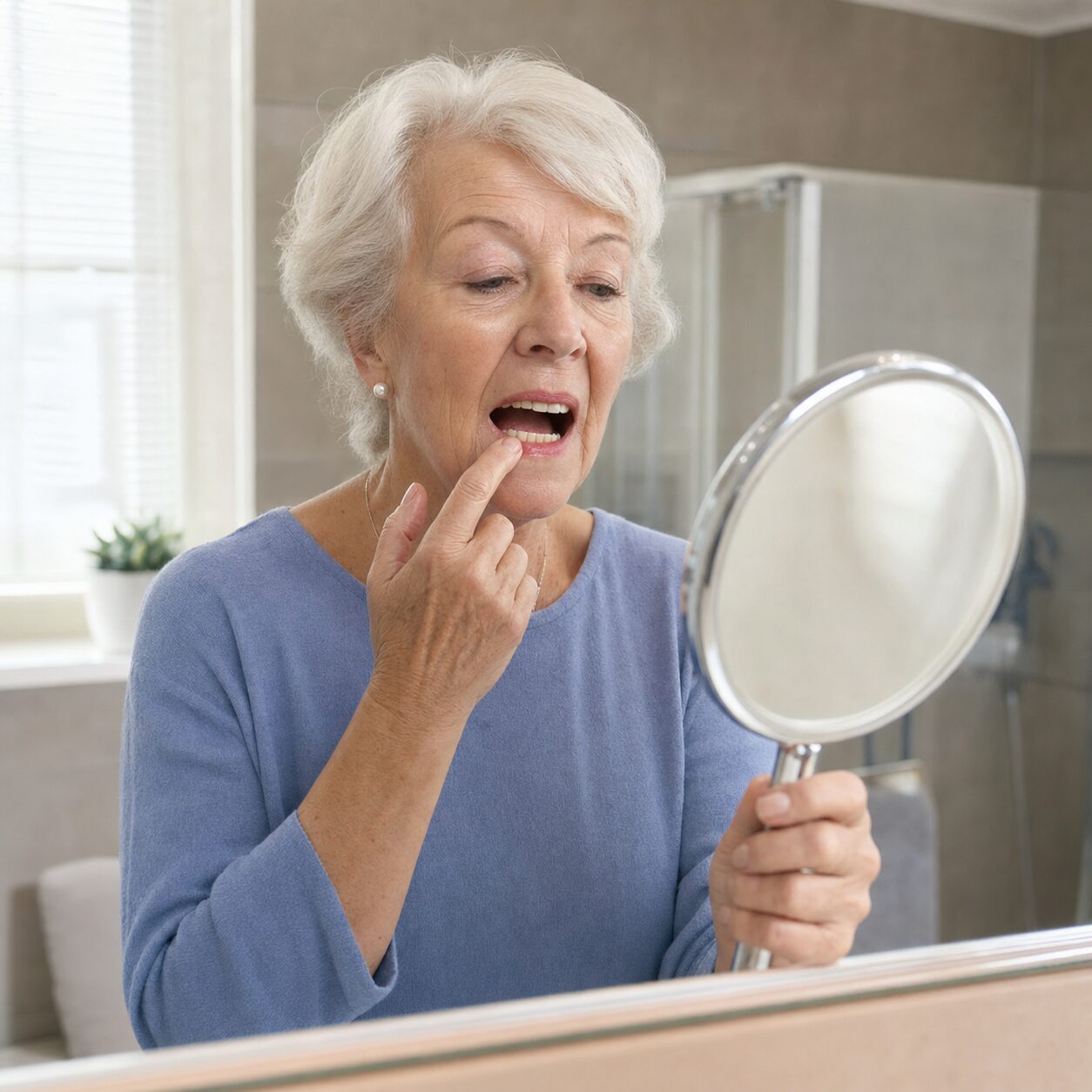
A five-minute mouth check once a month
Stand in good light and use a mirror. If you wear dentures, remove them first. Look at the lips, gums, tongue, roof of the mouth, cheeks, and the areas under a denture. You are not trying to diagnose yourself. You are simply establishing what is normal for you and noticing a change.
| What you notice | What to record | Next step |
|---|---|---|
| Bleeding during brushing | Where, how often, and for how long | Arrange dental advice rather than stopping all cleaning |
| Dry or sticky mouth | Time of day, new medicines, swallowing or speaking difficulty | Ask a dentist, doctor, or pharmacist for a medication and dry-mouth review |
| Denture rubbing or looseness | Sore location and foods that cause trouble | Book an adjustment; do not reshape the denture yourself |
| Lump, patch, ulcer, or sore | Date first seen, size, pain, and whether it heals | Seek professional assessment, especially if persistent |
| Pain, swelling, fever, or trouble swallowing | When it began and how quickly it changed | Contact urgent dental or medical services promptly |
Take a dated photograph only if it is comfortable and useful for explaining a change. Do not let repeated photographs delay an appointment. Severe swelling, breathing difficulty, uncontrolled bleeding, major facial injury, or rapidly worsening illness needs urgent local help.
Build a daily routine that fits your hands and energy
Brush without scrubbing
Use a soft-bristled brush and fluoride toothpaste. Clean all tooth surfaces and the gum line with small, controlled movements. More pressure does not mean better cleaning. If gripping is difficult, ask a dental professional about a powered brush or a wider handle. A foam grip or purpose-made adaptive handle can be easier for arthritic hands.
Spit out excess toothpaste. Follow the instructions provided by your dentist and on the product in your country. Do not assume that an expensive paste is automatically appropriate, particularly if you have sensitivity, mouth sores, or swallowing difficulty.
Clean between teeth
A toothbrush cannot fully clean tight spaces. Floss, interdental brushes, or another device recommended for your mouth may help. The correct size matters: forcing a brush can injure the gums, while one that is too small may be ineffective. Ask for a demonstration at your next visit and practise while the professional watches.
Clean dentures and the mouth beneath them
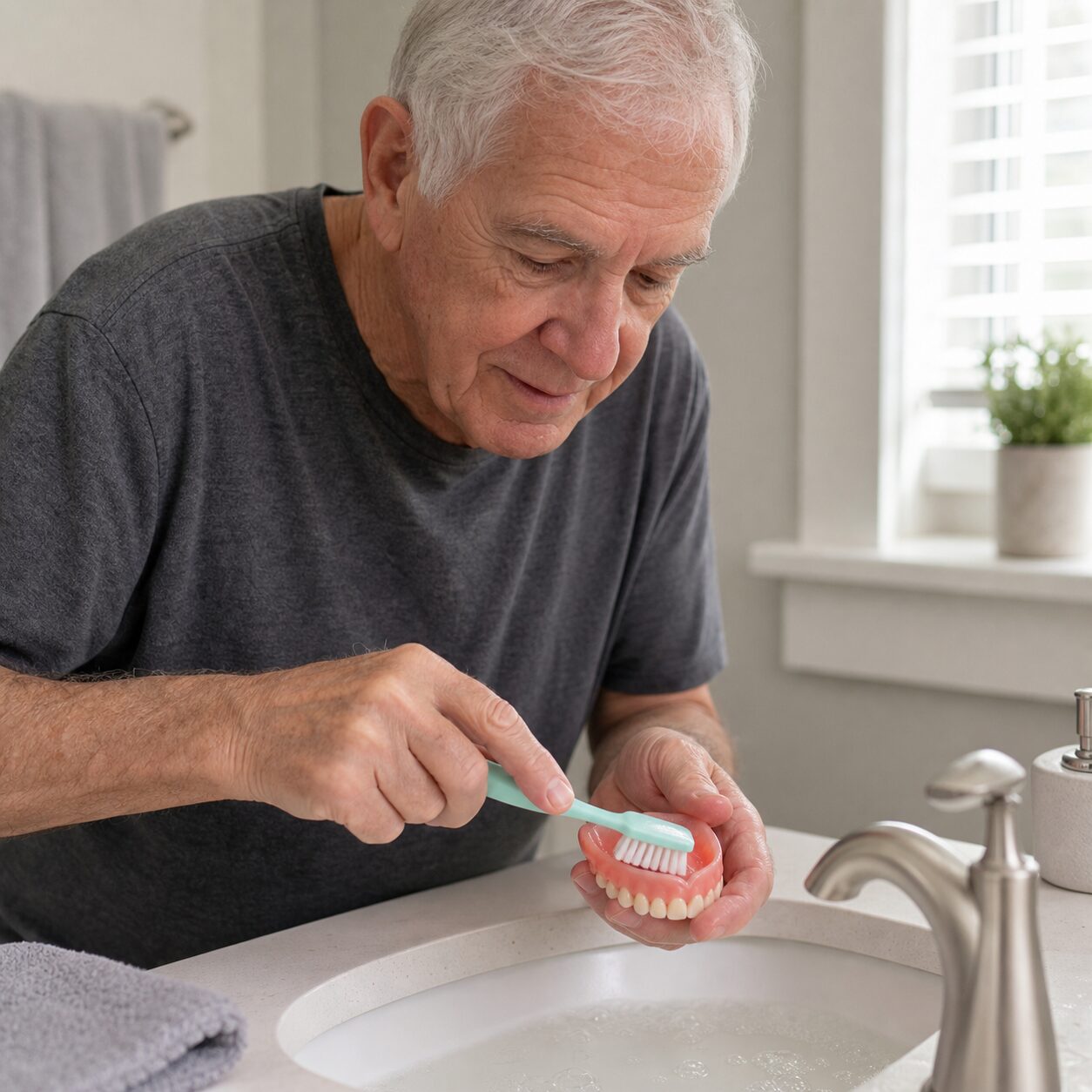
The CDC advises older adults to clean dentures daily and, when possible, remove them overnight. Clean the gums, tongue, and any remaining teeth as well. Use the method and cleanser recommended for the denture material; ordinary toothpaste may be too abrasive for some dentures. Store dentures safely away from pets and accidental disposal.
Do not tolerate a persistent sore because a denture is old. Fit can change as the mouth changes. Adhesive should not become a substitute for assessment of a loose or painful denture.
Dry mouth: a symptom worth discussing
Saliva helps protect tissues, makes swallowing easier, and supports comfort. Dry mouth can accompany medicines, medical treatment, dehydration, mouth breathing, or health conditions. Do not stop a prescribed medicine because you suspect it is causing dryness. Instead, take the full medication list to a dentist, doctor, or pharmacist and ask whether timing, dosage, alternatives, or supportive measures should be reviewed.
Simple comfort measures may include regular sips of water when appropriate, avoiding tobacco, and limiting alcohol-containing mouth products if they worsen irritation. People with fluid restrictions, swallowing problems, kidney disease, or heart failure should follow their clinician’s advice rather than adopting generic hydration targets.
Sugar-free gum or lozenges may not suit everyone, including people with swallowing difficulty, jaw pain, or dietary restrictions. A dentist can assess cavity risk and recommend suitable fluoride or saliva-support products.
Prepare for the dental appointment
A short written sheet reduces stress and prevents important details being forgotten. Prepare it a day or two before the visit.
- List every medicine and supplement. Include dose and timing, blood thinners, osteoporosis medicines, inhalers, injections, and non-prescription products.
- Summarise health conditions and allergies. Note recent hospital care, surgery, falls, or changes in memory, mobility, swallowing, or breathing.
- Describe the mouth problem. Record when it began, triggers, pain pattern, swelling, bleeding, taste change, and what you have tried.
- Bring denture details. Take the denture and any packaging for cleaners or adhesives you use.
- Plan access. Ask about step-free entry, transfer help, toilet access, hearing support, longer appointments, rest breaks, and a companion.
- Plan transport. Confirm whether a proposed procedure or sedating medicine means you should not drive or travel alone.
- Set a spending question. Ask for the diagnosis, options, urgency, number of visits, likely maintenance, and a written estimate before agreeing to non-emergency work.
| Question to ask | Why it helps |
|---|---|
| What problem are you treating, and how certain are you? | Clarifies the purpose of care |
| What happens if I wait? | Separates urgent treatment from work that can be planned |
| What are the benefits, risks, and alternatives? | Supports informed decisions |
| Will this affect eating, medicines, driving, or daily care? | Makes recovery practical |
| What warning signs should prompt a call? | Creates a clear safety net |
Make the visit easier if you have hearing, memory, or mobility changes
Tell the clinic what helps before you arrive. You may ask staff to face you when speaking, reduce background noise, provide written instructions, or allow a trusted companion. Bring hearing aids unless the clinic advises otherwise, plus a case and spare batteries.
If lying flat is uncomfortable, explain why and ask whether the chair position can be adjusted. If you fatigue easily, request a morning appointment or a shorter visit. If memory is unreliable, ask the professional to use plain language and provide a written summary that includes medicine instructions and follow-up dates.
A caregiver should support the older adult’s choices and privacy. Speak to the person, not over them. Ask permission before answering questions or handling personal information.

After treatment: use the written plan
Before leaving, check that you understand eating and drinking restrictions, pain-control instructions, cleaning around the treated area, denture use, and the follow-up date. Confirm which symptoms are expected and which require a call. If a new medicine is recommended, mention allergies, current medicines, and any kidney, liver, bleeding, ulcer, or swallowing concerns.
Do not share prescription pain medicine. Do not exceed the label or clinician’s directions, and avoid combining products that contain the same ingredient. If instructions from the dentist conflict with advice from another clinician, ask the professionals or a pharmacist to reconcile them.
A realistic seven-day reset
- Day 1: Check your toothbrush, toothpaste, denture supplies, and lighting.
- Day 2: Practise a comfortable grip and time an unhurried cleaning routine.
- Day 3: Review cleaning between teeth and note where it is difficult.
- Day 4: Write the medicine list and health summary.
- Day 5: Complete the five-minute mouth check.
- Day 6: Call the clinic about access, cost, or overdue preventive care.
- Day 7: Put supplies in one visible, safe place and set a reminder.
Consistency matters more than perfection. If pain, hand weakness, tremor, vision, or memory makes mouth care difficult, ask a dentist or occupational therapist about adaptations instead of abandoning the routine.
Official sources
- CDC, Oral Health Tips for Adults: https://www.cdc.gov/oral-health/prevention/oral-health-tips-for-adults.html
- CDC, About Tooth Loss: https://www.cdc.gov/oral-health/about/about-tooth-loss.html
- CDC National Center for Health Statistics, Oral Health: https://www.cdc.gov/nchs/dqs/topics/oral-health.html
Frequently asked questions
No. Risk can increase because of cavities, gum disease, smoking, medical conditions, medicines, or barriers to care, but preventive habits and professional care can help many people keep their teeth. Ask for an individual risk assessment.
FAQ: Should I stop a medicine if it seems to cause dry mouth?
No. Do not stop a prescribed medicine on your own. Record when dryness occurs and ask the prescriber, dentist, or pharmacist to review the medicine and safe ways to manage the symptom.
FAQ: How often should an older adult see a dentist?
There is no single interval for everyone. The schedule depends on teeth, gums, dentures, dry mouth, medical conditions, treatment history, and access. Ask the dentist to explain the recommended recall interval and what would justify an earlier visit.