If you are returning to swimming after 60, the safest first step is not a long workout. It is a short, supervised session in a pool with easy entry, a clear exit plan, and an honest check of your current ability. Swimming can be enjoyable aerobic activity, but confidence from years ago is not the same as current water skill. Start where you are now.
1. Choose a lifeguarded pool, use the handrail or ramp, and tell someone your plan.
2. Take an adult lesson if you are unsure of your breathing, floating, or exit skills.
3. For lakes, rivers, or the sea, check local conditions and wear a properly fitted life jacket.
This guide is for adults roughly 60 to 80 who want a practical way to begin or restart swimming. It also helps a family member support the plan without taking over.
It is general prevention information, not individual medical advice. If you have not exercised recently, have a health condition, feel unwell, or are concerned about how medicines affect balance or alertness, ask an appropriate health professional what level of activity suits you.
Why a careful restart matters
Swimming is often described as gentle because water supports the body. That does not remove every risk. Pool decks can be slippery. Water entry and exit require balance and strength. Cold water, waves, currents, fatigue, poor visibility, and overconfidence can turn a pleasant outing into a difficult one.
The U.S. Centers for Disease Control and Prevention reported that adults aged 65 and older had the second-highest drowning rate in its recent analysis. The same CDC material says older adults were more likely than younger adults to report that they could not swim. These figures are U.S. data, but the practical lesson travels well: adults can benefit from refreshing basic swimming and water-safety skills.
At the same time, physical activity supports healthy ageing. The U.S. National Institute on Aging explains that older adults can benefit from aerobic, strength, and balance activity. The UK National Health Service includes swimming among activity options, while advising people who have been inactive or have health concerns to speak with a clinician first.
Use this 9-step plan for your first session
1. Start with your current ability, not your old ability
Ask yourself three plain questions. Can I float calmly? Can I control my breathing with my face near the water? Can I reach and use the exit after one short length?
If any answer is “not sure,” book an adult beginner or refresher lesson. A qualified instructor can observe what you can do now. There is no embarrassment in restarting in shallow water.
2. Choose the venue before choosing the workout
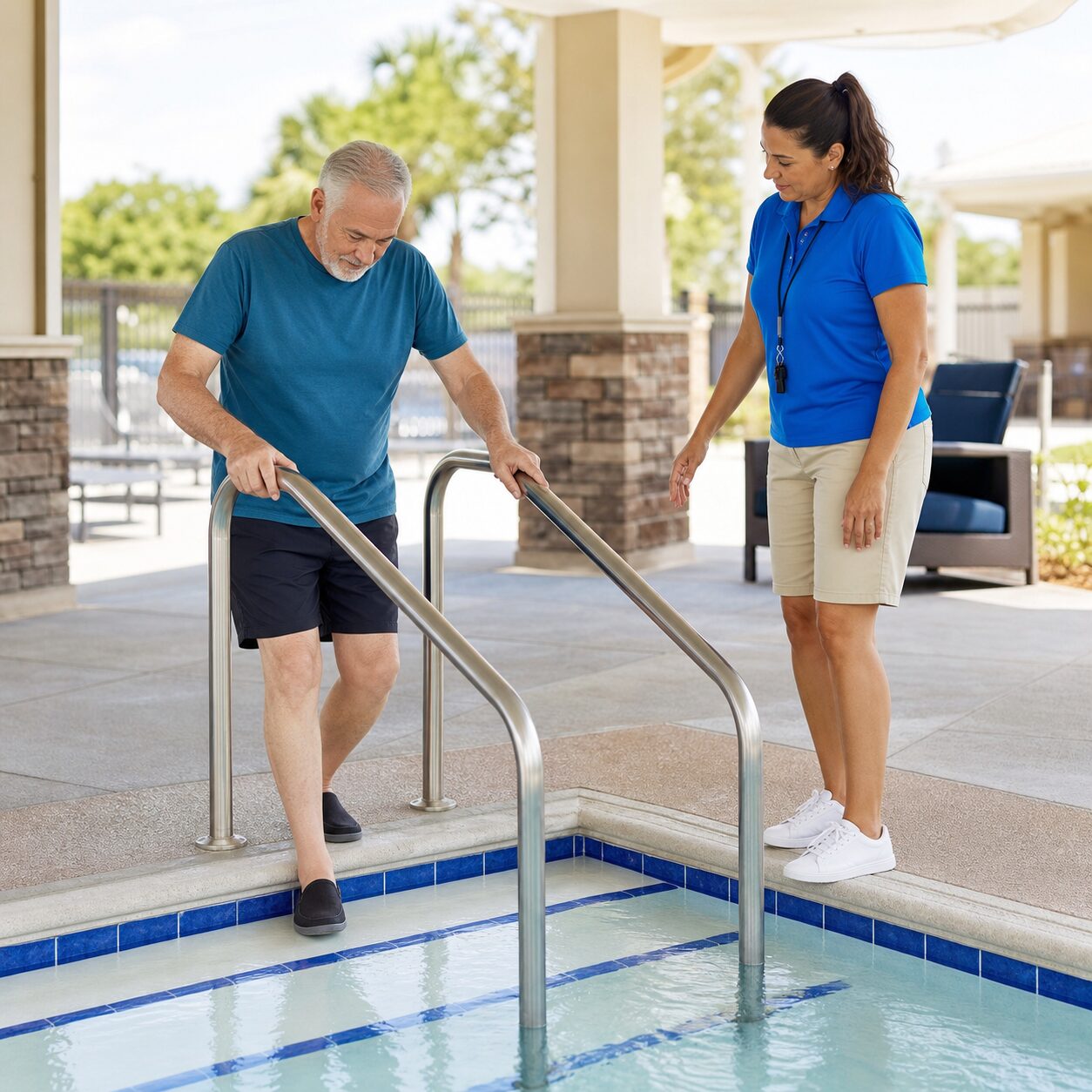
For a first return, a supervised pool is usually easier to assess than open water. Call ahead or check the venue’s official page. Ask about quieter hours, water depth, lifeguard coverage, pool temperature, handrails, steps, ramps, accessible changing rooms, and storage for mobility aids.
Confirm whether the session is lane swimming, an aqua class, or open recreation. Each has different pace and space expectations.
| Check | A useful answer | Why it matters |
|---|---|---|
| Entry | Rail, broad steps, ramp, or lift | Reduces the need for an awkward jump or climb |
| Exit | A reachable exit in the same area | Fatigue may make a distant ladder difficult |
| Supervision | Lifeguard on duty | Adds trained observation but does not replace personal caution |
| Deck | Non-slip route with seating | Supports safer walking and rest |
3. Put health questions in the right place
A pool worker can explain the facility. An instructor can assess swimming technique. A pharmacist or clinician can discuss health conditions or medicines. Do not ask one person to answer outside their role.
Before going, seek professional advice if you are unsure about symptoms during activity, a recent procedure, a new medicine, fainting, severe breathlessness, or chest discomfort. Do not change prescribed medicines just to fit a swim session.
4. Pack for safe movement, not just for the water
Bring a comfortable swimsuit, towel, water bottle, easy-to-use locker token if required, and pool shoes with good grip where permitted. Prescription goggles may help if you normally need vision correction. Keep glasses and hearing devices in a dry, secure place, and plan how you will communicate without them.
Carry an emergency contact and essential health information in the format you normally use. A waterproof pouch can protect a phone, but do not rely on a phone as your only plan.
5. Tell someone what you are doing
Swimming alone is not a good test of independence. Tell a trusted person where you will be and when you expect to finish. At the venue, mention to the instructor if you are returning after a long break or feel nervous in water.
A family member can help with transport or observe the first visit. The older swimmer should still lead decisions and describe the support wanted.
6. Make the first session deliberately short
Warm up with easy movement. Enter using the rail, steps, ramp, or lift. Stay where you can stand until breathing feels settled. Practice floating, turning toward the wall, and reaching the exit before adding distance.
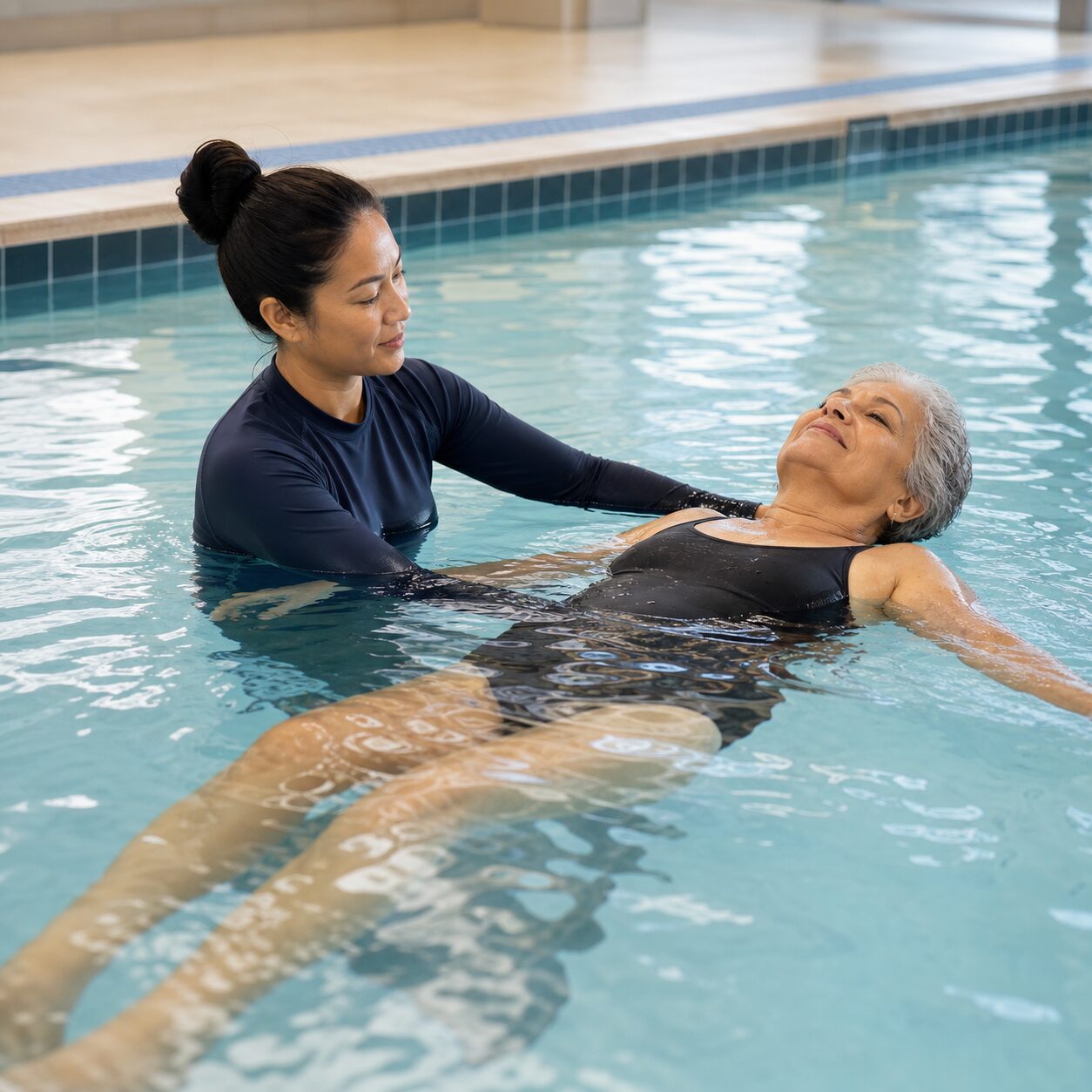
Use the talk test as a simple intensity guide: at moderate effort, you should generally be able to speak, although not sing. Stop before technique becomes untidy. A five- or ten-minute first water session can be more useful than pushing through fatigue.
7. Notice warning signs and leave the water early
Get out and seek appropriate help for chest pain, faintness, unusual severe breathlessness, sudden weakness, confusion, or any symptom that feels alarming. For milder discomfort, stop, use the nearest safe exit, sit down, and reassess.
Do not race another swimmer to the wall because you feel tired. Do not use alcohol or sedating substances before swimming or boating. CDC drowning-prevention guidance specifically recommends avoiding alcohol before and during swimming and boating.
8. Treat the deck and changing room as part of the activity
Move slowly on wet surfaces. Use rails. Sit to dress if that is steadier. Allow time for showering, changing, and walking back to transport; the session is not finished the instant you leave the water.
If the venue is hot or humid, pause before standing after a shower. Drink normally according to your usual health guidance. Do not assume that being surrounded by water means you cannot become dehydrated.
9. Review before increasing distance
Later that day, note what worked: entry, breathing, stroke, exit, changing, transport, and recovery. Increase only one part next time—perhaps a few more minutes, not speed and distance together.
If soreness, fatigue, or anxiety lasted longer than expected, repeat the easier session or ask for professional guidance. Progress does not need a timetable.
Pool swimming and open water are different activities
A calm lake can look easier than a busy pool, yet open water adds changing depth, cold, currents, waves, boats, plants, uneven ground, and fewer exits. Familiarity with a beach does not guarantee today’s conditions.
| Feature | Supervised pool | Open water |
|---|---|---|
| Conditions | Usually controlled | Can change quickly |
| Depth | Marked and predictable | May be uneven or unclear |
| Exit | Steps, rail, ramp, or lift | Shore may be slippery, steep, or distant |
| Support | Often a lifeguard | May have no trained supervision |
Before any open-water outing
Use official local weather, water-quality, tide, current, and beach-warning information. Follow local flags and closures. Do not enter discoloured water or water affected by warnings. Swim with another capable adult in a designated area.
Wear a properly fitted life jacket for boating and when local guidance or the activity calls for one. Fasten every buckle. Inflatable toys and arm bands are not substitutes for a life jacket.
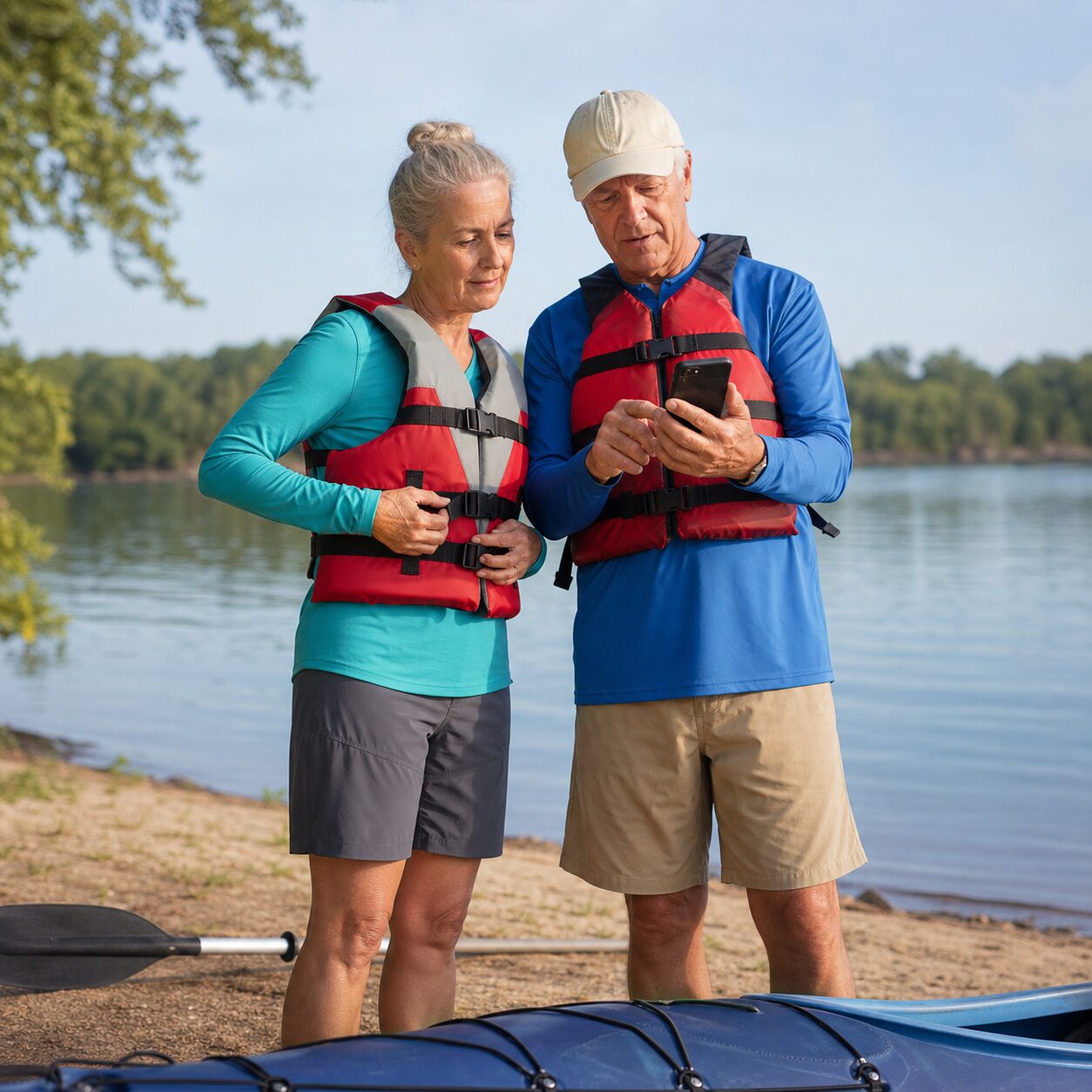
Plan the exit before entering. If you cannot identify a safe way out, do not go in. A wetsuit may change warmth and buoyancy, but it does not remove the need for skill, supervision, and local knowledge.
A simple first-month progression
This example is a planning framework, not a prescription. Adapt it with an instructor or health professional when needed.
- Visit 1: Tour the venue, confirm access, enter shallow water, practise breathing and the exit.
- Visit 2: Take a lesson or supervised refresher. Practise floating, turning, and reaching the wall.
- Visit 3: Repeat the same skills and add only a small amount of easy distance.
- Visit 4: Review comfort, recovery, and access before choosing a regular class or session.
The goal is not to prove that you can still do what you did at 30. The goal is a repeatable activity that fits your body, your confidence, and your local setting now.
Official sources
- CDC: Summer Swim Safety (updated January 27, 2026)
- CDC: Risk Factors for Drowning (updated January 27, 2026)
- CDC: Guidelines for Healthy and Safe Swimming
- National Institute on Aging: Health Benefits of Exercise and Physical Activity
- NHS: Physical Activity Guidelines for Older Adults
Frequently asked questions
FAQ: Am I too old to learn to swim?
No age automatically makes learning impossible. Look for an adult beginner class with a qualified instructor, shallow-water practice, and accessible entry. Ask a health professional first if inactivity, symptoms, or a medical condition make you unsure about exercise.
FAQ: Is a lifeguard enough if I swim alone?
No. A lifeguard improves supervision but does not know your individual ability or replace a personal plan. Use a suitable area, tell someone your plan, stay within your present skill, and leave before fatigue develops.
FAQ: Can I use an inflatable float instead of a life jacket?
No. Inflatable toys and arm bands are not designed as life-saving equipment. For open-water or boating activities, use a properly fitted life jacket that meets the rules and standards where you are.