Quick answer: Adults over 60 do not need an intense gym programme to begin building useful strength. A safer starting point combines simple muscle-strengthening work, supported balance practice and comfortable aerobic activity. Begin below your maximum, use stable support, and increase one element at a time. If you have recent falls, unexplained dizziness, chest symptoms, a new injury, recent surgery or a condition that limits exercise, ask a qualified health professional what is appropriate before starting.
- Train three abilities: strength, balance and aerobic fitness support different parts of daily function.
- Start with control: a stable chair, clear floor and comfortable effort matter more than heavy weights.
- Progress gradually: add repetitions, resistance or time separately, and stop for warning symptoms.
Strength-focused exercise for healthy ageing is receiving renewed attention in 2026. The American College of Sports Medicine’s worldwide trends place fitness programmes for older adults near the top of the industry agenda. The useful part of that trend is not a fashionable gadget. It is the growing focus on maintaining the ability to rise from a chair, carry groceries, climb steps and recover balance.
Official guidance is consistent. The World Health Organization recommends that older adults include varied activity that emphasises functional balance and strength on three or more days each week. The US Centers for Disease Control and Prevention says adults aged 65 and older need aerobic, muscle-strengthening and balance activities each week. These are population goals, not a requirement to reach the full amount on day one.
Why walking alone is not the whole plan
Walking is valuable. It can improve stamina, mood and confidence outdoors. However, it does not challenge every major muscle group through a useful range, and an ordinary walk may provide little direct balance practice. A complete weekly plan includes all three activity types.
| Activity type | Everyday purpose | Beginner examples |
|---|---|---|
| Muscle strengthening | Standing up, lifting, carrying and climbing | Chair rises, wall push-ups, resistance-band rows |
| Balance | Staying steady during turns and uneven steps | Supported heel-to-toe stance, weight shifts, controlled marching |
| Aerobic activity | Stamina for errands, travel and social activities | Comfortable walking, cycling or water exercise |
The CDC’s weekly target for most older adults is at least 150 minutes of moderate-intensity aerobic activity, muscle strengthening on at least two days, and balance activity. People with chronic conditions or disabilities should be as active as their abilities and conditions allow. A professional can help adapt the plan.
Before the first session: make the environment safer
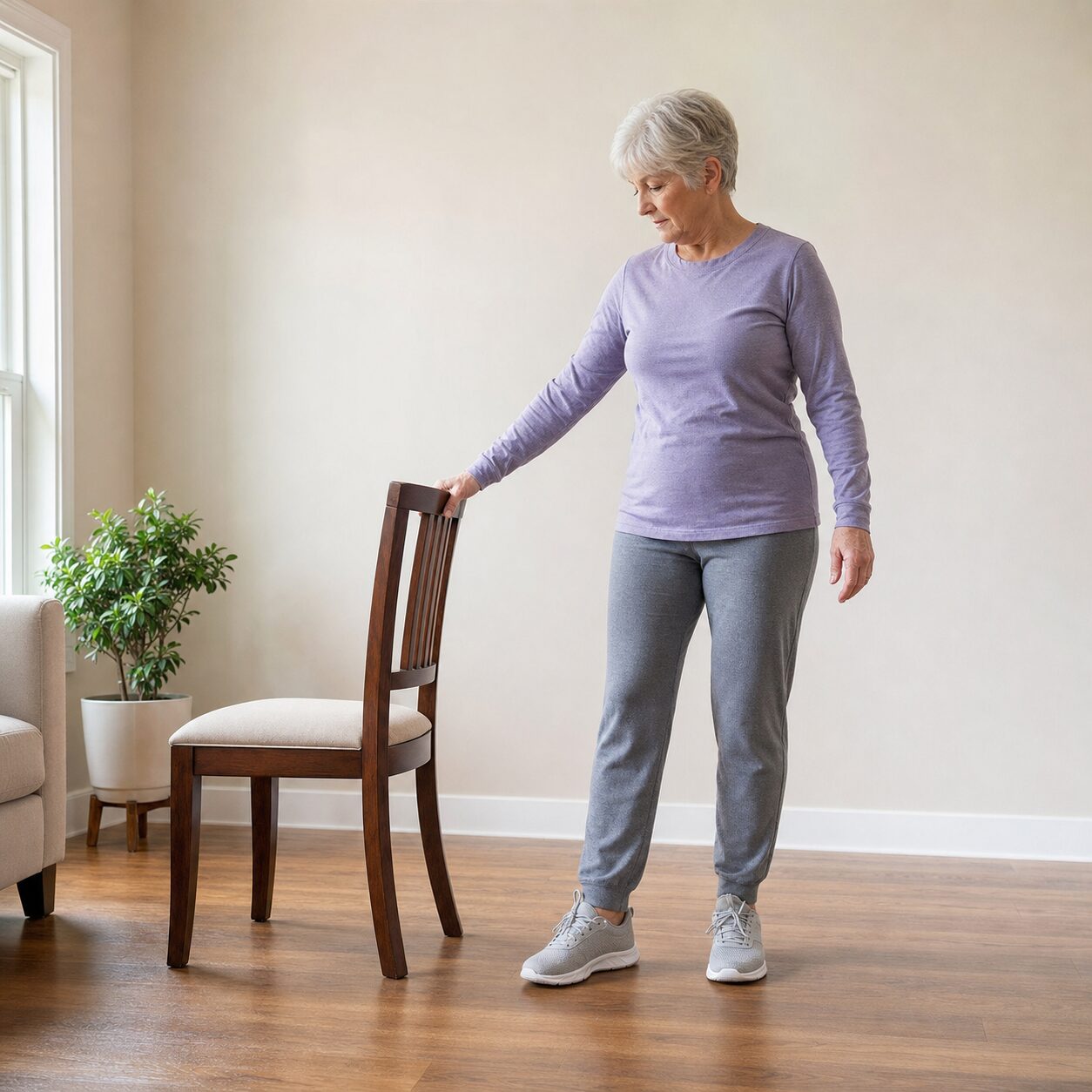
Choose a firm, level surface. Remove loose rugs, bags and electrical cables. Use a sturdy chair that does not roll or fold. Place it near a wall if extra stability is useful. Wear shoes that fit securely and allow you to feel the floor.
When to seek individual advice first
Contact a clinician, physiotherapist or other qualified professional before beginning if you have been told to restrict activity, have had a recent operation or fracture, are recovering from illness, experience repeated falls, or have symptoms that are not explained. A medicine review may also matter when medicines cause drowsiness or light-headedness.
Stop exercising and seek urgent medical help for chest pain or pressure, severe breathlessness, fainting, or sudden weakness. Stop the movement and arrange advice for sharp or worsening pain. Normal effort can feel challenging; alarming symptoms are not something to “push through.”
Use effort rather than ego
A practical way to judge moderate aerobic effort is the talk test: you can speak, but singing would be difficult. Strength movements should feel controlled. The final repetitions may take effort, but posture should remain steady and breathing should continue. Avoid holding your breath.
For a complete beginner, one short set can be enough for the first session. Rest between exercises. Leave at least a day before training the same muscles again. Consistency over several weeks is more useful than exhausting one session.
A four-week starter plan
This example is a framework, not an individual prescription. Choose movements that are comfortable and approved for your circumstances. A qualified instructor can check technique and suggest seated, standing or mobility-aid adaptations.
| Week | Strength | Balance | Aerobic activity |
|---|---|---|---|
| 1 | Two days; 3 to 4 movements; one easy set | Three days; 3 to 5 minutes with support | Most days; several comfortable 5 to 10 minute bouts |
| 2 | Two days; repeat with smoother control | Three days; add one supported pattern | Add a few minutes only if recovery is good |
| 3 | Two days; add a few repetitions to selected movements | Three or more days; practise turns and weight shifts | Build towards longer continuous bouts if suitable |
| 4 | Two days; add light resistance to one movement if ready | Three or more days; reduce hand support slightly only when steady | Continue gradual progress towards the weekly guideline |
Four beginner movement patterns
- Sit to stand: rise from a firm chair and sit down slowly. Use the armrests or hands as needed.
- Wall push: place hands on a clear wall and bend and straighten the elbows with the body aligned.
- Supported heel raise: hold a stable chair and lift the heels slowly, then lower with control.
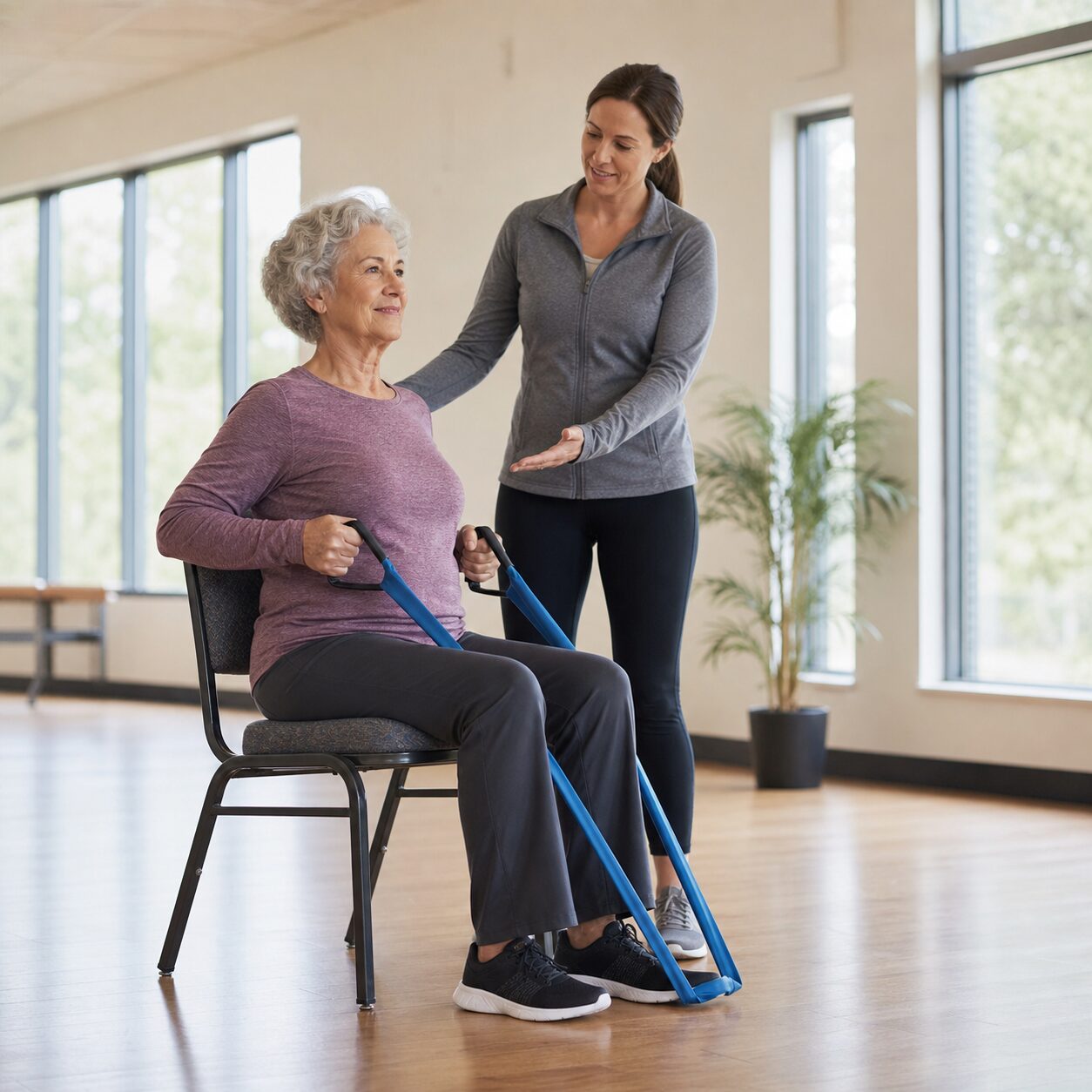
- Seated or standing row: use a resistance band only after learning how to anchor and inspect it safely.
These patterns cover pushing, pulling and lower-body work, but they are not suitable for everyone. Range of motion can be smaller. A chair version can replace a standing version. Pain, recent injury and surgical precautions require individual guidance.
Balance practice should be challenging, not hazardous
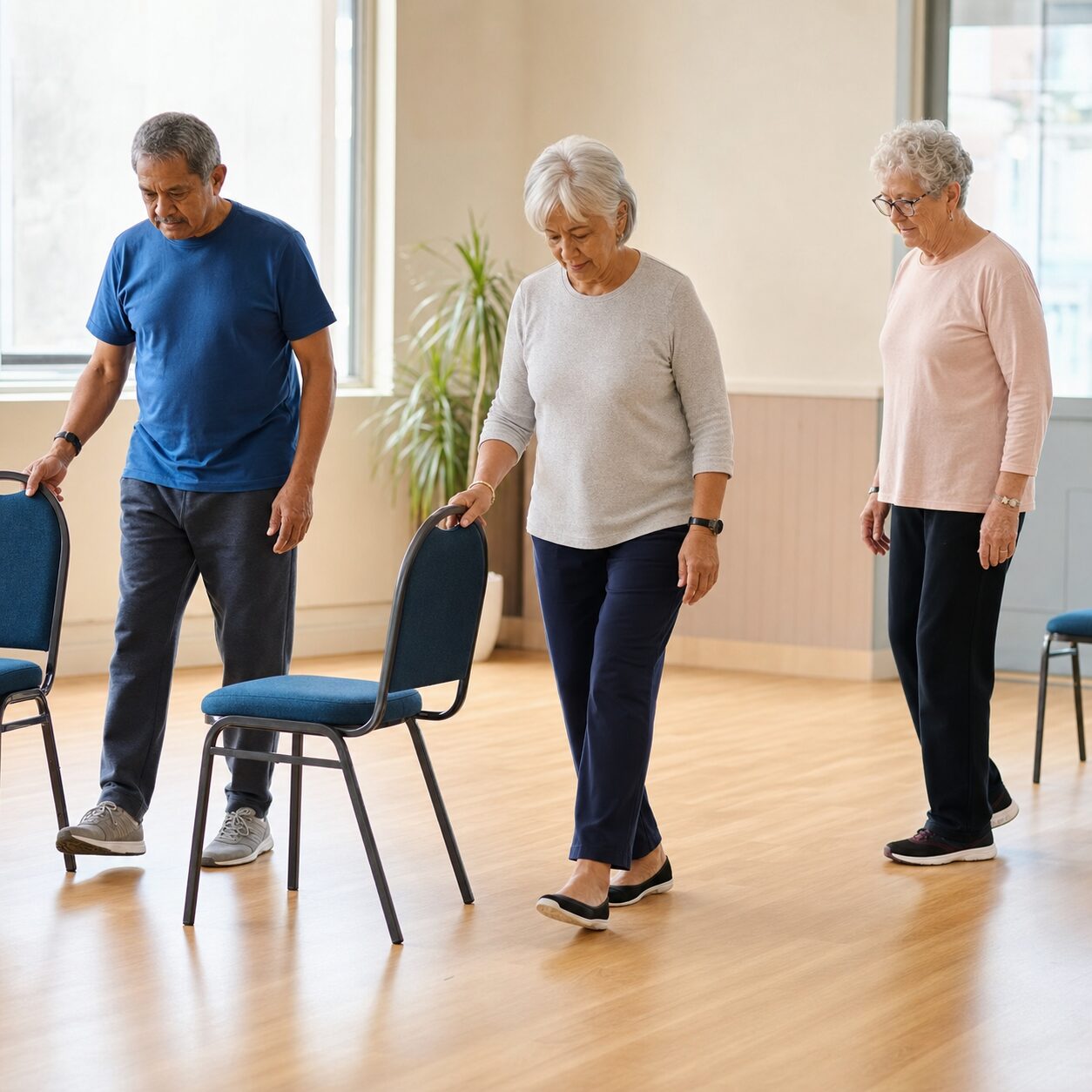
Balance improves when the task is difficult enough to require attention but safe enough to repeat. Begin within reach of a stable counter or chair. Do not close your eyes, stand on unstable cushions or attempt advanced one-leg poses simply because they appear online.
Useful starting patterns include shifting weight from side to side, stepping in different directions, controlled marching and a supported heel-to-toe stance. Practise when you are alert, in good light and not rushed. If a movement repeatedly causes dizziness, stop and seek advice.
How to progress without guessing
Keep a simple paper record of the movement, repetitions and how difficult it felt. Change only one variable at a time. For example, add two repetitions while keeping the same band, or use slightly more resistance while keeping the same repetitions. Do not increase resistance, volume and speed together.
- Progress when: the movement is controlled, symptoms are absent, and recovery is normal by the next day.
- Hold steady when: technique becomes untidy or ordinary activities feel unusually tiring.
- Step back when: pain increases, balance worsens or recovery takes longer than expected.
Choosing a class or instructor
Ask whether the programme is designed for older beginners and whether the instructor has recognised qualifications in the country where the class operates. A good class offers chair or seated options, asks about relevant conditions, explains how to stop safely and keeps the floor uncluttered.
Avoid programmes that promise to reverse ageing, guarantee prevention of falls, sell a supplement as essential, or encourage participants to ignore pain. Exercise can reduce risk and improve function, but no programme removes all risk.
Your weekly check-in
- Did I complete some strength, balance and aerobic activity?
- Could I maintain good control and keep breathing?
- Did any movement cause pain, dizziness or unusual breathlessness?
- Was the environment clear and the support stable?
- Can I repeat this plan next week without feeling overwhelmed?
The best plan is one that is safe enough to continue and useful enough to support daily life. Start modestly. Build the habit first. Then add challenge in small, observable steps.
Frequently asked questions
FAQ: Do I need weights to become stronger after 60?
No. Body weight, household movement and resistance bands can provide a starting challenge. Weights may become useful later. What matters is safe, progressive resistance and good technique.
FAQ: Is muscle soreness normal?
Mild temporary soreness can occur after unfamiliar activity. Sharp pain, worsening joint pain, swelling or symptoms that interfere with daily function need a pause and professional advice.
FAQ: Can I exercise if I use a walking aid?
Often yes, with appropriate adaptation. A physiotherapist or qualified exercise professional can help choose safe seated and supported options without compromising how you use the aid.
Official sources
- World Health Organization: Guidelines on physical activity and sedentary behaviour
- WHO: Physical activity and sedentary behaviour brief for older people
- CDC: Older Adult Activity — An Overview
- CDC: Preventing Falls and Hip Fractures
- National Institute on Aging: Strength training and healthier ageing
- American College of Sports Medicine: 2026 fitness trends
This article provides general educational information. It does not diagnose a condition or prescribe an exercise programme.