- Landscape sketching acts as a form of “visual meditation,” training the brain to process spatial relationships and focus on fine details, which helps maintain neural plasticity.
- The practice requires no artistic talent; the cognitive benefit comes from the act of observing rather than the quality of the final drawing.
- By breaking complex scenes into basic geometric shapes, you engage executive functions like planning, sequencing, and problem-solving.
Learning to sketch landscapes is not about becoming a professional artist; it is about engaging the brain in a sophisticated process of translation. When you look at a natural scene—a row of trees, a winding path, or a distant building—your brain must perform a complex series of calculations to represent that 3D world on a 2D surface. This process stimulates areas of the brain associated with spatial reasoning, visual memory, and sustained attention.
The Neuroscience of Observation: Why Drawing Changes Your Brain
At its core, sketching is an exercise in active perception. In our daily lives, we often look at objects without truly “seeing” them; we identify a tree as a generic shape and move on. Sketching forces the brain to slow down and deconstruct the visual field. This shift from “automatic recognition” to “analytical observation” is what provides the cognitive benefit.
When you attempt to sketch a landscape, you are engaging in several mental tasks simultaneously:
- Visual-Spatial Processing: You must measure the relative size of objects, the distance between them, and their orientation.
- Executive Function: You must decide which elements are essential to include and which can be simplified, requiring prioritization and planning.
- Fine Motor Coordination: The physical act of controlling a pencil requires a feedback loop between the eyes and the hands, which helps maintain dexterity and motor control.
Research into neuroplasticity suggests that the brain remains capable of forming new connections throughout adulthood. Engaging in novel, challenging, and focused activities—like learning the mechanics of perspective and shading—provides the necessary “cognitive load” to support this ongoing development.

Deconstructing the Landscape: A Step-by-Step Approach
Many adults are intimidated by the idea of sketching because they worry about “getting it right.” To gain the cognitive benefits, you must discard the idea of perfection. The goal is to train your brain to identify the underlying structure of the world.
1. The “Squint and Simplify” Method
The most common mistake beginners make is trying to draw every leaf on a tree. Instead, squint at your subject until the details blur. You will notice that the scene is actually composed of large, simple shapes—triangles for trees, rectangles for buildings, and horizontal lines for the horizon.
Actionable Step: Start by drawing these “masses” rather than the outlines. By focusing on the shape of the shadow rather than the object itself, you bypass the brain’s tendency to rely on symbols (like drawing a “lollipop” shape for a tree) and force it to engage with reality.
2. Establishing the Horizon Line
The horizon line is the foundation of any landscape. It dictates where the viewer’s eye level is. Establishing this early in your sketch helps your brain organize the rest of the visual information. If your horizon is crooked, the entire landscape will feel unstable. This simple act of anchoring your drawing is a practical lesson in spatial orientation.
3. The Three-Tone Rule
Shadows and light define depth. Rather than trying to match every shade of color, simplify your scene into three values: light, middle-gray, and dark. This “value mapping” is a high-level cognitive task that forces you to compare the brightness of different areas in your field of vision.
| Stage | Cognitive Benefit | Task |
|---|---|---|
| Observation | Attention and Focus | Squint to identify major shapes. |
| Structural Planning | Executive Function | Draw the horizon and basic geometry. |
| Value Application | Visual-Spatial Reasoning | Apply light, mid-tone, and dark shading. |
Practical Considerations for Comfort and Stamina
For older adults, the physical aspect of sketching is just as important as the mental one. If you are uncomfortable, you will not be able to focus on the cognitive task at hand.
Setting Up Your Workspace
Whether you are sketching in your backyard or at a local park, accessibility is key. If you are sketching outdoors, ensure you have a stable, lightweight folding chair. Avoid sitting on the ground, which can cause strain on the knees and hips. A portable easel or a sturdy clipboard is essential to provide a firm surface, reducing the need for awkward wrist angles.
Managing Stamina
Sketching can be mentally exhausting because it requires intense concentration. Do not attempt to complete a masterpiece in one sitting. A 20-minute session is often more beneficial for brain health than a three-hour marathon. Break your practice into “observation intervals”:
- 10 minutes: Observe and sketch basic shapes.
- 5 minutes: Rest, stand up, and stretch.
- 10 minutes: Add shading and refine details.
Overcoming Common Misconceptions
A major barrier for many is the belief that they “lack talent.” It is crucial to understand that cognitive benefits are independent of artistic talent. You are not sketching for an audience; you are sketching for your own neural health.
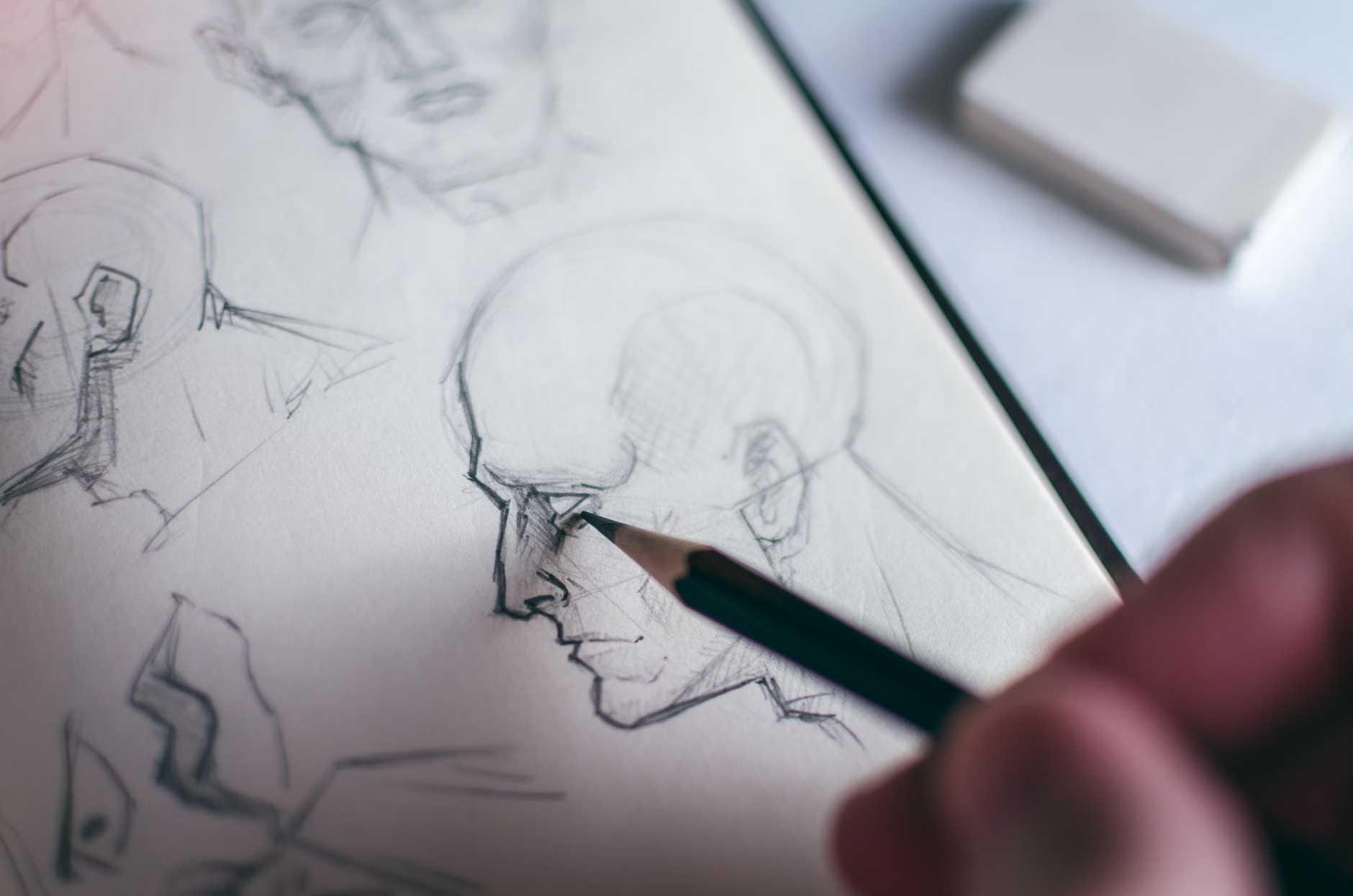
Another common mistake is purchasing overly complex equipment. You do not need expensive paints, canvases, or professional-grade charcoal. A simple set of HB and 2B pencils, a soft white eraser, and a spiral-bound sketchbook are more than enough. In fact, limiting your tools can actually increase the cognitive benefit, as it forces you to be more creative with how you represent light and shadow using only one medium.
When to Seek Professional Guidance
If you find that you are struggling with fine motor control due to conditions like arthritis or tremors, do not be discouraged. You can adapt by using thicker pencils or “pencil grips” to make holding the tool easier. If you experience persistent pain in your joints while sketching, consult with an occupational therapist. They can provide specific exercises or ergonomic tools that allow you to continue your practice without physical discomfort.

Integrating Sketching into Your Daily Routine
To maximize the cognitive benefits, consistency is more important than duration. Treat sketching like a brain-training game. If you can dedicate just 15 minutes a day to sketching a view from your window or a corner of your living room, you will begin to notice improvements in your ability to perceive detail and maintain focus.
Insight: The most significant benefit often occurs during the “transition phase”—the moment you look away from the paper to the subject and back again. This constant switching requires the brain to hold a visual image in its “working memory” and then retrieve it to apply to the page. This specific cycle is a powerhouse for maintaining memory and cognitive flexibility.
As you progress, try sketching the same scene at different times of the day. The way light changes the shadows will force you to re-evaluate your observations, providing a fresh cognitive challenge each time. This prevents the brain from going into “autopilot” mode and ensures that you are constantly processing new information.
Conclusion: The Path Forward
Landscape sketching is a accessible, low-cost, and highly effective way to keep the mind sharp. By focusing on the process of observation, you turn a simple hobby into a rigorous cognitive workout. Remember, the quality of your sketch is irrelevant; the neurological value lies entirely in the effort you put into seeing, analyzing, and translating the world around you. Start small, stay comfortable, and enjoy the process of discovery.
Frequently Asked Questions
- Do I need to be good at drawing to get these cognitive benefits? No. The benefits come from the effort of observation and spatial reasoning, not from the aesthetic quality of the final drawing.
- How long should I sketch each day to see benefits? Even 15 to 20 minutes of focused, daily practice is sufficient to engage the brain’s focus and spatial reasoning centers.
- What if I have trouble with fine motor skills? You can use thicker pencils, ergonomic pencil grips, or even draw on a larger scale to reduce the need for precise, small movements. Consult an occupational therapist for personalized adaptations.
Further reading for cognitive health and aging: