Birdwatching can begin with a window, a bench, or a short walk. You do not need expert knowledge, expensive equipment, or a long hike. For many adults over 60, it is a gentle way to notice nature, spend time outdoors, and add purposeful movement to the week.
- Choose a level, familiar place with seating, shade and toilets before choosing rare birds.
- Start with lightweight binoculars and short 20-to-30-minute outings.
- Protect comfort and safety: check weather, carry water, tell someone your route, and stop if you feel unwell.
Why birdwatching works well after 60
Birdwatching turns an ordinary walk into a small project: listen, look, identify and remember. The activity can be adapted to your stamina. You can watch from home on a low-energy day or visit a local park when you feel stronger.
The US Centers for Disease Control and Prevention says adults aged 65 and older benefit from a weekly mix of aerobic, muscle-strengthening and balance activity. It also advises people with health limitations to do what they can and discuss suitable activity with a clinician. Birdwatching is not a complete exercise programme, but an easy walk connected to a hobby can make regular movement more appealing.
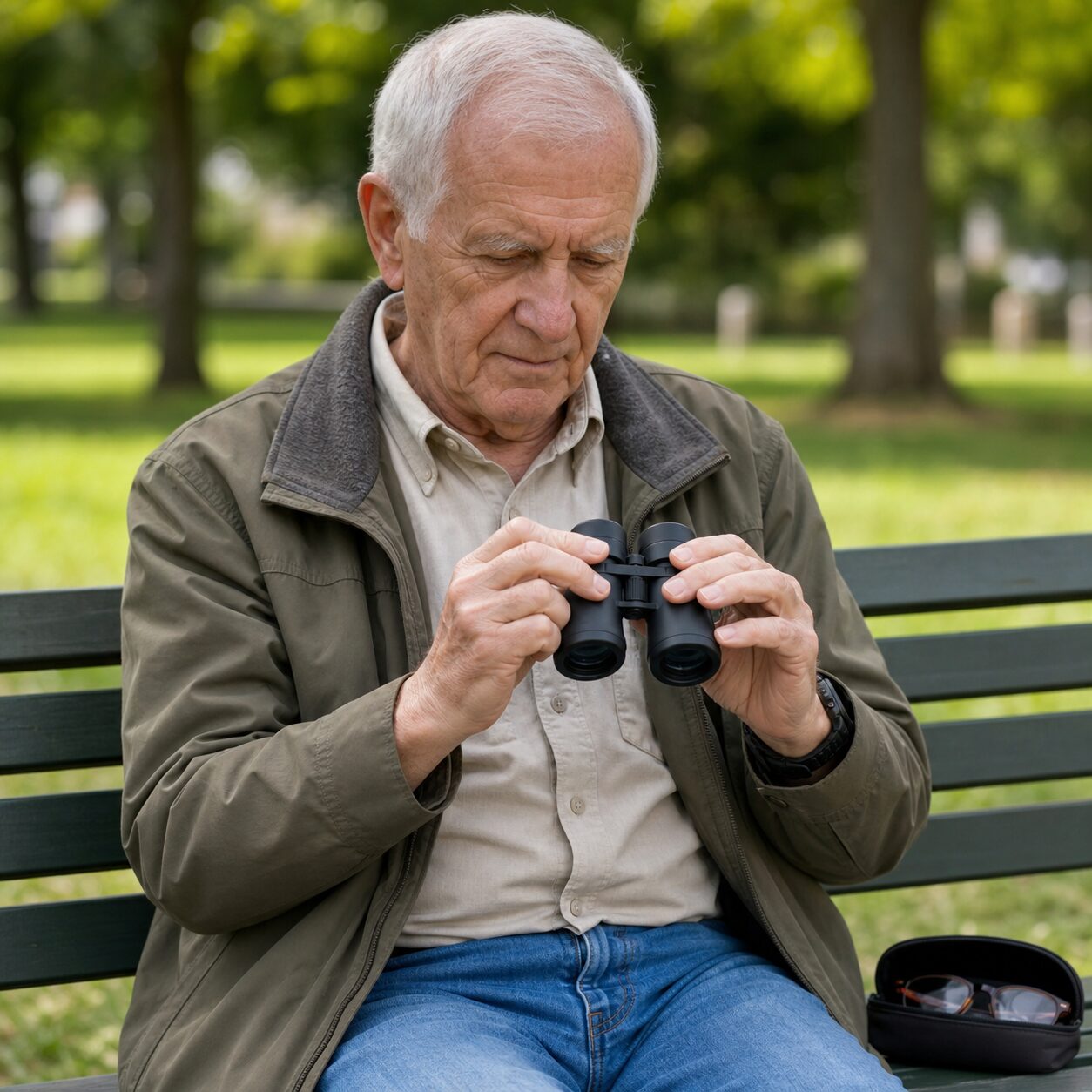
A simple starter kit
| Item | Practical choice | Why it helps |
|---|---|---|
| Binoculars | Lightweight 8× magnification | Usually easier to hold steady than higher power |
| Neck support | Wide strap or harness | Reduces pressure and keeps hands free |
| Identification | Local field guide or accessible app | Start with common birds, not every species |
| Comfort | Water, hat, layers and supportive shoes | Helps manage weather and uneven temperatures |
| Notes | Small notebook or voice memo | Records place, time, colour and behaviour |
Set up binoculars before you move
- Adjust the barrels until you see one round image.
- Focus on a stationary object at medium distance.
- Set the right-eye diopter according to the binocular instructions.
- Practise finding an object with your eyes first, then lift the binoculars without moving your head.
Never look at the sun through binoculars. If glasses are necessary for distance vision, use the fold-down eyecups as directed. The National Eye Institute notes that regular comprehensive dilated eye examinations can help adults over 50 detect eye disease early. New flashes, a curtain-like shadow, sudden vision loss or severe eye pain need urgent professional assessment.
Choose the place before the bird
Your first site should be easy, not exotic. A flat loop around a pond, a botanical garden, an accessible nature reserve or a park bench near trees may be enough. Check the official site map for distance, gradients, toilets, accessible parking, opening hours and temporary closures.
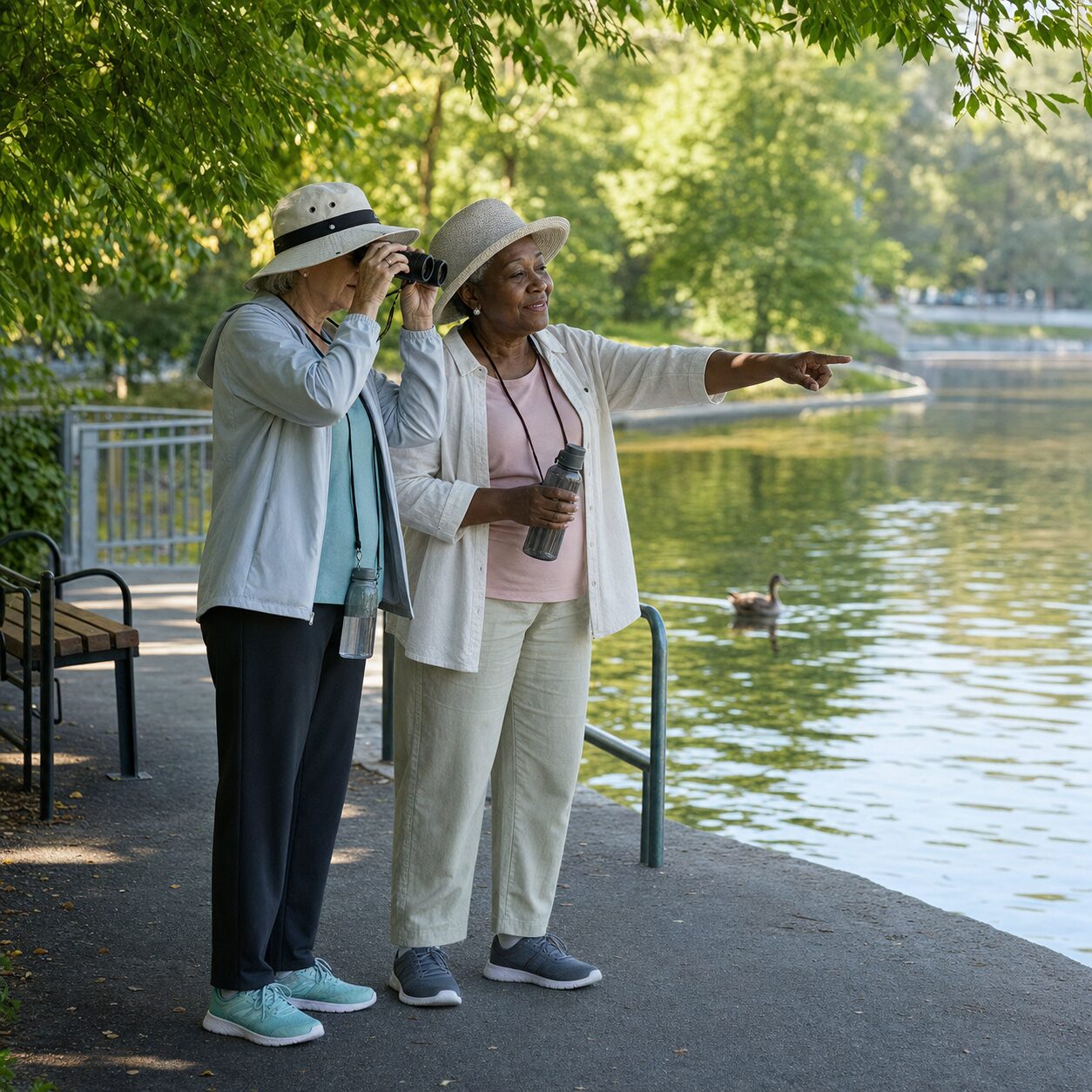
Use this five-minute safety check
- Weather: avoid extreme heat, storms, ice and poor air quality.
- Route: choose a familiar circuit with a clear turning point.
- Contact: tell someone where you are going and when you expect to return.
- Medicines: carry your usual medicines as directed, plus emergency information.
- Body signals: stop for chest pressure, unusual breathlessness, faintness or sudden weakness and seek appropriate help.
Your first 30-minute outing
- Minutes 0–5: sit or stand quietly and listen.
- Minutes 5–15: watch one area rather than scanning constantly.
- Minutes 15–20: note size, shape, colour and behaviour.
- Minutes 20–25: compare one or two likely species in your guide.
- Minutes 25–30: return before fatigue affects balance or concentration.
Do not worry about a perfect identification. “Small brown bird feeding on the ground” is a useful observation. Over time, repeated encounters teach more than chasing a long checklist.
Make it sustainable
Choose one regular place and visit at a similar time each week. Keep the outing short enough that you want to return. A local club can offer company, but ask whether the pace, distance and terrain suit you. Never step into traffic, water, long grass or unstable ground for a photograph.
Official sources
- CDC, activity recommendations for older adults: https://www.cdc.gov/physical-activity-basics/adding-older-adults/index.html
- CDC, benefits for adults 65 or older: https://www.cdc.gov/physical-activity-basics/health-benefits/older-adults.html
- National Eye Institute, vision and ageing: https://www.nei.nih.gov/about/education-and-outreach/vision-and-aging-resources
Frequently asked questions
FAQ: Do I need expensive binoculars?
No. A lightweight, comfortable pair you can hold steadily is more useful than a powerful, heavy model. Try before buying if possible.
FAQ: Can I birdwatch with limited mobility?
Yes. Window watching, a balcony, a garden, a hide with step-free access or a bench beside water can all work. Check accessibility information directly with the venue.
FAQ: What if I cannot identify the bird?
Record its approximate size, colours, bill shape, movement, sound, place and time. Identification can come later; careful observation is the main skill.
This article provides general preparation and wellbeing information. It does not replace individual medical or vision advice.